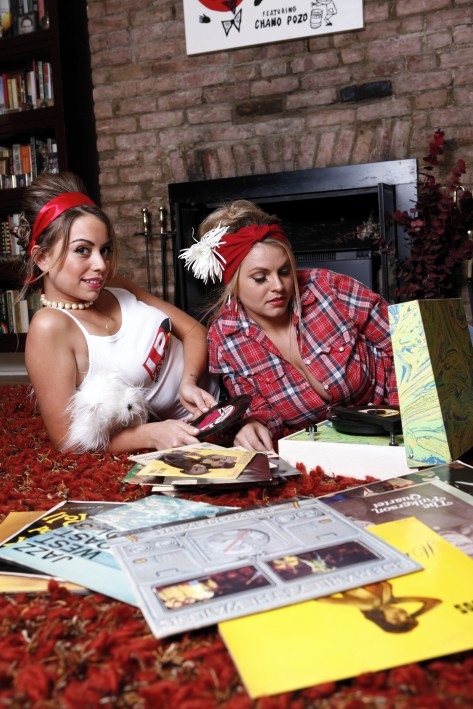

Locomotive – Locomotive (1969)
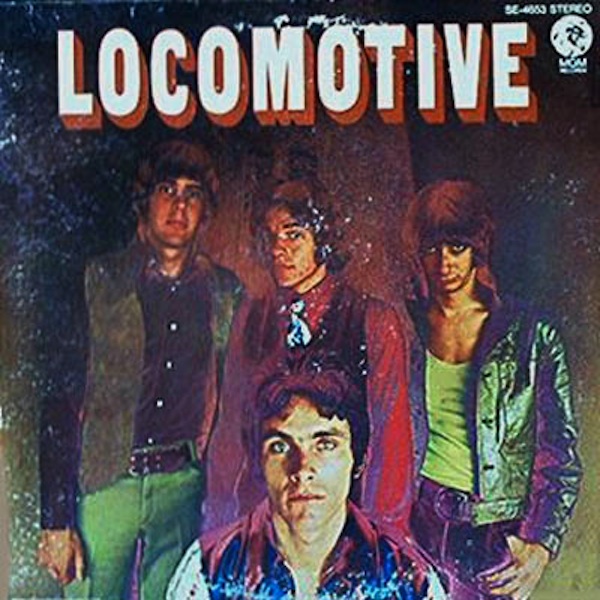
Title: Locomotive
Year: 1969
Format: LP
Label: MGM
The Locomotive were a blues rock band from Mercer Island, Washington and included Pat Clausing (keyboards), Russ Kammerer (drums), Bill Stroum (bass), and John Ussery (guitar). The band also included Skip Morehouse on keyboards, who left before the recording of this album to join a group called Peece. John Ussery also recorded a solo album for Mercury records under his name. (Prairie Prince Minsky)
Track Listing
- Big City Car
- Get On Away
- Barbara Jean
- All Come Free
- Catch You Later
- Thinking Of You
- Roberta
- Wah Wah
- Don’t Cut Your Hair
- Move On Up
Smoke Rise – The Survival of St. Joan (A Rock Opera) (1971)
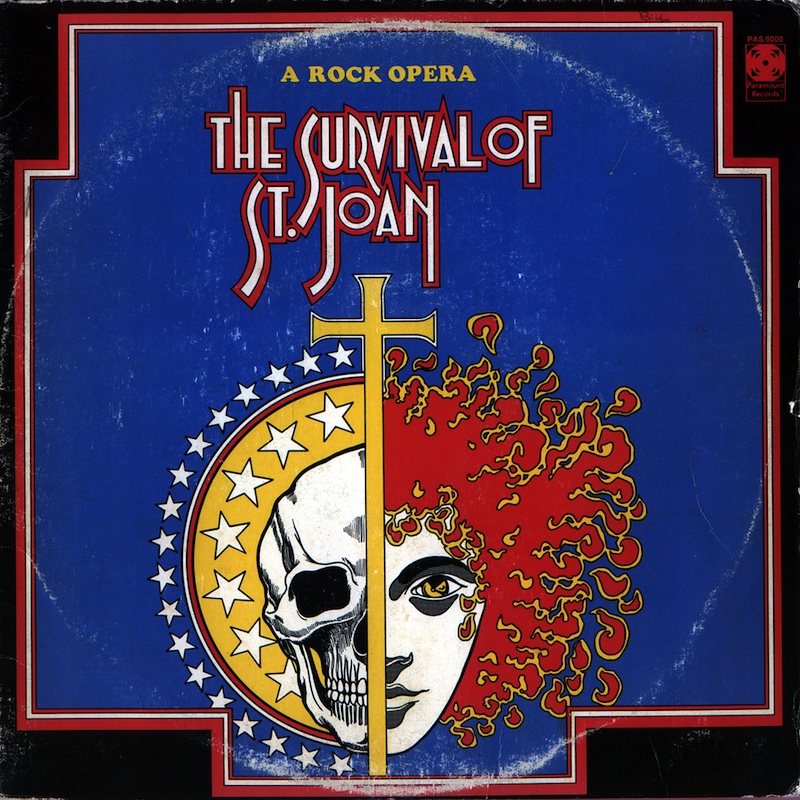
Title: The Survival of St. Joan (A Rock Opera)
Year: 1971
Format: LP
Label: Paramount
The Survival of St. Joan is a rock opera by Smoke Rise (Gary Ruffin, Hank Ruffin, Stan Ruffin, and Randy Bugg–music composed by Hank and Gary) on a libretto by James Lineberger. To date, it has not been issued on compact disc. It was first produced as a concept album on Paramount Records PAS-9000 by Stephen Schwartz in 1971.
A concert version ran eight performances at The Playwrights Unit. A fully-scripted musical play with spoken dialogue, directed by Chuck Gnys was produced at the Studio Arena Theatre in Buffalo, New York, November 5, 1970. It had 16 performances Off-off-Broadway at the Anderson Theater, directed by Gnys and produced by Haila Stoddard and Neal Du Brock, where audiences were frequently scared off by the local chapter of the Hells Angels in the front rows each night.
Possibly inspired by Operation Shepherdess: The Mystery of Joan of Arc by André Guérin and Jack Palmer White, a revisionist history alleging that Joan of Arc escaped execution and later married a nobleman named Robert des Armoises, an idea rejected by historians [1], and certainly inspired by the Vietnam War, the opera tells of the government of France and Pierre Cauchon, Archbishop of Beauvais releasing Joan of Arc and allowing a double, also believed to be a witch, to burn in her place. She is sent to live with a mute farmer, who falls in love with her, as he elucidates in songs performed in soliloquy toward the audience. Realizing that there is no end in sight to the Hundred Years’ War, the first act ends with Joan seeking to rejoin the army, despite the fact that she is no longer hearing her voices.
In Act II, Joan learns that she has lost the respect of the army, who attempt to rape her. (The libretto in the concept album has her get raped about halfway through the act; this was changed when stagings went beyond a band performance to a full-fledged play.) She meets with a deserter who no longer understands the purpose of the war, unless it is God’s desire to reduce the population, as well as civilians affected by the war’s rationing, complaining that the general can have whatever he wants, whether or not he needs it. Alone and unappreciated, Joan is eventually found by villagers who mistakenly decide she has put a hex on their cow, who tie her to a tree and immolate her, thus her life ends almost as history tells us it did. Upon her death, she re-establishes contact with her three voices, St. Michael, St. Catherine, and St. Margaret.
The play script is held in the North Carolina Collection at The University of North Carolina at Chapel Hill and remains unpublished. It contains many scene changes, often depicting how ordinary people’s lives affect the war, including Joan’s brother, Charles, acting as a scribe for his mother, requesting the king to provide them Joan’s soldier wages to live on, and chides her for some irate informalisms she wants to include. (Wikipedia)
Track Listing
- Survival
- Someone Is Dying
- Run, Run
- Back In The World
- I’m Here / Love Me
- Stonefire
- Love Me
- Lady Of Light
- Country Life
- Run, Run / Precious Mommy
- Medley: Survival / Run, Run / Back In The World
- Lonely Neighbors
- Cornbread
- This Is How It Is
- Cannonfire
- It’s Over
- Darkwoods Lullaby
- You Don’t Know Why
- Propitius
- Burning A Witch
- Love Me
The Grass Roots – The Grass Roots (1975)
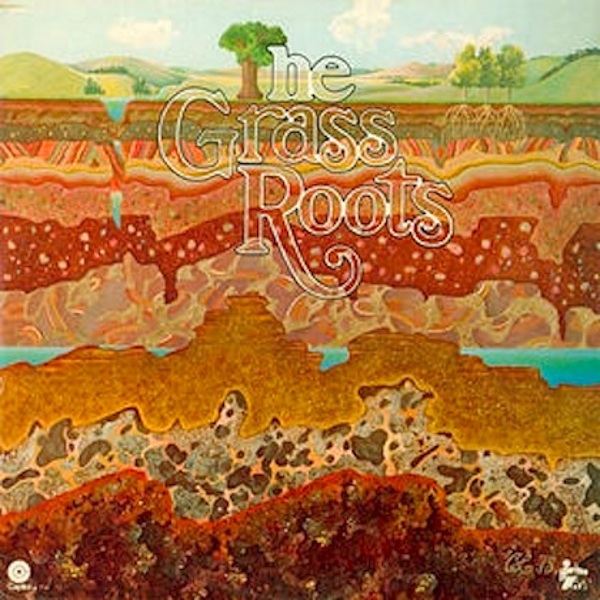
Title: The Grass Roots
Year: 1975
Format: LP
Label: Haven
The heavy brass and melodic, soulful material of the ’70s era Grass Roots sound are all present here. The only problem is, it isn’t performed by any of them. Warren Entner departed before this album, leaving singer/songwriter/bassist Rob Grill as the sole remaining original member- and his involvement on this record is strictly limited to vocals. Joel Larson, drummer on the past two Grass Roots albums- Move Along and Alotta Mileage – also appears, but everyone else on the lengthy credits list is a complete stranger.
The material, which is all provided by outside writers, fits the Grass Roots style, but at the same time, it’s unusually patchy. There are some particularly odd lyrics throughout the album, especially on “Naked Man,” and “I Wanna Slow Dance Again,” which has a baffling moment where it starts to fade out, then Rob Grill comes in again and says “Don’t start the fade yet, we ain’t got it made yet.” I’m still not quite sure what to think of that. “Optical Illusion” is great, classic Grass Roots. “The Last Time Around,” “Nothing Good Comes Easy,” and the infectiously catchy “Mamacita” are also highlights.
Not surprisingly, this would be the last Grass Roots record until Powers of the Night in 1982, which also featured just Rob Grill and sounded even less like the old band- but at least he played bass and wrote one song on that record. (Big Pimpin RYM)
Track Listing
- Something About You
- Out In The Open
- Optical Illusion
- I Wanna Slow Dance Again
- Naked Man
- Up On The Roof
- It’s A Cryin’ Shame
- The Last Time Around
- Nothing Good Comes Easy
- Mamacita
Alive ‘N Kickin’ – Alive ‘N Kickin’ (1970)
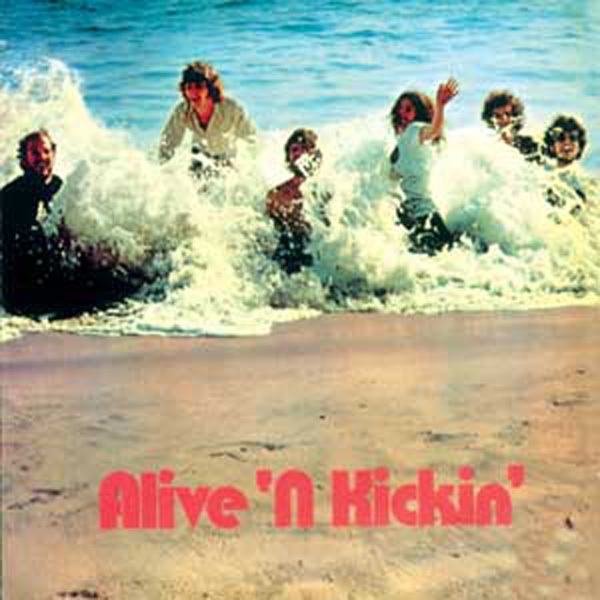
Title: Alive ‘N Kickin’
Year: 1970
Format: LP
Label: Roulette
Led by singer Pepe Cardona Alive ‘n Kickin’ was a New York City based sextet showcasing the talents of drummer Vito Albano, vocalist Sandy Todler, guitarist John Parisio, keyboardist Bruce Sudano and bassist Thomas Wilson. The group started their careers playing the city’s club circuit getting their initial break when they attracted the attention of Tommy James of Shondells fame. Impressed by the band he offered to help them record a song he’d recently written but had been unable to record due to a severe case of stage fright. Ironically, before the group could record ‘Crystal Blue Persuasion’ James withdrew the offer so that James and the Shondells could release it themselves. Redeeming himself, James offered the band a replacement track entitled ‘Tighter and Tighter’.
Feeling that the song was overly commercial, the band was initially reluctant to record the track. They ultimately relented recording the song as their debut for Roulette Records. Released as a single ‘Tighter and Tighter’ b/w ‘Sunday Morning’ (Roulette catalog number R-7078), the song eventually went top-10.
As was standard marketing, Roulette rushed the band into the studio to record a supporting album. Produced by James and Bob King, the cleverly-titled “Alive ‘n Kickin’” proved a minor surprise. Anyone hearing ‘Tighter and Tighter’ (let along looking at the fun-in-the-sun album cover), would have justifiably concluded these guys were little more than a faceless top-40 pop band. Wrong conclusion.
Powered by Todler’s tough voice (her bluesy delivery occasionally baring a startling resemblance to Janis Joplin – check out ‘Just Let It Come’ or ‘Kentucky Fire’), the set of largely original material rocked with a surprising amount of energy. While it may not have made for the year’s most original set, tracks such as ‘Junction Creek’ and ‘Mississippi Mud’ saw the group displaying a penchant for above average blues-rock. That wasn’t meant to imply these guys were going to knock Deep Purple off the hard rock throne. Largely penned by Sudano and Wilson, virtually everyone of these nine tracks retained a distinctive commercial sheen. (RDTEN1 RYM)
Track Listing
- Tighter, Tighter
- Junction Creek
- Jordan
- Kentucky Fire
- Sunday Morning
- Just Let It Come
- Mississippi Mud
- Hitter Man
- Mother Carey’s Chicken
- London Bridge
- You Gave Me Something
- Good Ole Lovin’ Back Home
Bud Shank – A Spoonful Of Jazz (1967)
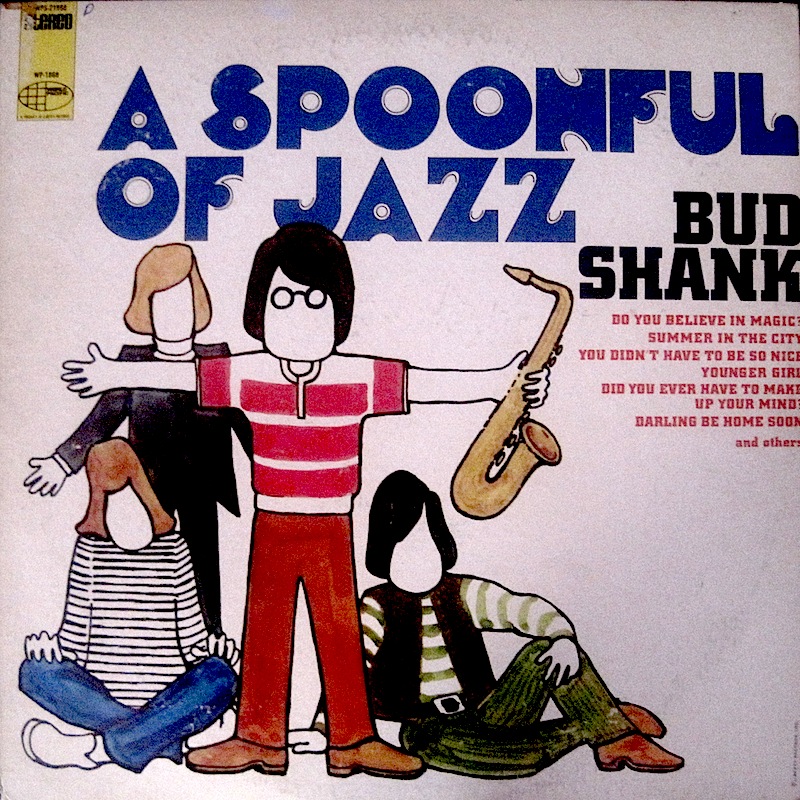
Artist: Bud Shank
Title: A Spoonful Of Jazz
Year: 1967
Format: LP
Label: World Pacific
A Spoonful of Jazz is a very good description of the contents of this LP by Bud Shank, which features little in the way of meaningful jazz in a songbook of works by 1960s pop group the Lovin’ Spoonful.
In spite of the usually potent alto sax of Shank and a band arranged and conducted by Shorty Rogers, which also includes George Roberts, Frank Rosolino, Conte Candoli, Bud Brisbois, and Buddy Childers, this release is an absolute dud as far as jazz fans are concerned. The melodies of the Lovin’ Spoonful are extremely repetitive, and none of Rogers’ charts flesh out the themes enough to provide grounds for any memorable improvisations.
The lifeless pedestrian rhythm section of electric bassist Carol Kaye, guitarist Dennis Budimir, and drummer Earl Palmer add to the badly dated sound of the album. Particularly embarrassing is the baroque arrangement of “(You and Me and) Rain on the Roof,” complete with electric harpsichord and Shank’s disappointing flute solo.
Veteran jazz writer Patricia Willard’s liner notes are full of hyperbole, but it is difficult to think she actually believed what she wrote about this release. This historical curiosity shows how desperate labels like World Pacific sought to attract some of the pop audience to jazz artists; it can be safely bypassed by all jazz fans, except for the most obsessive collectors of the music of Bud Shank. (allmusic)
Track Listing
- Summer In The City
- Did You Ever Have To Make Up Your Mind?
- (You And Me And) Rain On The Roof
- Amy’s Theme
- Cocoanut Grove
- Lovin’ You
- Darling Be Home Soon
- Six O’ Clock
- Younger Girl
- Didn’t Wanna Have To Do It
- Daydream
- Do You Believe in Magic?
Cook E. Jarr – Pledging My Love (1969)
Title: Pledging My Love
Year: 1969
Format: LP
Label: RCA Victor
Before he became the number one lounge act in Vegas, Cook E. Jarr released this album
for RCA which Play It Again Max describes as “a pleasant and at times soulful slice of pop music with full orchestral arrangments and occasional choruses”. For more info on Mr. Jarr visit his website at http://www.cookejarr.com/ (Max Collodie)
Track Listing
- Pledging My Love
- Do You Believe In Magic
- If I Were A Carpenter
- Reason To Believe
- The Lady Came From Baltimore
- Knock On Wood
- Ask The Lonely
- I Can’t Turn You Loose
- Red Balloon
Clint Eastwood – Sings Cowboy Favorites (1962)
Title: Sings Cowboy Favorites
Year: 1962
Format: LP
Label: Cameo
With the rusty door-hinge of a voice he possesses today, it’s hard to imagine a time when Clint Eastwood could have been groomed as a singing star, but in the early ‘60s, when he came to fame as the rebellious Rowdy in the hit Western TV series Rawhide, it wasn’t such a crazy idea. In 1963, playing off the popularity of the show, Cameo-Parkway released an album featuring Eastwood’s versions of classic cowboy-style tunes.
While Eastwood is admittedly not an exceptional vocalist, he’s not at all bad; this is by no means some Golden Throats-style celebrity train wreck. At the time, there were plenty of equally photogenic young men with no greater vocal ability than Eastwood being promoted as country singers, many with less of an actual musical background than the jazz-schooled actor. Eastwood’s soft, somewhat laconic croon might not possess the commanding quality that was de rigueur for the era’s country stars, but he never strays off-key, and his style is a kind of cross between legendary cowboy singer Roy Rogers and Dean Martin.
Most of the tunes he tackles here were already well-known in hit versions by other artists — the Sons of the Pioneers’ “Tumbling Tumbleweeds,” Bob Wills’ “San Antonio Rose,” Gene Autry’s “Mexicali Rose,” etc. The loping rhythms, lonesome harmonica, lazy guitar licks, and male backing-vocal choruses are all in keeping with the production conventions of the day for cowboy artists. (allmusic)
Track Listing
- Bouquet Of Roses
- Along The Sante Fe Trail
- The Last Round Up
- Sierra Nevada
- Mexicali Rose
- Searching For Somewhere
- I’ll Love You More
- Tumbling Tumbleweeds
- Twilight On The Trail
- San Antonio Rose
- Don’t Fence Me In
- Are You Satisfied
Henry Tree – Electric Holy Man (1969)
Title: Electric Holy Man
Year: 1969
Format: LP
Label: Mainstream
This one tends to get slammed by the critics, which may be one of the reasons I was willing to give it a chance. I’ll readily admit that this Cleveland-based trio won’t knock your socks off, but by the same token drummer Carmen Castaldi, singer/guitarist Leroy Markish and bass player Charles McLaughlin turned in an album that’s quite diverse and entertaining and in some ways better than other higher priced and better known releases on the Mainstream label.
Produced by Bob Shad, 1970′s “Electric Holy Man” differed from a lot of other early-1970s Mainstream releases in that it showcased a progressive streak rather than the popsike sound that was common to the label. Moreover, for a trio these guys sported a surprisingly full sound, helped in no small measure by Markish’s impressive voice.
Not being a big jazz fan, I’ll be among the first to admit that I was surprised at how entertaining the group’s jazzy forays were. ‘Mr. Fear’, their Traffic cover and the extended title track showcase that interesting jazzy streak with some stunning work from un-credited jazz guitarist Bill DeArango. Mind you there was still plenty of fuzz driven guitar (check out the second half of the title track), but it didn’t come close to these other highlights and the group’s most commercial effort; the ballad ‘Lady Of Day’ was also the album’s most disposable offering. (RDTEN! RYM)
Track Listing
- Country Son
- Mr. Fear
- Electric Holy Man
- Dear Mr. Fantasy
- Lady Of Day
- Penfield Town
Gun Hill Road – First Stop (1972)
Title: First Stop
Year: 1972
Format: LP
Label: Mercury
As Gun Hill Road, their first album including first version of 42nd Street. Original rip posted courtesy of Ventana Circular. (Max Collodie)
Track Listing
- 42nd St.
- My Lady Loves The Day
- Man Of Trade
- I Have A Friend
- New York Morning
- Cargoes
- Daybreak
- Thoughtcatcher
- Baked Bean Band
- I Will Never Face The World Again
- Gun Hill Road
Pookah – Pookah (1969)
Title: Pookah
Year: 1969
Format: LP
Label: United Artists
Pookah were John Ippolito (vocals-bass-guitar),Pat Cupo (organ-piano-ondioline),and Dave Ranaletta (vocals-drums-pecussion). This is a strange one, an early example of American progressive rock that has really been panned by the critics (it’s not that bad… is it?), an acquired taste for sure, like rubbing alcohol. (Jack Dominilla)
Track Listing
- Blue And Peaceful
- In A Field
- Tomorrow’s The Day
- Things Don’t Matter
- Broken Dream
- Kickin’ A Can
- Merlin’s Party
- Lady Ostrich
- Ha! Ha! I Can Fly
- The Heat
- Rain On Your Grave