
Moccasin – Moccasin (1970)
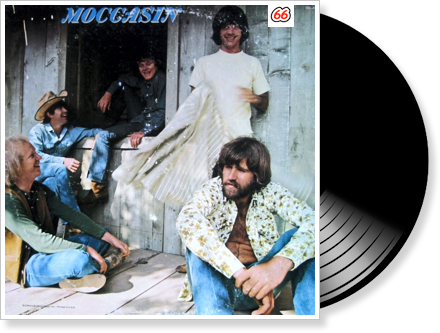
Title: Moccasin
Year: 1970
Format: LP
Label: MGM
Moccasin were a country-tinged rural rock group that consisted of Keigh Johnson (guitar-vocals), Merlin Moran (guitar-vocals), Gerald Gibson (percussion), Bud Deal (saxophone-vocals), and Casey Van Beek (baas-piano-vocals). The album was produced by Michael Lloyd, who along with another former WCPAEB member Bob Markley produced several albums while under contract to MGM in the early seventies. Van Beek and Deal later would be members of the Tulsa, Oklahoma group the Tractors (Jack Dominilla)
Track Listing
- (Roll) Big Wheel
- Better Get On
- Larkins’ County Fair
- The Light
- Memphis, Tennessee
- Sun’s Gonna Shine
- Someone’s Watching
- Day’s Lost
- You, You
- Skinnerback (Keith’s Theme)
Moccasin – Moccasin (1970)

Title: Moccasin
Year: 1970
Format: LP
Label: MGM
Moccasin were a country-tinged rural rock group that consisted of Keigh Johnson (guitar-vocals), Merlin Moran (guitar-vocals), Gerald Gibson (percussion), Bud Deal (saxophone-vocals), and Casey Van Beek (baas-piano-vocals). The album was produced by Michael Lloyd, who along with another former WCPAEB member Bob Markley produced several albums while under contract to MGM in the early seventies. Van Beek and Deal later would be members of the Tulsa, Oklahoma group the Tractors (Jack Dominilla)

Dewey Martin And Medicine Ball – Dewey Martin And Medicine Ball (1971)
Title: Dewey Martin And Medicine Ball
Year: 1971
Format: LP
Label: UNI
Dewey Martin — born Walter Milton Dwayne Midkiff — grew up in the Ottawa, Canada, area and began playing the drums at age 13. One of his first bands, the Jive Rockets, featured future Staccatos guitarist Vern Craig). Martin eventually moved to the U.S., and ended up in Nashville, where he became a touring drummer with Faron Young, Roy Orbison, the Everly Brothers, Patsy Cline and others. Along the way, he adopted the surname Martin; his childhood mispronunciation of Dwayne led to “Dewey” becoming his first name. In 1964, Martin ended up in Seattle, where he played drums on Sir Raleigh and the Coupons’ British Invasion-styled cover of “White Cliffs of Dover”.
The single was successful in Los Angeles, so Martin moved there and recruited a new Sir Raleigh and the Coupons lineup from members of the Sons of Adam. They had released four singles — for A&M, Jerden andTower– by early 1966 (later compiled as One Buffalo Heard) before Martin left to join the Modern Folk Quartet, briefly, and the Dillards. He was mainly looking to play country-rock, however, and in the spring of 1966, was invited to join a group calling themselves the Herd. They were soon to become better known as Buffalo Springfield. Martin remained with the band until they dissolved in May 1968. In October, Martin formed the New Buffalo Springfield (later shortened to New Buffalo) with bassist Robert C Apperson, drummer/vocalist Don Poncher, rhythm guitarist/vocalist David Price, horn player Jim Price and lead guitarist Gary Rowles.
In early 1969, Price left to join Delaney & Bonnie, and when Apperson split, he was replaced by former Bobby Fuller Four bassist Randy Fuller. Rowles eventually lost interest too, quitting to join Arthur Lee’s Love. Martin recruited guitarist Bob (“B.J.”) Jones, and guitarist/keyboardist/vocalist Joey Newman and they decided on a new name, Blue Mountain Eagle. Atco Records signed the group, but in July of 1969, before recording their album, Martin left for a solo deal with UNI Records. He formed Dewey Martin and Medicine Ball, with lead guitarist Billy Darnell, keyboard player/vocalist Peter Bradstreet, steel guitarist Buddy Emmons, and bassist Harvey Kagen (ex-Sir Douglas Quintet).
They cut several tracks in November 1969, credited only to Martin, and began recording an album in April 1970. Kagen left before the sessions were over, and was replaced by Stephen Lefever, and then by Fuller (who had quit Blue Mountain Eagle), moving over to guitar after bassist Terry Gregg joined. Bruce Palmer also helped out during the recording of Dewey Martin & Medicine Ball. Despite positive reviews, the group were soon dropped from UNI. They recorded another album’s worth of songs for RCA, but only one single was released, in 1971.
Martin became a car mechanic in the late seventies. In the mid-’80s, he joined Pink Slip (alongside former Byrds bassist John York), the Roberts-Meisner Band, and finally, Bruce Palmer’s Buffalo Springfield Revisited, before retiring. In 1991, he formed Buffalo Springfield Again with guitarist Billy Darnell, but the group dissolved. In 1997, Dewey Martin and Buffalo Springfield were inducted into the Rock and Roll Hall of Fame. (Bryan Thomas)
Track Listing
- Indian Child
- Right Now Train
- Silent Song Thru The Land
- Maybe Baby
- Recital Palmer
- Yesterday
- The Devil And Me
- I Do Believe
- Race Me On Down
- Change
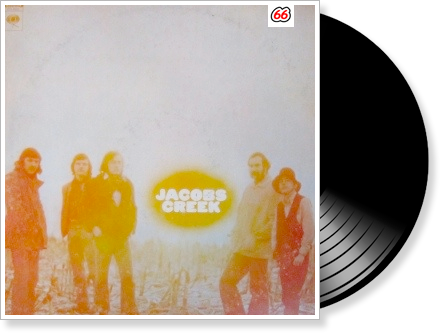
Jacobs Creek – Jacobs Creek (1969)
Title: Jacobs Creek
Year: 1969
Format: LP
Label: Columbia
Jacobs Creek consisted of Lon and Derek Van Eaton, Steve Burgh, Tim Case, and Bruce Foster. According to Acid Archives, the album is a “mixed bag of early rural rock, dreamy harmony vocal flower moves and heavier tracks with acid leads and BS & T moves. Cool long eastern track with sitar too. ”
Judging by the sleeve, i always thought this was strictly a rural rock lp, but it’s a pretty diverse album, with more of an early progressive psychedelic feel that features some nice harmonies and an array of instruments including harpsichord, sitar, slide banjo, saxes and keyboards. This album, along with MAN (see March 31, 2010 post) were two of the better releases on the Columbia label in 1969.
Lon and Derek Van Eaton would go on to release an album on Apple Records in 1972 entitled “Brother” (with some involvement from Ringo Starr and George Harrison) and another in 1974 for A&M Records called “Who Do You Out Do”, while Burgh next surfaced playing bass on David Bromberg’s own eponymous debut, beginning a session career that would quickly grow to include dates in support of John Prine, Steve Goodman, and Willie Nelson (1973’s classic Shotgun Willie). Burgh spent much of the mid-’70s serving as musical director for Phoebe Snow, and in 1977 he contributed guitar to Billy Joel’s breakthrough effort The Stranger, appearing on the Grammy-winning “Just the Way You Are.” (Max Collodie)
Disclaimer: The link below may point to content that is copyrighted. redtelephone66 only provides this link with the understanding that you are responsible for the content you download. redtelephone66 does not engage in music piracy, nor do we do host, fileshare, or otherwise trade in copyrighted works.

Madura – Madura III (1973)
Title: Madura III (Unreleased, Live)
Year: 1973
Format: LP
Label: N/A
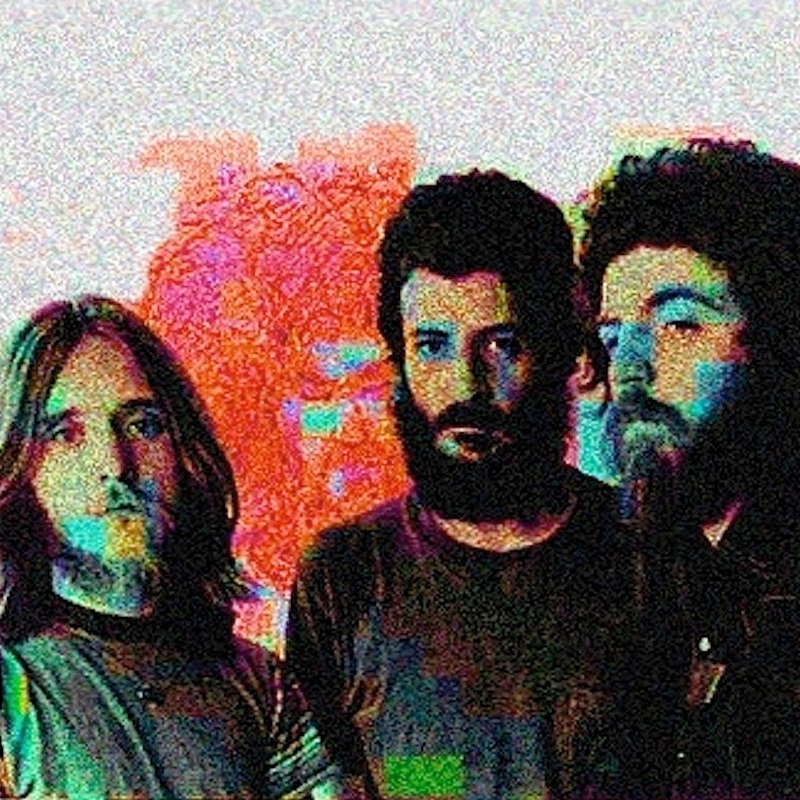
Here’s the “unofficial” third album by Madura, the source of these recordings are from the tapes of David Wolinski himself, They are from a “Live” performance in 1973. For more info on Madura please see the previous posts from March 20 2010 and July 31, 2009. (Max Collodie)
Track Listing
1.If You Got The Dime
2.SynthHigh (Dr. Honoris Causa)
3.Stagger Lee
4.My Favorite Things
5.Funky Broadway
6.Organize
7.Save The Miracle
8.Walkin’ The dog
9.My My What A World
10.Last Jam
The Kit Kats – It’s Just A Matter Of Time (1967)
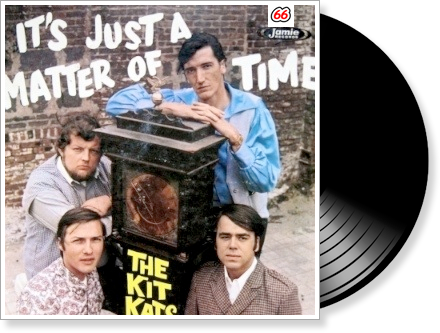
Title: It’s Just A Matter Of Time
Year: 1967
Format: LP
Label: Jamie
The Kits Kats had several big hits in the Philadelphia area in the mid-to-late 1960s, and were also a very popular live attraction in their native region, but never broke out nationally, although a few of their singles nibbled at Billboard’s Hot Hundred. The quartet had a distinctly Philadelphian blend of the retro and the current, with material (much written by keyboardist Karl Hausman and drummer Kit Stewart) that mixed doo wop, 1950s rock and soul oldies, and 1960s commercial pop-rock.
Their harmonies were in a league with the Four Seasons, the Happenings, the Tokens, and, more distantly, the Zombies and the sunshine pop of the Beach Boys and the Association. They were not just another throwback sixties White vocal group, such as Jay & the Americans and the Vogues. They played their own instruments, with a classical-baroque tinge to their keyboard-dominated arrangements that could make them sound like a more pop-oriented, minor-league counterpart to the Left Banke and the Zombies. Like those groups, they had a lead singer (John Bradley) with a high, delicate range, although Bradley went into falsetto far more than the Zombies or Left Banke did.
Although some of their recordings were pedestrian period pop, their best ones had an ambitious complexity, though their innocuous name and square, clean-cut image ensured that listeners of the time, and historical critics, have largely overlooked and undervalued their work. (Richie Unterberger)
Track Listing
1.Let’s Get Lost On A Country Road
2.Breezy
3.Cotton Fields
4.Liza-Jane
5.These Are A Few Of My Favorite Things
6.The Nut Rocker
7.Funny How Love Can Be
8.That’s The Way
9.Sea Of Love
10.Won’t Find Better Than Me
11.You Got To Know
12.Cold Walls
Sebastian – Rays Of The Sun (1969)
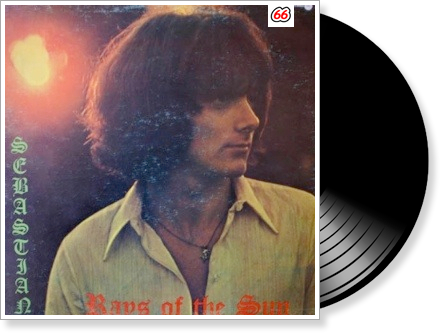
Title: Rays Of The Sun
Year: 1969
Format: LP
Label: Decca
Deep folkish psych rarity by Ontario Quebec born Sebastian with lavish arrangements by Roger Gravel are like Darius meets Scott Walker. Great songs, long and short, and with superb vocal melodies with acid leads, sitar, and ’67 “Peppery” feel on some tracks.
“Soaring psychedelic pop from the late 60s Canadian scene — pretty grandly arranged with bursts of brass, and strings, lavish vibes all around that really going all out with what sounds harpsichord, sitar and more, but with a gritty underbelly and a chiming groove. It’s a strange mix of sounds, with big catchy choruses and poppier aspects, and also more baroque touches. We’re not sure if Sebastian was reaching for The Animals, or Scott Walker, or both, but we’re digging the disjointed effects!” (Dusty Groove)
Track Listing
1.Back In Love Again
2.Love Time
3.Elaine
4.Passages
5.Smile A Little
6.Be What You Are
7.Jubilation
8.Through With Our Love
9.Rays Of The Sun
10.Now That It’s Over
The Goggles – The Goggles (1969)
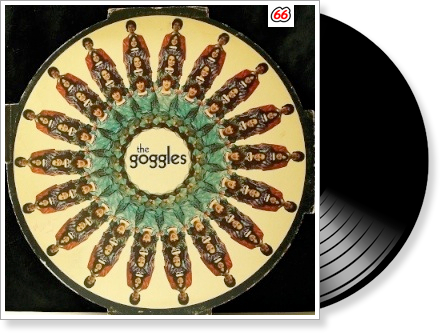
Title: The Goggles
Year: 1969
Format: LP
Label: Audio Fidelity
The Goggles were a group consisting of Jessica Harper (vocals), Rod McBrien (lead vocal-bass), Mark Lockhart (drums), and David Spinoza (guitar-vocal), The group released this album which was actually the soundtrack and more to the 1970 NBC television presentation “Looking Through Super Plastic Elastic Goggles At Color”.
Spinoza, of course, would go on to an illustrious career working with Beatles Paul McCartney, John Lennon and Ringo Starr, and a long association with James Taylor. He also dated Yoko Ono during Lennon’s “Lost Weekend” period when Lennon was involved with Mae Pang. (James Oglthorpe)
Disclaimer: The link below may point to content that is copyrighted. redtelephone66 only provides this link with the understanding that you are responsible for the content you download. redtelephone66 does not engage in music piracy, nor do we do host, fileshare, or otherwise trade in copyrighted works.
Ed Wahonka – Wahonka (1968)
Title: Wahonka
Year: 1968
Format: LP
Label: Super K
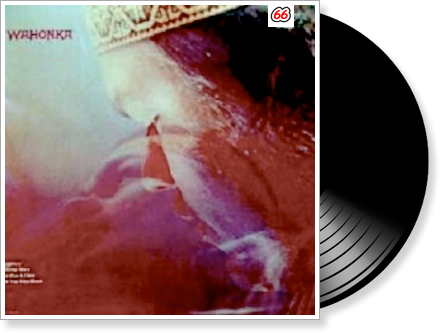
Wahonka was a singer-songwriter in the K-K stable with that beefy voice common in post-Woodstock rock (think Rare Earth, David Clayton-Thomas of Blood, Sweat and Tears, or Jim Peterik with the Ides of March). Although the liner notes and the front cover (a serious, double-exposure photo of long-haired, mustachioed Wahonka bathed in psychedelic lights) to his self-titled Super K album make him sound like a sensitive, introspective Singer of Sad Songs and Teller of Truths, he’s essentially singing the same old bubblepop hash that K-K is famous for. (It’s still a good listen, “There Was A Time”, not to be confused with the James Brown show stopper, could be a snarling, garage-punk tune if they beefed up the guitars.) (Max Collodie)
Disclaimer: The link below may point to content that is copyrighted. redtelephone66 only provides this link with the understanding that you are responsible for the content you download. redtelephone66 does not engage in music piracy, nor do we do host, fileshare, or otherwise trade in copyrighted works.
Pat Boone – Departure (1969)
Title: Departure
Year: 1969
Format: LP
Label: Tetragrammaton
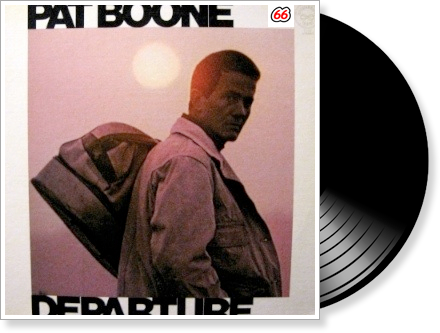
Departure was Pat Boone’s only album for the short lived Tetragrammaton label. It is, as the title suggests, a clean break from most everything he had done before. It was released in early 1969 and consists of contemporary material that focuses on compositions by John C. Stewart, John D. Loudermilk, Biff Rose, and Roger Dollarhide. The album’s sharp contrast to the Pat Boone of 1955-1968 is a kind of earlier version of a new musical direction that he took with his In A Metal Mood CD of 1997 (and which was, in actuality, a much greater departure).
Ironically, Departure’s best tracks are its more forceful Rock songs, since it was mainly the subdued stuff that had earned Boone his reputation as a singer. Worthy of mention are the hard-hitting “Bad News,” “I’ve Got A Secret,” “Break My Mind,” as well as the terrific leadoff track “What’s Gnawin’ At Me.” “July, You’re A Woman” is a mixture of Country, Rock, and Folk that has a “Gentle On My Mind” (Glen Campbell) flavor to it, even though it’s far less gentle. (The song was released as a single and made a brief chart appearance). “Never Goin’ Back” a driving Country Rock tune – may well have been the album’s top track with some more work and a few more takes. And that’s how it is with several other tracks, as well.
There’s no problem with the material, per se, it’s just that the finished sound does not really sound finished. Some rough edges needed to be ironed out and it seems there was insufficient time allowed to accomplish this. Perhaps due to scheduling constraints they had to be done at the end of too long a day in the recording studio. Just the same, there is enough good with Departure to redeem it. (Arthur Rowe All Music Guide)
Track Listing
1.What’s Gnawing At Me
2.July, You’re A Woman
3.Within My Own Time
4.Song Of The Siren
5.Molly
6.Never Goin’ Back
7.Long Distance
8.No Playing In The Snow
9.I’ve Got A Secret
10.Bad News
11.Break My Mind
12.Friends