

The Section – Forward Motion (1973)
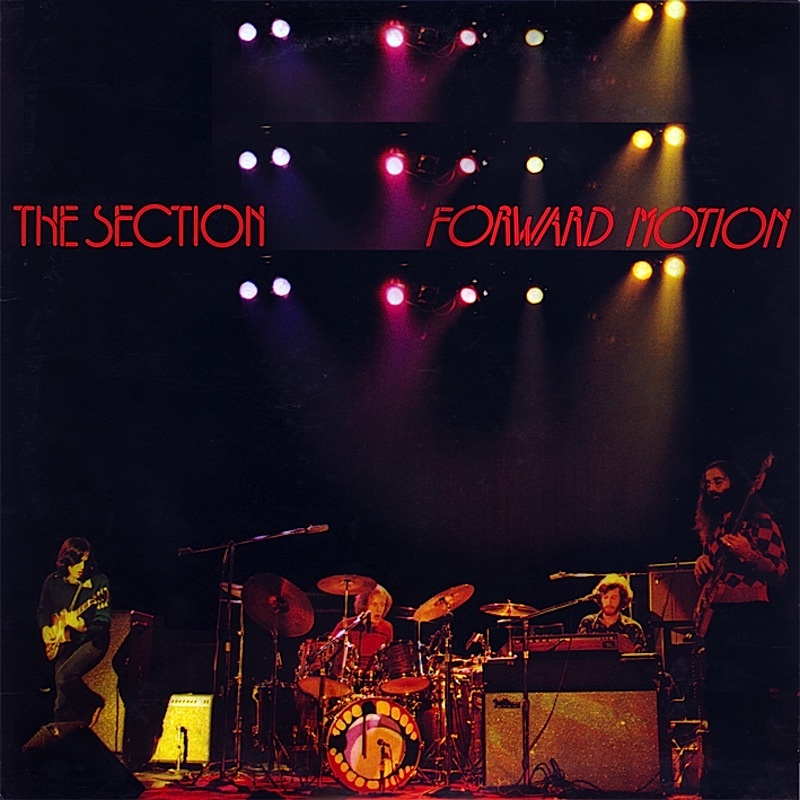
Artist: The Section
Title: Forward Motion
Year: 1973
Format: LP
Label: Warner Brothers
Oh this is sweet. A trancending spacey mellow out in silver lycra jumpsuit of a thing. Itsaa like Zappa and King Crimson find the mogadon man. Look at me, I’m a bird. Weeeeeeeeeeeee. That organ’s a muthef**ker and Kortchmar’s magic fingers massage your inner surf libido.
My lucidity is like the lotus. Warm soup when the weather turns wet and nippy. Fondue ritual and melt into the futon. Brown and orange and yellow and beige soothe you. They are one. Who needs a forward motion. It’s right here where you are there. (King Fahtah RYM)
Track Listing
- Smilin’ Ed
- El Mirador Bolero
- A Kind Of Albatross
- One Drum
- Bullet Train
- Forward Motion
- Baby Lame
- Burning Bush
- Get Down, Piltdown
- The Garden Of Ryoanji
James Vincent – Culmination (1974)
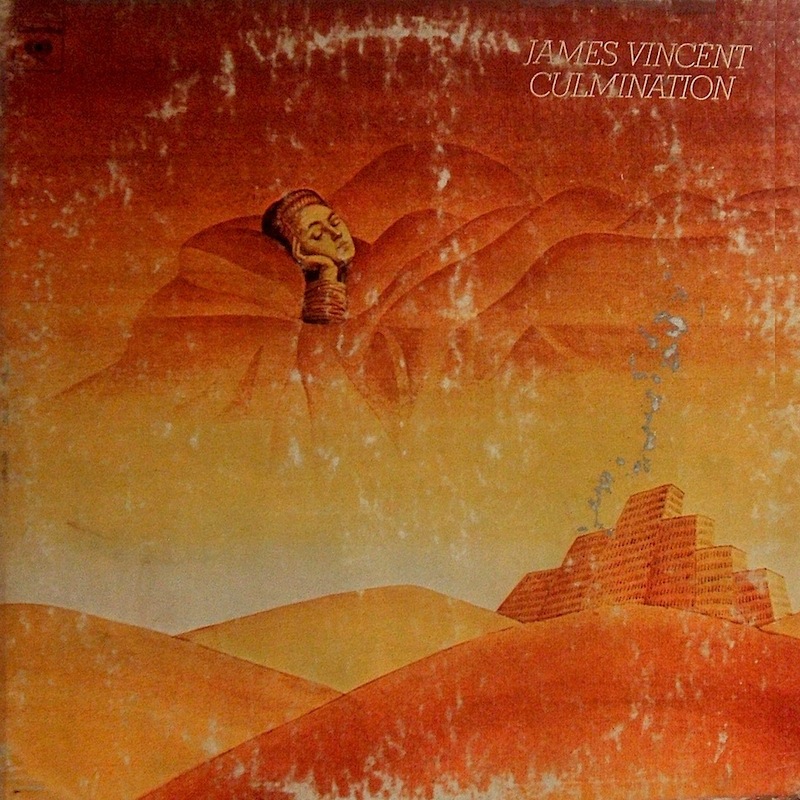
Artist: James Vincent
Title: Culmination
Year: 1974
Format: LP
Label: Columbia
Of all the people of whom it might be said that their not owning a turntable is a shame, the Chicago-born guitarist James Vincent is chief among them. “Yeah, I should get one sometime,” he remarks casually via phone from his Idaho home. “I have a ton of records I’ve played on over the years.”
Vincent, 59, is neither bragging nor exaggerating. Before establishing a successful if short-lived solo career on Caribou Records with Space Traveler (1975) and Waiting for the Rain (1978) — albums that blended jazz, R&B, spirituality, and Vincent’s superlative singing into rich, soulful concoctions — he’d been a studio guitarist at Chess Records (under the name Jim Donlinger, a truncation of his birth name, Dondelinger) and performed with the psychedelically experimental Aorta (Aorta, Aorta 2), Lovecraft (Valley Of The Moon), Jerry Garcia and Howard Wales (on their Hooteroll? tour), Cesar Ascarrunz (Cesar 830), and the Latin-rock combo Azteca (Azteca).
Judging from the “guestbook” at jamesvincent.net, Vincent isn’t alone in remembering his past fondly. “I played the hell out of [Space Traveler] when I was a disc jockey in the 70′s and 80′s in Dallas,” writes a fan. “The music has stayed in my mind ever since.” Writes another: “There has always been something very special and unique in your playing and composing. It was there in the first Aorta album and has carried through to this day, drawing me into a search for everything you have recorded.
My collection numbers 11 albums so far.” Writes a third: “In the circles I travel on the Internet, the first Aorta album is considered a psychedelic masterpiece, and in our humble opinions should go down in rock history as one of the all time greats, right up there with Sgt. Peppers’ and Electric Ladyland.” And a fifth: “Stellar site! Didn’t know you wuz another son of the South Side. We’ll have to chat more later on such topics as Old Town, Wabash, Michigan Ave, the rooming house at 18th & California….” The website itself, in fact, is the creation of an Australian Space Traveler fan. “He offered to do it for free of charge,” says Vincent. “I was kind of blown away.”
Despite the gratification Vincent takes from such appreciation, he launched the site not for nostalgic but for commercial purposes, namely to make available CD versions of his long-out-of-print solo albums and to notify his fans that as of 1997 he has been back in the music-making game. His first release was the mostly instrumental fusion-jazz Second Wind, followed last year by the career-spanning Greatest Hits and the all-new Pure Satisfaction. Mystery of Love — which he describes as “kind of inspired by the Song Of Solomon” — has just been completed.
As the guestbook comments indicate, people remember Vincent as much for his work with Aorta and Lovecraft as for his solo LPs. It was, however, his membership in another seminal Chicago band that would eventually affect his career the most. “The Exceptions was the band that I was in with Peter Cetera in the 60′s,” Vincent recalls, “but we had a parting of the ways. It was at that time of transition, when bands either wanted to stay secure in their little club gigs and do cover tunes or break away and do original material, and Peter did not want to break away. He wanted the security of $300-$400 a week, which back then was a lot of money. So we fired him.”
Vincent laughs at what hindsight and numerous multi-platinum Chicago albums have revealed to be a trick played on The Exceptions by the hand of fate (“I even referred him to Terry Kath for what was called, at the time, the Chicago Transit Authority,” he says). Vincent’s connection with Chicago-the-band, however, would eventually turn out to be significant. His friendships with Robert Lamm and James William Guercio (Chicago’s original overseer and Caribou Records CEO), for instance, led to his playing on the former’s 1974 album, Skinny Boy, and the latter’s financing his solo-album deal, respectively.
But it was his friendship with the band’s original guitarist that made Vincent privy to the darkest chapter in the Chicago story. “I was closer to Terry Kath than [I was to] anybody else in the band,” he recalls, “but I felt like I’d failed the guy. I could see things coming that nobody else seemed to know, yet I didn’t give him the comfort he was looking for, and when he shot himself it blew my mind.”
Official versions of the 24-year-old tragedy leave open Kath’s motives and state of mind at the time of the shooting (the chicagotheband.com website calls the self-inflicted shooting “accidental), and Vincent himself stops short of absolute certainty. “But I’ll tell you what happened. He went over to two of the roadies’ houses, and he always carried a 44 Magnum. He was playing around with his gun, and they said, ‘Terry, quit screwing around with that gun, ’ and he said, ‘Don’t worry. It’s not loaded. ’ He put it up to his head and pulled the trigger. That’s what happened. You go figure.”
There had always been, according to Vincent, an understanding that he would be offered the guitarist’s slot should Kath ever leave the band, and six weeks later he was asked to join. He declined. One reason was the “huge Columbia contract” the group had hanging over its head at the time, a contract that required the formulaic cranking out of more music than they had in them.
Another is that he had, in the wake of Space Traveler’s success, become a Christian. So unappealing to him was pop superstardom at the time that Caribou practically had to force him to record Space Traveler’s follow-up. When he did, it was only with the stipulation that he be allowed to express within it his newfound beliefs. “They said, ‘Oh, no problem, ’” Vincent recalls, laughing, “but they didn’t quite know what that meant until Waiting For The Rain actually came out. They liked the music, but the words were quite offensive to a lot of people.”
In retrospect, it’s hard to understand the objections. Not only were the formal qualities of the music as high as Space Traveler’s, but the lyrics, especially by the haphazard standards of “contemporary Christian music,” were notably well crafted. Nevertheless, Vincent soon found himself without a contract, and not long after recording another excellent Christian album, Enter In, for Sparrow Records in 1980, he retired.
He hadn’t played for years when in 1986 he was asked by Danny Seraphine to audition for Chicago again. He didn’t get the job, but his interest in performing was re-awakened, and a decade later — his professional, personal, and spiritual conflicts finally resolved — he founded BRJ Records and began work on Second Wind. “Space Traveler and Waiting for the Rain created kind of a cult following,”
Vincent observes. “Some days I’ll get a lot of orders, and some days I’ll just get a couple, so I can’t say, ‘This is my retirement, ’ but it’s doing quite well, and it seems to be growing.” For Vincent fans both old and new, such news is good indeed. (Illinois Entertainer)
Track Listing
- Brain Subway
- Controlled Folly
- Plains Of Nazca
- Algernon I
- Duplex
- Divinity
- Freedom Struggle
- Algernon II
- Declamation
The Section – Forward Motion (1973)
Artist: The Section
Title: Forward Motion
Year: 1973
Format: LP
Label: Warner Brothers
Oh this is sweet. A trancending spacey mellow out in silver lycra jumpsuit of a thing. Itsaa like Zappa and King Crimson find the mogadon man. Look at me, I’m a bird. Weeeeeeeeeeeee. That organ’s a muthef**ker and Kortchmar’s magic fingers massage your inner surf libido.
My lucidity is like the lotus. Warm soup when the weather turns wet and nippy. Fondue ritual and melt into the futon. Brown and orange and yellow and beige soothe you. They are one. Who needs a forward motion. It’s right here where you are there. (King Fahtah RYM)
Track Listing
- Smilin’ Ed
- El Mirador Bolero
- A Kind Of Albatross
- One Drum
- Bullet Train
- Forward Motion
- Baby Lame
- Burning Bush
- Get Down, Piltdown
- The Garden Of Ryoanji
James Vincent – Culmination (1974)
Artist: James Vincent
Title: Culmination
Year: 1974
Format: LP
Label: Columbia
Of all the people of whom it might be said that their not owning a turntable is a shame, the Chicago-born guitarist James Vincent is chief among them. “Yeah, I should get one sometime,” he remarks casually via phone from his Idaho home. “I have a ton of records I’ve played on over the years.”
Vincent, 59, is neither bragging nor exaggerating. Before establishing a successful if short-lived solo career on Caribou Records with Space Traveler (1975) and Waiting for the Rain (1978) — albums that blended jazz, R&B, spirituality, and Vincent’s superlative singing into rich, soulful concoctions — he’d been a studio guitarist at Chess Records (under the name Jim Donlinger, a truncation of his birth name, Dondelinger) and performed with the psychedelically experimental Aorta (Aorta, Aorta 2), Lovecraft (Valley Of The Moon), Jerry Garcia and Howard Wales (on their Hooteroll? tour), Cesar Ascarrunz (Cesar 830), and the Latin-rock combo Azteca (Azteca).
Judging from the “guestbook” at jamesvincent.net, Vincent isn’t alone in remembering his past fondly. “I played the hell out of [Space Traveler] when I was a disc jockey in the 70′s and 80′s in Dallas,” writes a fan. “The music has stayed in my mind ever since.” Writes another: “There has always been something very special and unique in your playing and composing. It was there in the first Aorta album and has carried through to this day, drawing me into a search for everything you have recorded.
My collection numbers 11 albums so far.” Writes a third: “In the circles I travel on the Internet, the first Aorta album is considered a psychedelic masterpiece, and in our humble opinions should go down in rock history as one of the all time greats, right up there with Sgt. Peppers’ and Electric Ladyland.” And a fifth: “Stellar site! Didn’t know you wuz another son of the South Side. We’ll have to chat more later on such topics as Old Town, Wabash, Michigan Ave, the rooming house at 18th & California….” The website itself, in fact, is the creation of an Australian Space Traveler fan. “He offered to do it for free of charge,” says Vincent. “I was kind of blown away.”
Despite the gratification Vincent takes from such appreciation, he launched the site not for nostalgic but for commercial purposes, namely to make available CD versions of his long-out-of-print solo albums and to notify his fans that as of 1997 he has been back in the music-making game. His first release was the mostly instrumental fusion-jazz Second Wind, followed last year by the career-spanning Greatest Hits and the all-new Pure Satisfaction. Mystery of Love — which he describes as “kind of inspired by the Song Of Solomon” — has just been completed.
As the guestbook comments indicate, people remember Vincent as much for his work with Aorta and Lovecraft as for his solo LPs. It was, however, his membership in another seminal Chicago band that would eventually affect his career the most. “The Exceptions was the band that I was in with Peter Cetera in the 60′s,” Vincent recalls, “but we had a parting of the ways. It was at that time of transition, when bands either wanted to stay secure in their little club gigs and do cover tunes or break away and do original material, and Peter did not want to break away. He wanted the security of $300-$400 a week, which back then was a lot of money. So we fired him.”
Vincent laughs at what hindsight and numerous multi-platinum Chicago albums have revealed to be a trick played on The Exceptions by the hand of fate (“I even referred him to Terry Kath for what was called, at the time, the Chicago Transit Authority,” he says). Vincent’s connection with Chicago-the-band, however, would eventually turn out to be significant. His friendships with Robert Lamm and James William Guercio (Chicago’s original overseer and Caribou Records CEO), for instance, led to his playing on the former’s 1974 album, Skinny Boy, and the latter’s financing his solo-album deal, respectively.
But it was his friendship with the band’s original guitarist that made Vincent privy to the darkest chapter in the Chicago story. “I was closer to Terry Kath than [I was to] anybody else in the band,” he recalls, “but I felt like I’d failed the guy. I could see things coming that nobody else seemed to know, yet I didn’t give him the comfort he was looking for, and when he shot himself it blew my mind.”
Official versions of the 24-year-old tragedy leave open Kath’s motives and state of mind at the time of the shooting (the chicagotheband.com website calls the self-inflicted shooting “accidental), and Vincent himself stops short of absolute certainty. “But I’ll tell you what happened. He went over to two of the roadies’ houses, and he always carried a 44 Magnum. He was playing around with his gun, and they said, ‘Terry, quit screwing around with that gun, ’ and he said, ‘Don’t worry. It’s not loaded. ’ He put it up to his head and pulled the trigger. That’s what happened. You go figure.”
There had always been, according to Vincent, an understanding that he would be offered the guitarist’s slot should Kath ever leave the band, and six weeks later he was asked to join. He declined. One reason was the “huge Columbia contract” the group had hanging over its head at the time, a contract that required the formulaic cranking out of more music than they had in them.
Another is that he had, in the wake of Space Traveler’s success, become a Christian. So unappealing to him was pop superstardom at the time that Caribou practically had to force him to record Space Traveler’s follow-up. When he did, it was only with the stipulation that he be allowed to express within it his newfound beliefs. “They said, ‘Oh, no problem, ’” Vincent recalls, laughing, “but they didn’t quite know what that meant until Waiting For The Rain actually came out. They liked the music, but the words were quite offensive to a lot of people.”
In retrospect, it’s hard to understand the objections. Not only were the formal qualities of the music as high as Space Traveler’s, but the lyrics, especially by the haphazard standards of “contemporary Christian music,” were notably well crafted. Nevertheless, Vincent soon found himself without a contract, and not long after recording another excellent Christian album, Enter In, for Sparrow Records in 1980, he retired.
He hadn’t played for years when in 1986 he was asked by Danny Seraphine to audition for Chicago again. He didn’t get the job, but his interest in performing was re-awakened, and a decade later — his professional, personal, and spiritual conflicts finally resolved — he founded BRJ Records and began work on Second Wind. “Space Traveler and Waiting for the Rain created kind of a cult following,”
Vincent observes. “Some days I’ll get a lot of orders, and some days I’ll just get a couple, so I can’t say, ‘This is my retirement, ’ but it’s doing quite well, and it seems to be growing.” For Vincent fans both old and new, such news is good indeed. (Illinois Entertainer)
Track Listing
- Brain Subway
- Controlled Folly
- Plains Of Nazca
- Algernon I
- Duplex
- Divinity
- Freedom Struggle
- Algernon II
- Declamation
Steve Allen featuring Gabor Szabo – Songs For Gentle People (1967)

Title: Songs For Gentle People
Year: 1967
Format: LP
Label: Dunhill
Brought To You By The Big “N”
Here, producer Bob Thiele concocted, perhaps, the least successful of his musical alliances. Thiele’s inspired pairings already included Ellington with Armstrong and Ellington with Coltrane.
He also arranged (around the same time) for Johnny Hodges to record with Lawrence Welk and would soon, more successfully, unite Allen with arranger Oliver Nelson. But Allen’s cocktail piano pop style stirred with Gabor Szabo’s edgier “in” sound seems like a miscalculation even in theory. Commercial intentions were no doubt considered, especially given many of the titles present and the brief running time of each.
SONGS FOR GENTLE PEOPLE fails, primarily, because Thiele shows his hand. There are at least two recordings here — a partially complete Steve Allen album and several outstanding Szabo leftovers.
Thiele has the guitarist drop in some doodles here and there over a series of Allen’s ‘summer of love’ recordings (“Here Comes Sgt. Pepper,” “So Nice,” “San Francisco,” “Something Stupid,” “Groovin’” and “59th Street Bridge”)
Despite pedestrian arrangements and Allen’s often cloying harpsichord, the guitarist seems game and shows how economically he can embellish a theme. As Szabo’s jagged sound waxes melodic, it becomes much missed when absent from such forgettable themes as “Here Comes Sgt. Pepper,” ” Something Stupid,” and “Green.”
Likewise, Allen seems dubbed on top of Szabo’s three utterly distinctive — and worthwhile — originals and, as a result, seems reduced to merely comping. At such stylistic odds with the rest of the material, these songs undoubtedly employ an alternative rhythm section (featuring Jimmy Stewart)
They certainly engage the listener in the way they open spaces for improvisation and hints of interaction lacking elsewhere on the record. “Fox” is an infectious melody built on a rhythmic electric-bass ostinato.
Allen surprises with a riveting harpsichord solo (suspended on well-used block chords). Szabo then spins a rousing, rolling cadenza into one of his hypnotic frenzies. (Allen added lyrics to this song, which produced a vocal version titled “Are You There” on Szabo’s WIND, SKY AND DIAMONDS album.).
“Flowers and Love,” though merely a vamp, is significant not only in spotlighting Gabor’s first recorded use of feedback, but Jimmy Stewart’s introduction provides what became the foundation for Szabo’s future presentations of his significant composition, “Mizrab.”
The 12-bar blues of “Flower Revolution” (Szabo probably had little to do with the “flower power” theme of these titles) lets the guitarist just have a good time and play. Even at tempos like this, Szabo’s melodicism is apparent.
His playing has a singing, almost story-like quality to it which becomes evident upon repeated listens. Allen’s support on piano is more aggressive and engaging here; yet his squeaky-clean approach is a bit forced.
A multitude of misjudgments will eradicate SONGS FOR GENTLE PEOPLE from ever achieving any sort of acknowledgment (not even producer Bob Thiele remembered it in 1995).
While both Steve Allen and Gabor Szabo have shown, elsewhere, talents history may endure, neither is considered significant enough in the final analysis to rate the resurrection of such doomed material.
As a result, rewarding Szabo performances like “Fox,” “Flowers and Love” and “Flower Revolution” endure a fate that keeps them unheard by many of Szabo’s admirers. (Doug Payne)
Track Listing
- Here Comes Sgt. Pepper
- So Nice
- San Francisco (Be Sure To Wear Some Flowers In Your Hair)
- Something Stupid
- Groovin’
- Fox
- Keep Telling Me
- Flowers And Love
- 59th Street Bridge
- Green
- Flower Revolution
Jeremy Steig – Energy (1971)
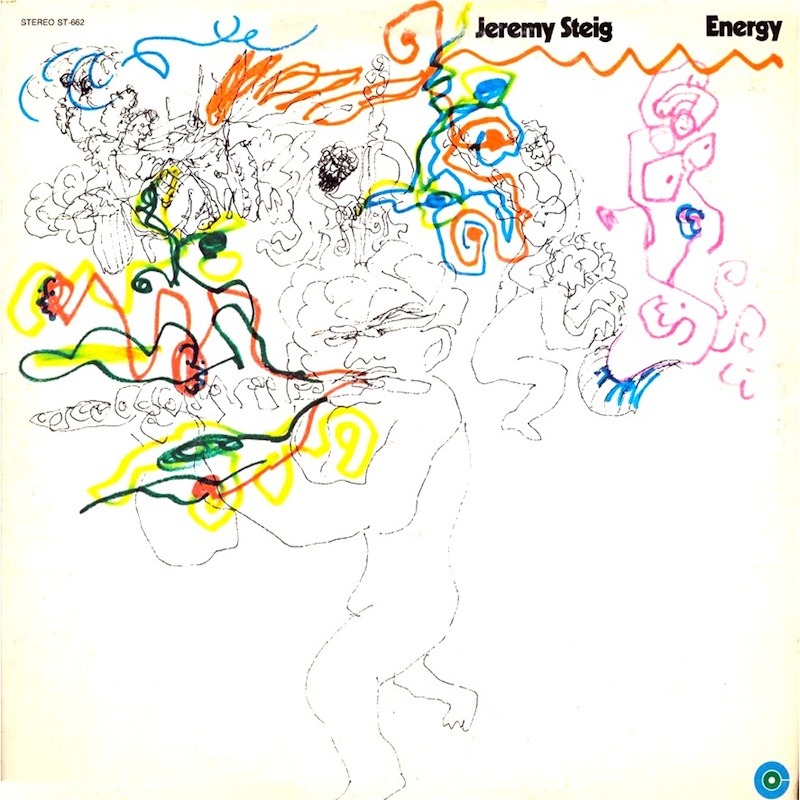
Artist: Jeremy Steig
Title: Energy
Year: 1971
Format: LP
Label: Capitol
One of the earliest and finest jazz-rock/funk flutists, Jeremy Steig’s an outstanding soloist. He’s mastered the entire flute family, including bass, and also plays piccolo well. He has a similarily rich, classically pure tone and timbre like James Newton or Hubert Laws, and uses almost as many devices such as tongue fluttering, humming and swirling lines.
But he’s not as blues or swing oriented, and his associations include working in the early ’60s with Richie Havens, and heading Jeremy And The Satyrs in 1967. Steig’s father is the famous artist William Steig; he began playing recorder at six and took flute lessons at 11. Steig attended the High School of Music and Art.
He played with Gary Peacock and Paul Bley in the early ’60s, then led a jazz-rock combo in 1967 backing Tim Hardin before heading his own groups. Steig played with Mike Manieri and Eddie Gomez in the ’60s, and Jan Hammer in 1970.
He began using electronics and synthesizers in the ’70s, and toured Europe both as a soloist and heading quartets and quintets. He recorded with Gomez and Joe Chambers in the late ’70s, and did sessions with Mike Nock, Karl Ratzer, Nana Vasconcelos, Ray Baretto, Steve Gadd and Jack DeJohnette in the ’80s. (Delvin Bishop Cutterfield)
Track Listing
- Home
- Cakes
- Swamp Carol
- Energy
- Down Stretch
- Give Me Some
- Come With Me
- Dance Of The Mind
Minnesoda – Minnesoda [Vinyl] (1972)
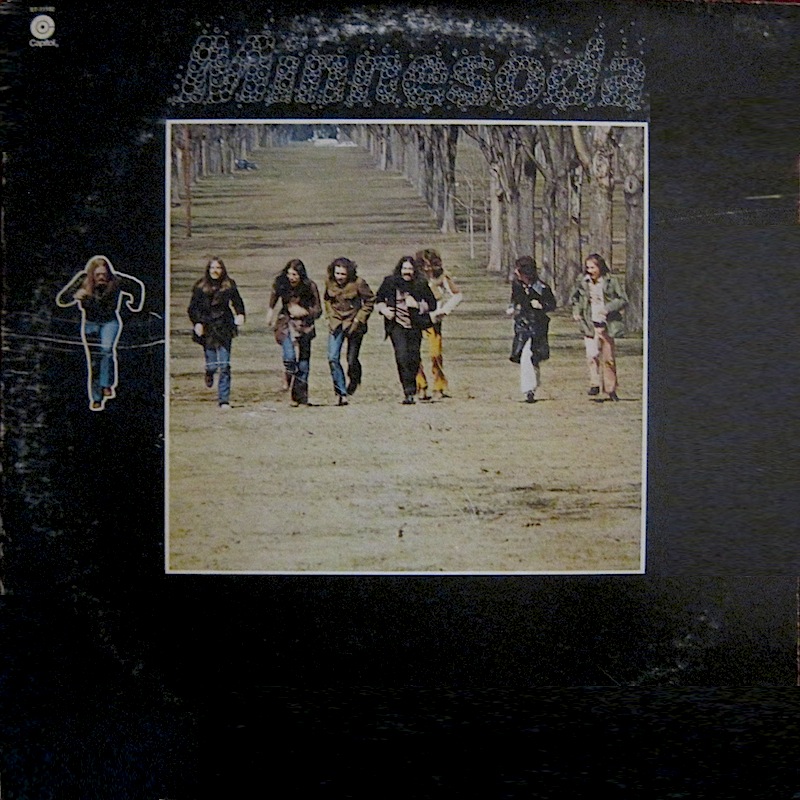
Title: Minnesoda
Year: 1972
Format: LP
Label: Capitol
Minnesoda did an obscure but fairly interesting self-titled jazz-rock album for Capitol in 1972. Produced by Bob Johnston (famous for his work with Bob Dylan, Johnny Cash, Leonard Cohen, Simon & Garfunkel, and numerous others).
The group consisted of John Elms (vocals), Ed Shaw (trumpet), Rick Warner (tenor sax), Don Lehnhoff (trombone), Dave Gustafson (tenor sax), Charles Dahl (guitar), Bob Anderson (drums) and Wayne Cafarella (bass).
The record was in limited respects like the first recordings of Chicago and, more distantly, Blood, Sweat & Tears in its jazz-rock-with-vocals format. Minnesoda however had a substantially greater funk flavor, and a speedier, more aggressive edge to their material, though they didn’t have the pop-friendly melodies of the more renowned bands.
Half of Minnesoda’s eight members were on horns, with tenor saxophonist Dave Gustafson playing flute as well, adding to the rock band-as-big-band feel.
A couple of the musicians in Minnesoda had performed with name acts prior to the album. Trombonist Don Lehnhoff had played with Mitch Ryder And The Detroit Wheels.
Much more unexpectedly, trumpeter Eddie Shaw had in the 1960s been the bassist for the Monks, the 1960s band of ex-GIs who recorded an album of ludicrously minimalist, furious pre-punk in Germany in the mid-1960s, a record that was unknown by 1972, but which by the 1990s had an avid cult following.
Minnesoda were at first called Copperhead, but without the band’s knowledge, they were renamed Minnesoda (in a nod to their Minnesota origins) for the Capitol album. (They were no relation to another band called Copperhead, including ex-Quicksilver Messenger Service guitarist John Cipollina, that also recorded in the early 1970s.)
Johnston recorded a second album with the band that went a little further into jazz, and further away from any rough similarities with Chicago, although they were still present. But Johnston was unable to get the LP released, and Minnesoda remained their only issued LP. (Richie Unterberger)
Track Listing
- Let’s Get It On
- Smoking Bitch
- Misery Isn’t Free
- Shop Talk
- When Is My Season
- Flex
- Child’s Play
- Party
- Maggie
The Section – The Section (1972)
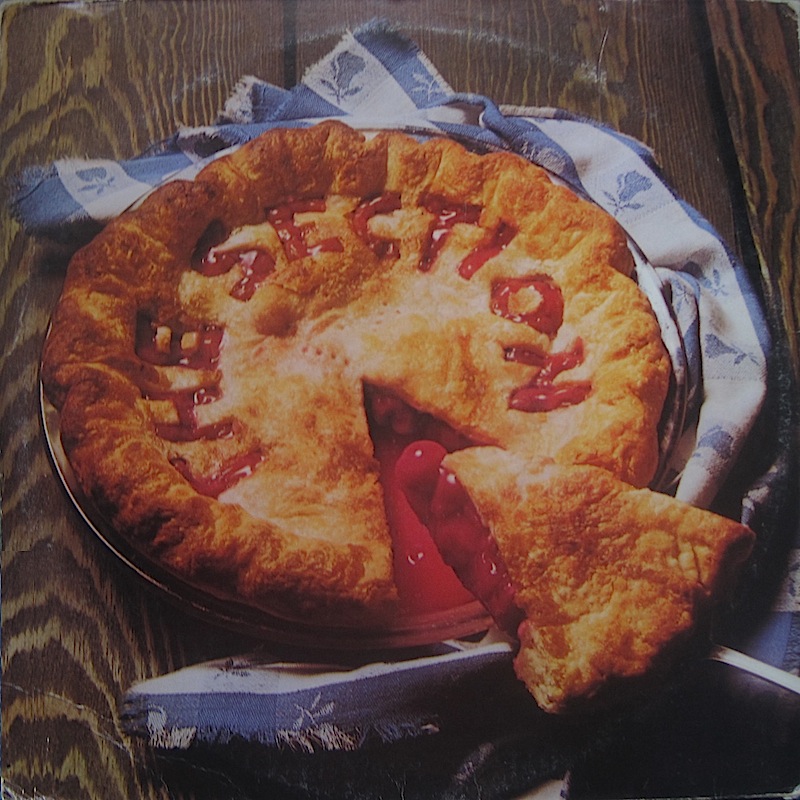
Title: The Section
Year: 1972
Format: LP
Label: Warner Brothers
After leaving the west coast group The City (see their “Now That Everything Has Been Said” post of June 17, 2010), Danny Kortchmar had settled into the security of an in-demand L.A. session musician, and along with Lee Sklar (bass), Craig Doerge (keyboards) and Russ Kunkel (drums), they formed a backup band to accompany James Taylor on his first National tour.
The band decided to stay together afterwards, calling themselves the Section, putting out three records, “The Section” [1972] and “Forward Motion” [1973] on Warner Brothers and finally “Fork It Over” [1977] on Capitol.
On this, their first album, they are joined by Michael Brecker on soprano sax and flute. All the tracks are original compositions except a re-working of the Otis Redding hit”Sitting On The Dock Of The Bay”.
The music is quite surprising considering the source, and at times reminding me (at times) of a mellower Weather Report or the “Sleep Dirt” Frank Zappa” period, featuring some wonderful arrangements by the group. The album which has been long out of print, was released a few years ago on CD in Japan. (Prairie Prince Minsky)
Track Listing
- Second Degree
- Same Old Same Old
- Sporadic Vacuums Of Thought
- Sitting On the Dock Of The Bay
- Holy Frijoles
- Doing The Meatball
- Swan Song
- The Thing What Is
- Mah-Hoo-Dah-Vah l)
- Zippo Dippo
Shades Of Joy – Shades Of Joy (1969)
Artist: Shades Of Joy
Title: Shades Of Joy
Year: 1969
Format: LP
Label: Fontana
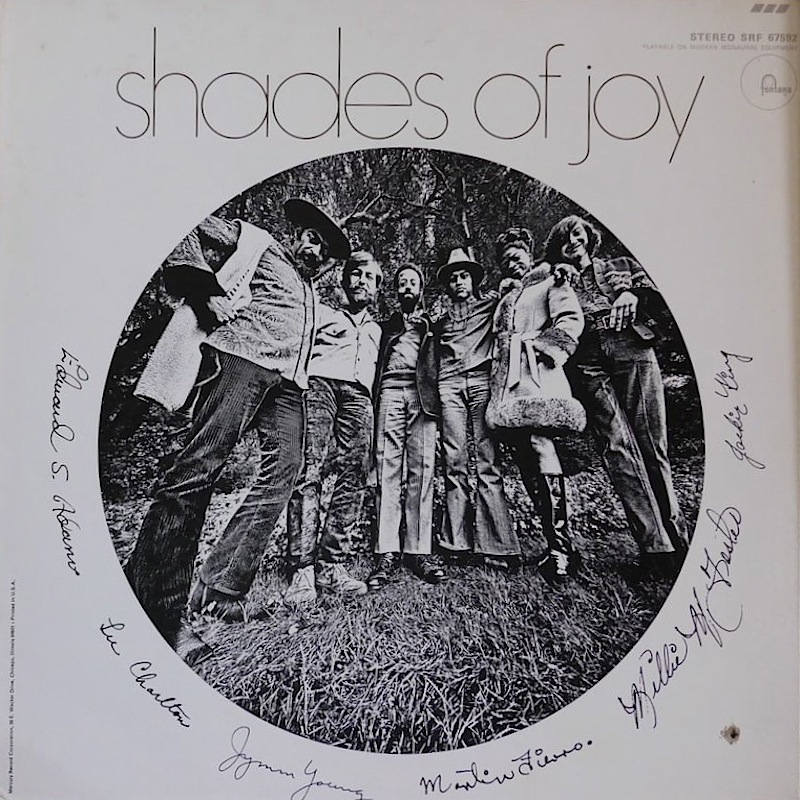
Shades Of Joy were Martin Fierro (Alto Tenor, Soprano Sax, Flute, Vocals), Edward Adams (Bass), Jose Rodriguez (Drums, Tambourine), Jackie King (Guitar, Sitar), Jymm Young (Piano, Flugelhorn), Lee Charlton (Sound Effects, One String Violin), and Millie Foster (Vocals).
Although based in San Francisco, California, the founders of this jazz rock unit were Texan émigrés. Leader Martin Fierro (horns,vocals) was a former member of the Sir Douglas Quintet and Mother Earth, while Millie Foster (vocals), Jackie King (San Antonio, Texas, USA; guitar, sitar), Jymm Young (keyboards), Edward Adams (bass) and Jose Rodrigues (drums) were veterans of various avant garde and blues bands. The band’s albums were undeniably competent with top notch players. (fcvinyl
Track Listing
- Icarus Revealed
- Come And Throw Rye Bread
- Crying Bag
- 4th Stride (Truncated)
- 4th Stride
- It’s Time
- Bye, Bye Love
- Andy’s Dream
- Blues For Millie
- Tada
Fountainhead – Fountainhead (1970)
Title: Fountainhead
Year: 1970
Format: LP
Label: GWP
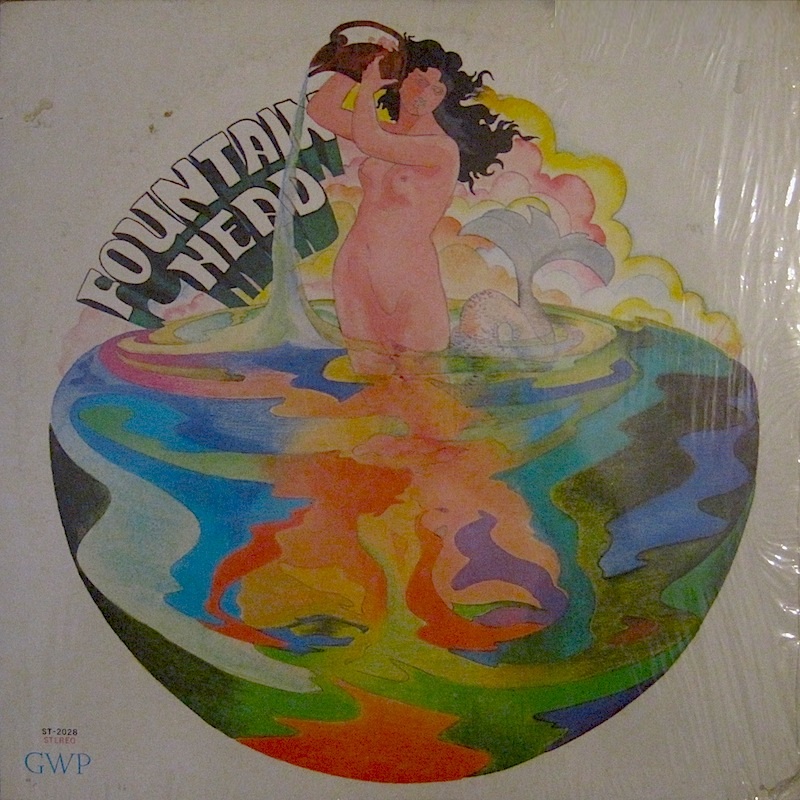
Fountainhead is a Southern Florida jazz-rock group consisting of Gus Mas (tenor saxophone), Eddie Crane (alto saxophone), Vinnie Tanno (lead trumpet), Phil Gilbert (trumpet), Ken Faulk (trumpet), Dolphe Castellano (piano), Lee Schwartz (drums) and David Glatts (bass).
The album, which only contains four selections, was arranged by Mike Lewis and produced by
Teo Macero and includes two Mike Lewis originals (“Orchestration 70″ and “Ballet”) which are the two long tracks, and two covers (“Mac Arthur Park” and “Honky Tonk Woman”). A short, but fantastic Lp. (Jack Dominilla)
Track Listing
- Mac Arthur Park
- Orchestration 70
- Ballet
- Honky Tonk Woman