
Osmosis – Osmosis (1970)
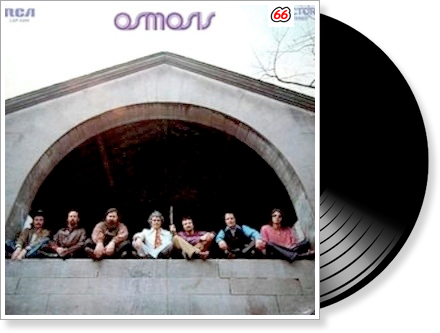
Title: Osmosis
Year: 1970
Format: LP
Label: RCA Victor
Originally released on RCA this 1970 progressive Jazz rock outfit created a full blown rock based performance with two drummers. The wall of sound was amazing with alto and soprano saxophones- courtesy of the great Charlie Mariano, whose career since 1944 has included bebop with Shelly Manne and electronic fusion with Eberhard Weber’s Colours- wailing over the wall of sound. The mood ranges from spacey and saxy to full on heavy stoner acid doom. (Freak Emporium)
Track Listing
1.Of War And Peace (In Part)
2.Beezlebub
3.Thoughts Often Stray
4.Sunrise
5.Shadows
6.Adrift
7.Sunlight
8.Scorpio Rising
9.Please Let Me Go
10.Geoffrey’s Tune
11.Of War And Peace (In Full)
12.Sleep, My Love (Epilogue)
Bruce MacKay – Midnight Minstrel (1967)

Title: Midnight Minstrel
Year: 1967
Format: LP
Label: ESP Oro
Although the ESP label is most known for its far-out free jazz and wacky rock bands, it also made a few bids at recording folk-rock in the last half of the 1960s, albeit folk-rock of a somewhat off-kilter kind. In addition to Pearls Before Swine, there was Randy Burns and the even more obscure Bruce MacKay, who did an album for the company in 1967. The self-titled LP combined elements of Bob Dylan (in the free-associative rambling wordplay), Tim Buckley (in the reverbed guitar lines), Donovan, and the aforementioned Pearls Before Swine without adding up to anything substantial.
The long-winded songs tend to drift along interminably, without enough melodic interest and lyrical insight to spark, let alone maintain, interest. It branches out a bit beyond the usual folk-rock guitar/organ instrumentation with some flute, brass, and (on “The Song About the Railroad Shack”) a dueting woman vocalist. The ESP ethic comes into play with ragged timekeeping and execution, implying that the songs were either somewhat improvised or not given much, if any, of a polish in the studio. ~ Richie Unterberger, All Music Guide
Disclaimer: The link below may point to content that is copyrighted. redtelephone66 only provides this link with the understanding that you are responsible for the content you download. redtelephone66 does not engage in music piracy, nor do we do host, fileshare, or otherwise trade in copyrighted works.

V.A. – CTV’s After Four (1968)

Title: CTV’s After Four
Year: 1968
Format: LP
Label: Yorkville
The big selling point of Toronto’s Yorkville label sampler CTV After Four is, of course, the very FIRST Pink Floyd cover ever, a KILLER crude garage psych take on “See Emily Play” by Three To One, whoever they were. Amazing, too, considering it was a cover recorded the SAME YEAR as the original, which means that Three To One were stealing from the Floyd THIRTY FIVE YEARS before Mars Volta got around to it.
That’s some foresight. And while I can’t take anything away from the original (it’s a classic), I kinda prefer this even trippier version, the addition of an avalanche of Star Trek special effects and a little girl who asks “Everyone know how to play” are two nice touches. And for a band to improve on the psychedelic quotient of 1967 Floyd, well, that’s quite an accomplishment, isn’t it.
But there’s more to CTV After Four than that. Scarlet Ribbon’s “Four in the Morning” is a growling garage punker that rides a cool spy theme riff (think a crude teen band take on “Lucifer Sam“ again with the Pink Floyd referencing). And the legendary Ugly Ducklings surprise us with a very unique, orchestrated baroque psych track, “Epilogue”, very different from their album and very British, like, er, that band with Syd Barrett. Am I sensing a THEME here?
There’s also a trippy hippie version of “Downtown” with echoed-out vocals and strumming mandolin performed by one Patricia-Anne, and redubbed “Changin’Time”. And the oddly-named Willapuss Wallapuss turn in a superb Beatles-meets-Brian Wilson slice of harmony pop called “To Jone” stoned soft pop vocals riding on a bouncy bed of banging barrelhouse Paul McCartney piano.
So you can see, not EVERYTHING here brings to mind Pink Floyd. But if you’re one of the handful of people who believe Syd Barrett’s not REALLY dead, you might wanna start by checking the phone directories in Toronto. Something’s going on up there. (Collector’s Frenzy)
Track Listing
1.Four In The Morning [The Scarlet Ribbon]
2.Mary Jane [Ronnie Hawkins]
3.If I Were A Carpenter [The Sugar Shoppe]
4.Do It To ‘Em [The Big Town Boys]
5.To Jone [The Willapuss Wallapuss]
6.Epilogue [The Ugly Ducklings]
7.Only 16 [Terry Black]
8.If You Love Me [Susan Taylor]
9.Changin’ Time [Patrician – Anne]
10.See Emily Play [Bob Francis And The Three To One]
11.Winchester Cathedral [The Chain Rattlers Orchestra]
12.Kazoo [Bonnie & Clyde]
13.Sweet Soul Music [The Majestics]
14.You Keep Me Hangin’ On [Teak Wood]
15.The Joke [Ritchie Knight And The Midnights]
16.Dry Your Eyes [The Stich In Tyme]
The Happenings – Piece Of Mind (1969)
Title: Piece Of Mind
Year: 1969
Format: LP
Label: Jubilee
Geez, if you’d asked me about The Happenings I probably would’ve smirked at you and said something along the lines of ‘lame assed, Tokens-styled pop group’. Shows you that I don’t know squat. Actually, for the most part my snide comments would have been right on the mark. What I didn’t know is that late in their careers the group somehow managed to record one all but ignored killer album. 1969′s self-produced “Piece of Mind” is simply unlike anything else in their catalog. Like many of their contemporaries (The Four Seasons and The Tokens readily come to mind), this album was apparently a last ditch effort to modernize the group’s sound in the hopes of expanding their rapidly dwindling audience.
The results aren’t perfect, but anyone who knows these guys for hits such as ‘See You In September’ and ‘Go Away Little Girl’ will be amazed to hear original material such as ‘Heartbeat’, ‘Living In Darkness’ and ‘Be My Brother’. With bassist Dave Libert and guitarist Bob Miranda responsible for the majority of the twelve tracks, the band turned in surprisingly impressive slices of lite-psych and rock. An impressive blend of their patented harmony vocals and some interesting studio effects, the set’s high points are probably the rocking ‘Don’t You Think It’s Time’ and the six minute plus ‘Imagine’. In addition to an interesting song structure the latter even sports a cool Eastern-flavored Bernie LaPorta guitar solo.
One more song like that and the LP would’ve warranted four stars. Besides, ever imagine you’d hear these guys singing a song entitled ‘Where Do I Go / Be In (Hare Krishna)’? Mind you, old habits die hard and it was probably too much to expect the group to totally abandon their old ways. ‘Cold Water’, ‘New Day Comin’ and the country-flavored ‘Piece of Mind’ were sufficiently schmaltzy to appeal to their older fans. The bizarre cover art is almost worth an additional half star. (Bad Cat)
Track Listing
- Where Do I Go/Be-In (Hare Krishna)
- Heartbeat
- Living In Darkness
- Cold Water
- Be My Brother
- New Day Comin’
- Imagine
- Let’s Do Something
- Piece Of Mind
- Don’t You Think It’s Time
- We’re Gonna Make Them Care
David Hemmings – Happens [Vinyl] (1967)
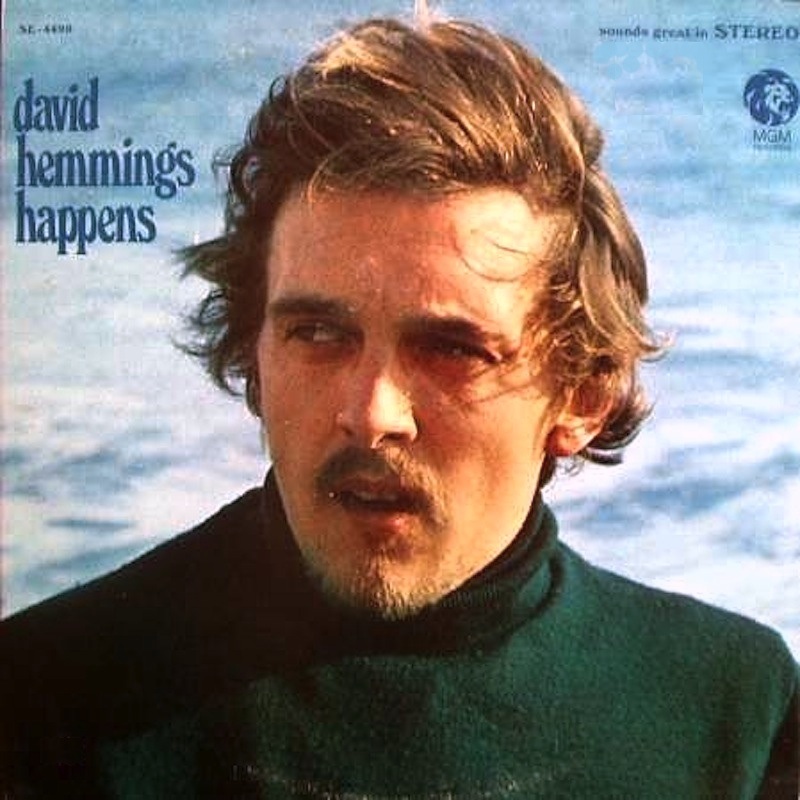
Title: Happens
Year: 1967
Format: LP
Label: MGM
Even though I knew what this was when I found it, I didn’t have high hopes for it being good. I figured guy from Blow Up + record that bombed = bogus psych moves. I mean, come on, how good could it be? The guy was an actor!
Well, for one, Hemmings has a good voice. And for two and three, the production is excellent and the song selection (many penned by Byrds Roger McGuinn and Chris Hillman, who back him on this) is solid. Most reviews I’ve read of this disparage that there are some “period sounding” tracks.
There is a healthy amount of quasi-Indian background music, and improvised lyrics – but let’s face it, sitars sound cheesy in all rock music. You either like it or you don’t. If you are not prepared for at least a little bit of period cheese, you probably shouldn’t bother with this type of stuff in the first place. Overall I find this to be an enjoyable LP that holds up well to repeat listenings. (Waxidermy)
Track Listing
- Back Street Mirror
- Reason To Believe
- Good King James
- Bell Birds
- Talkin’ L.A.
- Anathea
- After The Rain
- War’s Mystery
- The Soldier Wind
Toy Factory – Toy Factory (1970)
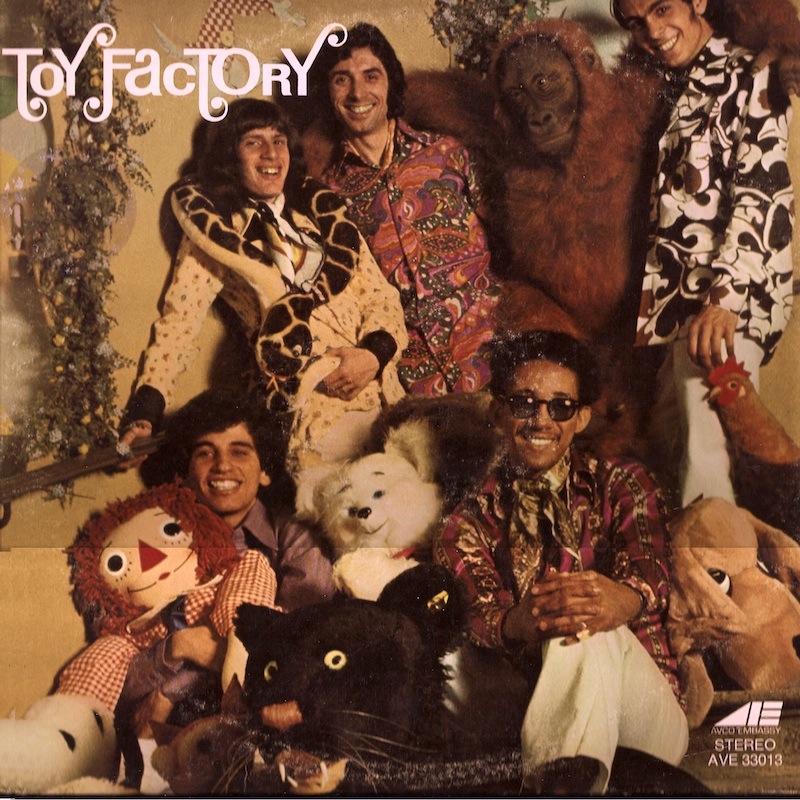
Title: Toy Factory
Year: 1970
Format: LP
Label: Avco Embassy
Though we haven’t been able to track down much bibliographical information on this late-60s bi-racial outfit, we think they were from Long Island, New York. From the liner notes on their LP we can also tell you Greg Weiss was the lead singer and was responsible for writing roughly half the material. The rest of the line up consisted of bassist Bill, guitarist Billy, drummer Joey and keyboard player Sal (great detail there).
Produced by Bernie Lawrence, the majority of 1970’s “Toy Factory” found the band trying to fight their way through rather faceless MOR pop. Lead singer Greg Weiss had a decent voice, but on tracks such as “What Is Youth”, “To Live or Die” and “Honey, Forever” he employed an irritating faux-English accent that recalled Davy Jones (he sounds like David Hemmings to me Bad Cat!!!). He also had an irritating habit of throwing mock sobs and groans into the mix (“When I’m with You” and “Honey Forever”).
Strike three were the occasional French lyrics (don’t pick on the French Bad Cat!!!) he tossed into the mix (“To Live or Die” and “Honey Forever”). Curiously, the band was at their best when they cut loose and go for a harder rock sound. In this case, the pseudo-psychedelic “No Rhyme To Orange” (sporting a nice fuzz guitar solo) and “Things” was a nifty slice of blue-eyed soul. “Summertime” also found the band turning in one of the weirdest George Gershwin covers we’ve ever heard (pretty decent guitar here too Bad Cat!!!). This one certainly won’t change your life, but it’s one of those period failures that’s worth checking out. (BAD CAT).
Track Listing
- What Is Youth
- To Live Or To Die
- Dear Girl
- Yesterday’s Love
- No Rhyme To Orange
- Summertime
- When I’m With You
- Things
- Honey Forever
- Little Girl
Ferris Wheel – Ferris Wheel (1970)
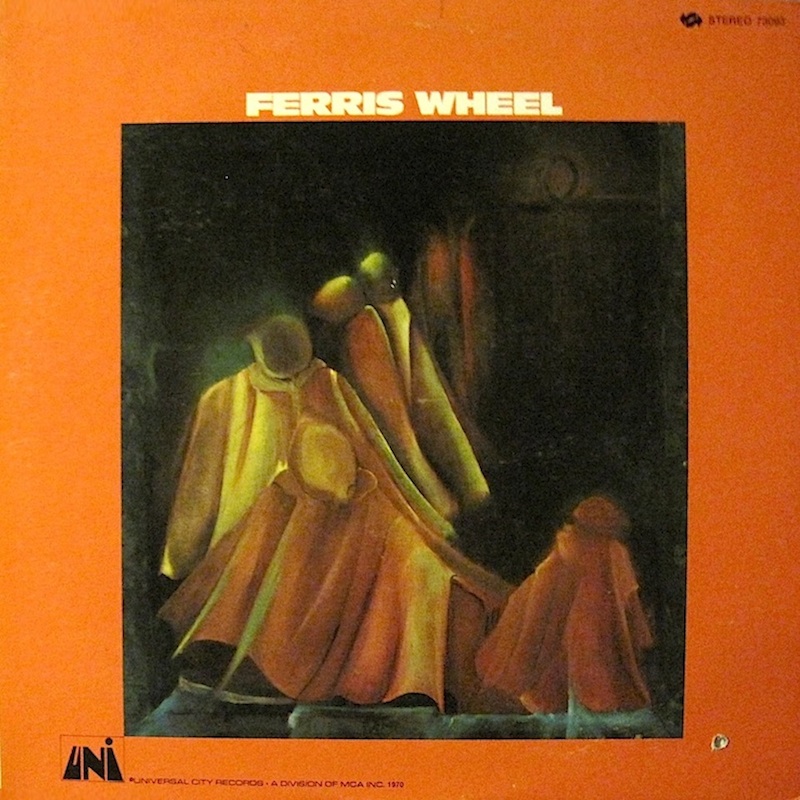
Title: Ferris Wheel
Year: 1970
Format: LP
Label: UNI
The Ferris Wheel were one of England’s great lost musical treasures of the mid- to late ’60s — immensely popular among club audiences, they were never able to translate their ability to win over crowds into chart success, but they made some great records while they were trying. The group came together out of the remnants of two earlier British bands, Emile Ford & the Checkmates and West Five. Dave Sweetman (saxophone), George Sweetman (bass, vocals), and Barry Reeves (drums) had played in the Checkmates, the backing band to Emile Ford (who was half-brother to Dave and George Sweetman), while Mike Liston (keyboards, vocals) had been with a group called the West Five.
Trinidad-born Diane Ferraz (vocals) had recorded as part of the duo of Diane & Nicky, in tandem with vocalist Nicky Scott, under the auspices of Simon Napier-Bell, best remembered as the second manager of the Yardbirds; guitarist Keith Anthony filled up the last instrumental spot in the group. The band’s original name was Diane Ferraz & the Simon’s Triangle, but that arrangement — with the others designated as Ferraz’s backing group — proved awkward and irrelevant when the whole act gelled as a unit, and Sweetman and Liston also both proved good vocalists in their own right. For a new name, they selected the Ferris Wheel, taking off from Ferraz’s family name.
The Ferris Wheel quickly became one of the most popular club acts in England, with their mix of soul music spiced with the influence of the psychedelic music that was starting to spread across the pop world. Vocally, their sound was centered around Motown, but instrumentally they were very much a part of the London scene of the time — there were no Mellotrons or sitars, but lots of guitar arabesques and extended ornate organ swells, and all of it was woven together well with the soul sound. Ferraz showed herself capable of crossing swords with Diana Ross or Martha Reeves or, together, all three vocalists could sound as smooth as the Fifth Dimension.
The group was signed to Pye Records by producer John Schroeder, who was, himself, a major figure in soul music in England, having arranged for the release of many of Motown Records’ early singles on that side of the Atlantic. It was Schroeder who decided to break the group by issuing a complete LP, Can’t Break the Habit, rather than starting with a single. This was a bold and appropriate decision — the group’s range was so great and its command of various musical idioms so strong, and its act honed so well after six months of playing clubs, that it was well capable of delivering a dozen worthwhile songs. The Supremes, Carla Thomas, and other influences abounded, and all were given a unique spin. A trio of singles followed, drawn from the album, but none of them charted.
The sextet stayed together for another year, but there followed a label switch and numerous membership changes over the next couple of years, most notably Ferraz’s departure (from the music business as well, to raise a family), to be replaced by Marsha Hunt and then Linda Lewis. The group issued one more album, a self-titled release on Polydor in England and the MCA subsidiary label Uni in America (though they never had any impact in the United States. In subsequent years, George Sweetman passed through the lineup of Medicine Head, while Barry Reeves joined Blossom Toes and Brian Auger & the Trinity, and latter-day drummer Dennis Elliott was subsequently a member of Foreigner.
The group was mostly forgotten during the later ’70s and ’80s, and Can’t Break the Habit was one of the rarest LP releases in the Pye catalog. The burgeoning nostalgia for mid-’60s mod and “freakbeat” records, coupled with the ubiquitous Northern soul boom of the late ’90s, seemed to make a rediscovery not only called for but likely. In 2000, Sequel Records issued an expanded edition of Can’t Break the Habit, complete with annotation that included reminiscences by Diane Ferraz. (Bruce Eder, All Music Guide)
Track Listing
- Keeper Of The Keys
- Ivory Tower
- Child Of The City
- Song For Alice
- Movie Queen
- The Tightrope Walker (And His Daughter)
- I Know You Well
- Where Lily’s Gone
- Little Indians
- Sunday Times
- The Ugly Duckling
- Diamonds Rely On
Swampwater – Swampwater (1970)
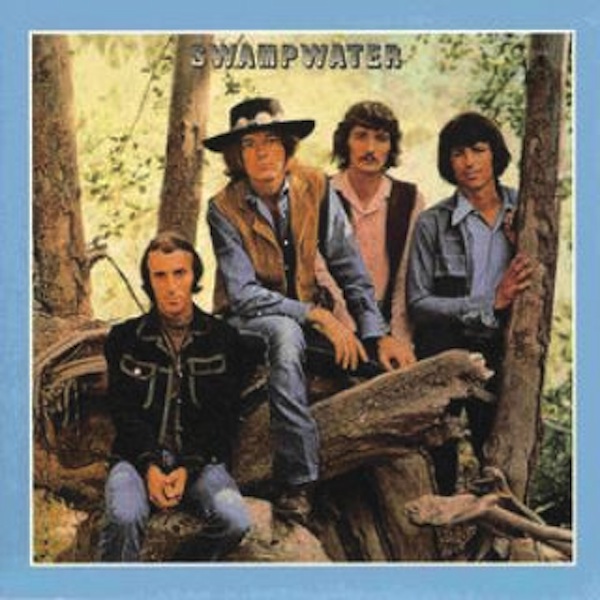
Title: Swampwater
Year: 1970
Format: LP
Label: King
Every review I’ve ever seen of this album compares the group with various country-rock outfits, but they’re all dead wrong! This is straight country with enough Louisiana bayou fiddle to make you swear that someone in the band has to be named Kershaw. Swampwater must have had mixed emotions ten year’s later when Alabama’s smash major label debut sounded uncannily similar while their own work was still languishing in the vaults. An absolute gem! (ochsfan RYM)
Track Listing
- Louisiana Woman
- Workin’ On A Tugboat
- Desparations Back Again
- It’s Your Game Mary Jane
- River People
- Man From New Orleans
- Take A City Bride
- Kathleen
- Nashville Lady
- Look Out Your Window
- Big Bayou
Salloom-Sinclair – Salloom-Sinclair (1969)
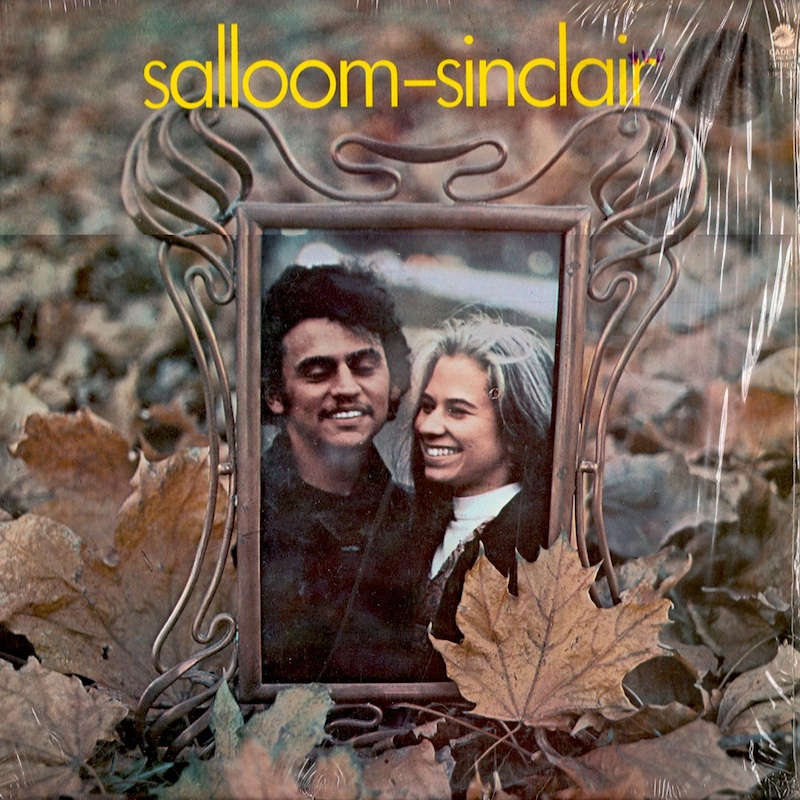
Title: Salloom-Sinclair
Year: 1969
Format: LP
Label: Cadet Concept
When Roger Salloom and Robin Sinclair recorded their second album for Cadet Concept on which they sang, it marked quite a change from the first, Salloom-Sinclair and the Mother Bear. The first LP had been fairly typical 1968 blues-rock-psychedelia, but Salloom-Sinclair was far more in a county-rock groove, recorded in Nashville with session ace and Dylan sideman Charlie McCoy producing. It’s actually an improvement over Salloom-Sinclair and the Mother Bear in that the more histrionic excesses of Salloom’s songwriting and Sinclair’s singing are toned down considerably. At the same time, it’s rather ho-hum if affable laid-back, countrified late-’60s rock.
The sound of Dylan-in-Nashville is particularly in evidence on “I’m Comin’ Home Again,” with its steel guitar and organ. Sinclair was a fine rock singer with strong shades of soul, blues, and gospel (“Violence, Blam Blam, I’m Sorry” sounds a little like Janis Joplin’s more soul-gospel-slanted stuff), but she really needed more distinctive material than this to make a mark. About the only song that demands a second listen is the uncharacteristically powerful and foreboding “Animal,” which boasts a killer ominous riff, eerie wavering background tones, and Marty Balin-esque vocals from Salloom. (Richie Unterberger, All Music Guide)
Track Listing
- Lesson At The Delicatessen
- Motorcycle
- One More Try
- I’m Comin’ Home Again
- Violence, Blam Blam, I’m Sorry
- Animal
- Faith Has Been Given
- Let’s Be Right
- Exhaustion
- Sleep
Salloom, Sinclair And Mother Bear – Salloom, Sinclair And Mother Bear (1968)
Title: Salloom, Sinclair And Mother Bear
Year: 1968
Format: LP
Label: Cadet Concept
Born and raised in Worcester, Massachusetts, the mid-60s found Roger Salloom attending Indiana University. Originally a literature major, like half of the under-20 population, 1968 found Salloom living in San Francisco, determined to make it as a musician. In San Francisco he teamed up with singer Robin Sinclair and the band The Mother Bear (bassist John Bolling, lead guitarist Tom Davis, drummer Phil Montgomery and keyboardist Dick Orvis).
As Salloom, Sinclair and the Mother Bear, the group quickly became staples on the city’s club circuit, opening for a wide range of acts at The Avalon, The Carousal and The Fillmore West. The resulting publicity caught the attention of Chess Records which was interested in entering the rock market. The first rock band signed by Chess’ rock-oriented Cadet Concept subsidiary, in July 1968 the band went into Ter Mar Studios with producers Marshall Chess and Abner Spector.
So what’s “Salloom, Sinclair and the Mother Bear” like? Well, the first time we listened to it the set didn’t make much of an impression. Luckily we gave it a couple of follow on spins, allowing the LP to display some of it’s subtle charms. Largely penned by Salloom and Sinclair, tracks such as “Be Born Again” recall The Jefferson Airplane, had Grace Slick and Paul Kantner had a long-term interest in the blues.
Both Salloom and Sinclair had decent voices, though the Sinclair was occasionally screechy (check out the Yoko Ono-ish howls on the extended freak out “She Kicked Me Out of the House After This One”), while Salloom’s penchant for talking his way through lyrically pompous songs (“Conversation with Gentility”) was an acquired taste. At least to our ears, the band are at their best when downplaying the philosophical commentary and simply rocking out “Steals”. “Griffin” and the bluesy instrumental “Florida Blues”. (Bad Cat)
Track Listing
- Be Born Again
- Conversations With Gentility
- Steals
- Griffin
- She Kicked Me Out Of The House After This One
- Florida Blues
- Sitting On A Finger
- Marie La Peau