
The Bag – Real (1969)
Title: Real
Year: 1969
Format: LP
Label: Decca
The Bag consisted of keyboardist Joe Di Marzo, singer Danny Mahony, guitarist Jay Saving and drummer Al Esposito.The album has been described as “Psychedelic Soul” with comparisons to the Young Rascals.The Bag were also the back-up musicians on the Hobbits’ third lp, “Back From Middle Earth” and also backed former Hobbit Jimmy Curtiss on his solo lp “J.C. Life” the first release on the Perception label in 1969.
“Released by Decca, 1968’s “Real” teamed the quartet with producer Jimmy Curtiss. Showcasing a mixture of originals (Di Marzo, Mahony and Savino all contributing material) and two covers, the collection offered up an enjoyable set of blue-eyed soul. Propelled by Mahony’s crusty voice (baring an uncanny resemblance to Felix Cavaliere), tracks such as “I Want You By My Side”, “Got Away” and “I’m Sitting By the Wayside Of My Life” were melodic and highly commercial.
Okay, back to the psych label for a moment: admittedly “Red, Purple and Blue” had a nifty freak-out fade, while “It’s All Over” benefited from a tasty lead fuzz guitar. A commercial non-entity, the set vanished without trace. Within a matter of months the band followed suit.” (Bad Cat)
Track Listing
- Up In The Morning
- I Want You By My Side
- I Don’t Want To
- Red, Purple And Blue
- Bide My Time
- Nickels ‘N Dimes
- Got Away
- Nobody’s Child
- Down And Out
- It’s All Over
- I’m Sitting By The Wayside Of My Life
The Unfolding – How To Blow Your Mind At A Freak Out Party (1967)
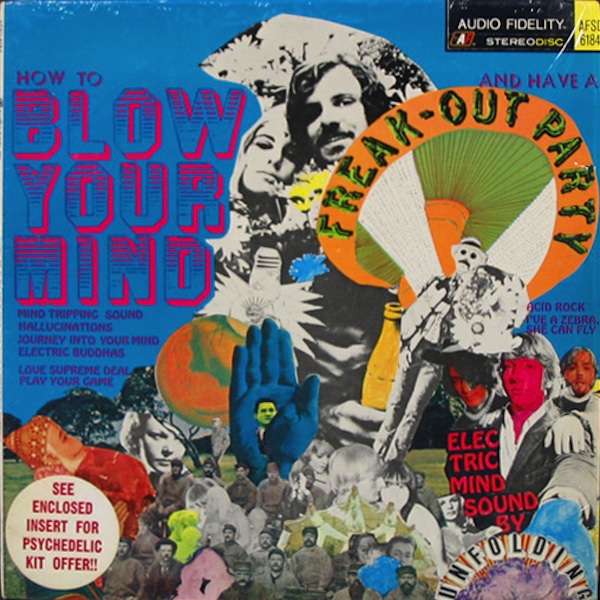
Title: How To Blow Your Mind At A Freak Out Party
Year: 1967
Format: LP
Label: Audio Fidelity
Not bad at all. Not exactly brilliant either, but this recorded free-form “freak-out” from 1967 (originally released on New York City’s Audio Fidelity label) is not only not terrible, but surprisingly pretty OK for stretches, especially considering the typical quality of these types of had-to-be-there period curios that purport to blow your mind with an aural approximation of an acid trip. This one actually manages to be something approaching far out, man, even at its most half-baked. Whether How to Blow Your Mind and Have a Freakout Party was, in fact, created as a “head” LP by practicing heads (a certain David Dalton is listed as the Unfolding’s presiding mastermind — no word in the liner notes if this is the same Dalton who was a pioneering rock scribe and founding editor of Rolling Stone), or as an exploitation of same by a faceless assemblage of session musicians is really anyone’s guess.
But either way, the album is decidedly not an unlistenable mess. That in itself qualifies as a kind of limited recommendation. Oh, this psychedelic party is more than a bit hit-and-miss, to be sure. For instance, opener “I’ve Got a Zebra — She Can Fly” (dig that title) is five minutes of druggy guitar jamming with requisite (and not entirely uninteresting) panning effects and pitch fluctuations before the music simply cuts out mid-sentence as if a shiny bauble (or perhaps a pan of hash brownies) had just been waved in front of the Unfolding’s glazed eyes. And the whole of the second “Meditations” side of the album is a melange of pseudo-philosophical babble, patchwork Eastern religious profundities (a good excuse for lots of sitars, flutes, and finger-chimes), New Age chanting, Pied Piper-type fairy tales, and bad poetry, all played straight, so to speak, and narrated in a steady baritone that is equal parts God and Vincent Price. Nary a melody within earshot, though. If that sounds like either a snore or a chore, maybe it will be for some listeners.
But there is also a heart-on-sleeve earnestness to the undertaking, and the first-side sequence of “Play Your Game,” “Girl from Nowhere,” and “Love’s Supreme Deal” cuts a suite of, yes, catchy pop-psych tunes through the chatter. It’s hard to imagine that the original LP had (and, four decades removed from its original context, even harder to imagine the Gear Fab CD reissue will have) wide appeal, as these sorts of altered state-specific experiments require certain enhancements that cast particular spells for full appreciation, and approaching the music without them is like trying to watch a 3-D movie without the plastic glasses. But then it’s always something of a trip to open a time capsule no matter what ends up being inside. (Stanton Swihart, All Music Guide)
Track Listing
- I’ve Got A Zebra-She Can Fly
- Play Your Game
- Girl From Nowhere
- Flora’s Holiday
- Love Supreme Deal
- Prana
- Electric Buddah
- Hare Krishna
The Open Window – The Open Window (1969)
Title: The Open Window
Year: 1969
Format: LP
Label: Vanguard
The Open Window were a chamber rock trio that featured Peter Schickele along with Robert Dennis, & Stanley Walden. The group also wrote and performed music for the revue “Oh! Calcutta”.
“This is wonderfully odd. Seems to be primarily the work of a classically trained keyboardist with a unique compositional flair. Freedom, experimentation, structure, atmosphere, and humor. Great!” (spherule RYM)
Track Listing
- Wild Bill Hickock Rides Again
- At The Wedding
- 4 00 A.M. June, The Sky Was Green
- Soldier’s Song, From The Last War, For The Next
- The Girl From Tarentum
- Italian Symphony
- Piece By The New Guy
- Piano Concerto No. 1 In G Major
- The Priests Of The Raven Of Dawn/Curtain Call (Circus)
Disclaimer: The link below may point to content that is copyrighted. redtelephone66 only provides this link with the understanding that you are responsible for the content you download. redtelephone66 does not engage in music piracy, nor do we do host, fileshare, or otherwise trade in copyrighted works.

Bengali Bauls – …At Big Pink (1968)
Title: …At Big Pink
Year: Year
Format: LP
Label: Buddah
The Bauls of Bengali were a family of itinerant street troubadours that Albert Grossman had met on a visit to India, and he invited them to stay in a converted barn in Bearsville in 1967. The brothers Luxman and Purna Das (that also can be seen posing with Bob Dylan on his John Wesley Harding album) became friends with the Band in Woodstock, and often visited them in Big Pink to inhale illegal substances and jam with the guys. One night, the Bauls wanted to jam, and Garth Hudson wanted to record, with Rick Danko and Levon sitting in with the Das brothers. The music was a bit too weird for the guys from the Band (“they were wailing in their own language, in their own world, Bubba”), so they left while Garth’s tape machine rolled for hours. The tapes were released, years after, as Bengali Bauls at Big Pink. — extracted from Levon Helm’s This Wheel’s on Fire
Luxman Das, Bob Dylan and Purna Das, on the cover of John Wesley Harding, 1967 Band guys can be heard saying “that’s nice” after one track, they don’t actually play. The album is produced by Garth Hudson. It was recorded in the basement of Big Pink on an Ampex 400 tape recorder using two Altec Lansing 1567A mixers with Norelco D-24 microphones. Engineered at A&R Studios, New York, by John Kryda. Purna Das of the Bauls also appears on Garth Hudson’s 2001 solo album The Sea to the North.
In the Bob Dylan magazine The Telegraph, issue 51, there was an article on the John Wesley Harding LP cover with some info on the Bauls of Bengal. Below are a four-part scan of this article, that also mentions The Band’s, and in particular Garth Hudson’s, relationship with the Bangali Bauls. (Internet Source)
Track Listing
- Alone, I Have Caught A Fish
- Praise My Beautiful Birthland
- With What Flower Shall I Worship Your Feet
- My Boatman Friend
- Say Hari, Mynah Bird
Disclaimer: The link below may point to content that is copyrighted. redtelephone66 only provides this link with the understanding that you are responsible for the content you download. redtelephone66 does not engage in music piracy, nor do we do host, fileshare, or otherwise trade in copyrighted works.
Marks And Lebzelter – Rock And Other Four Letter Words (1968)
Title: Rock And Other Four Letter Words
Year: 1967
Format: LP
Label: Columbia Masterworks
Rock And Other Four Letter Words was a concept album put together by the duo of J. Marks and Shipen Lebzelter. The songs consist of various voiceovers and strange noises to create meandering soundscapes, mixed in with the occasional blaring Rock guitar obviously aimed at the Psychedelic-drug crowd of the 60s.
The best songs are Other Four Letter Words that begins with a little orchestration, and then an effects laden conversation that eventually gives way to a loud guitar Rock cut with a banging fuzz heavy rhythm and a drum break.
There’s also the slow groover It’s True with some females singing, the jazzy Rock of Trouble with female back-ups and more of that guitar work, and Poop For Sopranos And Orchestra that switches between some swinging versus with two female lead singers and more abstract and spaced-out interludes. (Motown67)
Track Listing
- Other Four Letter Words
- Essence Of It’s Own
- It’s True
- Greatest Hits – Love Your Navel
- In The Middle Of Nothing
- Baked Beans
- They’re Through
- Today
- Eine Kleine Hayakawa
- Do You Understand What I’m Trying To Say?
- Trouble
- Poop For Sopranos And Orchestra
- This Is The Word
Disclaimer: The link below may point to content that is copyrighted. redtelephone66 only provides this link with the understanding that you are responsible for the content you download. redtelephone66 does not engage in music piracy, nor do we do host, fileshare, or otherwise trade in copyrighted works.
Ian Whitcomb – Yellow Underground [Mono] (1967)
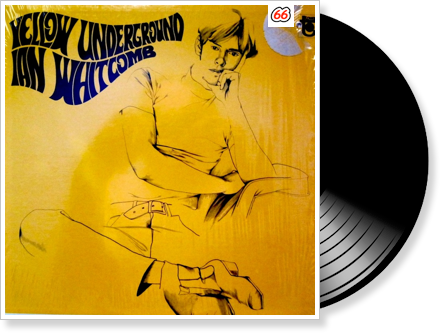
Title: Yellow Underground
Year: 1967
Format: LP
Label: Tower
Ian Whitcomb, born in England in 1941, has performed popular songs since childhood. In his late teens, he discovered ragtime and rhythm & blues. While he was a history major at Trinity College, Dublin in the early 1960s, he studied, wrote about, and played American pop music. By chance, his recording of a novelty song he’d written, “You Turn Me On,” shot him into the American Top Ten in 1965.
After touring with the Rolling Stones and the Beach Boys, he abandoned his career as a teen idol to concentrate on researching and performing ragtime and the music of Tin Pan Alley.
Released in 1967, “Yellow Underground” is a strange album that followed in that direction, including some great vaudevillian ragtime tunes such as “The End Of Me Old Cigar”, “They’re Wearing ‘Em Higher In Hawaii”, and “Sadie Salome Go Home!”. But the strangest track here is “Memoirs Of An Old Soldier” that brings to mind (and makes as much sense as) the Richard Lester movie “How I Won The War”. Those expecting a psych album with a title like “Yellow Underground” might be a bit disappointed (…or will they?) (Jack Dominilla)
Track Listing
- Lucky Jim
- College Life
- Lucious Slices – A Ragtime Two-Step
- Memoirs Of An Old Soldier
- They’re Wearing ‘Em Higher In Hawaii
- I’ve Been Ill
- They Gotta Quit Kickin’ My Dawg Aroun’
- Sandcastle – A Day By The Sea
- Sadie Salome Go Home!
- The End Of Me Old Cigar
- Purple Passage
Disclaimer: The link below may point to content that is copyrighted. redtelephone66 only provides this link with the understanding that you are responsible for the content you download. redtelephone66 does not engage in music piracy, nor do we do host, fileshare, or otherwise trade in copyrighted works.
The Mazatec Indians Of Mexico – Mushroom Ceremony (1957)
Title: Mushroom Ceremony
Year: 1957
Format: LP
Label: Folkways
Originally released on Folkways Records (8975) in 1957, this recording by Gordon & Valentina Wasson in Oaxaca, Mexico captures native Mexican curandera (witch-doctor) Maria Sabina, a male Mazatec indian, the Wassons and some research friends participating in a ritual mushroom ceremony.
“This field recording is of substantial historical interest, both as the earliest known vinyl document of people under the influence of hallucinogens, and as part of the Wasson couples legendary forays into remote Mexican mountains on the trail of an obscure mushroom cult. Wasson’s exploits became the subject of a Life magazine article which is a watershed event in the history of psychedelics, and the psilocybin shrooms would attract interest from the whole academic/literary/ethno-botanic hallucinogen set in the late 1950s. Although the Mazatec mushroom culture has been well documented over the years, this particular LP has drawn less attention than Wasson’s works and the many subsequent essays and books published, but is obviously worth attention.
The actual contents feature curandera Maria Sabina (who would later become famous, as part of the Wasson effect) eating the mushrooms and setting out on a transcental journey to invoke the mushroom spirit, reporting with a steady flow of words her experiences. The reports are spoken in her native Mazatec dialect, but an ambitious translation/transcription attempt by a linguistic expert can be found on the accompanying booklet. The mushroom cult is eclectic, combining elements of Catholicism with a pantheistic strain, in a way typical for many surviving plant cults around the world.
Her voice is an old woman’s, often tired, sometimes venturing into sing-songy nursery rhyme structures, and during the beginning of side 2 (where she’s peaking, bro) moving into a very rapid, unbroken flow of words. Rather remarkable, and according to those who have tripped with it, an efficient guide despite not being a successful invocation of the mushroom spirit (see booklet scans for explanation). Sounds of nature, nightbirds, barking dogs, and frequent mutterings from Sabina’s fellow Mazatec traveller are also audible.” – The Acid Archives
Track Listing
- Chjon Nka
- Chjon Nka Catsin
- Santo…Nana
- Papa Papai
- Na Ai – Ni Tso
- Santo…Ji Nai…Na
- Jan Jesu Cristo
- Ji Nai
- San Pedro
- Soso Soso
- Name Of Plants
- Pedro Martinez
- Don’t Be Concerned, Old One
- Birds
- Humming, Etc.
- Soft Singing
- Finale
Disclaimer: The link below may point to content that is copyrighted. redtelephone66 only provides this link with the understanding that you are responsible for the content you download. redtelephone66 does not engage in music piracy, nor do we do host, fileshare, or otherwise trade in copyrighted works.
The Great Metropolitan Steam Band – The Great Metropolitan Steam Band (1970)
Title: The Great Metropolitan Steam Band
Year: 1970
Format: LP
Label: Decca
Okay, I’ll admit it’s an acquired taste, but after wading though a sea of mediocre albums for reviews so far this year, this really is a nice change of pace. Old-timey vaudevillian blues in the vein of the Holy Modal Rounders. Personality ain’t everything, but it forms the basis of one of the more inspired albums I’ve heard. (ochsfan RYM)
Track Listing
- Blues Ain’t Nothin’
- Keep Your Hand Off Her
- Doctor Jazz
- Cocaine Blues
- Spare Change Rag
- It’s Tight Like That
- I Want A Big Butter And Egg Man
- Jackass Blues
- How Sweet I Roamed From Field To Field
- Cold In Hand
- Basin Street Blues
Disclaimer: The link below may point to content that is copyrighted. redtelephone66 only provides this link with the understanding that you are responsible for the content you download. redtelephone66 does not engage in music piracy, nor do we do host, fileshare, or otherwise trade in copyrighted works.
LSD – A Documentary Report (1966)
Title: A Documentary Report
Year: 1966
Format: LP
Label: Capitol
The granddaddy of all LSD documentaries sounds even better today than when it was released. The attitude is mocking and hostile in an understated manner rather than openly confrontational, perhaps because it was made at such an early stage. Interviews with acid luminaries, regular heads and neutral observers are tied together with classy narration and musical fragments, and an unforgettable peak is reached with an actual trip recording of “Brian”, a hipster acid head who unfortunately happens to have his first bad LSD experience while being recorded (with concealed microphones). The recording is authentic-sounding and either very funny or pretty scary, depending on how hard-core you are. (Lysergia.com)
The menace of LSD on wax! Side One is called “The Trip” and it consists of people talking about their personal experiences on acid. The best being a guy who they actually tape recorded having a bad trip. There is about 5 minutes or so of this dude just freaking out, all by himself, in a dark room. Supposedly these are highlights of a bad trip that lasted 12 hours and resulted in him permanently losing his mind. Other goodies include Huxley’s widow talking about showering angry mobs with acid fumes to create peace, Ginsberg chanting with gurus, and a hippy chick talking about an especially groovy shower – and that’s just side one!
Side Two is called “The Scene”, and it deals more with the Sociological aspects of drug culture. This must have come out right when Acid was outlawed, and you can tell it is supposed to be a piece of anti-drug propaganda, but they just make it sound like such darn good fun! I’m sure this lp was responsible for pushing many curious youths the last few inches to “turning on”. (Waxidermy)
This LP was created and released in 1966 by Capitol Records as a response to the burgeoning use of LSD — lysergic acid diethylamide — among American teenagers. The rear album jacket proclaims “A documentary report on the current psychedelic drug controversy!” Almost salaciously, the contents are depicted as “Actual recordings of people under the influence of psychedelic drugs… Psychedelic music… The sound of the “Acid Test”… LSD users and pushers and the amazing story of LSD in action.”
In an ironic and fascinating twist, some of that “psychedelic music” — particularly the fast-paced tune heard at the beginning of side two — is that of Neal Cassidy and a pre-Grateful Dead combo called the Warlocks performing “Speed Limit” circa 1965. Each side of the long-player consists of a single, continuous track.
Narrated by author Lawrence Schiller, side one sets “The Scene” with information on the history of the drug, its effects, as well as sound bites of acid users — both novice and seasoned — during and after use. Likewise there are points of view from leading authorities in the medical community via Dr. Sidney Cohen, M.D. — from the Psychosomatic Services division of the Wadsworth V. A. Hospital in Los Angeles, CA. Conversely, several minutes are devoted to the warnings and proselytizations of Dr. Timothy Leary and a variety of young men and women — from equally diverse walks of life — who speak candidly about their experiences — both pro and con.
Several countercultural iconic names are dropped, most prominent among them is that of Owsley Stanley aka Bear. He is specifically mentioned for creating a synthesis which left the LSD practically free of impurities and, for a time, the safest non- pharmaceutical acid being circulated. Side two contains “The Trip” where Schiller again guides listeners through comments from primarily teens about when they began their experimentation and what (if anything) they were able to take from their use. Next up is the audio vérité eight-party acid trip. One of the participants — named “Brian” — is the primary focus of Schiller’s occasional commentary.
Despite his purported familiarity with the drug, its ability to incapacitate becomes evident and his already fragile psyche turns increasingly dark and introspective as “Brian” is heard going through an especially unpleasant manic and psychotic episode. Or, as Schiller refers to it, a “rocky journey [that] ended 12 hours after it had so innocently begun.” As to the positive uses of the compound, both Schiller and Dr. Cohen are not secretive about the treatment of cancer patients, chronic alcoholics, and even the breakthroughs in therapy for mentally-challenged children. After providing a brief update of LSD’s legal nature — circa 1966 — there are additional quotes from Laura Archera Huxley, widow and biographer for her late husband, author of The Doors of Perception, Aldous Huxley. She vehemently disagrees with the illegality of the drug, yet is quick to warn of its dangers when used irresponsibly.
Following a brief allusion to the infamous Acid Tests held by Ken Kesey and company, portions of a live Allen Ginsberg poetry reading are played prior to some interview clips in which he talks about his revelations and insights on the substance. There are also a few minutes of rambling Acid Test recordings, concluding with the profound statement that “… on the basis of the evidence… the answer to the LSD problem should be just about as obvious as the basic question: Is this trip really necessary?”
The LP’s inner-gatefold includes a “Glossary of terms used in this album” with an A to Z of hippie slang — from “Acidhead” to “Turn On,” while the back cover has an essay from concurrent Capitol Records President, Alan W. Livingston that, in part, states “At Capitol Records we live in a world of the young — a world of rock ‘n’ roll music, amid the need for a constant awareness of teenage interests of all kinds.” ~ Lindsay Planer, All Music Guide
Track Listing
- The Scene
- The Trip
Disclaimer: The link below may point to content that is copyrighted. redtelephone66 only provides this link with the understanding that you are responsible for the content you download. redtelephone66 does not engage in music piracy, nor do we do host, fileshare, or otherwise trade in copyrighted works.
LSD – Promo – Open-End Interview With Dr. Sidney Cohen And Excerpts From Lp (1966)
Title: Promo – Open-End Interview With Dr. Sidney Cohen And Excerpts From Lp
Year: 1966
Format: LP
Label: Capitol
This is the companion release to the LSD documentary album. It was released to radio stations to promote the lp and contains an “open-end” interview with Doctor Sidney Cohen, M.D.. This “interview” is similar to the open-end interview album released by the Byrds to promote their “5D (Fifth Dimension)” album where DJs would play this record and have a list of questions that would be “answered” by playing back the record, an ingenious way to promote, saving the artist a lot of time and travel. This particular record also contains excerpts from the released album.
Track Listing
- Open-End Interview With Dr. Sidney Cohen/LSD [Excerpt]
- Allen Ginsberg [Excerpt]
- The “Lost Generation” [Excerpt]
- Users [Excerpt]
- Trip [Excerpt]
- Dr. Timothy Leary [Excerpt]
Disclaimer: The link below may point to content that is copyrighted. redtelephone66 only provides this link with the understanding that you are responsible for the content you download. redtelephone66 does not engage in music piracy, nor do we do host, fileshare, or otherwise trade in copyrighted works.