
Swampwater – Swampwater (1970)
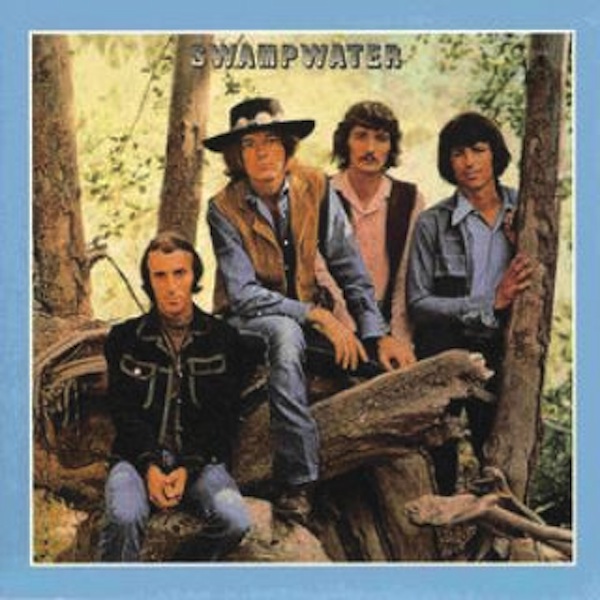
Title: Swampwater
Year: 1970
Format: LP
Label: King
Every review I’ve ever seen of this album compares the group with various country-rock outfits, but they’re all dead wrong! This is straight country with enough Louisiana bayou fiddle to make you swear that someone in the band has to be named Kershaw. Swampwater must have had mixed emotions ten year’s later when Alabama’s smash major label debut sounded uncannily similar while their own work was still languishing in the vaults. An absolute gem! (ochsfan RYM)
Track Listing
- Louisiana Woman
- Workin’ On A Tugboat
- Desparations Back Again
- It’s Your Game Mary Jane
- River People
- Man From New Orleans
- Take A City Bride
- Kathleen
- Nashville Lady
- Look Out Your Window
- Big Bayou
Salloom-Sinclair – Salloom-Sinclair (1969)
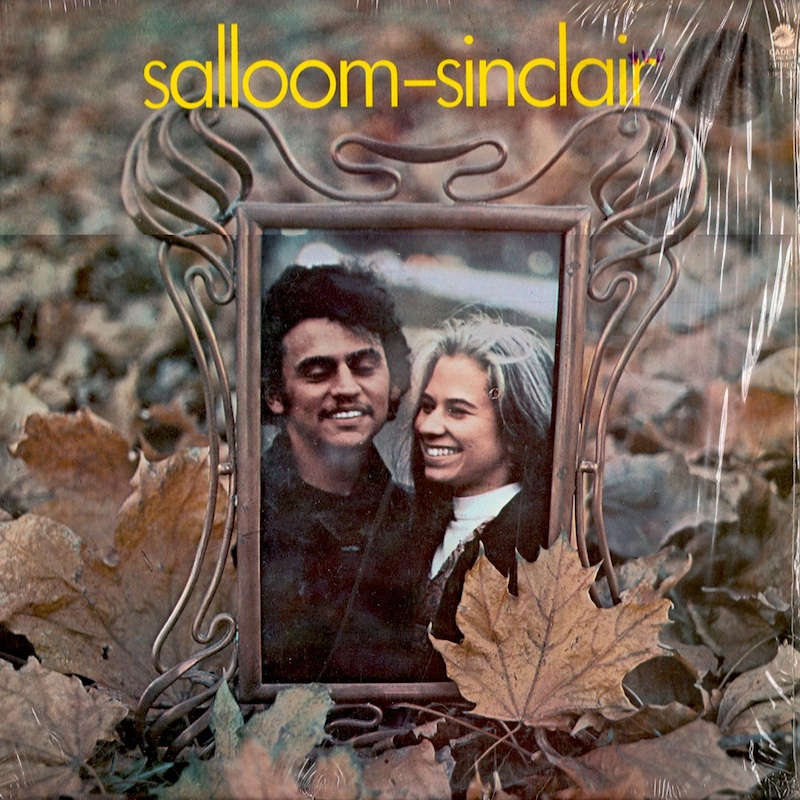
Title: Salloom-Sinclair
Year: 1969
Format: LP
Label: Cadet Concept
When Roger Salloom and Robin Sinclair recorded their second album for Cadet Concept on which they sang, it marked quite a change from the first, Salloom-Sinclair and the Mother Bear. The first LP had been fairly typical 1968 blues-rock-psychedelia, but Salloom-Sinclair was far more in a county-rock groove, recorded in Nashville with session ace and Dylan sideman Charlie McCoy producing. It’s actually an improvement over Salloom-Sinclair and the Mother Bear in that the more histrionic excesses of Salloom’s songwriting and Sinclair’s singing are toned down considerably. At the same time, it’s rather ho-hum if affable laid-back, countrified late-’60s rock.
The sound of Dylan-in-Nashville is particularly in evidence on “I’m Comin’ Home Again,” with its steel guitar and organ. Sinclair was a fine rock singer with strong shades of soul, blues, and gospel (“Violence, Blam Blam, I’m Sorry” sounds a little like Janis Joplin’s more soul-gospel-slanted stuff), but she really needed more distinctive material than this to make a mark. About the only song that demands a second listen is the uncharacteristically powerful and foreboding “Animal,” which boasts a killer ominous riff, eerie wavering background tones, and Marty Balin-esque vocals from Salloom. (Richie Unterberger, All Music Guide)
Track Listing
- Lesson At The Delicatessen
- Motorcycle
- One More Try
- I’m Comin’ Home Again
- Violence, Blam Blam, I’m Sorry
- Animal
- Faith Has Been Given
- Let’s Be Right
- Exhaustion
- Sleep
Salloom, Sinclair And Mother Bear – Salloom, Sinclair And Mother Bear (1968)
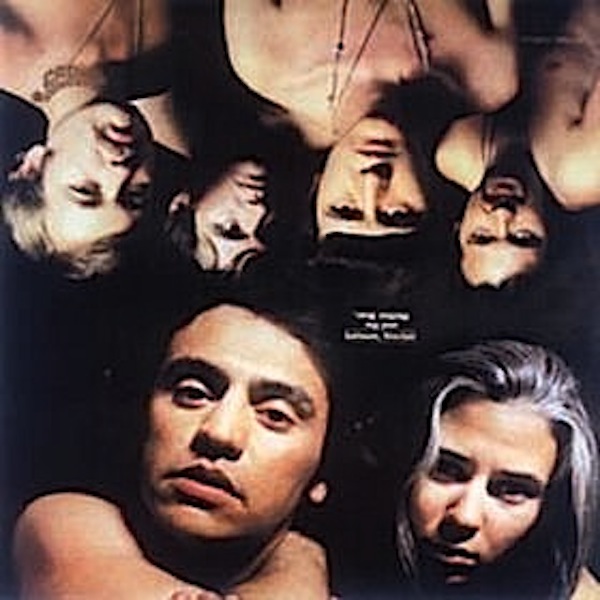
Title: Salloom, Sinclair And Mother Bear
Year: 1968
Format: LP
Label: Cadet Concept
Born and raised in Worcester, Massachusetts, the mid-60s found Roger Salloom attending Indiana University. Originally a literature major, like half of the under-20 population, 1968 found Salloom living in San Francisco, determined to make it as a musician. In San Francisco he teamed up with singer Robin Sinclair and the band The Mother Bear (bassist John Bolling, lead guitarist Tom Davis, drummer Phil Montgomery and keyboardist Dick Orvis).
As Salloom, Sinclair and the Mother Bear, the group quickly became staples on the city’s club circuit, opening for a wide range of acts at The Avalon, The Carousal and The Fillmore West. The resulting publicity caught the attention of Chess Records which was interested in entering the rock market. The first rock band signed by Chess’ rock-oriented Cadet Concept subsidiary, in July 1968 the band went into Ter Mar Studios with producers Marshall Chess and Abner Spector.
So what’s “Salloom, Sinclair and the Mother Bear” like? Well, the first time we listened to it the set didn’t make much of an impression. Luckily we gave it a couple of follow on spins, allowing the LP to display some of it’s subtle charms. Largely penned by Salloom and Sinclair, tracks such as “Be Born Again” recall The Jefferson Airplane, had Grace Slick and Paul Kantner had a long-term interest in the blues.
Both Salloom and Sinclair had decent voices, though the Sinclair was occasionally screechy (check out the Yoko Ono-ish howls on the extended freak out “She Kicked Me Out of the House After This One”), while Salloom’s penchant for talking his way through lyrically pompous songs (“Conversation with Gentility”) was an acquired taste. At least to our ears, the band are at their best when downplaying the philosophical commentary and simply rocking out “Steals”. “Griffin” and the bluesy instrumental “Florida Blues”. (Bad Cat)
Track Listing
- Be Born Again
- Conversations With Gentility
- Steals
- Griffin
- She Kicked Me Out Of The House After This One
- Florida Blues
- Sitting On A Finger
- Marie La Peau
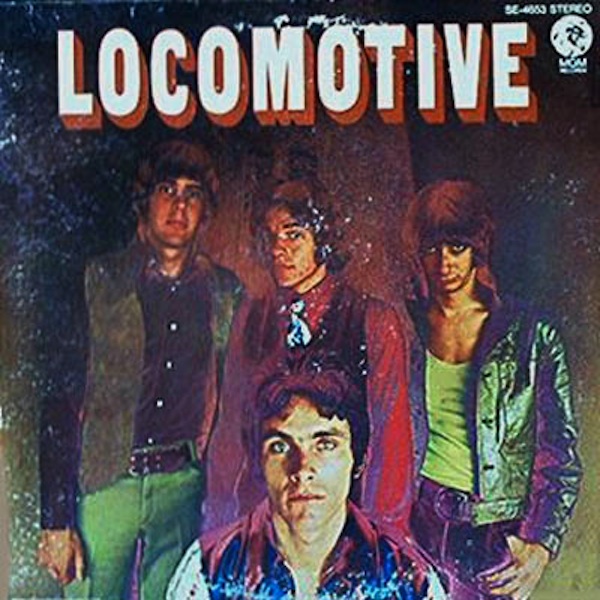
Locomotive – Locomotive (1969)
Title: Locomotive
Year: 1969
Format: LP
Label: MGM
The Locomotive were a blues rock band from Mercer Island, Washington and included Pat Clausing (keyboards), Russ Kammerer (drums), Bill Stroum (bass), and John Ussery (guitar). The band also included Skip Morehouse on keyboards, who left before the recording of this album to join a group called Peece. John Ussery also recorded a solo album for Mercury records under his name. (Prairie Prince Minsky)
Track Listing
- Big City Car
- Get On Away
- Barbara Jean
- All Come Free
- Catch You Later
- Thinking Of You
- Roberta
- Wah Wah
- Don’t Cut Your Hair
- Move On Up
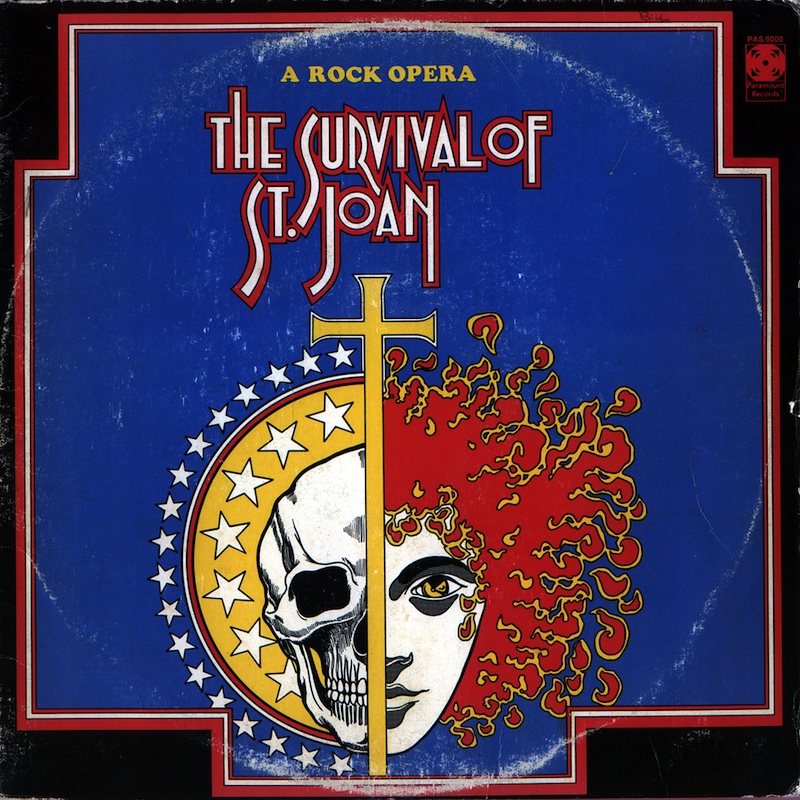
Smoke Rise – The Survival of St. Joan (A Rock Opera) (1971)
Title: The Survival of St. Joan (A Rock Opera)
Year: 1971
Format: LP
Label: Paramount
The Survival of St. Joan is a rock opera by Smoke Rise (Gary Ruffin, Hank Ruffin, Stan Ruffin, and Randy Bugg–music composed by Hank and Gary) on a libretto by James Lineberger. To date, it has not been issued on compact disc. It was first produced as a concept album on Paramount Records PAS-9000 by Stephen Schwartz in 1971.
A concert version ran eight performances at The Playwrights Unit. A fully-scripted musical play with spoken dialogue, directed by Chuck Gnys was produced at the Studio Arena Theatre in Buffalo, New York, November 5, 1970. It had 16 performances Off-off-Broadway at the Anderson Theater, directed by Gnys and produced by Haila Stoddard and Neal Du Brock, where audiences were frequently scared off by the local chapter of the Hells Angels in the front rows each night.
Possibly inspired by Operation Shepherdess: The Mystery of Joan of Arc by André Guérin and Jack Palmer White, a revisionist history alleging that Joan of Arc escaped execution and later married a nobleman named Robert des Armoises, an idea rejected by historians [1], and certainly inspired by the Vietnam War, the opera tells of the government of France and Pierre Cauchon, Archbishop of Beauvais releasing Joan of Arc and allowing a double, also believed to be a witch, to burn in her place. She is sent to live with a mute farmer, who falls in love with her, as he elucidates in songs performed in soliloquy toward the audience. Realizing that there is no end in sight to the Hundred Years’ War, the first act ends with Joan seeking to rejoin the army, despite the fact that she is no longer hearing her voices.
In Act II, Joan learns that she has lost the respect of the army, who attempt to rape her. (The libretto in the concept album has her get raped about halfway through the act; this was changed when stagings went beyond a band performance to a full-fledged play.) She meets with a deserter who no longer understands the purpose of the war, unless it is God’s desire to reduce the population, as well as civilians affected by the war’s rationing, complaining that the general can have whatever he wants, whether or not he needs it. Alone and unappreciated, Joan is eventually found by villagers who mistakenly decide she has put a hex on their cow, who tie her to a tree and immolate her, thus her life ends almost as history tells us it did. Upon her death, she re-establishes contact with her three voices, St. Michael, St. Catherine, and St. Margaret.
The play script is held in the North Carolina Collection at The University of North Carolina at Chapel Hill and remains unpublished. It contains many scene changes, often depicting how ordinary people’s lives affect the war, including Joan’s brother, Charles, acting as a scribe for his mother, requesting the king to provide them Joan’s soldier wages to live on, and chides her for some irate informalisms she wants to include. (Wikipedia)
Track Listing
- Survival
- Someone Is Dying
- Run, Run
- Back In The World
- I’m Here / Love Me
- Stonefire
- Love Me
- Lady Of Light
- Country Life
- Run, Run / Precious Mommy
- Medley: Survival / Run, Run / Back In The World
- Lonely Neighbors
- Cornbread
- This Is How It Is
- Cannonfire
- It’s Over
- Darkwoods Lullaby
- You Don’t Know Why
- Propitius
- Burning A Witch
- Love Me
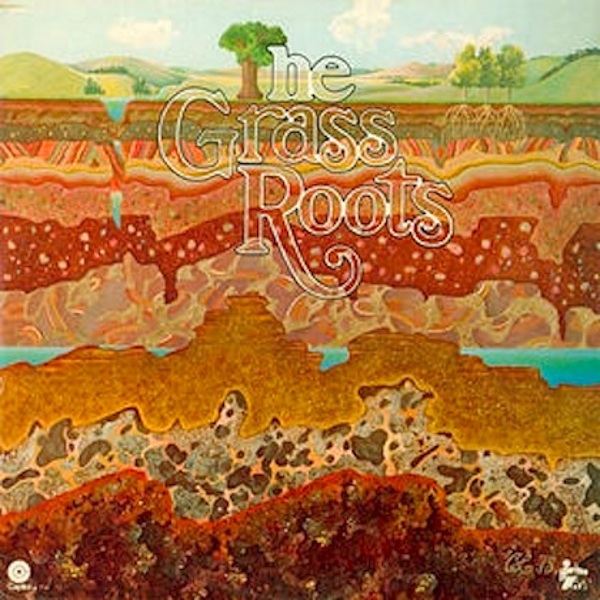
The Grass Roots – The Grass Roots (1975)
Title: The Grass Roots
Year: 1975
Format: LP
Label: Haven
The heavy brass and melodic, soulful material of the ’70s era Grass Roots sound are all present here. The only problem is, it isn’t performed by any of them. Warren Entner departed before this album, leaving singer/songwriter/bassist Rob Grill as the sole remaining original member- and his involvement on this record is strictly limited to vocals. Joel Larson, drummer on the past two Grass Roots albums- Move Along and Alotta Mileage – also appears, but everyone else on the lengthy credits list is a complete stranger.
The material, which is all provided by outside writers, fits the Grass Roots style, but at the same time, it’s unusually patchy. There are some particularly odd lyrics throughout the album, especially on “Naked Man,” and “I Wanna Slow Dance Again,” which has a baffling moment where it starts to fade out, then Rob Grill comes in again and says “Don’t start the fade yet, we ain’t got it made yet.” I’m still not quite sure what to think of that. “Optical Illusion” is great, classic Grass Roots. “The Last Time Around,” “Nothing Good Comes Easy,” and the infectiously catchy “Mamacita” are also highlights.
Not surprisingly, this would be the last Grass Roots record until Powers of the Night in 1982, which also featured just Rob Grill and sounded even less like the old band- but at least he played bass and wrote one song on that record. (Big Pimpin RYM)
Track Listing
- Something About You
- Out In The Open
- Optical Illusion
- I Wanna Slow Dance Again
- Naked Man
- Up On The Roof
- It’s A Cryin’ Shame
- The Last Time Around
- Nothing Good Comes Easy
- Mamacita
Clint Eastwood – Sings Cowboy Favorites (1962)
Title: Sings Cowboy Favorites
Year: 1962
Format: LP
Label: Cameo
With the rusty door-hinge of a voice he possesses today, it’s hard to imagine a time when Clint Eastwood could have been groomed as a singing star, but in the early ‘60s, when he came to fame as the rebellious Rowdy in the hit Western TV series Rawhide, it wasn’t such a crazy idea. In 1963, playing off the popularity of the show, Cameo-Parkway released an album featuring Eastwood’s versions of classic cowboy-style tunes.
While Eastwood is admittedly not an exceptional vocalist, he’s not at all bad; this is by no means some Golden Throats-style celebrity train wreck. At the time, there were plenty of equally photogenic young men with no greater vocal ability than Eastwood being promoted as country singers, many with less of an actual musical background than the jazz-schooled actor. Eastwood’s soft, somewhat laconic croon might not possess the commanding quality that was de rigueur for the era’s country stars, but he never strays off-key, and his style is a kind of cross between legendary cowboy singer Roy Rogers and Dean Martin.
Most of the tunes he tackles here were already well-known in hit versions by other artists — the Sons of the Pioneers’ “Tumbling Tumbleweeds,” Bob Wills’ “San Antonio Rose,” Gene Autry’s “Mexicali Rose,” etc. The loping rhythms, lonesome harmonica, lazy guitar licks, and male backing-vocal choruses are all in keeping with the production conventions of the day for cowboy artists. (allmusic)
Track Listing
- Bouquet Of Roses
- Along The Sante Fe Trail
- The Last Round Up
- Sierra Nevada
- Mexicali Rose
- Searching For Somewhere
- I’ll Love You More
- Tumbling Tumbleweeds
- Twilight On The Trail
- San Antonio Rose
- Don’t Fence Me In
- Are You Satisfied
Henry Tree – Electric Holy Man (1969)
Title: Electric Holy Man
Year: 1969
Format: LP
Label: Mainstream
This one tends to get slammed by the critics, which may be one of the reasons I was willing to give it a chance. I’ll readily admit that this Cleveland-based trio won’t knock your socks off, but by the same token drummer Carmen Castaldi, singer/guitarist Leroy Markish and bass player Charles McLaughlin turned in an album that’s quite diverse and entertaining and in some ways better than other higher priced and better known releases on the Mainstream label.
Produced by Bob Shad, 1970′s “Electric Holy Man” differed from a lot of other early-1970s Mainstream releases in that it showcased a progressive streak rather than the popsike sound that was common to the label. Moreover, for a trio these guys sported a surprisingly full sound, helped in no small measure by Markish’s impressive voice.
Not being a big jazz fan, I’ll be among the first to admit that I was surprised at how entertaining the group’s jazzy forays were. ‘Mr. Fear’, their Traffic cover and the extended title track showcase that interesting jazzy streak with some stunning work from un-credited jazz guitarist Bill DeArango. Mind you there was still plenty of fuzz driven guitar (check out the second half of the title track), but it didn’t come close to these other highlights and the group’s most commercial effort; the ballad ‘Lady Of Day’ was also the album’s most disposable offering. (RDTEN! RYM)
Track Listing
- Country Son
- Mr. Fear
- Electric Holy Man
- Dear Mr. Fantasy
- Lady Of Day
- Penfield Town
Gun Hill Road – First Stop (1972)
Title: First Stop
Year: 1972
Format: LP
Label: Mercury
As Gun Hill Road, their first album including first version of 42nd Street. Original rip posted courtesy of Ventana Circular. (Max Collodie)
Track Listing
- 42nd St.
- My Lady Loves The Day
- Man Of Trade
- I Have A Friend
- New York Morning
- Cargoes
- Daybreak
- Thoughtcatcher
- Baked Bean Band
- I Will Never Face The World Again
- Gun Hill Road
Pookah – Pookah (1969)
Title: Pookah
Year: 1969
Format: LP
Label: United Artists
Pookah were John Ippolito (vocals-bass-guitar),Pat Cupo (organ-piano-ondioline),and Dave Ranaletta (vocals-drums-pecussion). This is a strange one, an early example of American progressive rock that has really been panned by the critics (it’s not that bad… is it?), an acquired taste for sure, like rubbing alcohol. (Jack Dominilla)
Track Listing
- Blue And Peaceful
- In A Field
- Tomorrow’s The Day
- Things Don’t Matter
- Broken Dream
- Kickin’ A Can
- Merlin’s Party
- Lady Ostrich
- Ha! Ha! I Can Fly
- The Heat
- Rain On Your Grave