
Elephants Memory – Elephants Memory (1969)
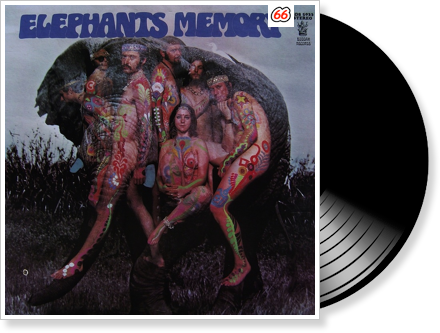
Title: Elephants Memory
Year: 1969
Format: LP
Label: Buddah
Elephant’s Memory were a seemingly wild bunch of folks from NYC who integrated jazz, rock, and some folk elements to form some freak out rock songs along with some more whimsical compositions, which brings me to the only real highpoint of this album: “Old Man Willow”, the seven minute mini-epic made somewhat legendary from its use in MIdnight Cowboy.
And it’s a major highpoint; a cosmic Warhol/Factory esque kaleidoscope of technicolor trippyness and space-girl notions, utilized three decades later by the likes of Stereolab and Broadcast. What a great song. As for the rest, ahhhhhhhh… (ignatius RYM)
Track Listing
- Don’t Put Me On Trial No More
- Crossroads Of The Stepping Stone
- Jungle Gym At The Zoo
- Super Heep
- R.I.P.
- Band Of Love
- Takin’ A Walk
- Hot Dog Man
- Old Man Willow
- Yogurt Song
- Brief Encounters
Moccasin – Moccasin (1970)
Title: Moccasin
Year: 1970
Format: LP
Label: MGM
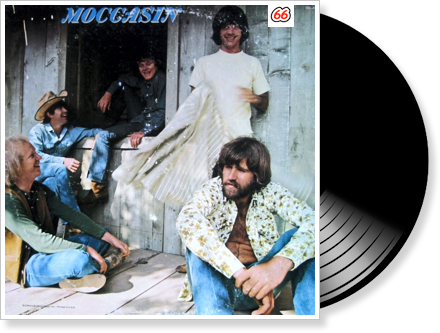
Moccasin were a country-tinged rural rock group that consisted of Keigh Johnson (guitar-vocals), Merlin Moran (guitar-vocals), Gerald Gibson (percussion), Bud Deal (saxophone-vocals), and Casey Van Beek (baas-piano-vocals). The album was produced by Michael Lloyd, who along with another former WCPAEB member Bob Markley produced several albums while under contract to MGM in the early seventies. Van Beek and Deal later would be members of the Tulsa, Oklahoma group the Tractors (Jack Dominilla)
Track Listing
- (Roll) Big Wheel
- Better Get On
- Larkins’ County Fair
- The Light
- Memphis, Tennessee
- Sun’s Gonna Shine
- Someone’s Watching
- Day’s Lost
- You, You
- Skinnerback (Keith’s Theme)
Moccasin – Moccasin (1970)

Title: Moccasin
Year: 1970
Format: LP
Label: MGM
Moccasin were a country-tinged rural rock group that consisted of Keigh Johnson (guitar-vocals), Merlin Moran (guitar-vocals), Gerald Gibson (percussion), Bud Deal (saxophone-vocals), and Casey Van Beek (baas-piano-vocals). The album was produced by Michael Lloyd, who along with another former WCPAEB member Bob Markley produced several albums while under contract to MGM in the early seventies. Van Beek and Deal later would be members of the Tulsa, Oklahoma group the Tractors (Jack Dominilla)

Dewey Martin And Medicine Ball – Dewey Martin And Medicine Ball (1971)
Title: Dewey Martin And Medicine Ball
Year: 1971
Format: LP
Label: UNI
Dewey Martin — born Walter Milton Dwayne Midkiff — grew up in the Ottawa, Canada, area and began playing the drums at age 13. One of his first bands, the Jive Rockets, featured future Staccatos guitarist Vern Craig). Martin eventually moved to the U.S., and ended up in Nashville, where he became a touring drummer with Faron Young, Roy Orbison, the Everly Brothers, Patsy Cline and others. Along the way, he adopted the surname Martin; his childhood mispronunciation of Dwayne led to “Dewey” becoming his first name. In 1964, Martin ended up in Seattle, where he played drums on Sir Raleigh and the Coupons’ British Invasion-styled cover of “White Cliffs of Dover”.
The single was successful in Los Angeles, so Martin moved there and recruited a new Sir Raleigh and the Coupons lineup from members of the Sons of Adam. They had released four singles — for A&M, Jerden andTower– by early 1966 (later compiled as One Buffalo Heard) before Martin left to join the Modern Folk Quartet, briefly, and the Dillards. He was mainly looking to play country-rock, however, and in the spring of 1966, was invited to join a group calling themselves the Herd. They were soon to become better known as Buffalo Springfield. Martin remained with the band until they dissolved in May 1968. In October, Martin formed the New Buffalo Springfield (later shortened to New Buffalo) with bassist Robert C Apperson, drummer/vocalist Don Poncher, rhythm guitarist/vocalist David Price, horn player Jim Price and lead guitarist Gary Rowles.
In early 1969, Price left to join Delaney & Bonnie, and when Apperson split, he was replaced by former Bobby Fuller Four bassist Randy Fuller. Rowles eventually lost interest too, quitting to join Arthur Lee’s Love. Martin recruited guitarist Bob (“B.J.”) Jones, and guitarist/keyboardist/vocalist Joey Newman and they decided on a new name, Blue Mountain Eagle. Atco Records signed the group, but in July of 1969, before recording their album, Martin left for a solo deal with UNI Records. He formed Dewey Martin and Medicine Ball, with lead guitarist Billy Darnell, keyboard player/vocalist Peter Bradstreet, steel guitarist Buddy Emmons, and bassist Harvey Kagen (ex-Sir Douglas Quintet).
They cut several tracks in November 1969, credited only to Martin, and began recording an album in April 1970. Kagen left before the sessions were over, and was replaced by Stephen Lefever, and then by Fuller (who had quit Blue Mountain Eagle), moving over to guitar after bassist Terry Gregg joined. Bruce Palmer also helped out during the recording of Dewey Martin & Medicine Ball. Despite positive reviews, the group were soon dropped from UNI. They recorded another album’s worth of songs for RCA, but only one single was released, in 1971.
Martin became a car mechanic in the late seventies. In the mid-’80s, he joined Pink Slip (alongside former Byrds bassist John York), the Roberts-Meisner Band, and finally, Bruce Palmer’s Buffalo Springfield Revisited, before retiring. In 1991, he formed Buffalo Springfield Again with guitarist Billy Darnell, but the group dissolved. In 1997, Dewey Martin and Buffalo Springfield were inducted into the Rock and Roll Hall of Fame. (Bryan Thomas)
Track Listing
- Indian Child
- Right Now Train
- Silent Song Thru The Land
- Maybe Baby
- Recital Palmer
- Yesterday
- The Devil And Me
- I Do Believe
- Race Me On Down
- Change
Jacobs Creek – Jacobs Creek (1969)
Title: Jacobs Creek
Year: 1969
Format: LP
Label: Columbia
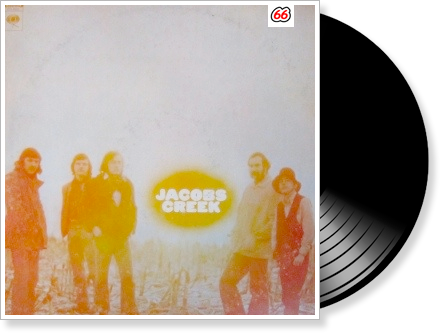
Jacobs Creek consisted of Lon and Derek Van Eaton, Steve Burgh, Tim Case, and Bruce Foster. According to Acid Archives, the album is a “mixed bag of early rural rock, dreamy harmony vocal flower moves and heavier tracks with acid leads and BS & T moves. Cool long eastern track with sitar too. ”
Judging by the sleeve, i always thought this was strictly a rural rock lp, but it’s a pretty diverse album, with more of an early progressive psychedelic feel that features some nice harmonies and an array of instruments including harpsichord, sitar, slide banjo, saxes and keyboards. This album, along with MAN (see March 31, 2010 post) were two of the better releases on the Columbia label in 1969.
Lon and Derek Van Eaton would go on to release an album on Apple Records in 1972 entitled “Brother” (with some involvement from Ringo Starr and George Harrison) and another in 1974 for A&M Records called “Who Do You Out Do”, while Burgh next surfaced playing bass on David Bromberg’s own eponymous debut, beginning a session career that would quickly grow to include dates in support of John Prine, Steve Goodman, and Willie Nelson (1973’s classic Shotgun Willie). Burgh spent much of the mid-’70s serving as musical director for Phoebe Snow, and in 1977 he contributed guitar to Billy Joel’s breakthrough effort The Stranger, appearing on the Grammy-winning “Just the Way You Are.” (Max Collodie)
Disclaimer: The link below may point to content that is copyrighted. redtelephone66 only provides this link with the understanding that you are responsible for the content you download. redtelephone66 does not engage in music piracy, nor do we do host, fileshare, or otherwise trade in copyrighted works.

Madura – Madura III (1973)
Title: Madura III (Unreleased, Live)
Year: 1973
Format: LP
Label: N/A
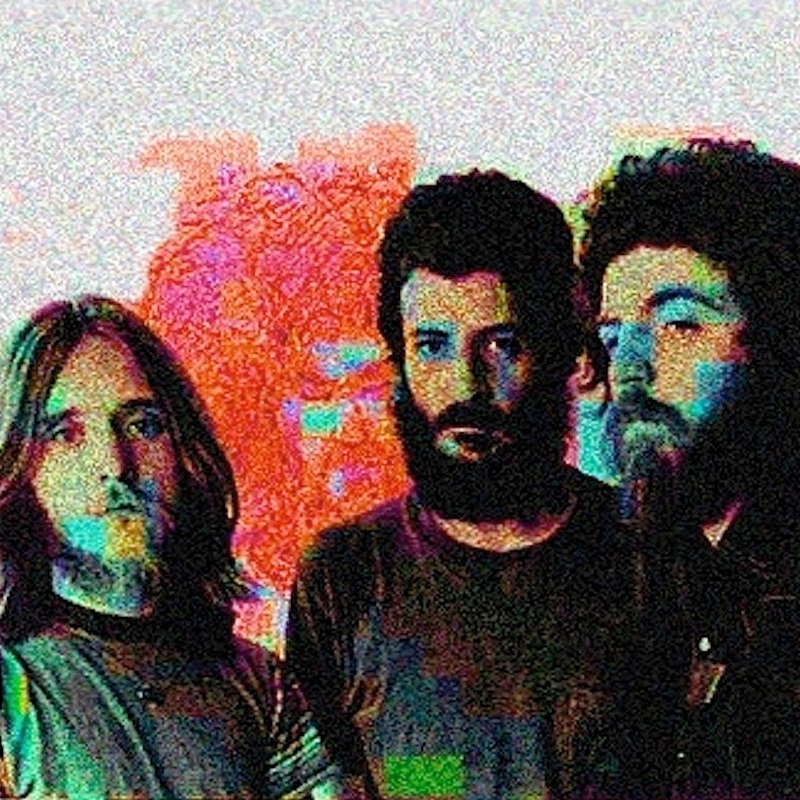
Here’s the “unofficial” third album by Madura, the source of these recordings are from the tapes of David Wolinski himself, They are from a “Live” performance in 1973. For more info on Madura please see the previous posts from March 20 2010 and July 31, 2009. (Max Collodie)
Track Listing
1.If You Got The Dime
2.SynthHigh (Dr. Honoris Causa)
3.Stagger Lee
4.My Favorite Things
5.Funky Broadway
6.Organize
7.Save The Miracle
8.Walkin’ The dog
9.My My What A World
10.Last Jam
Ed Wahonka – Wahonka (1968)
Title: Wahonka
Year: 1968
Format: LP
Label: Super K
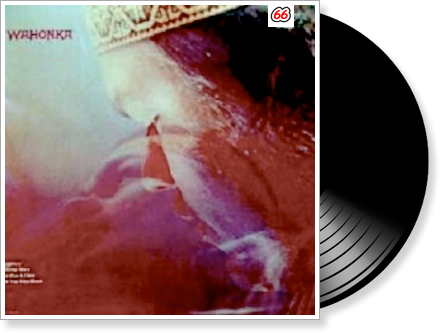
Wahonka was a singer-songwriter in the K-K stable with that beefy voice common in post-Woodstock rock (think Rare Earth, David Clayton-Thomas of Blood, Sweat and Tears, or Jim Peterik with the Ides of March). Although the liner notes and the front cover (a serious, double-exposure photo of long-haired, mustachioed Wahonka bathed in psychedelic lights) to his self-titled Super K album make him sound like a sensitive, introspective Singer of Sad Songs and Teller of Truths, he’s essentially singing the same old bubblepop hash that K-K is famous for. (It’s still a good listen, “There Was A Time”, not to be confused with the James Brown show stopper, could be a snarling, garage-punk tune if they beefed up the guitars.) (Max Collodie)
Disclaimer: The link below may point to content that is copyrighted. redtelephone66 only provides this link with the understanding that you are responsible for the content you download. redtelephone66 does not engage in music piracy, nor do we do host, fileshare, or otherwise trade in copyrighted works.
Osmosis – Osmosis (1970)
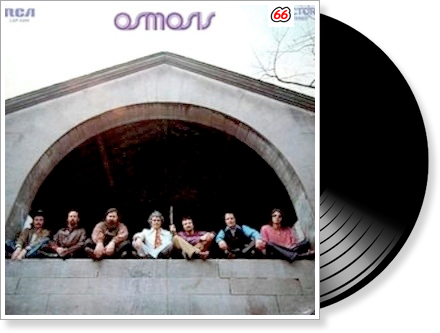
Title: Osmosis
Year: 1970
Format: LP
Label: RCA Victor
Originally released on RCA this 1970 progressive Jazz rock outfit created a full blown rock based performance with two drummers. The wall of sound was amazing with alto and soprano saxophones- courtesy of the great Charlie Mariano, whose career since 1944 has included bebop with Shelly Manne and electronic fusion with Eberhard Weber’s Colours- wailing over the wall of sound. The mood ranges from spacey and saxy to full on heavy stoner acid doom. (Freak Emporium)
Track Listing
1.Of War And Peace (In Part)
2.Beezlebub
3.Thoughts Often Stray
4.Sunrise
5.Shadows
6.Adrift
7.Sunlight
8.Scorpio Rising
9.Please Let Me Go
10.Geoffrey’s Tune
11.Of War And Peace (In Full)
12.Sleep, My Love (Epilogue)
V.A. – CTV’s After Four (1968)

Title: CTV’s After Four
Year: 1968
Format: LP
Label: Yorkville
The big selling point of Toronto’s Yorkville label sampler CTV After Four is, of course, the very FIRST Pink Floyd cover ever, a KILLER crude garage psych take on “See Emily Play” by Three To One, whoever they were. Amazing, too, considering it was a cover recorded the SAME YEAR as the original, which means that Three To One were stealing from the Floyd THIRTY FIVE YEARS before Mars Volta got around to it.
That’s some foresight. And while I can’t take anything away from the original (it’s a classic), I kinda prefer this even trippier version, the addition of an avalanche of Star Trek special effects and a little girl who asks “Everyone know how to play” are two nice touches. And for a band to improve on the psychedelic quotient of 1967 Floyd, well, that’s quite an accomplishment, isn’t it.
But there’s more to CTV After Four than that. Scarlet Ribbon’s “Four in the Morning” is a growling garage punker that rides a cool spy theme riff (think a crude teen band take on “Lucifer Sam“ again with the Pink Floyd referencing). And the legendary Ugly Ducklings surprise us with a very unique, orchestrated baroque psych track, “Epilogue”, very different from their album and very British, like, er, that band with Syd Barrett. Am I sensing a THEME here?
There’s also a trippy hippie version of “Downtown” with echoed-out vocals and strumming mandolin performed by one Patricia-Anne, and redubbed “Changin’Time”. And the oddly-named Willapuss Wallapuss turn in a superb Beatles-meets-Brian Wilson slice of harmony pop called “To Jone” stoned soft pop vocals riding on a bouncy bed of banging barrelhouse Paul McCartney piano.
So you can see, not EVERYTHING here brings to mind Pink Floyd. But if you’re one of the handful of people who believe Syd Barrett’s not REALLY dead, you might wanna start by checking the phone directories in Toronto. Something’s going on up there. (Collector’s Frenzy)
Track Listing
1.Four In The Morning [The Scarlet Ribbon]
2.Mary Jane [Ronnie Hawkins]
3.If I Were A Carpenter [The Sugar Shoppe]
4.Do It To ‘Em [The Big Town Boys]
5.To Jone [The Willapuss Wallapuss]
6.Epilogue [The Ugly Ducklings]
7.Only 16 [Terry Black]
8.If You Love Me [Susan Taylor]
9.Changin’ Time [Patrician – Anne]
10.See Emily Play [Bob Francis And The Three To One]
11.Winchester Cathedral [The Chain Rattlers Orchestra]
12.Kazoo [Bonnie & Clyde]
13.Sweet Soul Music [The Majestics]
14.You Keep Me Hangin’ On [Teak Wood]
15.The Joke [Ritchie Knight And The Midnights]
16.Dry Your Eyes [The Stich In Tyme]
Ferris Wheel – Ferris Wheel (1970)
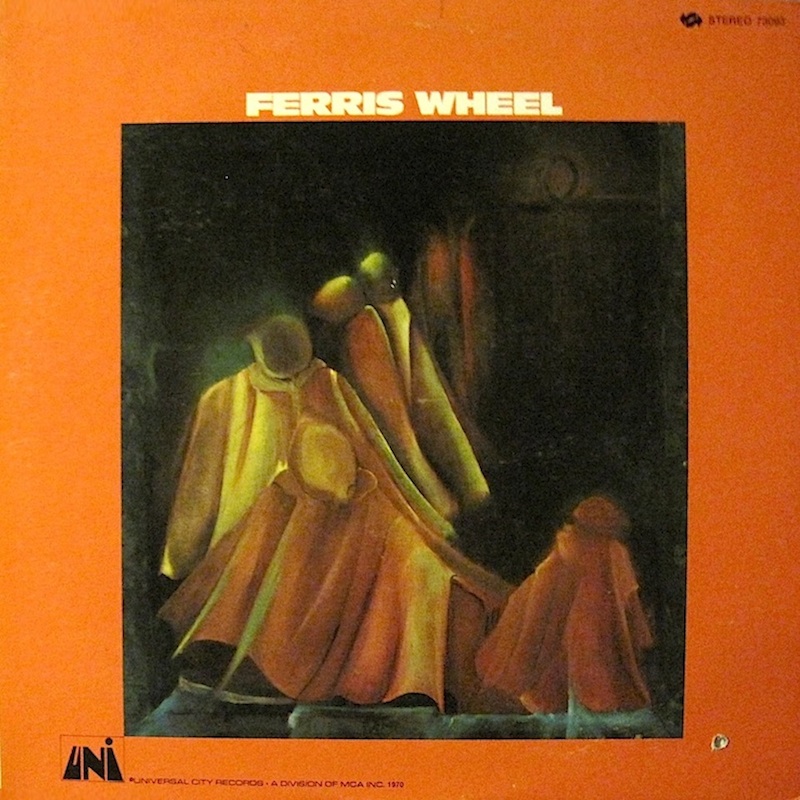
Title: Ferris Wheel
Year: 1970
Format: LP
Label: UNI
The Ferris Wheel were one of England’s great lost musical treasures of the mid- to late ’60s — immensely popular among club audiences, they were never able to translate their ability to win over crowds into chart success, but they made some great records while they were trying. The group came together out of the remnants of two earlier British bands, Emile Ford & the Checkmates and West Five. Dave Sweetman (saxophone), George Sweetman (bass, vocals), and Barry Reeves (drums) had played in the Checkmates, the backing band to Emile Ford (who was half-brother to Dave and George Sweetman), while Mike Liston (keyboards, vocals) had been with a group called the West Five.
Trinidad-born Diane Ferraz (vocals) had recorded as part of the duo of Diane & Nicky, in tandem with vocalist Nicky Scott, under the auspices of Simon Napier-Bell, best remembered as the second manager of the Yardbirds; guitarist Keith Anthony filled up the last instrumental spot in the group. The band’s original name was Diane Ferraz & the Simon’s Triangle, but that arrangement — with the others designated as Ferraz’s backing group — proved awkward and irrelevant when the whole act gelled as a unit, and Sweetman and Liston also both proved good vocalists in their own right. For a new name, they selected the Ferris Wheel, taking off from Ferraz’s family name.
The Ferris Wheel quickly became one of the most popular club acts in England, with their mix of soul music spiced with the influence of the psychedelic music that was starting to spread across the pop world. Vocally, their sound was centered around Motown, but instrumentally they were very much a part of the London scene of the time — there were no Mellotrons or sitars, but lots of guitar arabesques and extended ornate organ swells, and all of it was woven together well with the soul sound. Ferraz showed herself capable of crossing swords with Diana Ross or Martha Reeves or, together, all three vocalists could sound as smooth as the Fifth Dimension.
The group was signed to Pye Records by producer John Schroeder, who was, himself, a major figure in soul music in England, having arranged for the release of many of Motown Records’ early singles on that side of the Atlantic. It was Schroeder who decided to break the group by issuing a complete LP, Can’t Break the Habit, rather than starting with a single. This was a bold and appropriate decision — the group’s range was so great and its command of various musical idioms so strong, and its act honed so well after six months of playing clubs, that it was well capable of delivering a dozen worthwhile songs. The Supremes, Carla Thomas, and other influences abounded, and all were given a unique spin. A trio of singles followed, drawn from the album, but none of them charted.
The sextet stayed together for another year, but there followed a label switch and numerous membership changes over the next couple of years, most notably Ferraz’s departure (from the music business as well, to raise a family), to be replaced by Marsha Hunt and then Linda Lewis. The group issued one more album, a self-titled release on Polydor in England and the MCA subsidiary label Uni in America (though they never had any impact in the United States. In subsequent years, George Sweetman passed through the lineup of Medicine Head, while Barry Reeves joined Blossom Toes and Brian Auger & the Trinity, and latter-day drummer Dennis Elliott was subsequently a member of Foreigner.
The group was mostly forgotten during the later ’70s and ’80s, and Can’t Break the Habit was one of the rarest LP releases in the Pye catalog. The burgeoning nostalgia for mid-’60s mod and “freakbeat” records, coupled with the ubiquitous Northern soul boom of the late ’90s, seemed to make a rediscovery not only called for but likely. In 2000, Sequel Records issued an expanded edition of Can’t Break the Habit, complete with annotation that included reminiscences by Diane Ferraz. (Bruce Eder, All Music Guide)
Track Listing
- Keeper Of The Keys
- Ivory Tower
- Child Of The City
- Song For Alice
- Movie Queen
- The Tightrope Walker (And His Daughter)
- I Know You Well
- Where Lily’s Gone
- Little Indians
- Sunday Times
- The Ugly Duckling
- Diamonds Rely On