
Dick Hyman – The Electric Eclectics Of Dick Hyman (1969)
Title: The Electric Eclectics Of Dick Hyman
Year: 1969
Format: LP
Label: ABC Command
When you picture the future, what does it look like? If you take your cues from pop culture, the view’s a little bleak — a landscape of distant, desolate planets and bright white spaces inhabited by cyborgs and machines, all marching to the vocoder-powered voice of Kanye West. Come to think of it, it’s a lot scarier typed-out than it is through the gloss of a music video.
The funny thing is, since the dawn of the space age, our vision of the future hasn’t changed that drastically. For evidence, one needs only look at the cover of Dick Hyman’s 1969 album, Moog: The Electric Eclectics of Dick Hyman. Reverse carbon copies of Hyman himself emerge from an early model spacecraft; they stand stiffly, sometimes floating above a sparse, crater-filled terrain. The emptiness of space looms in the background.
And then there’s the music contained within — jazz and pop spun through the modular waves of the then-emerging Moog synthesizer. Hyman, a classically-trained jazz pianist and composer, was, along with his contemporary Wendy Carlos, one of the pioneers of the machine. Electric Eclectics was his first foray into composing for the Moog (he’d previously pioneered similar use of the Lowrey organ), and the resulting album is one of the most successful of its kind. “The Minotaur,” a classic proggy jam, was the first Top 40 hit composed entirely on the Moog and would subsequently provide a bit of shameless “inspiration” for Emerson, Lake & Palmer’s “Lucky Man.”
The rest of the tracks (including a transcendent yet still danceable take on James Brown’s “Turn It Up or Turn It Loose”) range from pure kitsch to loungey pop to hazy improvisational jazz. It all comes together to form the “sound of the future”: pulsating blips, jaunty bloops, and funky bleeps; undulating sine waves and modulating grooves; melody and human emotion, processed through the heart of a machine. The result, however, is surprisingly warm and undeniably entertaining.
So how does the sound of the future hold up today? Well, sort of dated, actually — a bit like a space age bachelor pad relic. This is hardly a criticism, though. Hyman was doing something new, testing the boundaries of an instrument that had rarely been used to its full potential before.
And the result, while occasionally veering into questionably cheesy territory, is for the most part a set of virtuosic instrumental pop tunes iconically indicative of the era. To say they’re dated? Well, do you imagine Daft Punk won’t sound a little kitschy after 40 years? How about Kanye’s aforementioned robot vocals? It’s not a knock to anyone’s creative integrity, just a note that artistic merit shouldn’t always be judged based on the technology available at the time.
So maybe the future doesn’t sound exactly like Moog predicted it would. That doesn’t diminish the contributions of Hyman and his contemporaries to the modern musical sphere. Beyond all of the analog noodling, all of the killer sampling fodder, and all of the influence the guy’s clearly had on everyone from Beck to Stereolab to Momus, Hyman’s most important contribution is the enlightened realization that electronic music doesn’t have to be cold and distant, so long as the person playing it’s got a little soul. (Prairie Prince Minsky)
Track Listing
- Topless Dancers Of Corfu
- The Legend Of Johnny Pot
- The Moog And Me
- Tap Dance In The Memory Banks
- Four Duets In Odd Meter
- The Minotaur
- Total Bells And Tony
- Improvisation In Fourths
- Evening Thoughts
- Give It Up Or Turn It Loose
- Kolumbo
- Time Is Tight
Disclaimer: The link below may point to content that is copyrighted. redtelephone66 only provides this link with the understanding that you are responsible for the content you download. redtelephone66 does not engage in music piracy, nor do we do host, fileshare, or otherwise trade in copyrighted works.

Silver Apples – Silver Apples (1968)
Title: Silver Apples
Year: 1968
Format: LP
Label: Kapp
Silver Apples formed in 1967 from the ashes of covers outfit the Overland Stage Electric Band and originally comprised Simeon Coxe and Dan Taylor (b. USA, d. 10 March 2005, Kingston, New York, USA; drums). Taking their name from a line in the W. B. Yeats poem “The Wandering Angus’, the duo’s recordings in the late 60s were met by general bewilderment and almost total lack of recognition at the time.
Simeon performed on an early synthesizer prototype (also known as the Simeon) comprising nine audio oscillators and eighty-six manual controls played, seemingly, with whatever part of the body was free at the time. The Silver Apples” self-titled debut album sounded for all purposes as if it had been beamed down from another planet, its innovative fusion of bizarre home-made electronic noises and complex percussion completely removed from the era’s dominant psychedelic rock sound.
Somehow Simeon and Taylor managed to create melodic order out of the chaos, with the former gamely attempting to sing along on a number of tracks (the hippie lyrics were one of the few concessions to the age). (Jack Dominilla)
Track Listing
- Oscillations
- Seagreen Serenades
- Lovefingers
- Program
- Velvet Cave
- Whirly-Bird
- Dust
- Dancing Gods
- Misty Mountain
Disclaimer: The link below may point to content that is copyrighted. redtelephone66 only provides this link with the understanding that you are responsible for the content you download. redtelephone66 does not engage in music piracy, nor do we do host, fileshare, or otherwise trade in copyrighted works.
John Fischer – The Cold Cathedral (1969)
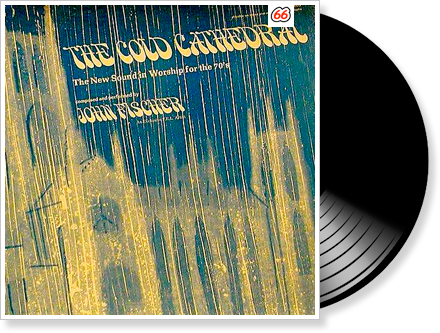
Title: The Cold Cathedral
Year: 1969
Format: LP
Label: F.E.L. Publications
John (Walter) Fischer (born 1947) is a Christian author, singer, songwriter, and speaker. He is one of the credited founders of Jesus music and was a Senior Writer with PurposeDrivenLife.com.
John Fischer was born in Pasadena, California in 1947. He graduated from Wheaton College in 1969. He studied for the Christian ministry at the Peninsula Bible Church in Palo Alto, California under Ray Stedman.
He released his first Christian album The Cold Cathedral in 1969 (a few months before Larry Norman’s Upon This Rock). This is considered the first American contemporary Christian album. (Wikipedia)
Track Listing
- The Cold Cathedral
- The Road Of Life
- See The Lilies
- Born To Die
- Open Up
- Got To Shout About It
- Alleluia (Easter Day)
- Lamentations (Death In The City)
- Look All Around You
- Hard Feeling To Explain
- No Vacancy
- The Lord’s Prayer
- John Fischer Promo
Disclaimer: The link below may point to content that is copyrighted. redtelephone66 only provides this link with the understanding that you are responsible for the content you download. redtelephone66 does not engage in music piracy, nor do we do host, fileshare, or otherwise trade in copyrighted works.
The Nitty Gritty Dirt Band – Rare Junk [Vinyl] (1968)
Title: Rare Junk
Year: 1968
Format: LP
Label: Liberty
This, the group’s third album release, was actually an odds-and-sods type compilation of leftover tracks and singles that formed a respectable 10-song 30-minute plus LP.
As a sign of just how strong the band was, it still represented a step forward from their second album, and is one of the great unknown albums of 1968. (Bruce Eder, All Music Guide)
Track Listing
- Mournin’ Blues
- Collegiana
- Willie The Weeper
- Cornbread And ‘Lasses (Sassafrass Tea)
- These Days
- Sadle Green The Vamp Of New Orleans
- Dr. Heckle And Mr. Jibe
- End Of Your Line
- Reason To Believe
- Hesitation Blues (Oh! Baby Must I Hesitate?)
- A Number And A Name
Disclaimer: The link below may point to content that is copyrighted. redtelephone66 only provides this link with the understanding that you are responsible for the content you download. redtelephone66 does not engage in music piracy, nor do we do host, fileshare, or otherwise trade in copyrighted works.
The Nitty Gritty Dirt Band – Ricochet [Vinyl] (1967)
Title: Ricochet
Year: 1967
Format: LP
Label: Liberty
This is my favorite NGDB album ’cause it’s fresh, original, and there was nothing else like it when it came out in ’67. I know ’cause I was there. A bunch of friends and I, who were in college at the time, loved to listen to this one, especially when we were feeling really good. Listening to it today brings a flood of memories about those good times.
The Teddy Bears’ Picnic is a real grabber, but the rest of the songs are good too, demonstrating musical virtuousity and the guts to be different. It’s definitely not for the country music set – it’s trippy and nostalgic. If you can listen to it without smiling, get thee to a shrink! (M. Brown)
Track Listing
- Shadow Dream Song
- Ooh Po Pe Do Girl
- Coney Island Washboard
- Put A Bar In My Car
- It’s Raining Here In Long Beach
- I’ll Search The Sky
- Truly Right
- Tide Of Love
- Happy Fat Annie
- I’ll Never Forget What’s Her Name
- Call Again
- The Teddy Bear’s Picnic
Disclaimer: The link below may point to content that is copyrighted. redtelephone66 only provides this link with the understanding that you are responsible for the content you download. redtelephone66 does not engage in music piracy, nor do we do host, fileshare, or otherwise trade in copyrighted works.
Mitch Ryder – The Detroit-Memphis Experiment (1969)
Title: The Detroit-Memphis Experiment
Year: 1969
Format: LP
Label: Dot
A famous blue-eyed Soul singer from Detroit goes to Memphis to record with Booker T. & the MGs. I was expecting some rhythm ‘n’ blues aping the Stax sound, and was surprised: from the first song, Mitch sounds more like James Brown or Wilson Pickett, very funky and hard.
The other surprise is that he switches styles from song to song, so the album is quite varied and always interesting ; it is not always funky, it is always soulful. Third surprise, Booker T. & the MGs sound quite differently than usual, harder and heavier.
Steve Cropper produced, and has written some nice liner notes where he praises Mitch Ryder, who has written his own liners too. Highly recommended, for instance to those who think that white men have no Soul. (chrismass RYM)
Track Listing
- Liberty
- Eenie Meenie Minie Moe
- Boredom
- Push Aroun’
- Sugar Bee
- I Get Hot
- I Believe
- Direct Me
- Long Long Time
- Raise Your Hand
- Fun City
- Meat
Disclaimer: The link below may point to content that is copyrighted. redtelephone66 only provides this link with the understanding that you are responsible for the content you download. redtelephone66 does not engage in music piracy, nor do we do host, fileshare, or otherwise trade in copyrighted works.
Broken Bow & Idabell – Broken Bow & Idabell (1976)
Title: Broken Bow & Idabell
Year: 1976
Format: LP
Label: Broken Bow & Idabell Inc.
Normally something as bizarre and goofy as this album would be a major turn off to me, but there’s something charming about this self-financed vanity project… First a quote from the liner notes – “One garage. One album. Two Fools. 3 years. You see here two guys who wrote and recorded their own album, in a studio they built with their own two hands. The music is indescribable: one critic tried – he said… :it is a social anecdote for disco madness, a kind of… soothing rock and roll Renaissance… in the modern music sea of same-ness…
I see a combination of Harry Nilsson, Randy Newman, and Joe Walsh in their style …” But whoever heard of a real love song for married people, or a Calypso song with a country & western break, or a song titled: “Please Buy This Song.” The two guys were Tom Colquitt and John Crow (I think) and their labor of love took the form of 1976′s “Broken Bow and Idabell”. Literally recorded in a garage that the pair converted into a recording studio (you can see studio pictures on the back cover), these guys wrote all 15 tracks (!), handled most of the instrumentation, and were credited with arranging, engineering, mixing and producing.
From a technical standpoint they did a wonderful job as the album’s production values matched that of a big budget label. Musical the set bounced all over the spectrum, including snippets of Monty Pythonesque humor (the Calypso-turn-C&W ‘At The Laundrymat’), pop (‘Something’s Coming’), hard rock (‘Time To Be Free’) and progressive moves (‘Never Have I Seen’) (great tune by the way!!!). Sure it wasn’t perfect. Their quirky sense of humor (‘Please Buy This Record’) probably pissed off lots of potential fans and some of their popier stuff bore a weird resemblance to America (check out ‘Everything Is Fine’).
Also, nothing here was particularly original, but then when’s the last time you heard a top-40 act turn out something truly original? Besides, even though it took three years, these guys sounded like they had a lot of fun recording the album. In case anyone cares, 500 copies were apparently pressed, helping explain some of the asking prices I’ve seen on dealer lists. (Bad Cat)
Track Listing
- Something’s Gone Wrong – Keep Me In Mind
- Spittin On The Keys
- Dear Lord
- Trains And Boats And Planes
- Please Buy This Song
- Spanish Lesson
- Everything Is Fine
- Never Have I Seen
- Something’s Coming
- A Friend
- At The Laundrymat
- Without Her
- Un Paid Bill – We Got Inflation
- Time To Be Free
- Goodbye And Goodnight
Disclaimer: The link below may point to content that is copyrighted. redtelephone66 only provides this link with the understanding that you are responsible for the content you download. redtelephone66 does not engage in music piracy, nor do we do host, fileshare, or otherwise trade in copyrighted works.
Eli Radish – I Didn’t Raise My Boy To Be A Soldier (1969)
Title: I Didn’t Raise My Boy To Be A Soldier
Year: 1969
Format: LP
Label: Capitol
Eli Radish, also known as the Eli Radish Band, were among the great enigmas of late-’60s rock music — a year before the Byrds began popularizing country-rock, they were playing it to receptive audiences and (mostly) unsympathetic record executives. They were founded between 1967 and 1968 in Ohio by bassist Danny Sheridan, who later became a producer, actor, and radio host (and was married to Bonnie Bramlett for a time) ; the other early members included guitarist Tom Foster (aka “the Foss”), singer Ken Frak (aka “the Reverend”), and drummer Skip Heil (aka “Skip Towne”).
Together they melded country and blues into a rock format that went over well with audiences, and then extended this sound with the addition of Eva Karasik, a virtuoso violinist whose presence allowed them to stretch out their songs on-stage, as well as experiment with unusual timbres.
Eli Radish were signed to Capitol Records in 1969, and for their debut album they decided to make a combined musical and political statement — their politics were very leftist and antiwar, and for their debut LP, ultimately titled I Didn’t Raise My Boy to Be a Soldier, they put together a collection of traditional patriotic songs about war and bravery done in a loose, sometimes decidedly off-key, and always irreverent country style.
In 1969 this was pretty potent stuff, or should have been — the backlash against the antiwar movement had manifested itself with the election of Richard Nixon to the White House (and Spiro Agnew as vice president), and Capitol, ironically enough, was already capitalizing on one aspect of the latter with Merle Haggard’s “Okie from Muskogee.”
Unfortunately, neither the record label nor most of the record-buying public got the irony or the joke behind the record, and the album’s commercial fate was sealed, though it did become a cult item in the ranks of the antiwar movement, an underground success along the lines of David Peel’s releases of the same era (though Eli Radish had a lot more obvious musical talent manifesting itself in their ranks). Musically, they sounded somewhat like the Band, mixing several genres within the same songs.
Ken Frak left the band after the recording of the debut album, and over the next few months they added two new members — guitarist Rick “Muskrat” Kennedy and singer David Allan Coe, then not long out of prison and still starting up his music career. He was there for a couple of years, as the band’s career and popularity peaked and then wound down. Coe lasted until 1972 and was succeeded by Jonah Koslen (later with the Michael Stanley Band). The Eli Radish Band broke up in 1973, leaving behind the Capitol album, plus a rumored live album — cut for Sun Records no less — that has never seen the light of day. (Bruce Eder, All Music Guide)
Track Listing
- I Didn’t Raise My Boy To Be A Soldier
- Praise The Lord And Pass The Ammunition
- When The Lights Go On Again (All Over The World)
- Comin’ In On A Wing And A Prayer
- Johnny Zero
- The White Cliffs Of Dover
- Over There
- Johnny Doughboy (Found A Rose In Ireland)
- When Johnny Comes Marching Home
- The Ballad Of The Green Berets
Cincinnati Joe & Mad Lydia – Cincinnati Joe & Mad Lydia (1971)
Title: Cincinnati Joe & Mad Lydia
Year: 1971
Format: LP
Label: River Witch
Legendary, special and unique higher key “real people” LP that goes all over the map from psych to funk femme folk psych all with their own perspective and filtered through a half empty Holiday Inn lounge vibe. Quite unexplainable but very enjoyable. (subliminal sounds)
Track Listing
- Get It On
- I Paid My Dues
- 900 Years
- Jesus Is Our Color Man
- Love Spider
- Being Yourself
- Officer John
- Down On The River
- Plastic Rose
- Cincinnati Soul
Country Coalition – Country Coalition (1970)
Title: Country Coalition
Year: 1970
Format: LP
Label: ABC Bluesway
Country Coalition were a country rock/pop group whose members included John Kurtz, David Jackson, Peggy Bradley and Dick Bradley. The band formed in 1968 and at one time included Doug Dillard of Dillard & Clark fame.
This was their lone album, which was also released under the title “Time To Get It Together” with a different cover. John Kurtz would go on to record an album for ABC Dunhill (“Reunion” see June 25, 2010 post) (Max Collodie)
Track Listing
- Your One Man Band
- Second-Hand Sundown Queen
- Sweet Sweetheart
- Poverty
- Life’s Little Up’s And Downs
- Time To Get It Together
- How Do I Love You
- November Monday
- Think About Now
- Giving Up Trying To Please You
- Age Of Angels
- Longing To Be Free