
Game – Game (1970)
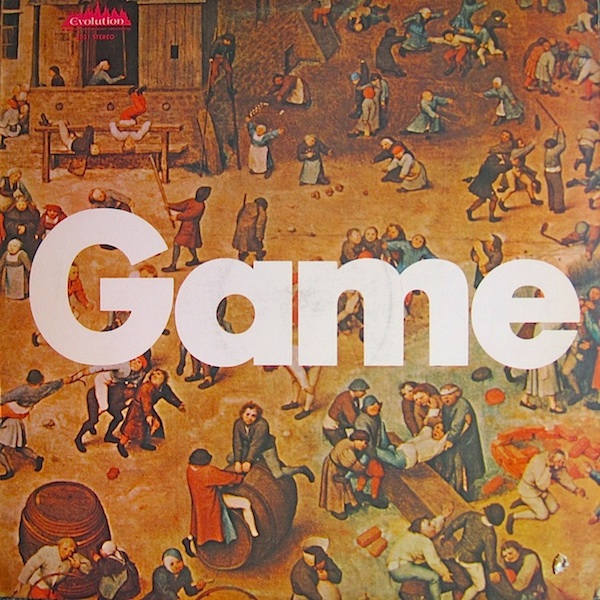
Title: Game
Year: 1970
Format: LP
Label: Evolution
Singers/guitarists Eddie Keating and Chuck Kirkpatrick, drummer Scott Kirkpatrick, keyboard player Les Luhring and singer/bassist George Terry had all been members of the Southern Florida based Proctor Amusement Company. The band had become quite popular throughout the region, even recording a couple of singles and an unreleased LP for the New York based Faithful Virtue label before calling it quits. While Proctor Amusement Company had come to an end, by 1969 the five were playing Southern Florida clubs as Game.
Released by Faithful-Virtue (also released on the Evolution Label), 1969’s “Game” is an interesting debut. Co-produced by manager/mentor Steve Goldberg and Chuck Kirkpatrick, musically the set’s all over the place, including stabs at conventional pop, progressive (‘Entrance’), rock (‘Fat Mama’) and even showing off some jazzy interludes (check out side two’s ‘Disturbance/We Turn To You’). Normally such a diverse album wouldn’t make all that much of an impression with me, but this is one of those exceptions.
While most bands have a hard time finding one good singer, Game wasn’t hurt by having three in the form of Keating, Chuck Kirkpatrick and Terry. The fact that Keating and Luhring wrote some nifty melodies and were capable of turning in ear candy harmony vocals didn’t hurt the end results either (check out Luhring’s ‘Discovering You’). To be honest, material such as ‘Make Some Music’ and ‘Stop, Look & Listen’ sounds a couple of years ahead of it’s time… had it been released in say 1976 it probably would have blown an AOR outfit like Kansas off the radio. Unfortunately the set went nowhere. (RDTEN1 RYM)
Track Listing
- Entrance/What’s Goin’ Through My Head
- Discovering You
- Fat Mama
- Make Some Music
- Stop, Look & Listen
- Disturbance/We Turn To You
- Sermon
- Girl Next Door
- Exit
Game – Long Hot Summer (1971)
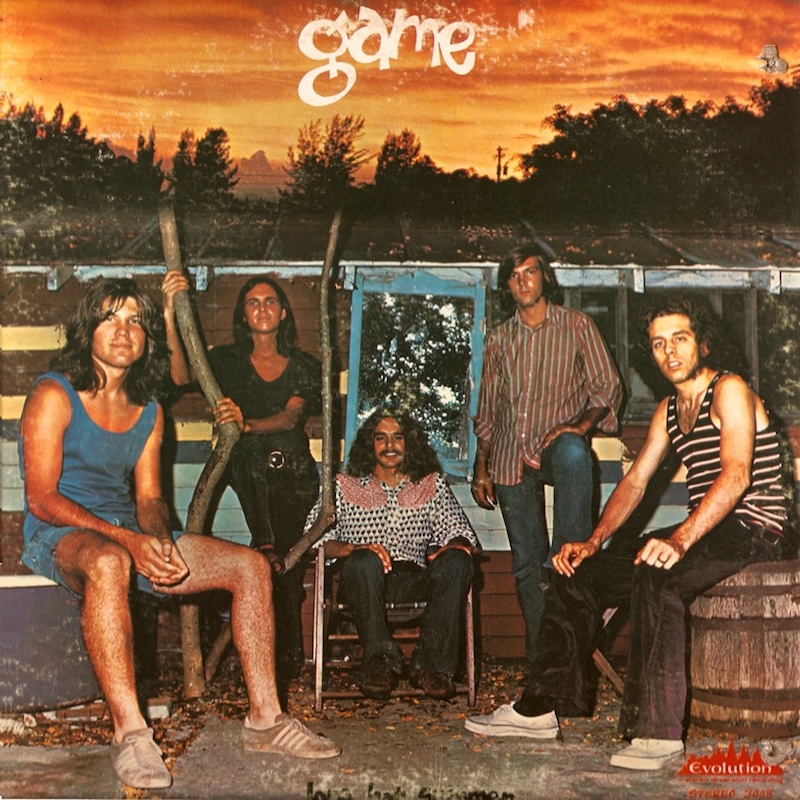
Title: Long Hot Summer
Year: 1971
Format: LP
Label: Evolution
In 1970 the band relocated to Southern California. Original drummer Scott Kirkpatrick dropped out before the move, replaced by Dave Robinson. Over the next two years the band recorded a considerable amount of material including 1971’s “Long Hot Summer” which was a departure from the progressive style rock of their first lp. Forced to start playing local clubs when their long time financial benefactor threatened to cut off support, Robinson and Terry called it quits, returning to Florida.
Terry subsequently hit the big time as a member of Eric Clapton’s band. Enduring a series of personnel changes, the band continued to play through 1978. Chuck Kirkpatrick recorded an instantly obscure solo album for Capitol before returning to Miami where he spent some time recording and touring with Firefall, eventually starting his own business. (Max Collodie)
Track Listing
- The Rock + Roll Medley: We’re On The Road This Weekend/Rock + Roll Me Baby
- Man In Black
- Sunshine 79
- Two Songs For The Senorita
- I’ll Be Back Someday
- Laying Back
- Animal Friends
- Feeling Good
- Changes
- Same Mountain
Five Man Electrical Band – Good-Byes And Butterflies (1970)
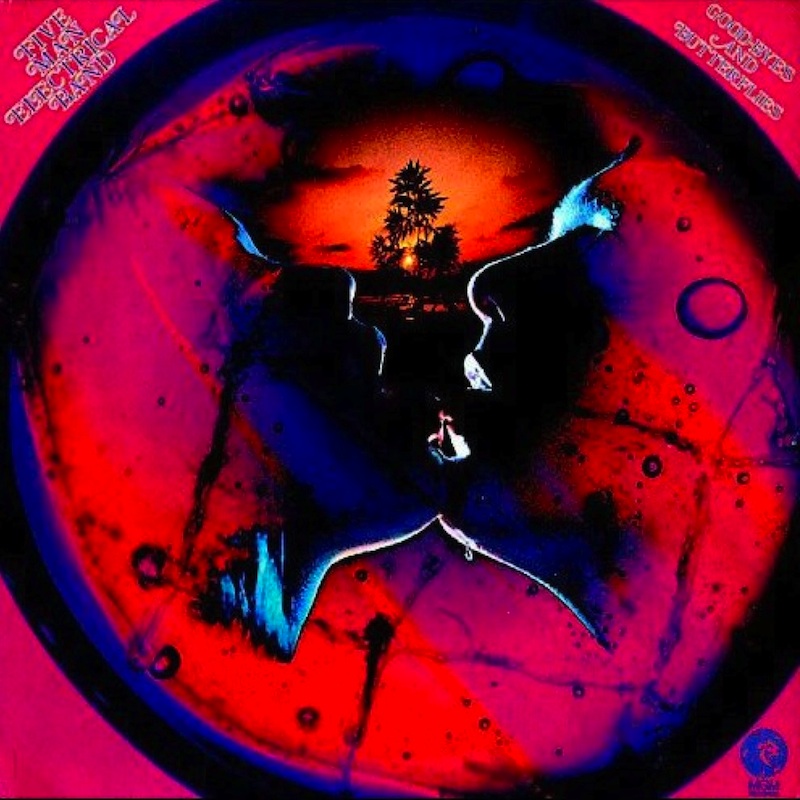
Title: Good-Byes And Butterflies
Year: 1970
Format: LP
Label: MGM
Best-known for their 1971 anti-establishment hit “Signs,” Ottawa, Canada’s Five Man Electrical Band featured guitarist/vocalist Les Emmerson, bassist Brian Rading, keyboardist Ted Gerow, and drummers Rick “Bell” Belanger and Mike “Bell” Belanger. Originally known as the Staccatos, the group formed in the mid-’60s and earned their first big break with the 1967 hit “Half Past Midnight”; their first attempt at stateside success came that year when they recorded A Wild Pair with the Guess Who. The album sold well and “Half Past Midnight” was released as a single in the U.S., but the group was dismissed as sounding too much like the Beach Boys.
The Staccatos released their second album, Five Man Electrical Band, in 1968, and renamed themselves after it the following year. They continued to record for Capitol Records, traveling to L.A. to record singles such as “It Never Rains on Maple Lane.” After switching to MGM and relocating permanently to L.A., the group released several other singles that received very little chart action. One of those singles, “Hello Melinda Goodbye,” featured “Signs” as its B-side, which was inspired by the proliferation of billboards on America’s freeways; though it garnered some airplay in L.A., it failed to do much when it was reissued on its own. By 1971, the group was close to splitting when their new label, Jimmy Webb and Dallas Smith’s Lion Records, reissued “Signs” as a teaser for the Five Man Electrical Band’s full-length debut, Goodbyes & Butterflies.
This time, “Signs” reached number three in the U.S., number four in Canada, and sold more than two million copies internationally. The follow-up single, “Absolutely Right,” also did well, reaching number three in Canada and the Top 20 in the U.S. However, their later albums didn’t receive much attention, and in 1973 after so many ups and downs, the original Five Man Electrical Band finally packed it in; Emmerson recorded using the group’s name for another two years. Subsequently, he tried his hand at running a label, Perfect Records, played with the Cooper Brothers, and began a solo career upon his return to Ottawa. The original lineup re-formed in 1986 for a benefit concert and for occasional tours of eastern Canada. Emmerson bought the rights to the group’s material and released the best-of, Absolutely Right, in 1996. (Heather Phares, All Music Guide)
Track Listing
- Signs
- Safe And Sound With Jesus
- Dance Of The Swamp Woman
- Butterfly
- Hello Melinda Goodbye
- Moonshine
- Forever Together
- Mama’s Baby Child
- Man With The Horse And Wagon
- All Is Right With The World Tonight
- Variations On A Theme Of Lepidoptera
The Knowbody Else – The Knowbody Else (1969)
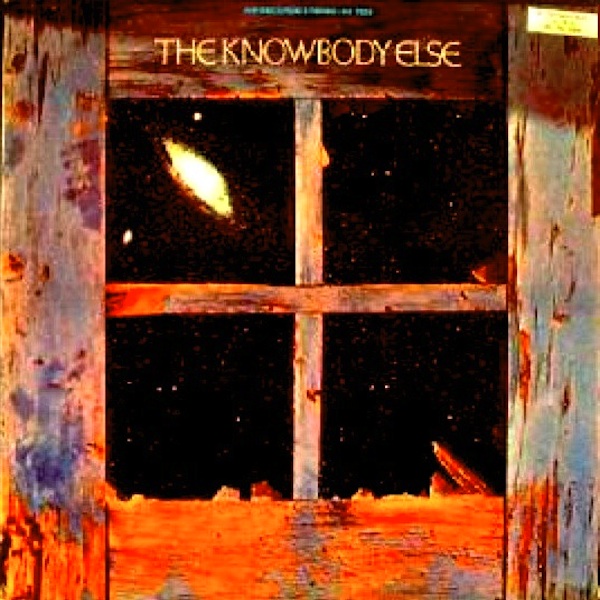
Title: The Knowbody Else
Year: 1969
Format: LP
Label: Hip
The Knowbody Else consisted of Jim Dandy (vocals, washboard), Rickie Lee Reynolds (guitar, vocals), Harvey Jett (guitar, keyboards, vocals), Pat Daugherty (bass, vocals), Wayne Evans (drums), Stanley Knight (guitar).
This is totally pre Black Oak, this album is more of a late 60s country album then a hard southern rock album like Black Oak put out in 1970, these recordings are from 68/69, most accoustic with Jim Dandy’s “grandpa tobacco sounding voice” singing along, it amazes me how great Black Oak got very quickly right after these recordings, it probably had everything to do with their label and production team, within two years of these recordings these guys where true rockers of the 70s” (Saxoman)
Track Listing
- Hold Me Down
- In Your Quiet Home
- Fools And Friends
- No One And The Sun
- Vieux Carre
- Flying Horse Of Louisiana
- After I Smoke, I Like To Sleep
- One Life Two Live
- Black Blues
Rare Bird – As Your Mind Flies By (1970)
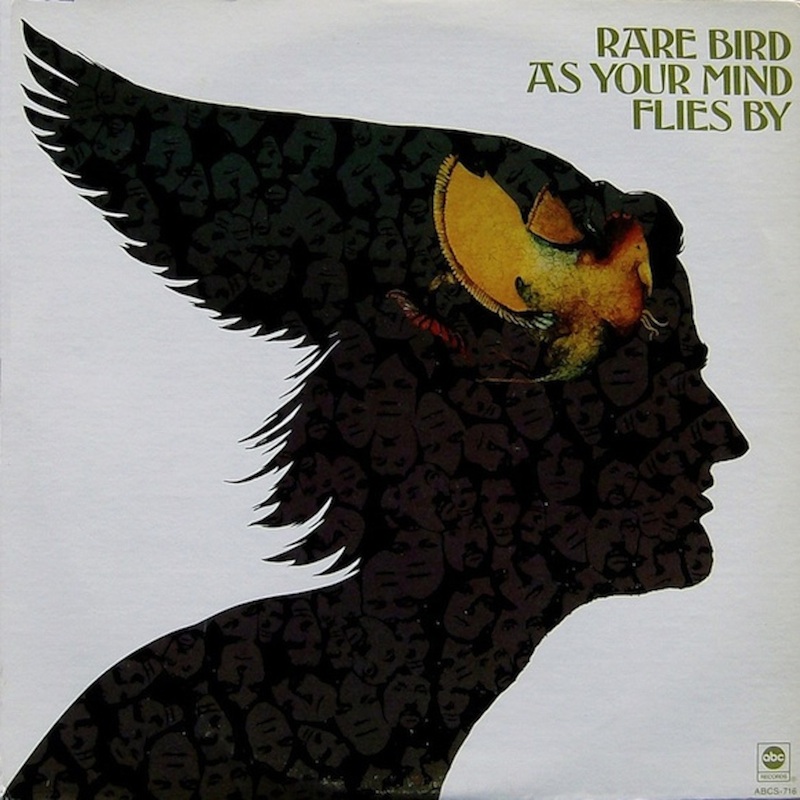
Title: As Your Mind Flies By
Year: 1970
Format: LP
Label: ABC
I must be one of the few who actually think their self-entitled album was actually better than As Your Mind Flies By. While the music on this followup has matured, it seems as if they became even more pop-oriented, like on “What You Want To Know” and “I’m Thinking”. I find these two pieces to drag on a bit. Then there’s “Down on the Floor” which is mainly a harpsichord-dominated piece. Without a doubt, the real highlight on side one is the heavy and aggressive “Hammerhead”.
Here the band is exploring more or less the same kind of prog other bands of the time like Gracious, Cressida, Beggars Opera, even the satanic act Black Widow, etc. were doing. Incredible piece. But what I totally forgot to mention, is all four pieces feature the voice of bassist Steve Gould, another one of my favorite rock vocalists, this guy certainly don’t get the attention that say Peter Gabriel, Peter Hammill, or even Roger Chapman gets, and he’s up there, as far as I’m concerned.
Side two is taken up by a four part movement called “Flight”. This is without a doubt their most ambitious piece, they even went so far as adding a choir, and even an experimental passage that’s much like the Krautrock bands of the time. But for some reason, I seem to like the progressive experiments of their debut (“Beautiful Scarlet”, “God of War”, “Iceberg”) better, but of course, “Flight” is not bad, even if parts remind me of “Beautiful Scarlet”.
This was unfortunately the last album with the original lineup of Steve Gould, David Kaffenetti, Mark Ashton, and Graham Field. Field went on to form a band called Fields and Ashton moved on to other things (nothing I think was of interest to prog fans). The remaining Rare Bird members recruited new members (including two guitar players) and switched to Polydor. As for As Your Mind Flies By, I still recommend it to those who like early prog rock. (Proghead72 RYM)
Track Listing
- What You Want To Know
- Down On The Floor
- Hammerhead
- I’m Thinking
- Flight: As Your Mind Flies By
- Flight: Vacuum
- Flight: New York/Central Park
- Devil’s High Concern [non lp single]
On The Seventh Day… – Number One (1970)
Title: Number One
Year: 1970
Format: LP
Label: Mercury
Geez, this is a weird one. As the apparent brain trust behind 1970’s “Number One” about the only thing I know about Alan Bernstein and Victor Millrose is that they enjoyed isolated mid-1960s successes as songwriters, placing a number of hits with artists such as Neil Diamond (‘Girl You’re a Woman Now’). Clearly a concept set intended as social and political commentary, the album melds together a weird blend of original song fragments, with news clips (I recognized Martin Luther King, LBJ, Robert Kennedy, Nixon, Reagan,), brief narrative sections and assorted sound effects.
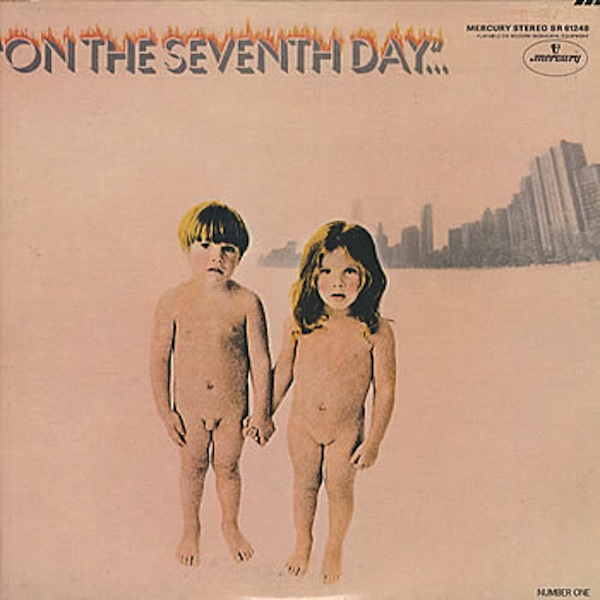
The activist agenda addressed the usual array of topics, including nuclear war, poverty, race relations, war, gun control, etc. I can’t say this has aged very well, though those same problems persist three decades later. As for the original songs, they’re okay, if somewhat anonymous. Recalling something out of James Brown’s catalog, the song fragment embedded in ‘Burn the Night’ is probably the best of the lot. Overall it reminds me a little of an album by the UK band Warm Dust (“Peace for Our Time”), though the results aren’t quite as abrasive. In many ways the cover art is actually more interesting than the music.
Mercury originally released the set with a cover photo showing a pair of naked young children holding hands. Needless to say, the resulting uproar saw Mercury hastily repackage the set with a bland picture of a tree. (Acid Archives)
Track Listing
- Epilogue/There’s A Baby
- Burn The Night
- The Sound Of Drums
- They Call Me Gun
- The Song Is Mightier Than The Gun/Prologue
The Loading Zone – The Loading Zone (1968)
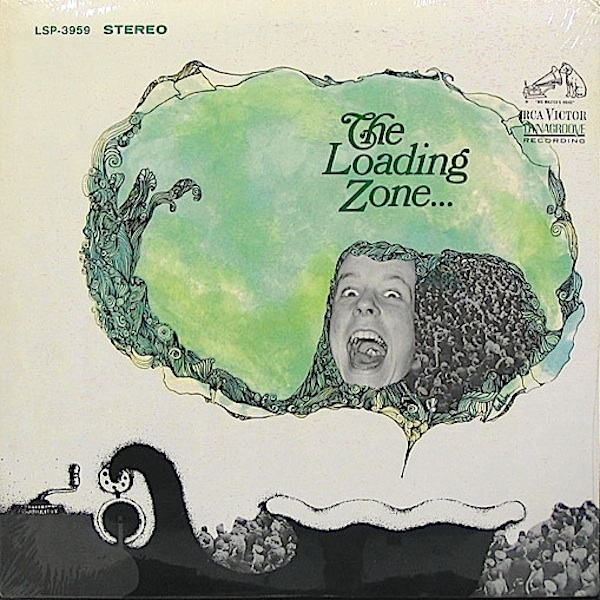
Title: The Loading Zone
Year: 1968
Format: LP
Label: RCA Victor
The Loading Zone was an American rock band of the late 1960s, formed in Oakland, California in 1966 by singer-keyboardist Paul Fauerso, following the dissolution of his jazz group The Tom Paul Trio. The original lineup was Fauerso, bassist Bob Kridle, drummer George Newcom and guitarists Pete Shapiro and Steve Dowler, both formerly of Berkeley psychedelic rock band The Marbles, who had supported Jefferson Airplane at the historic “Tribute to Dr. Strange” dance, the inaugural Family Dog promotion, held at San Francisco’s Longshoreman’s Hall in October 1965.
The Loading Zone’s first major concert was the now-legendary Trips Festival at the Longshoreman’s Hall in January 1966. Although primarily an R&B band, The Loading Zone added contemporary psychedelic influences and soon became a popular attraction on the burgeoning Bay Area music scene. The Loading Zone was based at the San Francisco venue The New Orleans House but performed numerous times at major venues including the Fillmore West.
The Loading Zone occasionally headlined but the group is better known for supporting some of the biggest acts of the period including Cream, The Who, The Byrds, Big Brother & the Holding Company, The Grateful Dead, Country Joe & The Fish, Howlin’ Wolf, Sam & Dave, Chuck Berry and Buddy Miles.
In 1968 Fauerso placed an ad in the San Francisco Chronicle seeking a new lead vocalist, which led to the recruitment of Linda Tillery, who joined just prior to the band’s signing with RCA Records. Despite their live popularity, the group lacked a strong base of original material; their self-titled debut LP was poorly received, and was criticised for its excessive production and its reliance on covers. The Loading Zone was unable to garner support from radio and eventually split in 1969.
In 1970 Fauerso and Tillery re-formed the group with guitarist Steve Busfield, bassist Mike Eggleston, and drummer George Marsh, recording their second and final LP One for All for the Umbrella label (i’ve included two tracks from that album in the file), before disbanding for good in 1971. (Wikipedia)
Track Listing
- No More Tears
- Love Feels Like Fire
- Don’t Lose Control (Of Your Soul)
- I Can’t Please You
- Shop Around
- The Bells
- Kali Yuga-Loo
- God Bless The Child
- Danger Heartbreak Dead Ahead
- Can I Dedicate
- One For All
- Think Alone
Swampgas – Swampgas (1972)
Title: Swampgas
Year: 1972
Format: LP
Label: Buddah
The Long Island, NY, band Swamp Gas recorded one album of mediocre of-its-age rock at the beginning of the early ’70s. Alternating between hard rock and folk-rock, it bore some influences from the Grateful Dead, Crosby, Stills, Nash & Young, and more aggressive bluesy early hard rock bands. The group had been discovered by Artie Kornfeld, most famous as one of the producers of the Woodstock festival, and Kornfeld and the band were co-credited as producers of the self-titled Swampgas LP.
It didn’t come out immediately, however, as Kornfeld’s label experienced financial troubles. It did eventually get released by Buddah Records, the parent company of Kornfeld’s label, but by that time the band had been broken up for about a year. Guitarist and principal songwriter Baird Hersey later recorded as part of the jazz group the Year of the Ear, with the band FX, and as a solo artist, as well as played guitar and sung with David Hykes. Singer Kim Ornitz established a successful career in film music as a sound mixer. (Richie Unterberger, All Music Guide)
Track Listing
- Potato Strut
- Don’t
- The Waiting, E Train Blue
- Trapped In The City
- Eulogy
- Frolic Child
- Pala
- Egg Shells
Gospel Oak – Gospel Oak (1970)
Title: Gospel Oak
Year: 1970
Format: LP
Label: Kapp
Matthew Kelly was a Californian who’d previously attracted attention playing blues harmonica and touring with the likes of Mel Brown, John Lee Hooker, and T-Bone Walker. The man clearly had some chops to be supporting names like that. Kelly soon found himself caught-up in San Francisco’s burgeoning rock scene. He added electric guitar to his repertoire and started playing with Chris Herold and Dave Torbert. In 1969 the three of them were hired to play in the band Horses which was fronted by sometimes actor and lead singer Don Johnson (yeap, the Miami Vice guy). Horses recorded one self-titled album before collapsing.
I found a brief online interview where Kelly actually talked about the experience: “I’m a bit embarrassed about. We actually made a record. We were backing up this Hollywood singer, a guy who was sort of a Jim Morrison type. We got flown down to Hollywood and lived there for three or four months while we were making this very commercial record, of which Jump for Joy (A Kingfish tune) was on the record with this guy Don Johnson was singing. Fortunately this record is very difficult to get. So for anybody that wants to run right out and buy it, I think they will have a very difficult time. It is just as well for it is a bit embarrassing.”
Perhaps out of personal shame Kelly’s next move found him headed for the UK. At the same time drummer Kerry Gaines, keyboardist Cliff Hall, pedal steel guitarist Gordon Huntley, lead guitarist Bob Le Gate, and singer/bassist John Rapp found themselves in England. Originally from Indiana, they somehow managed to attract the attention of Beatles publicist Tony Barrow. Barrow signed on as manager and used his connections to get the band a record deal with Kapp. The label then decided to ship the group to London where they hooked up with fellow expatriot Kelly.
The expanded lineup was the teamed with producers Mike Leander and Roger Watson for their self titled debut LP. Musically “Gospel Oak” was all over the genre map. With Rapp and Le Gate responsible for most of the material, tracks like ‘Recollections of Jessica’ and ‘Big Fat White Man’ were decent country-rock complete with nice melodies and catchy group harmonies. Showcasing Kelly’s harmonica and Le Gate’s lead guitar ‘Brown Haired Girl’, ‘Common Expressions’ and the instrumental ‘South Bleach’ offered up a harder edged blues sound, while ‘Go Talk To Rachel’ and ‘O. K. Sam’ found the group taking a stab at a more conventional and accessable rock attack. Propelled by some nifty Le Gate guitar, best of the lot was the album-closer ‘St. Anne’s Pretension’.
The album was never less than enjoyable, but by the same token it lacked anything to distinguish it from the competition. The album’s certainly likeable which makes it too bad if didn’t sport one or two slightly stronger compositions. With those ingredients these guys could have been major players. Kapp also tapped the album for a single in the form of ‘O. K. Sam’ b/w ‘Go Talk To Rachel (RDTEN1 RYM)
Track Listing
- Brown Haired Girl
- Common Expression
- Recollections Of Jessica
- South Bleach
- Big Fat White Man
- Why We Came
- Go Talk To Rachel
- O.K. Sam
- St. Anne’s Pretension
The Collage – The Collage (1968)
Title: The Collage
Year: 1968
Format: LP
Label: Smash
The Collage were a vocal quartet from California, 2 boys, (Jerry & Ron) & 2 girls, (Jodie & Donna) with a very cool sound. Not enough though, to set them apart from the pack, but very “groovy“ out of their context.
The group often gets confused with the “other” Collage that released an album on Golden Crest Records in 1971 (see above post).
The sound is as good as re-discovered groups like Free Design, or Millenium. In fact, Curt Boettcher wrote one of the songs (“Would You Like To Go”) on the lp, as well as one by Roger Nichols (“Can I Go”).
The arrangements are by the great Perry Botkin Jr., and he gives the whole record a nice swirling, magical quality, and the rest of the album is just as impressive, and should please any lover of the genre. (Jack Dominilla)
Track Listing
- Lookin’ At A Baby
- Driftin’
- Rainy Blue Memory Day
- Any Day’s A Sunday Afternoon
- My Mind’s At Ease
- Virginia Day’s Ragtime Memories
- Can I Go
- She’s Just Laughin’ At Me
- Ragged Clown
- Would You Like To Go