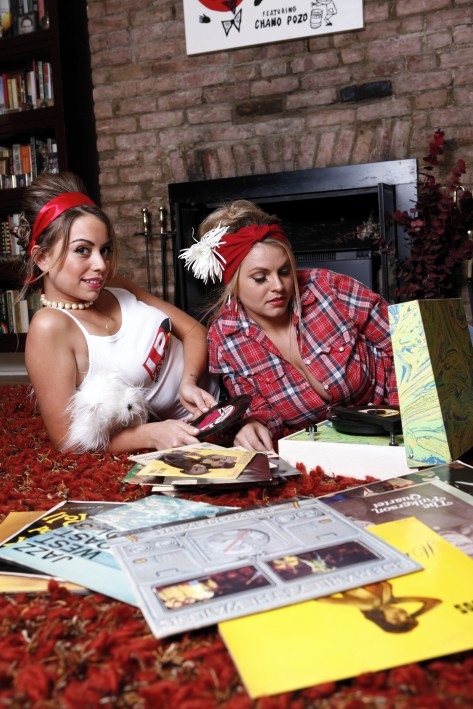

The Barry Goldberg Blues Band – Blowing My Mind (1966)
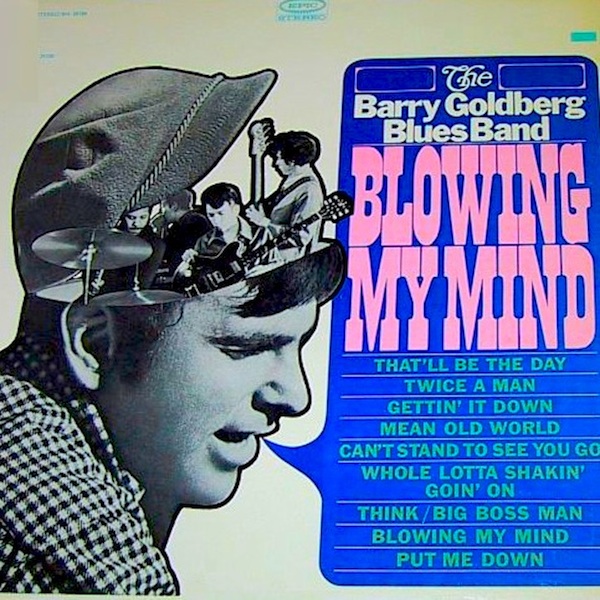
Title: Blowing My Mind
Year: 1966
Format: LP
Label: Epic
Chicago-style blues practitioner Barry Goldberg (keyboards/vocals) first came to prominence after appearing with Bob Dylan (guitar/vocals) at the 1965 Newport Folk Festival. Shortly after that he teamed up with Steve Miller (guitar/vocals) to form the Goldberg-Miller Blues Band, releasing a pair of mostly ignored 7″ singles. After Miller split to the Bay Area to form his own blues band, Goldberg and the remnants of the short-lived Goldberg-Miller union headed to Music City U.S.A. to cut Blowing My Mind (1966) . Joining Goldberg were several up-and-coming notables, including Charlie Musselwhite (harmonica), Harvey Mandel (guitar), Roy Ruby (bass), and Maurice McKinley (drums).
This quintet drives through a blend of high-energy originals as well as an interesting combination of equally commanding cover tunes. However, Goldberg’s “Mean Old World” stands as an anomaly. It mirrors a decidedly traditional blues style and incorporates a slower — if not somewhat methodical — pace with plenty of room for well-crafted solos. Mandel’s projections notably help to coalesce the band’s sound and overall direction. On tracks such as the rowdy and playful “Twice a Man,” he foreshadows the aggressive and full-bodied approach that his solo fretwork would eventually follow.
The same side is also highlighted by Musslewhite’s remarkable ensemble interplay as he interjects some tasty amplified mouth harp accents. The title cut is a mid tempo Goldberg/Ruby tune with an edgy garage rock feel, slightly reminiscent of Dylan’s “Positively Fourth Street.” The pair also contribute the upbeat and soulful “Put Me Down.” McKinley really shines with a solid backbeat that is fleshed out by some clever licks and fills. Again, front and center is Musslewhite’s reserved yet expressive co-lead as he responds to Goldberg’s vocals. “Whole Lotta Shakin’ Going On” and “That’ll Be the Day” are recommended re workings that perhaps best exemplify the bluesy synthesis that defined the Barry Goldberg Blues Band, at least on this initial effort.
Rather than attempting a note-for-note re-creation, they fuse their own blend of electric blues onto the well-known and already established melodies. The same holds for the cover versions of Jimmy Reed’s “Can’t Stand to See You Go” and Jimmy McCracklin’s seminal side, “Think.” The 1998 CD reissue on the Collectables label also includes a previously unreleased and highly effective reading of Geoff Muldaur’s “Ginger Man.” (Lindsay Planer, All Music Guide)
Track Listing
- Gettin’ It Down
- Mean Old World
- Twice A Man
- Whole Lotta’ Lovin’ Goin’ On
- Big Boss Man
- Blowing My Mind
- That’ll Be The Day
- Can’t Stand To See You Go
- Put Me Down
- Think
Power Of Zeus – The Gospel According To Zeus (1970)
Title: The Gospel According To Zeus
Year: 1970
Format: LP
Label: Rare Earth
What a weird bundle of circumstances this is. Signed inexplicably to the Motown label, this crew of ambitious Sabbath/Purple heavies issued their one and only album to almost zero response. Given the band’s unwieldy moniker and the fact that no one was expecting something like this from the company that brought us Marvin Gaye, it’s failure is not especially surprising.
But based on the actual guts of the record, The Gospel According To Zeus, it deserved much better. The fusion of sound here is not altogether lacking in R&B ideas, but that’s mostly in the vocals and in the occasionally funky beats present. But you gotta add in lots of squalling Hammond organ and tough guitars to the mix as well, all of which combine to make this record nothing if not surprising.
To be totally fair, we must thank hip-hop DJs that the album has any cache these days at all. Listen to the drum intro of “Sorcery Of Isis (The Ritual Of The Mole)” and you might recognize it from any number of B-boy mixes. The tune soon shifts into a dreamy but driving slide through sandy lysergia, and is among the album’s best tunes, showing off all the band’s powers intently. “No Time” and “In The Night” are more typical of early seventies heaviness, but the former especially strikes a great riff/groove that sticks to the ribs pleasingly. “Realize” also features some lucid jamming that wouldn’t have been out of place on an Iron Butterfly record, only with focus and restraint applied.
There are a few mellow cuts, which are actually pretty negligible, as well as some sections that dead ringers for Rod Evans era Deep Purple (“In The Night”) that will either disgust or amaze depending on your feelings about the band’s most divisive era. The classic on board, however, must be “It Couldn’t Be Me,” a slamming and well penned cut that makes best use of the band’s vocal talents, it also brings us everything that was great about this band into one, compact package. Great stuff. (cirithungol RYM)
Track Listing
- It Couldn’t Be Me
- In The Night
- Green Grass And Clover
- I Lost My Love
- The Death Trip
- No Time
- Uncertain Destination
- Realization
- Hard Working Man
- The Sorcerer Of Isis
Disclaimer: The link below may point to content that is copyrighted. redtelephone66 only provides this link with the understanding that you are responsible for the content you download. redtelephone66 does not engage in music piracy, nor do we do host, fileshare, or otherwise trade in copyrighted works.

Don Sebesky – The Distant Galaxy (1968)
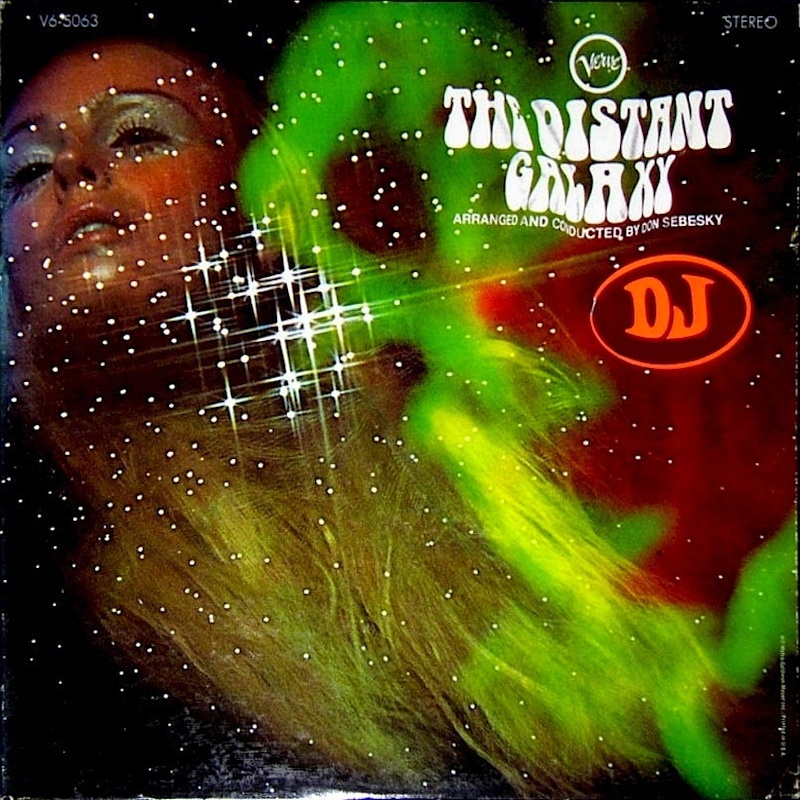
Title: The Distant Galaxy
Year: 1968
Format: LP
Label: Verve
The Distant Galaxy was in reality the studio project of Don Sebesky, a composer and arranger best known for a fruitful series of collaborations with producer Creed Taylor. Their lush, commercial orchestrations for jazz artists were ubiquitous in the late ‘60s twilight of jazz’s mainstream currency. The album features some well known jazz musicians including Hubert Laws (soprano sax-flute), Chuck Rainey (bass), Dick Hyman (piano), Larry Coryell (electric sitar-guitar), Donald McDonald (drums), and of course, Don Sebesky (moog synthesizer). (Jack Dominilla)
Track Listing
- The Distant Galaxy
- Dance The Night Away
- Sounds Of Silence
- Martian Storm
- Soul Lady
- Reflectivity
- Mr. Tambourine Man
- Cosmic Force
- Water Brother
- Spiral Nebulae
- The Blue Scimitar
- Satellite
- Elvira Madigan Theme/Honey
- Solar Emissions
- Guru-Vin
- I Wish It Would Rain
- Lady Madonna
Disclaimer: The link below may point to content that is copyrighted. redtelephone66 only provides this link with the understanding that you are responsible for the content you download. redtelephone66 does not engage in music piracy, nor do we do host, fileshare, or otherwise trade in copyrighted works.
The Cambridge Concept Of Timothy Clover – A Harvard Square Affair (1968)
Title: A Harvard Square Affair
Year: 1968
Format: LP
Label: Tower
Tower’s entry into the Boston Sound is this fine soft-rock album by Timothy Clover. With “Trolley Car Line” the best song on the album, leading the pace. This lp has the potential of a big seller. “My Friend John” is also as catchy, as is “A Harvard Square Affair”. (Billboard Magazine 1968)
Apparently a studio project masterminded by Bruce Patch and Lennie Petze who had recently enjoyed some success with Teddy and the Pandas, 1968′s “The Cambridge Concept of Timothy Clover” showcased an entertaining set of heavily orchestrated flower power/lite-psych moves. Recorded at New York City’s Olmsted Studio, the set was produced by Patch and Petze, with Larry Jaspon credited as executive producer. Largely written by Patch and Petze, material like ‘A Harvard Square Affair’, ‘Cotton Candy (Can Be Yours)’ and ‘My Friend John’ was full of pretty melodies, fey lyrics, and interesting studio touches.
Given they pulled a local bar band to record the material, the results weren’t bad. As lead singer ‘John Clover’ (whoever he was), had a decent if somewhat anonymous voice. Imagine a lightweight Donovan, or perhaps Chad and Jeremy, or Peter and Gordon during their hippy stages and you’d get a feel for songs like the title track, ‘Great World Next Door’ and ‘Trolley Car Line’.
While it was all quite pleasant and occasionally had some commercial potential (the harpsichord propelled ‘One Day You’re a Rich Man’), you were also left with the uneasy feeling that this was little more than big corporation product designed to part teenagers from their hard earned allowances (which it was). In case anyone cared, best of the lot were the last three tracks – ‘One Day You’re a Rich Man’, ‘When You’re Dreamin’ ‘ and ‘Tear-Drop Mobile’. Ironically the album stiffed commercially. (RDTEN1 RYM)
Track Listing
- Timothy Clover
- Trolley Car Line
- One Day You’re A Rich Man
- When You’re Dreamin’
- Tear Drop Mobile
- A Harvard Square Affair
- His Life To Live Over
- Cotton Candy (Can Be Yours)
- My Friend John
- Great World Next Door
Disclaimer: The link below may point to content that is copyrighted. redtelephone66 only provides this link with the understanding that you are responsible for the content you download. redtelephone66 does not engage in music piracy, nor do we do host, fileshare, or otherwise trade in copyrighted works.
Faun – Faun (1968)
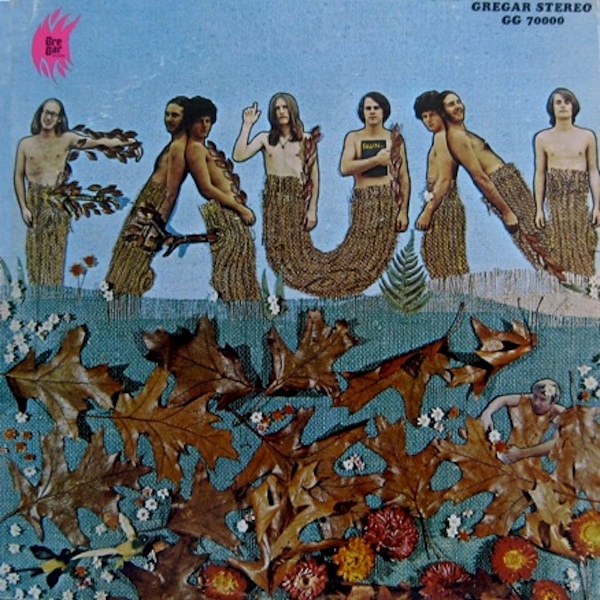
Title: Faun
Year: 1968
Format: LP
Label: Gre Gar
From San Francisco, Faun’s main claim to fame is the inclusion of Ross Valory and George Tickner who had previously been members of Frumious Bandersnatch. Tickner and Valory would go on to form Journey, while Valory would subsequently join the Steve Miller Band.
The Band consisted of James Trumbo (keyboards-vocals), George Tickner (guitar), Royal Martin (guitar), Don Banducci (vocals), Lynn Chatwin (vocals), and Ross Valory (bass) and originated in Mill Valley, San Francisco.
The album according to the liner notes “seems to trip backward and forward through time”… a unique blend of pop, jazz, 1930 swing and the classics”. tunes include “Looking For Sunshine”, “Velvet Pillows And Crystal Dreams” and “Follow Me”. (Jack Dominilla)
Track Listing
- Yes I’m Really Lonely
- Son Of A Literate Man
- The Girl With The Lonely Eyes
- Velvet Pillows And Crystal Dreams
- Albert
- We Hope You’re Feeling Better
- Looking For Sunshine
- I Asked My Mother
- Better Dig What You Find
- Wierd Rudy
- Follow Me
Disclaimer: The link below may point to content that is copyrighted. redtelephone66 only provides this link with the understanding that you are responsible for the content you download. redtelephone66 does not engage in music piracy, nor do we do host, fileshare, or otherwise trade in copyrighted works.
Gove – Heavy Cowboy (1968)
Title: Heavy Cowboy
Year: 1968
Format: LP
Label: TRX
Gove Scrivenor was born in New Haven, Connecticut in 1945, and raised in the small coastal town of Pine Orchard, Connecticut until his 15th birthday when he went off to ‘High Mowing School’ in Wilton, New Hampshire. ‘High Mowing School’ is one of the Waldorf schools that place great emphasis on the Arts and Nature, and encouraged Gove to express himself through music.
Gove’s musical influences began with the regular summer visits of Benny Goodman and Red Nichols and the Five Pennies to his home in Pine Orchard. His father had been a bandleader in college and had befriended Benny and Red after graduation in 1927. These were musical events to remember for a boy of ten. The joy of music was everywhere then and although Gove’s own style was affected more by the artists and musicians of the folk and blues genre, like Tom Rush, Eric Von Schmidt, Joan Baez, Paul Butterfield, Dylan and the like, he cherishes those times with his father and the incredible musicians who frequented his house on those lazy summer afternoons. After school in New Hampshire, Gove enlisted in the Navy and spent four years as a submarine sonar technician and was smitten by the music of the Newport Folk Festival in 1964. He attended the Festival three years running. It was underneath a tree, in a field at the fest, that he drew his first ‘crowd’ and it dawned on him that he might be an artist himself when he got out of the Navy.
When he was honorably discharged from the Navy in 1967, Gove settled in Virginia Beach, VA and began playing at the local coffeehouse “The Upstairs” with fellow beach dwellers Emmy Lou Harris, Mike Williams, Bryan Bowers, and ‘Juice’ Newton. They had all moved to the beach to be closer to the Edgar Cayce Headquarters, the Association for Research and Enlightenment. These were the days when everyone was searching for their muse! After a couple of years, Emmy went off to Washington, DC, Gove to Nashville, Bryan to Seattle, and later, Juice to LA.
Gove’s move to Nashville proved fruitful two days after he arrived there! The largest music publishing company in the world, Acuff Rose, signed him. Wesley Rose saw in Gove just what was needed for their fledgling TRX record label, and signed him to a recording contract as well as a songwriter agreement. He assigned Don Gant to produce and the result was a critically acclaimed album “Heavy Cowboy.” Don went on to produce several Jimmy Buffet albums, as well as the Neon Philharmonic and Delbert McClinton. Gove’s song “I Saw My Lady” from the album became a Top Twenty Hit for Dickie Lee in 1970. A lot was happening!
In 1971, Gove signed a management and booking pact with Don Light Talent in Nashville, who had just signed the newly arrived Jimmy Buffet. Soon the roster included Delbert McClinton, Alex Harvey, Steve Wariner, Keith Whitley, Lonnie Mack and others.
During the years with Don Light, Gove toured with Delbert and Jimmy and the Original Coral Reefer Band throughout Texas and the Southeast, gathering a following that led to a recording deal with Flying Fish Records the label out of Chicago that featured such diverse artists as The Incredible String Band, Vassaar Clements and John Hartford. Gove’s album, “Shady Gove, ” which featured Doc Watson, John Hartford, Buddy Emmons and a host of others, was the first of two highly regarded releases for the label. The second album “Coconut Gove” also included Doc, along with Marty Stuart, Ben Keith and Dave Loggins.
The release of these albums led to Gove being invited to perform not once but twice on the highly acclaimed “Austin City Limits” television show. He shared the hour with The Amazing Rhythm Aces on the first show and then with Doc Watson on the second.
As a result of these performances, bookings at colleges, festivals, and clubs poured in and Gove found himself playing all over the U. S. and Australia. Standing ovations and rave reviews of his shows were the order of the day, and then the bottom fell out of the Folk and Blues circuit with the advent of the ‘alternative music’ movement in the early 80′s. He “settled” in Nashville for a dozen years and established himself as a session player, playing autoharp mostly, on records for Dolly Parton, Dan Seals, Neil Young, Glen Campbell, Hank Williams, Jr., Iris Dement and many others. He met success with the singing of many jingles, including the early Opryland campaigns for TV and Busch Beer, among others.
Gove Scrivenor’s music has been described as high energy folk blues, with his inventive slide work and boisterous vocals tempered all the while with singular work on the autoharp and beautiful ballads of his own writing, as well as a magical rapport with his audiences of all ages. (Elixir Strings
Track Listing
- In The Morning (When You Dream)
- Your Eyes
- My Lady (At The River)
- I Wanna Know
- Sunday Morning Early
- Looking Out My Window
- Death Letter Blues
- Silver City Bound
- That’s The Way (It Ought To Be)
- Morning Dew
- Amazing Grace
Disclaimer: The link below may point to content that is copyrighted. redtelephone66 only provides this link with the understanding that you are responsible for the content you download. redtelephone66 does not engage in music piracy, nor do we do host, fileshare, or otherwise trade in copyrighted works.
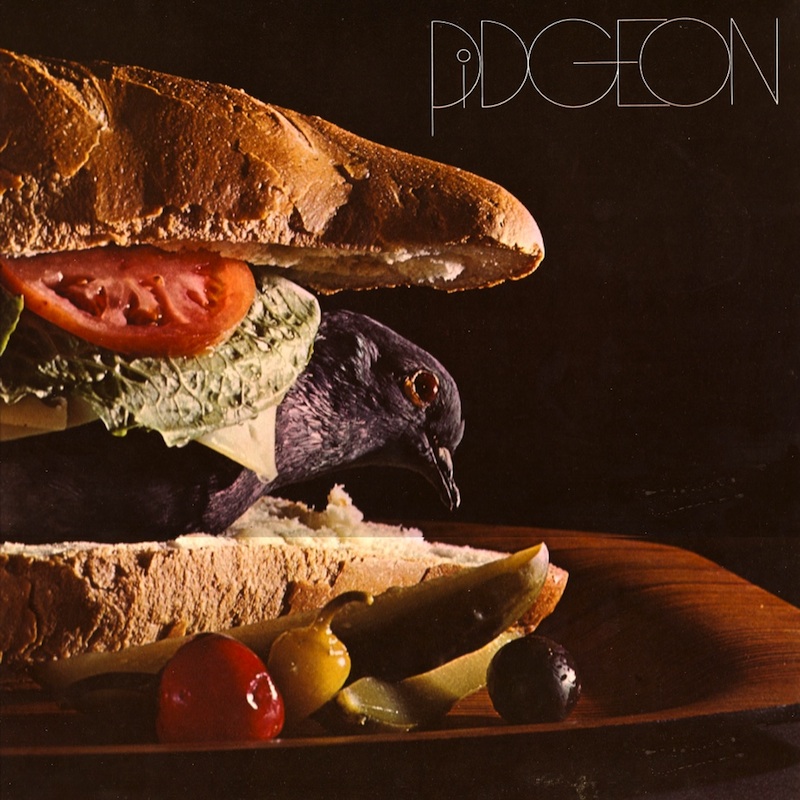
Pidgeon – Pidgeon (1969)
Title: Pidgeon
Year: 1969
Format: LP
Label: Decca
Pidgeon’s only album, 1969′s self-titled Pidgeon, would be even more obscure than it is were it not for the presence of Jobriath (here credited as Jobriath Salisbury) as principal singer, co-songwriter, keyboardist, and guitarist, about five years before he emerged as a notorious glam rocker whose hype failed to deliver commercial results.
In mid-1968, he left the Los Angeles cast of the Hair musical to hook up with Pidgeon, whose material was co-written by Jobriath and lyricist Richard T. Marshall. Producer and session singer Stan Farber got them a contract with Decca Records, and arranged for them to rehearse for six months in a house before they entered the studio to record Pidgeon in late 1968.
Containing elements of California sunshine pop, the harmonies of the Mamas & the Papas, the baroque pop of the Left Banke, and a little heavier psychedelia à la Jefferson Airplane, the Pidgeon album was too confused to cohere into a satisfying whole, though Jobriath’s high and strident vocals were a big part of the mix. Pidgeon released a subsequent non-LP single in 1969, “Rubber Bricks”/”Prison Walls,” before breaking up. (Richie Unterberger, All Music Guide)
Track Listing
- Of The Time When I Was Young
- Milk And Honey
- When She Arrives
- Dark Bird
- Irene
- The Wind Blows Cold
- Penny’s Magic Bell
- The Main Line
- Springtime Girl
- The Dancer
- House On A Hill Among Trees
- Rubber Bricks [bonus non-lp single]
- Prison Walls [bonus non-lp single]
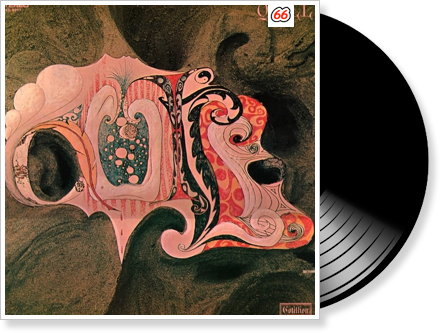
Quill – Quill (1970)
Title: Quill
Year: 1970
Format: LP
Label: Cotillion
Quill was a popular Northeast USA band that played extensively throughout New England and New York in the late 1960s and that gained national attention by performing at the original Woodstock Festival in 1969. The band was originally founded by two singer/songwriters and brothers from the Boston area, Jon and Dan Cole.
The Coles were managed by Ray Paret and David Jenks of Amphion Management, a Boston artist management group that helped to lay the groundwork for a fertile music scene in the Cambridge-Boston area. Many musicians who became international stars were a part of their coterie of bands, like the J. Geils Band, Peter Wolf & the Hallucinations (with Wolf later joining Geils to form a hit combination), Skunk Baxter (later of Doobie Brothers and Steely Dan fame), Jim Hodder of The Bead Game (who went on to become a drummer and vocalist for Steely Dan), Andy Pratt, Jimmy Thompson, drummer Russ Levine and Country Funk which became The Pure Prairie League. Many very successful Boston groups and musicians such as Aerosmith, The Cars, Jonathan Edwards, and Boston rose up out of the creative atmosphere in which Amphion was a key player.
With the assistance of the Ray and David, the Coles attracted some of the best musicians in the community. The basic line up included Roger North on drums, Norm Rogers on guitar and Phil Thayer on keyboard, sax and flute, with Jon on bass and Dan doing the bulk of the lead vocals. (However, as explained in detail below, instrumental flexibility was one of the band’s most unique features.) Out of this combination, and with the Cole brothers’ focus on original songwriting came ‘Quill’, which was then signed as a group to Amphion Management. The band spent 1967, 1968 and 1969 regularly playing rock venues in Boston, Providence, and New York, as well many other smaller markets around the Northeast. Though Quill rarely played outside of their region, the show made it as far west as Aspen, Colorado.
Though most often headlining in smaller clubs, where Quill gained a very loyal following, the group also played in a number of much larger venues, opening for such international acts as The Jeff Beck Group, The Who, The Kinks, Deep Purple, Buddy Guy, Blue Cheer, Sly and the Family Stone, the Grateful Dead, and Janis Joplin. It even opened for comedian Steve Martin in one of the interesting pairings in Quill lore. In addition.
Quill was featured on several local TV shows in Boston and the Midwest, and was highlighted by the music press on numerous occasions for its originality and creativity. An early summer ’69 appearance at Steve Paul’s Scene in New York City resulted in Quill being invited to play at The Woodstock Festival. Interestingly, that night at the club also featured the first introduction of Johnny Winter to the NYC record industry crowd. The night ended finding Jimi Hendrix and Stephen Stills joining Johnny and members of Quill for a late jam.
Aside from the basic roles of each member of the band as mentioned above, one of the interesting aspects of the band was its ability to mount a variety of instrumental and vocal configurations to play specific songs. Considered by many to be among the best technical and most creative rock drummers of that era, Roger North anchored the band on the drums and percussion.
The other members of the band would often switch instruments to create different sounds and effects. Jon and Norm both sang some lead vocals while Dan might be playing guitar, or even trombone, forming a small horn section with Phil on sax; Jon would sometimes switch to guitar with Norm playing bass; Norm was known to trot out his cello on occasion; Phil even played bass while Norm and Dan played guitar and Jon sang; everyone participated in group vocals as needed. Though Dan was the primary front man for the band on stage, its ability to effectively and frequently change focal points and configurations was well-suited to the broad song writing ambitions of the Coles, who were responsible for almost all of the band’s material.
Quill’s music was eclectic, social commentary, sometimes poetic, sometimes ironic, merged with very unusual, at times nearly atonal scales. Although for some in the drug-induced haze of the ’60′s, Quill music could be quite stimulating, it was never intended to be psychedelic music, and actually had a somewhat anti-hedonist slant. The Cole brothers were hoping to make their audiences think, even while the music was being enjoyed. The band’s music was compared to a modern day “Three Penny Opera” by Bertolt Brecht by a local reviewer.
In addition to its unique original material, Quill made its reputation on performance art by drawing the audience into the music. The band handed out rhythm instruments and exhorted the crowds to a near riotous dance frenzy. A number of famous bands that played on the same bill with Quill, received lukewarm receptions after finding themselves no match for the excitement generated by this five piece band from Boston. After Quill disbanded, many other groups took up audience participation with incitement to rhythm.
At Woodstock, in addition to playing the main festival stage on Saturday, Quill spent the week preceding the festival living at the setup crew’s camp at a nearby motel, providing entertainment for the collection of stage crew, hog farmers, and festival workers. Quill was also hired by festival promoters to play a series of goodwill concerts at nearby state prisons, mental institutions, and halfway houses as a gesture aimed at countering community concerns about the upcoming festival. (Note: In the history of Quill, this rated as one of the weird tours of all time. Though enjoyed by the band, there were moments of unpredictability as many members of the very animated audiences were either certifiably insane or ‘doin’ time’, depending on the venue.)
In the run up to Woodstock, seeing the market potential of the buzz that the band had already created with press, pundits and fans, and it’s coming appearance at the Festival with the potential for film exposure, Ahmet Ertegün President of Atlantic Records agreed to sign Quill in the summer of 1969 to their Cotillion label. (Trip Atlas)
Track Listing
- Thumbnail Screwdriver
- The Tube Exuding
- They Live The Life
- BBY
- Yellow Butterfly
- Too Late
- Shrieking Finally
Disclaimer: The link below may point to content that is copyrighted. redtelephone66 only provides this link with the understanding that you are responsible for the content you download. redtelephone66 does not engage in music piracy, nor do we do host, fileshare, or otherwise trade in copyrighted works.
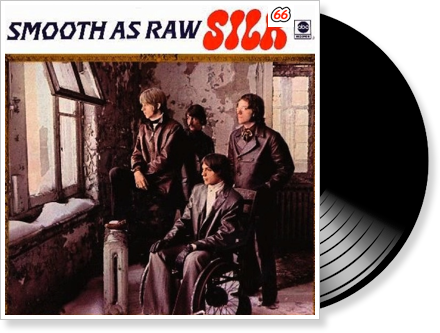
Silk – Smooth As Raw Silk (1968)
Title: Smooth As Raw Silk
Year: 1968
Format: LP
Label: ABC
A hard organ/guitar Cleveland quartet produced and arranged by Bill Szymczyk. The album has become a very minor collectable and contains several good tracks: Foreign Thing, Skitzo Blues, Walk In My Mind and Scottish Thing which is one of the few psych tracks to end with bagpipes!
The songs were written by the group members and Bill Szymczyk, except a cover of Tim Rose’s Long Haired Boy which was “dedicated to groupies everywhere” and Custody written by Steve Karliski and Larry Kolber. Harry Palmer of Ford Theatre played guitar and percussion on some tracks and is also credited for production work. Michael Gee later formed the Michael Stanley Band. (Fuzz, Acid & Flowers)
Track Listing
- Introduction/Foreign Trip
- Long Haired Boy
- Not A Whole Lot I Can Do
- Custody
- Scottish Thing
- Skitzo Blues
- Hours
- Walk In My Mind
- Come On Down
- For All Time
Disclaimer: The link below may point to content that is copyrighted. redtelephone66 only provides this link with the understanding that you are responsible for the content you download. redtelephone66 does not engage in music piracy, nor do we do host, fileshare, or otherwise trade in copyrighted works.
Spanky & Our Gang – Change (1975)
Title: Change
Year: 1975
Format: LP
Label: Epic
In 1975, Nigel Pickering and Elaine “Spanky” McFarlane reformed Spanky & Our Gang around a country-western sound and cut an album (Change) for Epic Records. Although their sound had altered considerably, they attracted many old fans to their concerts they played in 1975 and 1976, which also included original member Oz Bach who rejoined after the new album was released.
McFarlane later resurfaced most visibly as the replacement for the late Cass Elliot in the reformed Mamas & the Papas in the 1980s, but she also remained true to her folk and blues roots, participating in events such as a benefit concert for the terminally ill singer-songwriter Bob Gibson in 1996. Oz Bach died of cancer in September of 1998. ~ Bruce Eder, All Music Guide
Track Listing
- I Won’t Brand You
- Standing Room Only
- When I Wanna
- Since You’ve Gone
- San Diego Serenade
- L.A. Freeway
- Space Cowboys Forever
- National Stardom
- Dues
- I Wish We’d All Been Ready
Disclaimer: The link below may point to content that is copyrighted. redtelephone66 only provides this link with the understanding that you are responsible for the content you download. redtelephone66 does not engage in music piracy, nor do we do host, fileshare, or otherwise trade in copyrighted works.