
Quill – Quill (1970)
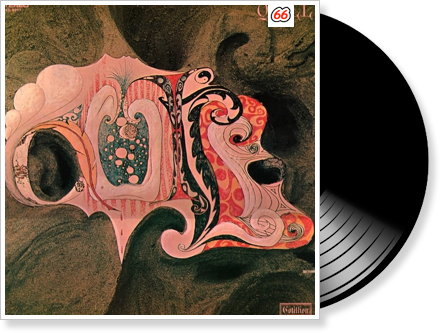
Title: Quill
Year: 1970
Format: LP
Label: Cotillion
Quill was a popular Northeast USA band that played extensively throughout New England and New York in the late 1960s and that gained national attention by performing at the original Woodstock Festival in 1969. The band was originally founded by two singer/songwriters and brothers from the Boston area, Jon and Dan Cole.
The Coles were managed by Ray Paret and David Jenks of Amphion Management, a Boston artist management group that helped to lay the groundwork for a fertile music scene in the Cambridge-Boston area. Many musicians who became international stars were a part of their coterie of bands, like the J. Geils Band, Peter Wolf & the Hallucinations (with Wolf later joining Geils to form a hit combination), Skunk Baxter (later of Doobie Brothers and Steely Dan fame), Jim Hodder of The Bead Game (who went on to become a drummer and vocalist for Steely Dan), Andy Pratt, Jimmy Thompson, drummer Russ Levine and Country Funk which became The Pure Prairie League. Many very successful Boston groups and musicians such as Aerosmith, The Cars, Jonathan Edwards, and Boston rose up out of the creative atmosphere in which Amphion was a key player.
With the assistance of the Ray and David, the Coles attracted some of the best musicians in the community. The basic line up included Roger North on drums, Norm Rogers on guitar and Phil Thayer on keyboard, sax and flute, with Jon on bass and Dan doing the bulk of the lead vocals. (However, as explained in detail below, instrumental flexibility was one of the band’s most unique features.) Out of this combination, and with the Cole brothers’ focus on original songwriting came ‘Quill’, which was then signed as a group to Amphion Management. The band spent 1967, 1968 and 1969 regularly playing rock venues in Boston, Providence, and New York, as well many other smaller markets around the Northeast. Though Quill rarely played outside of their region, the show made it as far west as Aspen, Colorado.
Though most often headlining in smaller clubs, where Quill gained a very loyal following, the group also played in a number of much larger venues, opening for such international acts as The Jeff Beck Group, The Who, The Kinks, Deep Purple, Buddy Guy, Blue Cheer, Sly and the Family Stone, the Grateful Dead, and Janis Joplin. It even opened for comedian Steve Martin in one of the interesting pairings in Quill lore. In addition.
Quill was featured on several local TV shows in Boston and the Midwest, and was highlighted by the music press on numerous occasions for its originality and creativity. An early summer ’69 appearance at Steve Paul’s Scene in New York City resulted in Quill being invited to play at The Woodstock Festival. Interestingly, that night at the club also featured the first introduction of Johnny Winter to the NYC record industry crowd. The night ended finding Jimi Hendrix and Stephen Stills joining Johnny and members of Quill for a late jam.
Aside from the basic roles of each member of the band as mentioned above, one of the interesting aspects of the band was its ability to mount a variety of instrumental and vocal configurations to play specific songs. Considered by many to be among the best technical and most creative rock drummers of that era, Roger North anchored the band on the drums and percussion.
The other members of the band would often switch instruments to create different sounds and effects. Jon and Norm both sang some lead vocals while Dan might be playing guitar, or even trombone, forming a small horn section with Phil on sax; Jon would sometimes switch to guitar with Norm playing bass; Norm was known to trot out his cello on occasion; Phil even played bass while Norm and Dan played guitar and Jon sang; everyone participated in group vocals as needed. Though Dan was the primary front man for the band on stage, its ability to effectively and frequently change focal points and configurations was well-suited to the broad song writing ambitions of the Coles, who were responsible for almost all of the band’s material.
Quill’s music was eclectic, social commentary, sometimes poetic, sometimes ironic, merged with very unusual, at times nearly atonal scales. Although for some in the drug-induced haze of the ’60′s, Quill music could be quite stimulating, it was never intended to be psychedelic music, and actually had a somewhat anti-hedonist slant. The Cole brothers were hoping to make their audiences think, even while the music was being enjoyed. The band’s music was compared to a modern day “Three Penny Opera” by Bertolt Brecht by a local reviewer.
In addition to its unique original material, Quill made its reputation on performance art by drawing the audience into the music. The band handed out rhythm instruments and exhorted the crowds to a near riotous dance frenzy. A number of famous bands that played on the same bill with Quill, received lukewarm receptions after finding themselves no match for the excitement generated by this five piece band from Boston. After Quill disbanded, many other groups took up audience participation with incitement to rhythm.
At Woodstock, in addition to playing the main festival stage on Saturday, Quill spent the week preceding the festival living at the setup crew’s camp at a nearby motel, providing entertainment for the collection of stage crew, hog farmers, and festival workers. Quill was also hired by festival promoters to play a series of goodwill concerts at nearby state prisons, mental institutions, and halfway houses as a gesture aimed at countering community concerns about the upcoming festival. (Note: In the history of Quill, this rated as one of the weird tours of all time. Though enjoyed by the band, there were moments of unpredictability as many members of the very animated audiences were either certifiably insane or ‘doin’ time’, depending on the venue.)
In the run up to Woodstock, seeing the market potential of the buzz that the band had already created with press, pundits and fans, and it’s coming appearance at the Festival with the potential for film exposure, Ahmet Ertegün President of Atlantic Records agreed to sign Quill in the summer of 1969 to their Cotillion label. (Trip Atlas)
Track Listing
- Thumbnail Screwdriver
- The Tube Exuding
- They Live The Life
- BBY
- Yellow Butterfly
- Too Late
- Shrieking Finally
Disclaimer: The link below may point to content that is copyrighted. redtelephone66 only provides this link with the understanding that you are responsible for the content you download. redtelephone66 does not engage in music piracy, nor do we do host, fileshare, or otherwise trade in copyrighted works.

this reads like it could be a fascinating listen, but there’s no link available. i’ll have to add this title to my list of things to look for the next time i find myself in a record store. thanks for the head’s up, leonard.
Quill and Ill Wind opened for the Who at the Music Hall, Boston in ’68. First rock concert I ever went to – I didn’t care for them or Ill Wind; for that matter I was disappointed by the Who. I expected pop-art mods and got guitar jams and Roger Daltrey’s fringed jacket. I was a tuff little critic.
Always loved this record! Great heavy psych & a more mellow communal side too. So glad too see you are back! Wonderful! Thanks for all the amazing posts- peace