
The Roundtable – Spinning Wheel [Vinyl] (1969)
Title: Spinning Wheel
Year: 1969
Format: LP
Label: Jay Boy
If you like a combination of jazz, folk, baroque, gospel and blues – kind of medieval music with pop influences – injected into eight well-known numbers and performed by a group of superb musicians plyaing such ancient instruments as shawms, crumhorns and regals, then you MUST buy this album.
The stars are David Munrow (also on descant recorder) and Chris Hogwood (harpsichord), two highly-respected interpreters of medieval sounds, but the effect achieved when they mix with three flugelhorns, two woodwinds, piano, organ and a driving rhythm section powered by two drummers is quite amazing.
You will hardly recognize Laura Nyro’s ‘Eli’s Coming’, Lennon & McCartney’s ‘Michelle’, or Blood Sweat And Tears ‘Spinning Wheel’.
‘Scarborough Fair’ and ‘This Guy’s In Love With You’ are also gems and the arrangements are so complex that it will take you a dozen plays to pick out everything that is going on. It is impossible to describe the beauty or fascinating rhythms on paper. All I can say is that it is one of the finest albums I have ever recommended. (ProgNotFrog)
Track Listing
- Eli’s Comin’
- Fantasia On A Theme By Lennon And McCartney (Michelle)
- Saturday Gigue
- Girl I Used To Know
- Scarborough Fair
- This Guy’s In Love With You
- Where Do You Go
- Spinning Wheel
Gracious! – Gracious! (1970)
Title: Gracious!
Year: 1970
Format: LP
Label: Capitol
Legendary British progressive band, and their classic debut-album explains why. The first side of the album seems to have a concept about heaven and hell, and the lifestyles which will lead to one of those places (if you believe that bull!) (c’mon Jack… to each his own!!!). The music is good old English progressive with loads of mellotron and harpsichord.
The highlight is the beautiful “Heaven”. With its floating mellotron theme and symphonic sound, this track lives up to its name. “Hell” is, as you may suggest, a much more uglier and heavier track with some very distorted organ creating a perfect hell-atmosphere. You can almost smell the sulphur! “Fugue in ‘D’ Minor” is a pure baroque piece played on guitar and harpsichord.
The 17-minute “The Dream” features a load of time changes and different moods. From symphonic and beautiful, to disharmonious and energetic. This is an impressive and truly progressive rock album that every 70′s progressive rock fan should own. (Jack Dominilla)
Track Listing
- Introduction
- Heaven
- Hell
- Fugue In ‘D’ Minor
- The Dream
Disclaimer: The link below may point to content that is copyrighted. redtelephone66 only provides this link with the understanding that you are responsible for the content you download. redtelephone66 does not engage in music piracy, nor do we do host, fileshare, or otherwise trade in copyrighted works.

Lift – Caverns Of Your Brain (1977)
Artist: Lift
Title: Caverns Of Your Brain
Year: 1977
Format: LP
Label: Guinness
Lift were an American progressive rock band from New Orleans, LA from the early 70′s. Much of the music on here is very energetic and fast paced. They played with such raw energy and enthusiasm yet also injected a strong sense of warmth and passion in their music in a way that is kind of rare these days.
I have always thought of this LP as sort of a cross between Genesis’ Foxtrot (especially “Supper’s Ready”) and Camel’s Mirage. Ther’s lots of hammond organ, synthesizer, mellotron and Latimer style guitar.
From what I understand however these guy’s main influence was Yes. There is an obvious Yes influence as well but this group definitely has their own sound and do not sound like they are copying any specific band.
The first track on here is called “Simplicity” and has a great long instrumental introduction. This LP only has four tracks on it.
The longest and best track on here(imho) is the 12 minute “Trippin”. This track reminds me a bit of “Supper’s Ready” but I would’t say it’s a deliberate ripoff of that classic but the ending parts to both are very similar.
This was released on symphonic a while ago and is probably out of print. If you like early Genesis, symphonic prog or Collect American prog this one is worth looking for. (Mike Reiss)
Track Listing
- Simplicity
- Caverns
- Butter Cup
- Tripping
Beggars Opera – Act One [Vinyl] (1970)
Title: Act One
Year: 1970
Format: LP
Label: Verve
Beggars Opera began their career as an excellent heavy organ/guitar prog band that used a lot of classical motifs (even “borrowing” little segments of light classical music). On “Act One” they serve up an intense (mostly instrumental) over-the-top, vintage rock with frantic drumming, blistering guitar and powerful organ.
This is their MOST organ-driven record. I love some of those “carnival” sounds achieved by Alan Park. Some of the long instrumental jams recall early Deep Purple, not least because Ricky Gardener achieves a plaintive sound like Ritchie Blackmore which works well over pulsing keyboards and “galloping” rhythm section.
Singer Martin Griffiths is the mad ringmaster of this pomp carnival. His vocals would be given much more space on later albums. The album relies on intense instrumental blowouts rather than smooth production or studio effects. Its raw, “period” sound will appeal to lovers of organ-driven British prog. (Chris Gerbig)
Track Listing
- Poet And Peasant
- Passacaglia
- Memory
- Raymond’s Road
- Light Cavalry
Disclaimer: The link below may point to content that is copyrighted. redtelephone66 only provides this link with the understanding that you are responsible for the content you download. redtelephone66 does not engage in music piracy, nor do we do host, fileshare, or otherwise trade in copyrighted works.
Bangor Flying Circus – Bangor Flying Circus [Vinyl] (1969)
Title: Bangor Flying Circus
Year: 1969
Format: LP
Label: Dunhill
Bangor Flying Circus was a progressive rock trio from Chicago, USA, formed in mid-1967. It consisted of David “Hawk” Wolinski (bass, keyboards, vocals), Alan DeCarlo (guitar, vocals), and Tom Schiffour (drums), who was replaced in late 1968 by former H. P. Lovecraft member Michael Tegza (drums, percussion).
Wolinski and Schiffour had previously been in the Shadows of Knight. They put out one self-titled album in 1969. After they brokeup Wolinski and DeCarlo formed Madura, while Tegza participated in two reconfigurations of Lovecraft, a successor band to H. P. Lovecraft. (Wikipedia)
Track Listing
- Violent Man
- Come On People
- Ode To Sadness
- Concerto For Clouds
- A Change In Our Lives
- Someday I’ll Find
- Mama Don’t You Know (That Your Daughter’s Acting Mighty Strange)
- In The Woods
- Norwegian Wood (This Bird Has Flown)
Disclaimer: The link below may point to content that is copyrighted. redtelephone66 only provides this link with the understanding that you are responsible for the content you download. redtelephone66 does not engage in music piracy, nor do we do host, fileshare, or otherwise trade in copyrighted works.
Baxter – Baxter (1973)
Title: Baxter
Year: 1973
Format: LP
Label: Paramount
Baxter were a Long Island New York group that included Doug Arioli (guitar-keyboards-vocals), Steve Belgrade (guitar-vocals), Lawrence Di Natale (drums-percussion), Steven Kirshenbaum (keyboards-synthesizer), and Edwin Damus Perry (bass-vocals).
“It’s one of those talented bands that got lost in the mix. It is a very enjoyable album, it has one of the qualities I enjoy the most in an album, and that is that it sounds like every song could be of a different band. One song sounds like Badfinger, then like Bowie, then like CSN, and them maybe Iron Butterfly.
Maybe that is why it didn’t catch on as they did not seem to have a musical identity. I had to start my album collection over three times, and this is one of the earliest selections in my collection. I listened to it a lot when I only owned maybe 20 albums so maybe nostalgia makes it sound better to me, but on second thought… you know this is a f*ing good album”. (zrox RYM)
Track Listing
- By The Gates
- Give It All
- Renaissance Woman
- “51″
- Gentle Arms
- MOONFIRE II
- Can’t Find The Time
- Doctor, Doctor
- 197THREE
Disclaimer: The link below may point to content that is copyrighted. redtelephone66 only provides this link with the understanding that you are responsible for the content you download. redtelephone66 does not engage in music piracy, nor do we do host, fileshare, or otherwise trade in copyrighted works.
Cynara – Cynara (1970)
Title: Cynara
Year: 1970
Format: LP
Label: Capitol
Cynara were a progressive jazz group that, according to one critic, has a “Santana sound with heavy percussion, keyboard, soulful rock etc.”. I can hear the keyboard and percussion comparisons at times, but that’s about all for me. The group included keyboardist Michael Tschudin, who had played with the Boston band Listening, who’s “Stoned Is” is covered on this album. (Jack Dominilla)
Track Listing
- Life Stories
- Hello You
- Stoned Is
- Religious Song
- Mermaid Song
- CIA’s Lullabye
The Flock – Dinosaur Swamps (1970)
Title: Dinosaur Swamps
Year: 1970
Format: LP
Label: Columbia
Dinosaur Swamps is even more progressive, and completely bewildering – right down to the intricate gatefold artwork which is almost indecipherable. It is a very dense sounding album – usually Glickstein (using both guitar and keyboards) and Goodman play at the same time, frequently with the horns as well (who get a larger role).
Either the group or producer John McClure was fascinated with the already passé use of sound effects for the beginning or endings of songs, like making foghorn noises (the opening of the Steve Miller Band’s Sailor anyone?), speeding up the track, or hideous laughing/calliope from hell noises. The songs are not much better, because the band has too many musical ideas.
Dinosaur Swamps has psychedelia (“Hornshmeyer’s Island” which alternates between quiet versus and loud, helium-voiced choruses), blues (“Crabfoot” with percussion solos, backwards noises, a strange horn noise section that’s not quite a John Zorn wet dream), a romantic folk ballad with Salvation Army style horns (“Mermaid”) and even a strong country feel on “Big Bird.” The album’s biggest surprise is the group’s almost complete failure to capitalize on Goodman.
Sure, he plays, but he has no lengthy solos, only spots now and again, and a couple of interesting tones (wah-wah on “Crabfoot”, and an underwater tone that makes it sound like a mellotron on “Hornschmeyer’s Island”). The last track, “Uranian Sircus,” has ridiculous spoken versus, a chorus of “Uranian Sircus is on it’s way to town!”, and fun production tricks like reverb and slightly phased vocals. Repetitive, annoying, but grotesquely interesting. Actually, quite a bit of nice playing is within these tracks when the band get a chance to stretch out, but with so many ideas to wade through, the band frequently does not make it.
As they never get around to playing, or the music changing too frequently, the weak lyrics (Hornschmeyer’s Island” has a few ‘gems’) and inter-song filler (the intro to “Big Bird”, Glickstein’s guitar lines in “Lighthouse”) shine through. While everyone had ample space on their debut (apportioned by talents, of course), Dinosaur Swamps’ approach of everyone going at once makes the album neither overly structured or organized chaos, but like an large object made out of Legos(TM): done in stages, fun for the assemblers, perhaps interesting to look at for a short while, but with a utility approaching zero.
In trying to do everything, the Flock amply demonstrate they are not the musical equivalent of an uncollapsed wave function, but instead a band that had too much time on their hands, too little quality control, and little knowledge about their strengths. (Tripod)
Track Listing
- Green Slice
- Big Bird
- Hornschmeyer’s Island
- Lighthouse
- Crabfoot
- Mermaid
- Uranian Sircus
Ars Nova – Ars Nova (1968)
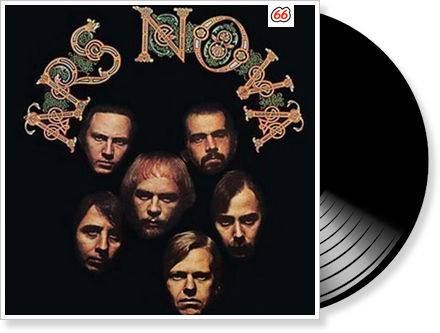
Title: Ars Nova
Year: 1968
Format: LP
Label: Elektra
Classically training musicians living and working in New York City, in 1967 drummer Maury Baker, guitarist Wyatt Day, bass Bill Folwell, guitarist Giovanni Papalia, vocalist/horn player John Pierson and bassist John Raskin decided their future (and their fortunes) lay in rock and roll. Several months of intense rehearsals and a series of well received concerts led to a deal with Elektra Records
.
Teamed with Doors producer Paul Rothchild, the band’s 1968 self-titled aptly debut displayed the sextet’s virtuosity. Musically diverse, “ARS Nova” found the band equally at home with classical inspired ballads (the Baroque-influenced single “Pavan for My Love”), precursor Blood, Sweat and Tears horn arrangements (“General Clover Ends a War”) and prototype heavy rock (“And How Am I To Know”).
With Day providing the majority of material (much of it co-written with either Pierson or non-band member Gregory Copeland), the group’s efforts to blend classical and rock elements was interesting, if occasionally a tad pretentious. Imagine a less bubble gummy version of The Left Banke and you’ll get a feel for the set. Personal favorite, the popish single “Fields of People.” In spite of decent reviews, including an extensive write-up in the June 1968 edition of Life, the set failed to sell. (Bad Cat)
Track Listing
- Pavan For My Lady
- General Clover Ends A War
- And How Am I To Know
- Album In Your Mind
- Zarathustra
- Fields Of People
- Automatic Love
- I Wrapped Her In Ribbons
- Song To The City
- March Of The Mad Duke’s Circus
- Aquel Caballero
- Le Messe Notre Dame
- Vita De L’Alma Mia
Game – Game (1970)
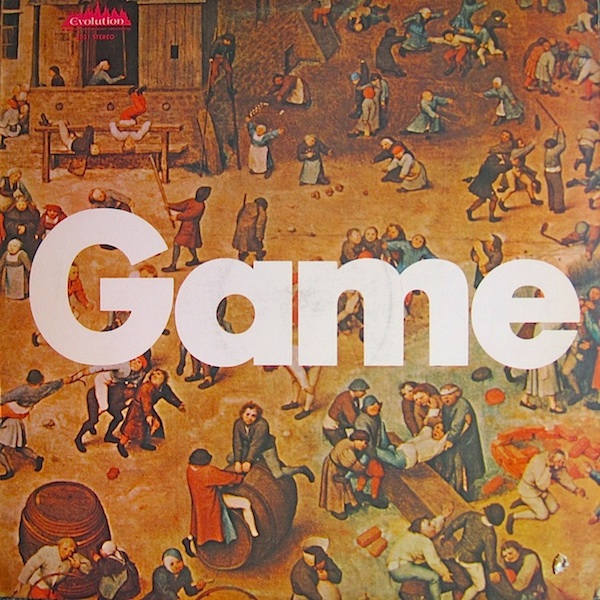
Title: Game
Year: 1970
Format: LP
Label: Evolution
Singers/guitarists Eddie Keating and Chuck Kirkpatrick, drummer Scott Kirkpatrick, keyboard player Les Luhring and singer/bassist George Terry had all been members of the Southern Florida based Proctor Amusement Company. The band had become quite popular throughout the region, even recording a couple of singles and an unreleased LP for the New York based Faithful Virtue label before calling it quits. While Proctor Amusement Company had come to an end, by 1969 the five were playing Southern Florida clubs as Game.
Released by Faithful-Virtue (also released on the Evolution Label), 1969’s “Game” is an interesting debut. Co-produced by manager/mentor Steve Goldberg and Chuck Kirkpatrick, musically the set’s all over the place, including stabs at conventional pop, progressive (‘Entrance’), rock (‘Fat Mama’) and even showing off some jazzy interludes (check out side two’s ‘Disturbance/We Turn To You’). Normally such a diverse album wouldn’t make all that much of an impression with me, but this is one of those exceptions.
While most bands have a hard time finding one good singer, Game wasn’t hurt by having three in the form of Keating, Chuck Kirkpatrick and Terry. The fact that Keating and Luhring wrote some nifty melodies and were capable of turning in ear candy harmony vocals didn’t hurt the end results either (check out Luhring’s ‘Discovering You’). To be honest, material such as ‘Make Some Music’ and ‘Stop, Look & Listen’ sounds a couple of years ahead of it’s time… had it been released in say 1976 it probably would have blown an AOR outfit like Kansas off the radio. Unfortunately the set went nowhere. (RDTEN1 RYM)
Track Listing
- Entrance/What’s Goin’ Through My Head
- Discovering You
- Fat Mama
- Make Some Music
- Stop, Look & Listen
- Disturbance/We Turn To You
- Sermon
- Girl Next Door
- Exit
Disclaimer: The link below may point to content that is copyrighted. redtelephone66 only provides this link with the understanding that you are responsible for the content you download. redtelephone66 does not engage in music piracy, nor do we do host, fileshare, or otherwise trade in copyrighted works.