
Modern Music Band – Modern Music Band (1972)
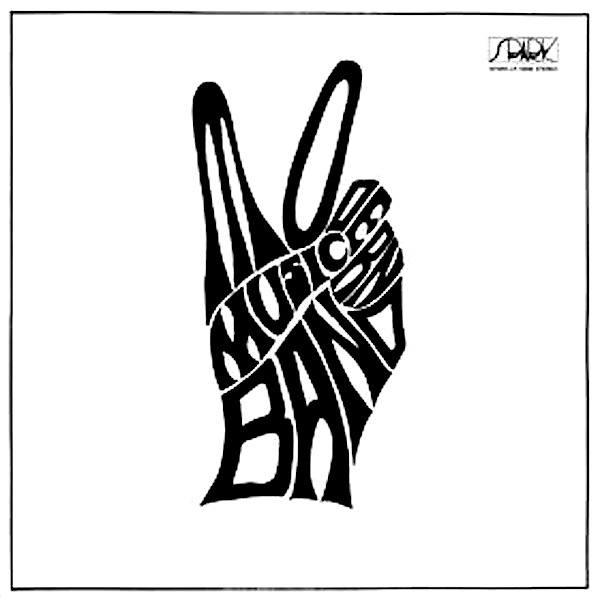
Title: Modern Music Band
Year: 1972
Format: LP
Label: Spark
Post courtesy of Beau Graham
The Modern Music Band were a Swedish Horn Rock Band that released one album in 1972. I discovered this album thanks to www.cdreissuewishlist.com there was review of the album posted in January.
The review of the album is fairly accurate but let me add more details. The album consists of 9 songs 2 of them are Instrumentals 2 of them are sung in swedish by Ann Bengtsson she is the Female lead singer of the band. The other five tracks are sung by Ann and guitar player Stefan Sandberg in English.
They do a wicked different cover of Chicago’s Make Me Smile. Ann Bengtsson is the better singer of the two by far she has a great smooth sounding voice. The album also has some nice guitar and hammond organ playing along with some flute here and there.
Overall a very strong album and very consistent most of the songs have a smooth and i will use the word groovy atmosphere to them. If you are a fan of 1970′s Horn Rock i highly suggest you check this out.
This album along with Uncle Chapin-1971 (see January 25, 2011 post) is one of my favorite music discoveries of 2011. This album is extremely rare don’t waste your time looking for the vinyl also it is not blogged anywhere else. Enjoy! (Beau Graham)
Track Listing
- Betjanten
- Fortvivlan
- Cabadello
- Make Me Smile
- Qz-4800
- Klumpen
- Man Of The Moon
- Herbie
- Granvisa
Rare Bird – Rare Bird (1969)
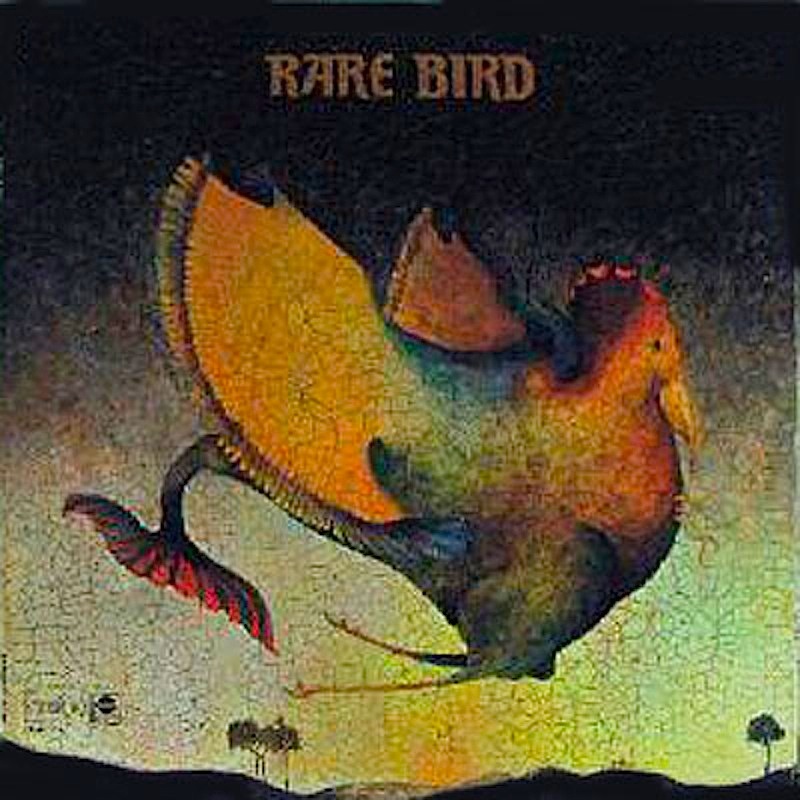
Title: Rare Bird
Year: 1969
Format: LP
Label: Probe
1st album by excellent British Prog band Rare Bird, one of the most unusual and original outfits on the burgeoning scene of the late 1960s / early 1970s. Fronted by two keyboards players Graham Fields (organ) and David Kaffinetti (electric piano) the group also included bassist / vocalist Steve Gould and drummer Mark Ashton.
Purposely avoiding the sound of guitar, they created a wonderful balance between the two keyboards, exchanging licks and complimenting each other virtuously. Their material was also excellent, often with quirky rhythmic background but not eschewing beautiful ballads. The eponymous debut album is a beautiful showcase of daring innovation and excellent musical taste, rarely achieved by other groups and remains one of the most stunning debuts ever.
It includes the song “Sympathy”, one of the greatest and everlasting anthems of British Prog, which enjoyed enormous chart success all over the world in spite of its unusual sound. This is a true gem and an essential piece of music, which lost absolutely nothing of its initial impact. (Jazziz RYM)
Track Listing
- Beautiful Scarlet
- Sympathy
- Nature’s Fruit
- Bird On A Wing
- God Of War
- Iceberg
- Times
- You Went Away
- Melanie
Faun – Faun (1968)
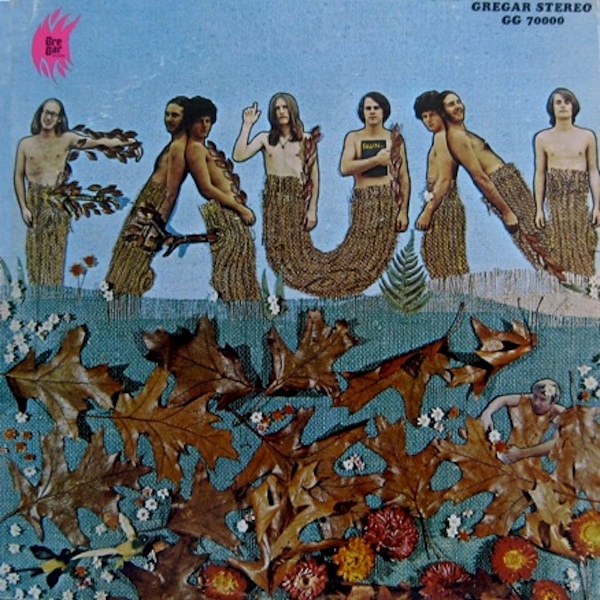
Title: Faun
Year: 1968
Format: LP
Label: Gre Gar
From San Francisco, Faun’s main claim to fame is the inclusion of Ross Valory and George Tickner who had previously been members of Frumious Bandersnatch. Tickner and Valory would go on to form Journey, while Valory would subsequently join the Steve Miller Band.
The Band consisted of James Trumbo (keyboards-vocals), George Tickner (guitar), Royal Martin (guitar), Don Banducci (vocals), Lynn Chatwin (vocals), and Ross Valory (bass) and originated in Mill Valley, San Francisco.
The album according to the liner notes “seems to trip backward and forward through time”… a unique blend of pop, jazz, 1930 swing and the classics”. tunes include “Looking For Sunshine”, “Velvet Pillows And Crystal Dreams” and “Follow Me”. (Jack Dominilla)
Track Listing
- Yes I’m Really Lonely
- Son Of A Literate Man
- The Girl With The Lonely Eyes
- Velvet Pillows And Crystal Dreams
- Albert
- We Hope You’re Feeling Better
- Looking For Sunshine
- I Asked My Mother
- Better Dig What You Find
- Wierd Rudy
- Follow Me
Ivory – Ivory (1973)
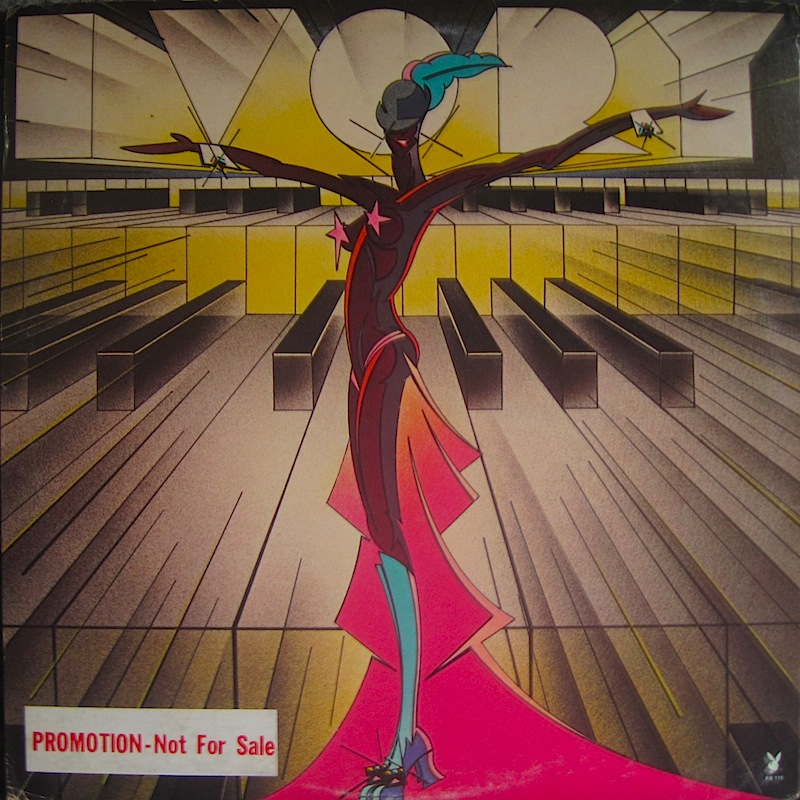
Title: Ivory
Year: 1973
Format: LP
Label: Playboy
Requested by Beau G.
Ivory consisted of Lance Gullickson (vocals), Jim Divisek (drums), Steve Pinkston (bass), Brian Whitcomb (keyboards), Paul Bass (keyboards) and Grant Gullickson (vocals).
Here we go again, another album that is about half excellent, half dreadful. Starts out promising enough with a heavy organ rocker that wouldn’t be out of place on a Uriah Heep album.
This then leads into three full plain old woman-done-me-wrong rock songs (hey ashram!!! i think that’s a wrong assessment, i think only one is a “woman-done-me-wrong song”, and i think it’s the fifth song, kinda like a “woman-done-me-prog song”) that are… well… they’re terrible. No redeeming value whatsoever, no matter how you try to rationalize it.
So of course, from there on out it’s prog rock heaven (you got that right ashram, kinda like their version of “Theme From An Imaginary Western”). Get out the organ, Moog and piano and let’s play us some complicated ELP style music shall we? Heck, some of the riffs even recall the Italian interpretation of the English famous trio (think Alphataurus, L’Uovo Colombo here).
And so it goes throughout Side two, complete with an Indian bit with sitar, tablas and the works. Sigh. Any chance there’s a full archive of this style sitting in a vault somewhere? (ashram RYM)
Track Listing
- Morning Song
- Prime Example
- Take It Easy
- Where Do We Go From Here
- Arrow Beach
- Bringing Me Down
- Bear Phaze
- Theme For An Imaginary Western
- I Want To Tell You
- Time After Time
Clouds – Above Our Heads (1969)
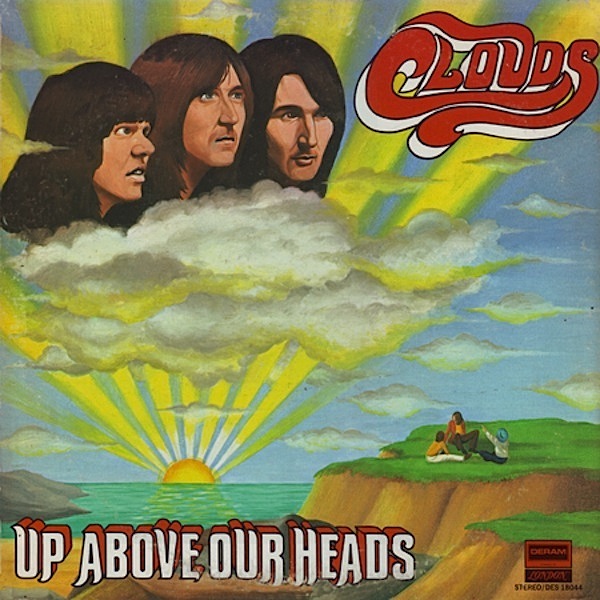
Title: Above Our Heads
Year: 1969
Format: LP
Label: Deram
Post courtesy of Tobias J.
This album is in some ways the most problematic of the three released by Clouds. It is indisputably the best example of the musicianship, yet it contains the least of the composition and excellent song-writing which defines the other two releases, The Clouds Scrapbook and Watercolour Days.
In fact, each snapshot you get of this group seems to show something different, organic changes abound. From the striking invention and jazziness of 1-2-3, through the mixture of songs and creativity of The Clouds Scrapbook, followed by the muso concert phase which contains Up Above our Heads, to the uncut diamond that is Watercolour Days. Each phase shows aspects of a group that are difficult to pin down by trite phrases or neat labels.
Imagine me opens the album, careering along a dizzy path of improvisation and a decent song too, a blistering organ ends proceedings, topped off by a spine-chilling vocal rall from Ellis. This is how the band must have sounded ‘live’ circa 1969-70.
Sing Sing Sing is the old jazz-swing classic, complete with instrumental solos from all three musicians, stand-out piano and organ underlines Ritchie’s reputation as one of the great keyboard players of the era, while Hughes’ drumming bristles with technical excellence and Ellis gives value for money in bass invention and solid support for his two virtuoso sidekicks.
Take me to your Leader yet again reveals the schism between group and song-writing.
This is effectively a non-song, an excuse to show off jazz sensibilities, and the band, with the always-excellent David Palmer’s help, pull off the performance well. Just that worry over content. Carpenter is something of the same ilk, a slightly-better ‘song’, but essentially, a platform for musicians rather than a statement of any real substance. One of several tracks lifted from The Clouds Scrapbook for inclusion here.
Old Man is the Ellis song, previously-heard on the first album. Neat and well-presented, but artistic content is again at issue here. Though on the first album it lent something in blues credibility to offset against the more mainstream offerings, it seems unnecessary here, with all that surrounds it.
Surely a chance missed to record something different for posterity?
Big Noise from Winettka, along with Sing Sing Sing, somewhat defines the character of this album, and perhaps the group at this point, a Rock version of Swing’s most emblematic numbers.
This one is put together well, excellent harmonies and re-writing of melody, but the central point, the drumsticks playing on the bass guitar, while no doubt excellent in concert, doesn’t carry the same weight on record. Perhaps that’s why the gimmicky effects were introduced?
The number is probably included here because of the concert popularity of the bass-drums novelty. To be fair, when seen on the video ‘live’ from Beat club (included here on Prog-archives), the technique is something of a tour-de-force by Hughes and Ellis, but has to be seen as much as heard.
In the Mine is, with the possible exception of Imagine Me, perhaps the only full-blown new song included on the album. That familiar melodic grandeur and serious tone once again pervades proceedings, with a beautiful 5/4 interlude which would have sounded quite breath-taking were it not for its shaky moments in performance.
As an ideas band, Clouds were second to none, only the studio time and experience was needed to complete the circle, but it never happened, and this has to be a cause for great regret.
As if to underscore that point, the album closes with Waiter there’s something in my Soup, from the first album, but a slightly-different mix or pressing, giving more dynamics at some points (and some strange noises at others!).
As mentioned before, the song-drama is a wonderful piece of invention, with sometimes-fragmented edges not quite coming off, but the reward is in some of sections where it is nothing less than classic in its timeless quality, suggesting something far more serious than mere Rock music. David Palmer has once again to be commended for his part in this production with his fine and thoughtful orchestrations.
Up Above Our Heads is an excellent album, albeit containing that familiar and frustrating mix of brilliance and sloppiness so prevalent to Clouds. It also contains the strains of the tension between songs and group music, though in the case of this album, the group has won – the opposite perhaps of the first album, which puzzled the Clouds audience at the time.
Perhaps this album was to appease those disgruntled fans of the ‘live’ band. If so, it was a mistake, as the album remains the lesser-known of the three, something of an obscurity, though apparently a CD release is on the horizon. (alex985 RYM)
Track Listing
- Imagine Me
- Sing, Sing, Sing
- Take Me To Your Leader
- Carpenter
- Old Man
- Big Noise From Winnetka
- In the Mine
- Walter, There’s Something In My Soup
Uncle Chapin – Uncle Chapin (1971)
Title: Uncle Chapin
Year: 1971
Format: LP
Label: Polydor
Uncle Chapin were a Jazz/Rock group from New York and consisted of Mike Mattia – (trumpet-flugelhorn-piano-percussion), Carl Shickler (trombone-flute-guitar), Donny Olson (bass-lead vocals), John Briganti (drums), Angelo Ficara (guitar-acoustic guitar-lead vocals), James Rosolino (trumpet-lead vocals), Paul Mergingoff (piano-organ-lead vocals) and Ed Covi (alto, tenor, baritone, soprano saxes-flute.)
“Breaks, Funk, Jazz, and more Breaks. This nicely textured, self-titled release by the jazz rock band Uncle Chapin, is a worthy addition for people looking to find something different in something that should be familiar.
The release is riddled with horn, drum, and rhythm solos that show off the band’s Jazz and Funk influence. Tracks worth checking out include “Do It”, for its drum and horn solo and it’s musical arrangements midway through the track, and “If You Quit Me”, for it’s tempo change from the meat of the track into the solo section, which has got a really cool down-tempo breakdown.” (Amazon)
Track Listing
- Wrong From Right
- Do It
- Time Is Wastin’ Away
- Lo And Behold
- Changes
- If You Quit Me
- You Must Help Yourself
Colosseum – The Grass Is Greener (1970)
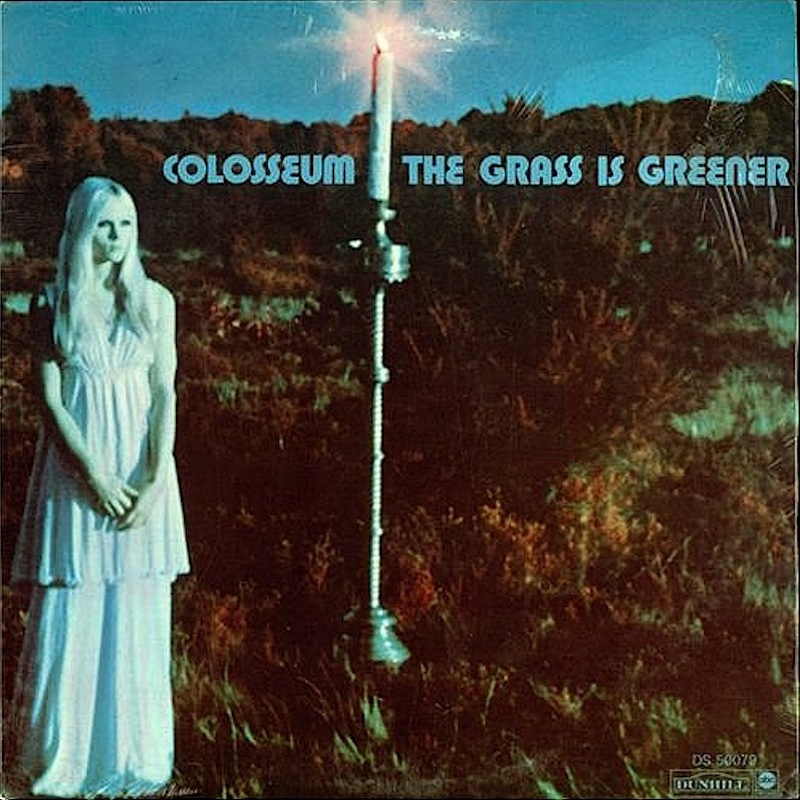
Title: The Grass Is Greener
Year: 1970
Format: LP
Label: Dunhill
The American release of “Valentyne Suite” is unexpectedly much more interesting than the british. The cover’s lettering and photo are a little weaker but musically the album is stronger with the addition of some lovely vocal tracks recorded at the same time the album came out in England. (antonbildern RYM)
Track Listing
- Jumping Off The Sun
- Lost Angeles
- Elegy
- Butty’s Blues
- Rope Ladder To The Moon
- Bolero
- The Machine Demands A Sacrifice
- The Grass Is Greener
Lost Nation – Paradise Lost [Vinyl] (1970)
Title: Paradise Lost
Year: 1970
Format: LP
Label: Rare Earth
Lost Nation were formed in Detroit, Michigan and consisted of Ron Stults (vocals), Larry Zelanka (organ-keyboard), Craig Webb (guitar), Art Wolff (bass) and Ron Fuller (percussion).
Superb album in the style of what people now call “proto-prog”. Essentially it is an amalgam of late psych rock, early Prog and hard rock. There were lots of bands from the period 1968-71 that encompassed these three elements, none more so than early Deep Purple and that’s who this lot remind me of most.
Oddly few were from the States, as this lot are and they do a pretty imitation of early European heavy Prog rock. It is melodic in a heavy style with plenty of organ, including Hammond. Great riffing and soloing and always fun. (Crazyworldof RYM)
Track Listing
- Tall Ivory Castle
- Rome
- Little Boy
- Images
- Seven Minute Woman
- Shadows Within You
- She’ll Take You
- Falling Inside My Mind
Edwards Hand – Stranded (1970)
Title: Stranded
Year: 1970
Format: LP
Label: RCA Victor
Rod Edwards and Roger Hand formed this inventive, psychedelic/progressive pop outfit after briefly recording as Picadilly Line. Having worked with George Martin on their self-titled debut, Edward’s Hand began recording at Morgan Studios in 1970, attempting to create a harder and more progressive sound than before. There where no nervous second album vibes here! The album is comprised of evocative and intelligent progressive pop songs immaculately produced featuring Edward’s and Hand’s distinctive harmonies to the fore.
The second half of the album is effectively a concept of alienation and isolation, covered in the 7 minute title track and the 12 minute epic ‘Death Of A Man.’ which includes an incredible ‘orchestra duelling-with-Moogs’ mid section followed by a beautifully majestic and Beatles-like coda.
The line drawing of a Southern Sheriff, ties in with the lyrics of ‘Sheriff Myras Lincoln’ — a song about an American racist policeman — and was subsequently banned and replaced with different artwork by RCA in the U.S. Clearly more confident and adventurous lyrically on this album, Edward’s Hand also had more time with George Martin during the pre-production stages. This preparation time, an intelligent lyric writing team and George’s complex yet concise orchestral arrangements give their second LP a much worldlier and unique feel. (Forced Exposure)
Track Listing
- Suite US: I. US Flag
- Suite US: II. Sheriff Myras Lincoln
- Suite US: III. Revolution’s Death Man!
- Suite US: IV. Encounter
- Suite US: V. Hello America
- Stranded
- Winter
- Death Of A Man: I. Die When You Must Die II. The Strife Is O’er The Battle Done III. He Is Gone IV. This May Sound Strange V. The Sentence Is Life
Sea Train – Sea Train (1969)
Artist: Sea Train
Title: Sea Train
Year: 1969
Format: LP
Label: A&M
A unique and subtly balanced mix of melodic Folk, Country, Psychedelic Rock, Funk, Blues, Jazz and even Classical (mainly baroque fugues à la Bach) played on a rich ensemble of intruments. One the most beautiful world of Psychedelia allegory, like a dream around the history of music. (Hitwomancake RYM)
Track Listing
- Sea Train
- Let The Duchess No
- Pudding Street
- Portrait Of The Lady As A Young Artist
- As I Lay Losing
- Rondo
- Sweet Creek’s Suite
- Outwear The Hills