
Bold – Bold (1969)
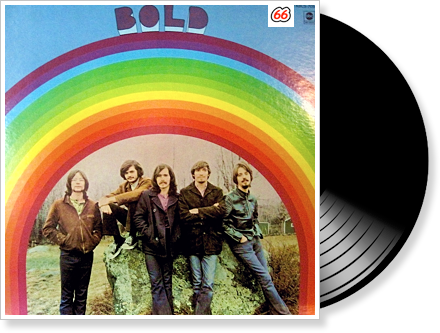
Title: Bold
Year: Year
Format: LP
Label: ABC
Hailing from the Pioneer Valley in Western Massachussetts, The Bold trace their beginnings back to the mid-1960s when band members met while attending the Umass in Amherst. As The Esquires, the group recorded a single in 1965 for the Salem label (‘Shake a Tail Feather’ b/w ‘Down the Track’). As ‘Steve Walker & the Bold’ the group recorded and released a 1966 single on Cameo (‘Gotta Get Some’ [song included on the Pebbles comilation] b/w ‘Robin Hood’). That was followed by a 1967 release for Dynovoice (‘Train Kept a-Rollin” b/w ‘I Found What I Was Looking For’. They also recorded and released an LP album on ABC records in 1969.
They were the house band at the Playboy Club in NYC in 1968 where they played 7 nights a week (and jam sessions on Sunday afternoon to boot!) for a full year. It is during this time that guitarist Bob La Palm is said to have met and taught Joe Walsh (then of The James Gang his techniques for using the echoplex effect on guitar (as is so elegantly exemplified in The Bold’s track “Free Fugue”, from the ABC album).
It is interesting to also note, perhaps uncoincidentally, that producer Bill Szymczyk (who later went on to produce Joe Walsh’s other band, The Eagles) took an interest in The Bold during this time period and went on to produce their only full length LP, titled “Bold”, on ABC records.
After The Bold broke up, Bob La Palm then joined Connecticut’s premier band,The Wildweeds (featuring Al Anderson of NRBQ fame) for a short time towards the end of that band’s career, and he is known to have played on at least one recording session with them, as well as numerous gigs. (last .fm)
Track Listing
Lullaby Opus Four
All I Really Want To Do
Friendly Smile
Changing Seasons
Factory [Version 3]
Crystal Chambers
Free Fugue
Child Of Love
For What It’s Worth
It’s All Over Now, Baby Blue
Words Don’t Make It
The Good Rats – The Good Rats (1969)
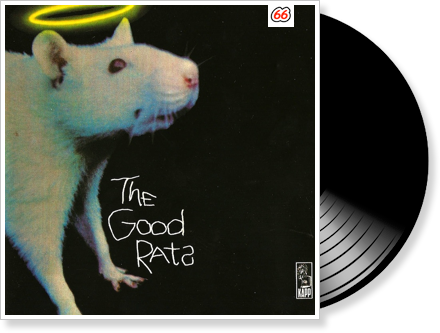
Title: The Good Rats
Year: 1969
Format: LP
Label: Kapp
While countless rockers started their careers in the New York suburb of Long Island before going on to worldwide success (Billy Joel, Twisted Sister, Steve Vai, Brian Setzer, Blue Öyster Cult, etc.), there have been countless acts that appeared poised for a breakthrough, but for whatever reason, fell short. Many longtime followers of Long Island-based rock would probably agree that tops on the ‘woulda/coulda/shoulda’ list were the Good Rats, a group who played at some of the East Coast’s best-known/biggest venues (Madison Square Garden, Nassau Coliseum, the Philadelphia Spectrum) during the ’70s, while opening for such big names as Aerosmith, Ozzy Osbourne, the Grateful Dead, Bruce Springsteen, Kiss, Journey, Heart, Styx, Meat Loaf, and Rush, among others.
Specializing in a tough form of bar band/hard rock (comparable to Led Zeppelin early on, before getting more commercial), quite a few band members have waltzed through the Good Rats’ ranks since their formation during the late ’60s, but through it all, lead vocalist Peppi Marchello has been present. Originally consisting of Marchello, drummer Joe Franco (later briefly a member of Twisted Sister), bassist/vocalist Lenny Kotke, plus a pair of guitarists/singers, John “The Cat” Gatto and Mickey Marchello. Debuting in 1969 with The Good Rats, a frustrating trend would soon follow for the group — their albums would be well-received by their large, local fan base and regional radio, but would fail to connect to other parts of the continent.
It was the group’s sophomore effort, 1974’s Tasty, that would spawn one of the Good Rats best-known songs: the jazzy title track, which remains a staple on Long Island-based classic rock radio. It was also around this time that the Good Rats caught the attention of guitarist Tommy Bolin (through a mutual friend), who was earning raves at the time due to his flashy guitar work for the likes of Billy Cobham and Deep Purple. Bolin was so impressed with the group that he had the management of one of his favorite clubs, Denver’s Ebbets Field, hire the group, which resulted in a jam session with Bolin and drummer Carmine Appice on a rousing cover of Cobham’s “Stratus,” which would appear years later on the Bolin compilation Bottom Shelf (Bolin sadly died from a heroin overdose two years later).
Although some groups would have quickly given up because of all the turbulence the Good Rats experienced, Marchello and company admirably continued to soldier ahead — continuing to issue strong yet overlooked albums (1978’s Rats to Riches and Birth Comes to Us All, 1979’s Rat City in Blue, and 1981’s Great American Music, the latter of which featured future Kiss guitarist Bruce Kulick). After laying low for a few years, Peppi put together a whole new version of the Good Rats in the early ’90s, featuring his son, guitarist Gene Marchello, who was a member of the short-lived-’80s pop-metal outfit, Marchello. After their rebirth, the Good Rats began issuing all-new studio albums, including 1996’s Tasty Seconds and 2002’s Play Dum. The original lineup of the Good Rats has been known to sporadically reunite for gigs, such as a pair of shows in Rochester, New York, in October of 1998, which saw the ‘new’ Good Rats open for the original Good Rats. ~ Greg Prato, All Music Guide
Track Listing
- We Are The Good Rats
- Joey Ferrari
- For The Sake Of Anyone
- Anybody Got The Time
- My Back Is Achin’ (And My Mind Is No Better)
- The Hobo
- If You Stay By Me
- Gotta Get Back
- The Truth Is Gone
- Family Portrait
- Stop, Look And Listen [bonus non-lp]
Disclaimer: The link below may point to content that is copyrighted. redtelephone66 only provides this link with the understanding that you are responsible for the content you download. redtelephone66 does not engage in music piracy, nor do we do host, fileshare, or otherwise trade in copyrighted works.

Ian Thomas – Ian Thomas (1973)
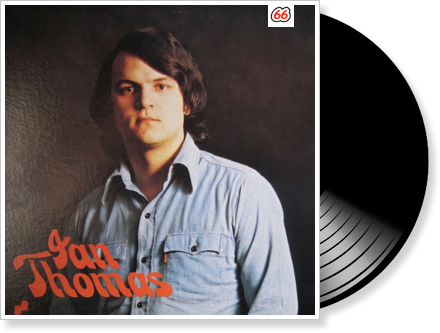
Title: Ian Thomas
Year: 1973
Format: LP
Label: Janus
Thomas was a successful rock and roll musician in Canada during the 1970s, with his most memorable hit being 1973′s “Painted Ladies”. Success in the American market, however, has proven to be elusive with the possible exception of “Painted Ladies”, which remains his only U. S. Top 40 hit, and the song “Runner” which was recorded by Manfred Mann’s Earth Band. He has also done musical composition for about a dozen films and television shows. Before breaking through with “Painted Ladies”, he was a producer at the CBC. Before that, he was part of the folk music group Tranquillity Base.
In 1974 he won a Juno Award for “Most Promising Male Vocalist of the Year”. In 1981, Thomas made a cameo appearance on SCTV with his real life brother Dave Thomas during a sketch of “The Great White North”. He played himself and performed the songs, “Pilot” and “Hold On”. He also wrote and recorded the theme song for his brother’s film Strange Brew. As well, Thomas was a musical guest on the CTV children’s show Whatever Turns You On (a short-lived spinoff of You Can’t Do That on Television) in 1979. (Wikipedia Excerpt)
Track Listing
- Painted Ladies
- Another
- One Of Those Days
- Will You Still Love Me
- Coming For My Life
- Come The Son
- When You Have Love
- Evil In Your Eyes
- Insecurity
- White Clouds
Disclaimer: The link below may point to content that is copyrighted. redtelephone66 only provides this link with the understanding that you are responsible for the content you download. redtelephone66 does not engage in music piracy, nor do we do host, fileshare, or otherwise trade in copyrighted works.
The Druids Of Stonehenge – Creation [Mono Vinyl] (1968)
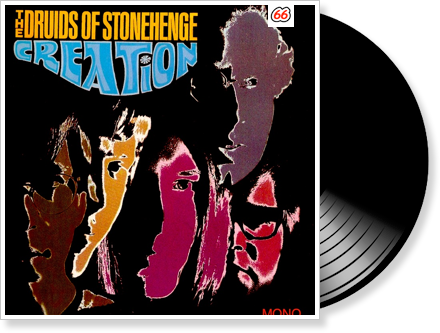
Title: Creation
Year: Year
Format: LP
Label: UNI
Formed while students attending New York’s Columbia and Syracuse Universities, by 1966 singer Dave Budge, guitarist Carl Hauser, drummer Steve Tindall (personal note – the Sherlock Holmes pipe didn’t exactly foster a “hip” image), rhythm guitarist Bill Tracy and bassist Tom Workman had come together as The Druids of Stonehenge; recorded a series of demos and relocated to Los Angeles in hopes of scoring big time successes. Two years of toil on the local club circuit eventually brought overnight success in the form of a contract with MCA’s newly formed Uni label.
Produced by Jerry Goldstein (he also contributed one song to the proceedings), 1968′s “Creation” didn’t exactly set the world on fire, though it’s far better than most mid-’60s offerings. Propelled by Budge’s nasty growl (imagine Eric Burdon after a week long bender), in contrast to most of their contemporaries who were pursuing ever more sophisticated arrangements, the band exhibited a penchant for roaring Animals-styled R&B (check out “Painted Woman”, their blazing cover of Screamin’ Jay Hawkins’ “I Put a Spell On You” and the original “Bring It On Home (Can’t Get By Alone)”).
The band’s other area of interest seemed to be drug-oriented material; check out the subtle “Speed” and their cover of Love’s “Signed DC”). Intriguing for it’s raw and rugged sound in an era of increasing audio sophistication. (Max Collodie)
Track Listing
- Six Feet Down
- Earthless
- I Put A Spell On You
- Speed
- Bring It On Home
- Painted Woman
- Pale Dream
- Signed D.C.
- Forgot To Begot
- A Garden Where Nothing Grows
- It’s All Over Now Baby Blue
Tarantula – Tarantula (1968)
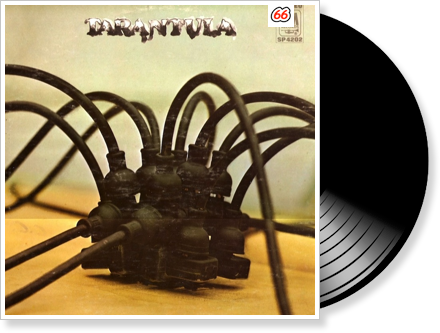
Title: Tarantula
Year: 1968
Format: LP
Label: A&M
Tarantula consisted of Tom Grasso (keyboards, vocals), Mike Edelman (electric flute, saxophone, vocals), Steve Swirn (drums), Oz Bach (bass, vocals), Thad Maxwell (guitar, vocals).
Formed by ex-Spanky and Our Gang and Wings member Oz Bach, and produced by Chad Stuart of Chad and Jeremy fame, the album slithers all over the place like a divinely mad snake on the trip of a lifetime. Eastern influences, military drumming and pieces of pastoral delight combine to intoxicate and alienate in equal measure. This spider has been out in the sun too long, is both scary and mad, but wishes to infiltrate the eardrums and share the madness. Joining Bach on bass, were Steve Zwirm, drums, Tom Grasso, organ, Thad Maxwell, electric guitar, and Mike Edelman on vocals, flute and sax.
Inspired perversity stripped much of Tarantula’s efforts of its obvious commerciality. The opening track “You” has successful single a la “Spirit in the Sky” written all over it, whilst “Electric Guru” is an adept exercise in bottling the mysticism and ideals of the era. “T. V. Repairman” sounds like Zappa auditioning for Hair. His diversity is referenced on much of the proceedings, but a bunch of also-ran Franks these boys were not. They possessed a strangely spiritual inclination, as betrayed in “Love Is for Peace, ” their only single. It’s a mantra-like chant for space cadets of any era, right down to the Scottish reel they mange to rope into this diligent tapestry of insanity before abandoning it a few seconds later.
Perhaps the beautifully melancholic “Thoughts for Anne” betrayed too much of “Eleanor Rigby” to impress the purists of the day, but you’d be hard-pressed to find a finer song. Rarely have Americans managed to sound so chamber-gloomily English and haunted. The divinely titled and terribly louche “Peach Fuzz and Peppermints” sounds like something a stripper might have shaken her moneymaker to, in a 1930s sin bin, before descending into the kind of fuzzed-out intensity only Patti Smith now seems capable of generating.
”Red Herring, ” as the name suggests, goes all over the shops, but somehow manages to never topple into the abyss it so perilously skirts, whilst “Billie the Birdman” begins as pure Beatles in “Strawberry Fields” mode, but ends as a whimsical Blur at their most Parklife. The brief, sad smattering of applause at the track’s demise, and that of the album, portended the meager portion of appreciation shown Tarantula. Things didn’t translate into wider recognition and success, and they didn’t cross the line from 1969 to ’70.
It is easy to see why they never hit anything resembling the big time. They probably weren’t even attempting to, and may not have managed the consequences of success too well. Albums like this don’t get made because of good sense and rational behavior, but they do betray impeccable timing and taste. As Mr. Wilde once opined, “All things in moderation, especially moderation. ” Tarantula thankfully gave free rein to their notions, albeit briefly, and left us a box of tricks worthy of Pandora. More Peach Fuzz everyone? (Robert Cochrane)
Track Listing
- You
- Electric Guru
- T.V. Repairman
- Love Is For Peace
- Poison Dance
- Thoughts For Anne
- Peach Fuzz And Peppermints
- Red Herring
- Billy The Birdman
The Surprise Package – Free Up (1968)
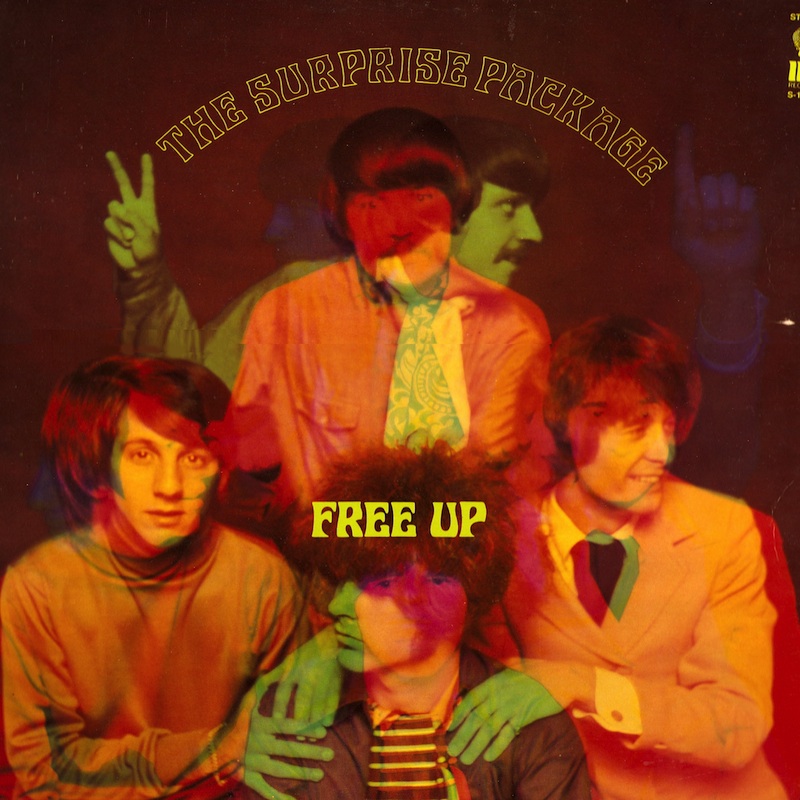
Title: Free Up
Year: 1968
Format: LP
Label: LHI
The Surprise Package were a Seattle, Washington group consisting of Fred Zeufeldt (drums, backing vocals), Michael Rohers (piano, organ, bass, backing vocals), Greg Beck (guitar, backing vocals), Rob Lowery (lead vocals).
Pretty standard late-60s heavy psych: soulful vocals, lots of organ, loud fuzz guitars. As with most of these bands, it has its moments, and the guitar sound is very nice. Still, it doesn’t really offer much you can’t get from dozens of other albums. The long title track, which would have easily been the album’s best song, is extended beyond the bound of reason with a batch of dull solos. It has some nice feedback, though. (Acid Archives)
Track Listing
- New Way Home
- 100% Vision
- Breakaway
- Supporting Cast
- Social Disease
The Weight – One Man’s Queen Is Another Man’s Sweat Hog (1969)
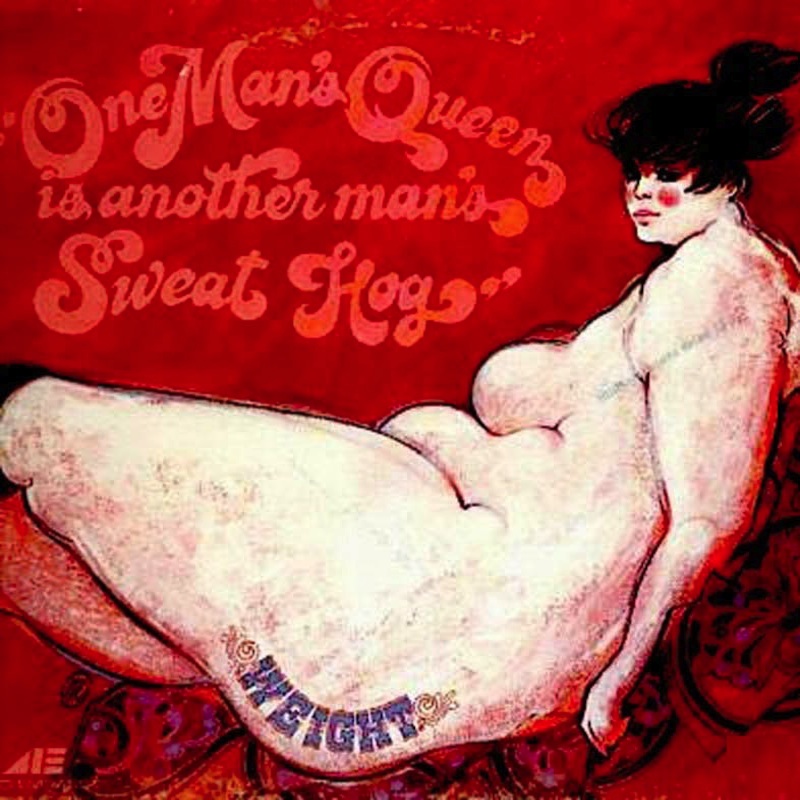
Title: One Man’s Queen Is Another Man’s Sweat Hog
Year: 1969
Format: LP
Label: Avco Embassy
Another obscurity courtesy of the Avco Embassy label by a group from New York called the Weight. The group consisted of Brian Cassidy (vocals-bass), Peter Masi (vocals-keyboards-guitar-harmonica), Toni Christmas (guitar-vocals), and Noel Cassidy (drums-washboard-vocals).
The album described in some circles as “progressive psych” starts off with “The Night The Pig Got Loose”, featuring a hilarious account of a drug bust told in an Arlo Guthrie sort of way, and then shifts to a ballad musically similar to Bob Dylan’s “I Shall Be Released” with the weird title of “Mr.M, Mr.N, and Mr.C (With Help From Mr.D)” (maybe the Mr.D is Dylan they’re referring to).
As the album progresses, it has some nice guitar/organ interplay similar in style to the Allman Brothers, so it leans to Southern Rock as much as it does to a progressive style. (Max Collodie)
Track Listing
- The Night The Pig Got Loose
- Mr.M, Mr.N And Mr.C (With Help From Mr.D)
- I’m Sure We’re Gonna Die
- Overhead Ego
- Dillusion #1
- Open Up Your Gate
- The Reason Why We’re Here
Christian Yoga Church – Turn On!! Music For The Hip At Heart (1967)
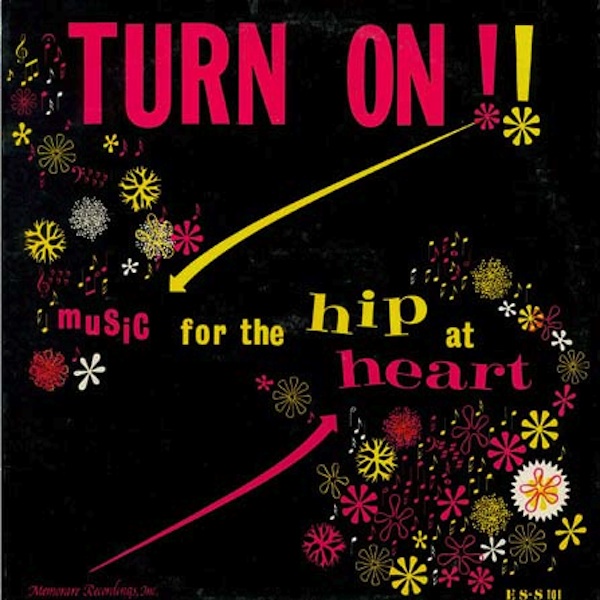
Title: Turn On!! Music For The Hip At Heart
Year: 1967
Format: LP
Label: Ecumenical
Virginia City, Nevada, Summer 1965. You know what’s going on here. Inside the Red Dog Saloon a sharp-looking young band of acidheads from the Bay Area called the Charlatans are playing weird folkrock for an equally stoned audience. Some consider this the birth of psychedelic rock music, or whatever. You’ve heard the story before.
So why not just once skip past the Red Dog, and continue down the main street, and up above a hill into a secluded area? There you’ll find an odd-looking monastery inhabited by the Christian Yoga Church, adherents of Kriya Yoga, one of many Eastern disciplines crouched away in the valleys and glens of Western America long before the rise of hippie-dom and New Age. Kriya Yoga was an old-school, non-cheesy way of life for honest, hard-working sadhaks looking for something else. Contemplating their teachings I find little out of the ordinary for the Himalayan headtrip scene, and they were apparently serious enough to survive into the 2000s.
In other words, I was unable to come up with anything that could explain the extraordinary LP that was released in the Christian Yoga Church’s name in 1967. In fact, I long doubted its origins, because each piece in the puzzle is so unusual that it seemed impossible to connect into something that made sense. But enough clues survive to tell you that this is all for real, although I’m still not able to present a coherent image of its meaning.
Looking at the album title and front cover artwork, you might mistake this for some flower power exploitation album released by Crown, Mark, or other fine repackagers of studio hack music to fit whatever trend was going on that week. “Christian” AND “Yoga” in the same sentence? Whew, that’s pretty shrewd. Except that this Church does exist, as evident from our trek into the Nevada hills.
Over on the back cover one “Father Christos” tells us that this is music for “going within”, while a John Doe explains in detail how the recording session was set up, after which “Father Hilarion” sums it up by pointing out that this is not an amalgamation of the East and West, but a rediscovery that East and West speak the same truth in different ways. This appears to be the core development of their Kriya Yoga studies, and is certainly a notion that has fuelled many an acid trip project — remember “Easter Everywhere”?
Then there is a reference to that same Himalayan Academy up in Nevada, side by side to a street address in San Francisco, both of which are apparently able to provide instructions on how to listen to the LP if you write them. Geographical and synchretistic confusion expands with a reference to a PO Box at the L.A airport (!) and a thank-you to the engineer, for whom “Allah be praised”. A convoluted production credit is given to Bob Keene, who may or may not be the Del-Fi label honcho that watched Richie Valens and Bobby Fuller become stars & subsequently croak.
You have to respect an album where the cover alone provides enough oddball visions and ideas to carry you through a full work-week, but the Christian Yoga Church trip doesn’t reveal its full glory until you drop the needle on the lead-in deadwax and enjoy the cosy, familiar ambience of a cheap pressing. And then the music begins. Now, as pointed out by Will Louviere in his excellent presentation of this album, there are literally hundreds of religious commune albums from the good old daze, although few of them are as early as 1967, and NONE of them hits this particular spot. Think Velvet Underground rehearsing on cough syrup in mid-1966.
Think Alan Watts rounding up his pals from “This Is IT” for a late-night session full of weirdness and introspection. Think Beat Of The Earth, unplugged.
“Turn On” consists of one continous 50-minute track, recorded live as it happened and without edits. You can hear players coughing and occasionally making mistakes. It goes through many changes as various church members — credited as “classical yoga students” on the label — enter to do their musical thing for a few minutes. A spooky reed organ is present throughout, droning through a sequence of modal chords that perfectly carries the East/West theme.
On top of this all sorts of instruments enter and leave, mainly percussion — tablas and gongs, bells, chimes, castanets, kazoos, a tuba and a french horn, high-pitched flutes — and things that don’t sound like instruments at all but people spinning coins on a wooden floor, clinking glasses or banging on tables. Inside this droning maelstrom sanskrit mantras come and go, done with American accents in a fairly mundane manner and occasionally interspersed with meditative “ommmm” chants.
It could have been a mess, but is instead an intense tranced out organic exploration into the Absolute Now, with a human-spiritual atmosphere as thick as anything I’ve ever heard.
In line with its background one might be inclined to take “Turn On! ” as one of those “trip music by accident” artefacts we sometimes stumble across, but as the liner notes show, the lysergic nature of the beast was deliberate:
“… that Memorare recordings is releasing a most decidedly Psychedelic Music album on an Ecumenical series might be a surprise to some, but not to those who firmly believe that we ‘go through all things to God’…”
Ah, this is as true psychedelia as you ever can find — about halfway through side 1 the music subsides and we are treated to the sound of running water, not from some lame sound effects library but there and as it happened, although I have no idea how it was achieved — because you can tell that it is a LOT of water running.
The intensity builds and dissolves, builds and dissolves, a gigantic gong chimes when you least expect it, and the spooky Twilight Zone Search Party reed organ is always sneaking around in the background. It’s impossible to review this music in a structured way — like “the plastic flute player is good, but the guy knocking on a table sounds unrehearsed” — but trying to gauge the acid flow of the 50 minutes, I would say that some of the most impressive vibes of all can be found at the beginning of side 1, opening an easy-access door into “Turn On! ” for anyone looking for esoteric kicks on a world-class level. (Patrick The Lama lysergia.com
Track Listing
- Turn On!! (Part One)
- Turn On!! (Part Two)
Jasper Wrath – Jasper Wrath (1971)
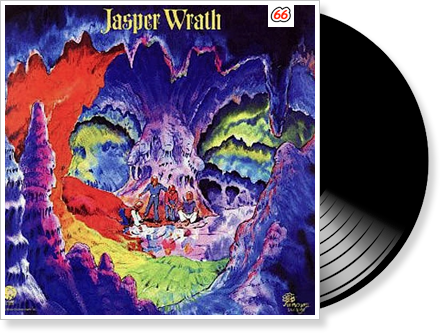
Title: Jasper Wrath
Year: 1971
Format: LP
Label: MGM Sunflower
Jasper Wrath formed in New Haven, Connecticut in 1969. The original lineup consisted of drummer Jeff Cannata of New Haven power trio band Christopher Hawke, as well as keyboardist Michael Soldan, guitarist Robert Giannotti, and bassist Phil Stone from the Connecticut-based band Buckle. Promoter John DuBuque recalls, “I had booked Christopher Hawke for an outdoor show in Milford.
In true agency form, another group showed up, Jasper Wrath. I believe it was their first gig. Although upset, I knew, once they started playing, I had never heard or seen anything like this before around here.” Uninterested in doing cover material, the band wrote a handful of songs in the next six to eight months and sent a few demos to record companies in New York and Los Angeles.
Within a couple of weeks, interest from LA based MGM Records, prompted a call to set up a live showcase with their New York office. Weeks later contracts were negotiated and Jasper Wrath had their first record deal. Recorded in six weeks at Phil Ramone’s A&R Studio in New York, Wrath was on it’s way. The self-titled debut was released in 1971. (Wikipedia Excerpt)
Track Listing
- Look To The Sunrise
- Mysteries (You Can Find Out)
- It’s Up To You
- Autumn
- Odyssey
- Did You Know That
- Drift Through Our Cloud
- Portrait: My Lady Angelina
- Roland Of Montevere
Disclaimer: The link below may point to content that is copyrighted. redtelephone66 only provides this link with the understanding that you are responsible for the content you download. redtelephone66 does not engage in music piracy, nor do we do host, fileshare, or otherwise trade in copyrighted works.
Fluff – Fluff (1972)
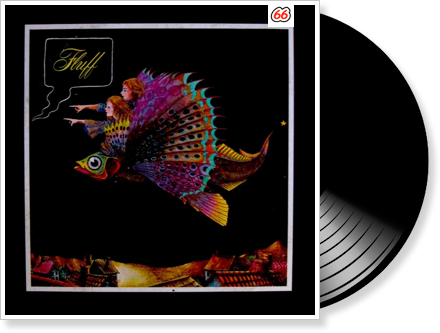
Title: Fluff
Year: 1972
Format: LP
Label: Roulette
Fluff was a hard rock outfit from the New York area that included soul vocalist Estelle Levitt (performing here as a background singer) and includes some exceptional guitar playing by Joey Ortiz. The songs are all originals were written by Levitt, Ortiz and Tammy Schiff. One of the better early seventies obscurities released by Roulette. (Max Collodie)
Track Listing
- You Make Me Lose Control
- Who’s Gonna Love Me In The Meantime
- Go To Sleep Elaine
- Free For All
- Unloving You
- The Only Reason You Never Did It Before (Is ‘Cause You Never Did It Before)
- What She Doesn’t Know
- Warm My Soul
- Something Strange Is Happening
- Crazy Lady
Disclaimer: The link below may point to content that is copyrighted. redtelephone66 only provides this link with the understanding that you are responsible for the content you download. redtelephone66 does not engage in music piracy, nor do we do host, fileshare, or otherwise trade in copyrighted works.