

Sandy Gurley – Sandy Gurley And The San Francisco Bridge (1968)
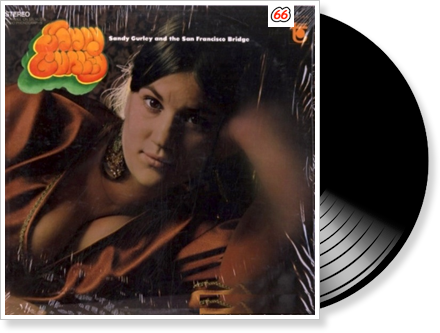
Title: Sandy Gurley And The San Francisco Bridge
Year: 1968
Format: LP
Label: Tower
Gurley has a great voice and though most songs have horns, there are a couple with wild fuzz guitar too. Kind of a mixed bag, but enjoyable. Oddly, the version of “Can’t Buy Me Love” is exactly the same backing track as that by Neighb’rhood Childr’n, just with Gurley as lead singer. Produced by Larry Goldberg & Leo Kulka (Afterglow, Maze, Mesmerizing Eye). (Acid Archives)
Track Listing
- Handful
- I You Wanna Ride On My Train
- I Know
- On The Morning Side
- Mind Pucker
- Some Times When I Get To Thinkin’
- Under My Thumb
- I Got A Man In The ‘Bama Mines
- You Can Be Replaced
- Can’t By Me Love
Calliope – Steamed (1969)
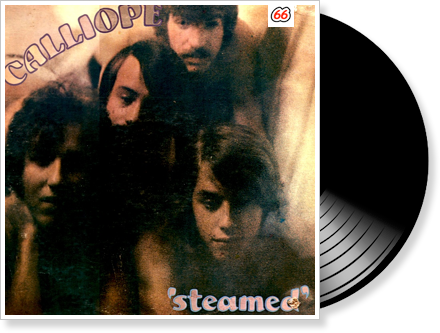
Title: Steamed
Year: 1969
Format: LP
Label: Buddah
Calliope consisted of Paul Goldsmith (guitar), Clyde Heaton (organ), Danny O’Keefe (bass-vocals), John Simpson (drums), Luther Rabb (bass),and Scott Strong (keyboards).
From Seattle, the driving force behind this short-lived outfit was singer/songwriter Danny O’Keefe, who later had one or two Top 20 hits (including “Magdalena”). They made a bit of a splash locally, but like a lot of Seattle bands, they seemed much better live than on record. It seems that bands from Seattle during that period did not get very good support from their record companies… obviously things have changed since then.
Calliope’s first album is now a very minor collectable, and the second may have remained unissued. The “Steamed” album includes cover versions of “Hello” (Lee Michaels), “California Dreamin’” (with a very good psychedelic guitar solo), “Hound Dog”, “Jimmy Bell” (a traditional number), “Like A Rolling Stone” (Dylan), “Nadine” (Chuck Berry) and four originals – two by Goldsmith and two by O’Keefe.
John Simpson, who was tragically killed in a plane crash in 1973, had previously played with Scott Strong in The Bumps and may also be the guy who played drums in Christopher. Prior to joining Calliope, Scott Strong also acted as their road manager. Paul Goldsmith and Luther Rabb had earlier been in Emergency Exit and Clyde Heaton in The Dimensions. Luther Rabb later played with Ballin’ Jack. (Max Collodie)
Track Listing
- Hello, Hello
- California Dreaming
- Rainmaker’s Dreaming
- Hound Dog
- Like A Rolling Stone
- Jimmy Bell
- I Wanna Thank You
- Nadine
- How About You
- Atlas
Disclaimer: The link below may point to content that is copyrighted. redtelephone66 only provides this link with the understanding that you are responsible for the content you download. redtelephone66 does not engage in music piracy, nor do we do host, fileshare, or otherwise trade in copyrighted works.

The Outlaw Blues Band – The Outlaw Blues Band (1968)
Title: The Outlaw Blues Band
Year: 1968
Format: LP
Label: ABC Bluesway
The Outlaw Blues Band consisted of Victor Aleman (drums-percussion), Joe Francis Gonzales (bass-vocals), Phillip John (lead guitar-lead vocals), Leon Rubenhold (harmonica-vocals), Joe Whiteman (saxophone-lute-vibra harp), and Lawrence Dickens (bass).
The Outlaw Blues Band decided to call themselves outlaws because of their self-proclaimed unconventional music. This is how they referred to rock music of the day-”It’s a 4/4 tempo that’s still rocking in its chair, not as a lady, but as a wench that shook up the historical path of music.” They stated in the album liner notes that they created the song “Death Dog Of Doom” in 6/8 tempo, thus making them a progressive band.
I agree that their sound is very progressive for the time that they recorded this album (1968). Being an avid electric blues lover myself, I found this LP very easy to appreciate. “Two ‘Tranes Running” is most likely a dedication to John Coltrane. It sounds very much like free form progressive jazz.
Possibly this is what Coltrane would have sounded like if a clone of him were playing in the same room. This is only a hypothesis of what I heard; others may have an entirely different interpretation than I. Their version of “Tobacco Road” was quite unusual. I had never heard the song done this way. I knew I was in for a ride when that song played through.
This group was far ahead of its time. They were to make one more album, “Breaking In”, in 1969. And that was the end of this out of the ordinary group. It’s to bad it couldn’t have lasted longer. I would have been very interesting to see how things developed over the course of a few more albums. (Bill Scalabrese)
Track Listing
- Tobacco Road
- Tried To Be A Good Boy (But I’m Worse Than A Nazi)
- How Bad Love Can Be
- I’ve Got To Have Peace On My Mind
- Lost In The Blues
- Death Dog Of Doom
- Sweet Sixteen
- Two ‘Tranes Running
Disclaimer: The link below may point to content that is copyrighted. redtelephone66 only provides this link with the understanding that you are responsible for the content you download. redtelephone66 does not engage in music piracy, nor do we do host, fileshare, or otherwise trade in copyrighted works.
Swampwater – Swampwater (1971)
Title: Swampwater
Year: 1971
Format: LP
Label: RCA Victor
For a couple of harrowing minutes on the opening track, Swampwater threatens to become just another faceless country-rock band. Thankfully, Gib Guilbeau pulls out the fiddle for the closing seconds of the song, and gets the band back on target.
From there, they turn in an even more consistant effort than on their debut. Breathtaking harmonies that, at times, approach The Louvin Brothers, and superlatve songcraft. I’ve never been to the bayou, but I can’t imagine getting closer than “Ol’ Papa Joe”. “Mama Lou”, meanwhile, sounds like a cajun-style inspiration for Bob Seger’s “Mainstreet”.
Even the occaisional mis-step is worthwhile. “Dakota”, a silly song about a dancing bear, introduces biting electric guitar, while the next track “Gentle Way of Lovin’ Me” features a prominent banjo. This juxtaposition pinpoints the nebulous distinction between “country” and “country-rock” — namely, that “country-rock” groups, for all their fondness for all things “down-home”, are frightened to death of banjoes. The fact that Swampwater doesn’t have that problem only adds to their verisimilitude.
The album ends with a ferocious fiddle stomp that gives way to a few seconds of “The Merry-Go-Round Broke Down”. The vocalist ends the album saying “that’s all folks”. It’s a line that proved sadly prophetic, as it marked the end of the band for a decade and a half. If you like country music, but especially if you don’t, search this one out. It’s good enough to make even the most cynical city-slicker feel at home on the front-porch. (Ochsfan RYM)
Track Listing
- Ooh-Wee California
- Headed For The Country
- Ol’ Papa Joe
- Mama Lou
- A Song I Heard
- One Note Man
- Back On The Street Again
- Dakota
- Gentle Ways Of Lovin’ Me
- Back Porch Harmony
- Medley: Swampdown/The Merry-Go-Round Broke Down
Disclaimer: The link below may point to content that is copyrighted. redtelephone66 only provides this link with the understanding that you are responsible for the content you download. redtelephone66 does not engage in music piracy, nor do we do host, fileshare, or otherwise trade in copyrighted works.
Human Beinz with the Mammals – Nobody But Me (1967)
Title: Nobody But Me
Year: 1967
Format: LP
Label: Gateway
Split release featuring songs recorded for Gateway prior to the enormous success of the Human Beinz Capitol Records release ‘Nobody But Me’, but not released until 1967. Since Gateway didn’t have enough material for a full album, they included cuts from a similar band, The Mammals. Contains Human Beinz doing covers of pop hits from the day like ‘Pied Piper’, ‘My Generation’ and ‘Gloria’. (Jack Dominilla)
Track Listing
- Pied Piper [The Human Beinz]
- My Generation [The Human Beinz]
- Gloria [The Human Beinz)
- The Times They Are A Changing [The Human Beinz]
- Nobody But Me [The Human Beinz]
- I Say Love [The Mammals]
- Hey Little One [The Mammals]
- Stop In The Name Of Love [The Mammals]
- Hold On! I’m Coming [The Mammals]
- Ooh Baby Baby [The Mammals]
- Up Tight [The Mammals]
Disclaimer: The link below may point to content that is copyrighted. redtelephone66 only provides this link with the understanding that you are responsible for the content you download. redtelephone66 does not engage in music piracy, nor do we do host, fileshare, or otherwise trade in copyrighted works.
Bloomsbury People – Bloomsbury People (1970)
Title: Bloomsbury People
Year: 1970
Format: LP
Label: MGM
As a teenager multi-instrumentalist, Sigmund Snopek III began a quest to find a way to combine rock music with classical music, electronics, and theater, a quest that led him to the University of Wisconsin-Milwaukee to study composition in the late ’60s.
He instantly set out to start a band, forming the Bloomsbury People in 1968. The band immediately gained a degree of local success, playing frequently around Milwaukee and the surrounding region and recording a couple of 45s over the next couple years. Their sound also earned acclaim in critical circles despite the inability of those critics to categorize the music (it was frequently saddled with the labels “psychedelic” or “classical” rock, or in some rare instances as “progressive”, rock years before the term was widely used).
The band released their self-titled debut album on MGM in 1970 and followed it up two years later with Virginia Woolf, although the latter was credited to Snopek III only, and the band disintegrated not long thereafter. The Bloomsbury People had been an important band in the late 1960s psychedelic/progressive music movement, playing to over 500,000 people at the Atlanta Pop Festival alongside Jimi Hendrix and other 60s icons.
Sigmund Snopek has been a dominant figure on the international musical scene since the late 1960s. Whether exercising his prodigious skills as composer, solo performer, bandleader, multi-instrument sideman or orchestrator, Snopek continues to share his creative spark with audiences across the country.
He has featured on recordings by many well-known artists including the Violent Femmes and many more. He developed a longstanding relationship with the Violent Femmes in the ’80s, in fact, he frequently joined the band in concert and on tours and finally joined them full-time in the 1990s. (Zzen Zero)
Track Listing
- Birdsong
- Witch Helen
- Have You Seen Them Cry
- Lake Of Sand
- State Of Confusion
- Golden Lion
- Pioneer Saint Of Death
- The Resurrection
- Demian
- So It Seems
- Suite: Classical #II
Disclaimer: The link below may point to content that is copyrighted. redtelephone66 only provides this link with the understanding that you are responsible for the content you download. redtelephone66 does not engage in music piracy, nor do we do host, fileshare, or otherwise trade in copyrighted works.
St. John Green – St. John Green [Mono] (1968 Flick Disc LP)
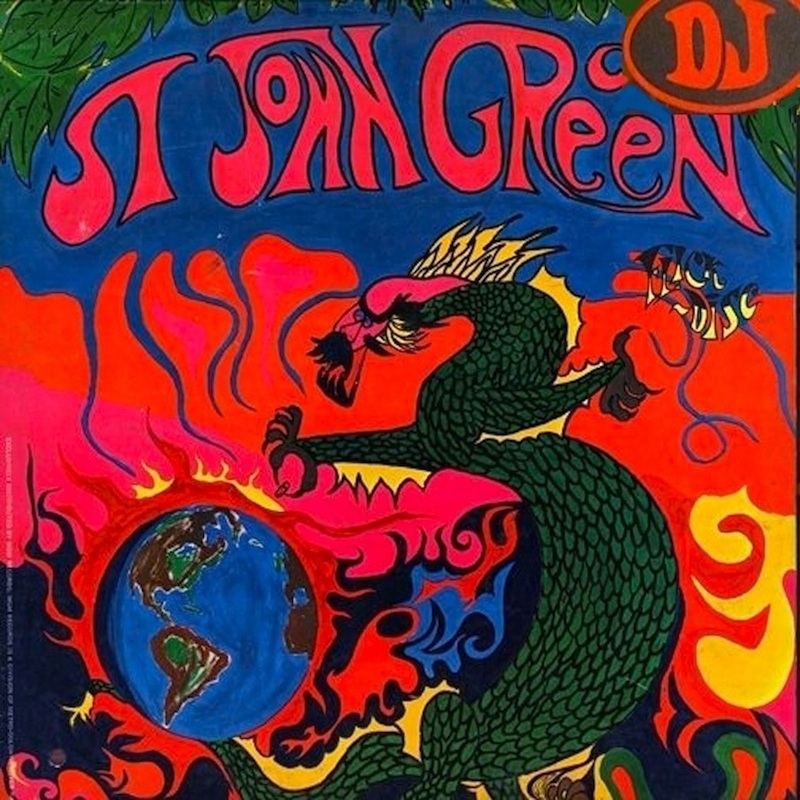
Title: St. John Green
Year: 1968
Format: LP
Label: Flick Disc
St. John Green consisted of Ed Bissot (bass-vocals), Vic Sabino (harmonica-vocals), Bill Kirkland (guitar), Mike Baxter (organ-vocals), and Shel Scott (drums).
Kim Fowley and Michael Lloyd co-produced this psychedelic opus with a “sanctified hippie vibe canyon music” as this Los Angeles area group might have described it; strange songs about the fires of hell and spacemen from Venus alternate with some anti ‘flower power’ songs and stoned sounding jams that show why they were touted by Fowley as the next in-thing they weren’t, of course, but a strong album all the same. (Jack Dominilla)
Track Listing
- 7th Generation Mutation
- Canyon Women
- Devil And The Sea
- Do You Believe
- Help Me Close The Door
- Messages From The Dead
- Goddess Of Death
- St. John Green
- Spirit Of Now
- Love Of Hate
- One Room Cemetary
- Shivers Of Pleasure
Disclaimer: The link below may point to content that is copyrighted. redtelephone66 only provides this link with the understanding that you are responsible for the content you download. redtelephone66 does not engage in music piracy, nor do we do host, fileshare, or otherwise trade in copyrighted works.
The Bonniwell Music Machine – The Bonniwell Music Machine [Original Vinyl Version] (1967)
Title: The Bonniwell Music Machine
Year: 1967
Format: LP
Label: Warner Brothers
Fans of garage and psych are probably familiar with this LA band of Talk Talk fame. Sean Bonniwell and the Music Machine released two records and a plethora of quality outtakes and are sadly remembered, if at all, for their sole hit record, Talk Talk.
The Music Machine covered themselves in black and played a grinding, relentless form of experimental garage rock.
Their music was full of tension and uneasiness, and many consider Bonniwell a tortured genuis.
Sean Bonniwell is really one of the grandfathers of punk rock. Rock critics and fans alike often forget how good the original band was. Talk Talk’s follow up was the brilliant People In Me which barely dented the charts and in early 66 Bonniwell unleashed Point of No Return, a track with a swirling mass of organ and futuristic blasts of guitar.
The Bonniwell Music Machine album above was recorded mostly with the original lineup who had recorded the 1966 debut. That debut was sabotaged, managers and producers forced Bonniwell to fill half the record with cover versions of current popular hits. Stellar originals battled it out with covers of Neil Diamonds’ Cherry Cherry and a respectable gutsy stab at Hey Joe. Their second album was released in 1967 and was a small victory for a band who had fought for absolute creative control. The recording sessions were tension fueled wars between management, Bonniwell, and the band. Eventually, the band left Bonniwell, feeling that he sided with management and ruled with an iron fist. Bonniwell Music Machine saw the band forge ahead and move beyond their garage roots.
The most popular song off the album, Double Yellow Line, was a real flame thrower, supposedly written while Sean was behind the wheel driving to the recording sessions! It was a unique statement that featured Bonniwell’s rants and hangups over some razor sharp guitars, a killer beat and strange fish bowl-like organ. Talk Me Down, Bottom of the Soul and the Eagle Never Hunts the Fly were just as vital and displayed Bonniwell’s alienation in spades. The Eagle Hunts was a monstrous, intense rocker with a wonderful fuzz meltdown that was supposedly disowned by the band during the recording sessions. Other strange pop songs like the psychedelic harpsichord-laden, harmony-rich Trap were a welcomed change in direction. Absolutely Positively was a fantastic fist pounding garage-punk anthem and Discrepancy was notable for two distinct vocalizations.
It’s always great to see a garage band enter the studio stoked about the possibilities of recording and come out creating their acid punk masterpiece. Bonniwell was definitely a rock star in his own mind, making this record their definitive statement. In 1969 Bonniwell would take a drastic left turn and release Close (see August 24, 2009 post), a solo album of crooner pop that showed little signs of the Music Machine’s past glories. (The Rising Storm)
Track Listing
- Astrologically Incompatible
- Double Yellow Line
- The Day Today
- Absolutely Positively
- Somethin Hurtin On Me
- The Trap
- Soul Love
- Bottom Of The Soul
- Talk Me Down
- The Eagle Never Hunts The Fly
- I’ve Loved You
- Affirmative No
- Discrepancy
- Me, Myself, And I
Disclaimer: The link below may point to content that is copyrighted. redtelephone66 only provides this link with the understanding that you are responsible for the content you download. redtelephone66 does not engage in music piracy, nor do we do host, fileshare, or otherwise trade in copyrighted works.
Plain Jane – Plain Jane (1969)
Title: Plain Jane
Year: 1969
Format: LP
Label: Hobbit
Underrated album on the same label as Sapphire Thinkers and Randy Holden. It’s generally described as “rural, ” but it’s not country at all. It’s more like a guitar pop album with a very laid back feel. In an understated way it anticipates the California rock of the 70s. Several songwriters create a surprisingly consistent sound. The vocals are very nice and the songs sneak up on you. “Not The Same” sounds like grade-A Badfinger. A pleasant surprise. (Acid Archives)
First off, other than what’s on the liner notes, good luck finding out much about this outfit. The line up featured singers/guitarists Don Gleicher and Barry Ray, and brothers David and Jerry Schoenfeld (drums and bass/keyboards respectively). This is speculation on my part, but I suspect the band originally hailed from New Mexico. That’s based on the fact that a ‘Don Gleicher’ was a member of a pair of mid-1960s New Mexico-based bands – The Monkeymen and The Piggy Bank.
Recorded at Hollywood’s I.D. Sound Studios with Les Brown Jr. handling the production duties, 1969’s “Plain Jane” was nothing short of fabulous. Featuring ten original tracks with all four members contributing material, the album showcased a mesmerizing blend of late-1960s country-rock, pop, and psych influences. Full of killer songs and breath-taking, slightly stoned vocals.
Hard to pick standouts since all ten tracks were worth hearing, but the opener ‘Who’s Drivin’ This Train’ sounded like Arlo Guthrie and the Grateful Dead having graduated from the John Philips top-40 songwriting academy, while ‘Not the Sam’ combined CSN&Y vocal harmonies with some ballistic drumming and a cool psych feel.
If I had any complaints, it was that these guys lacked a distinctive sound of their own, though in borrowing bits and pieces from other groups they came up with a wonderful aural stew. They also created one of those albums that was a blast to crank up and play spot-the-influences.
Okay, I’ll add that ‘Num-Bird’ was too country-flavored for my tastes. ‘You Can’t Make It Alone’ was what post-Monkees Michael Nesmith always yearned to sound like. ‘That’s How Much’ sported an odd mock-English feel – hum, kinda’ what Davy Jones always wanted to sound like … ‘Short Fairy Tale’ added some tasty jazzy guitar licks to the mix. And that was just side one. All hyperbole aside this is a classic lost album just waiting to be discovered !!! (RDTEN1 RYM)
Track Listing
- Who’s Drivin’ This Train
- You Can’t Make It Alone
- That’s How Much
- Short Fairy Tale
- Not The Same
- Num Bird
- What Can You Do?
- Fire Hydrant
- Silence
Disclaimer: The link below may point to content that is copyrighted. redtelephone66 only provides this link with the understanding that you are responsible for the content you download. redtelephone66 does not engage in music piracy, nor do we do host, fileshare, or otherwise trade in copyrighted works.
H.Y. Sledge – Bootleg Music (1971)
Title: Bootleg Music
Year: 1971
Format: LP
Label: SSS International
H. Y.Sledge at the time of this recording consisted of Richard Porter (guitar-piano-harpsichord-acoustic-vocals), Michael Eubank (organ-piano-acoustic-vocals), and Jan Pulver (bass-cowbell-gun shots-vocals). They were signed to Shelby Singleton’s SSS International label in 1971 and recorded this album in Nashville Tennessee.
H. Y. Sledge was a Tampa Florida band, and some of the members had backgrounds in 60s garage bands — Jan Pulver, for example, was in Those Five, who had recorded for the Paris Tower label. A couple members of the Outlaws were in H. Y. Sledge, so Outlaws fans have an interest in the album, Richard Porter played bass for the late sixties trio Wilkinson Tri-cycle who released an album on Date Records in 1969. (Jack Dominilla)
Track Listing
- Citation On Liberty
- Such An Easy Day
- Canadian Exodus
- Cellophane Lady/Nowhere To Go
- Ride The Waves
- I’m Your Brother
- Tamara
- Day Of Realization
- It’s In The Air
- Finding It
Disclaimer: The link below may point to content that is copyrighted. redtelephone66 only provides this link with the understanding that you are responsible for the content you download. redtelephone66 does not engage in music piracy, nor do we do host, fileshare, or otherwise trade in copyrighted works.