

John Berberian – The Dance Album (1978)
Artist: John Berberian
Title: The Dance Album
Year: 1978
Format: LP
Label: Olympia
Contributed by The Big “N”
A late seventies release from John Berberian (oud-violin-mandolin) also featuring legendary Armenian singer Onnik Dinkjian and traditional percussion by Johno Dolbashian (dumbeg-davool).
Also appearing on this record are vocalist Jack Baghsarian, David Attarian (accordion), Ara Dinkjian (acoustic guitar), Chris Marashlian (bass guitar) and John Vartan (doudoog-srink).
“John Berberian is considered to be one of the finest oud virtuosos in the world, and is known for a series of successful Armenian and Middle Eastern recordings. Two recordings from this series, “Expressions East” and “Oud Artistry” were record breaking in sales. “The Dance Album” was released on his own Olympia label.” (Max Collodie)
Track Listing
- Tamzara
- Mechus gyank chi menatz
- Karnan mekhag
- Medley
- Na mi naz uni
- Yeregoyan bar
- Le le yar
- Hale
Chariot – Chariot (1969)
Artist: Chariot
Title: Chariot
Year: 1969
Format: LP
Label: National General
Chariot’s lone musical offering, this eponymous release with its stunning artwork, appeared on the obscure National General label (NG2003) in 1969. The label, which apparently was the musical arm of the National General Cinema corporation, was distributed by Buddah Records and only lasted long enough to issue a handful of records including several undistinguished soundtracks.
Chariot, which evolved out of a ’60s outfit called The Knack, are often described as a Cream-influenced blues/psych trio, although to many ears their sound exhibits more than a hint of a classic flower power groove, with some decidedly progressive touches.
Although the other band members seem to have disappeared without trace, English-born drummer Pug Baker went on to play with a number of minor bands, such as the RCA-signed Rocking Horse, and Waves, a group that enjoyed a short tenure with Epic. Baker is still bashing the skins, and is currently plying his trade with southern rockers Ghost Riders. (pantsal RYM)
Track Listing
- Yolanda Jones
- You Let Me Love You
- Gamblin’ Man
- The War Is Over
- Home Wreckin’ Mama
- Hey People
- Variety Woman
- Got To Be A Lover
- Poor Man Blues
Silver Metre – Silver Metre (1970)
Artist: Silver Metre
Title: Silver Metre
Year: 1970
Format: LP
Label: National General
Recorded by the band less than two years after Leigh Stephens’ departure from Blue Cheer, one would expect this to be similarly heavy. And while it is quite consistently good, the hard rock is built more on it’s commercial aspects than it’s heavinous.
The album’s primary shortfall lies in it’s over-diversity, with the decent hard rock mixed with uninspired (and comparatively dumb) pop covers. (tymeshifter RYM)
Track Listing
- Now They’ve Found Me (Ballad Of A Well Known Gun)
- Naughty Lady
- Gangbang
- Country Comforts
- Superstar
- Sixty Years On
- Compromising Situation
- Cocklewood Monster
- Nightflight
- Dog End
Uncle Bill – Socks It To Ya (1969)

Artist: Uncle Bill
Title: Socks It To Ya
Year: 1969
Format: LP
Label: Dot
Courtesy of Egg City Radio
Circa 1969 LP by Burt Wilson performing in character as Uncle Bill, a sort of 1960’s hip updated version of W. C. Fields. Apparently he used this character on the “Laugh In” TV show. He puts his stamp on songs from the Beatles, Bob Dylan and others.
Incidentally (what makes this album interesting), backing up Wilson on this album is none other than The Peppermint Trolley Co. who were responsible for singing the “Brady Bunch” theme song for the show’s first season, they also released an album for Dot’s subsidiary label Acta Records in 1968 (see July 17, 2011 post).
The combination of Wilson’s “W. C. Fields” parody and the Trolley’s excellent accompaniment on such Pop standards as “Bottle Of Wine”, “With A Little Help From My Friends”, “The Mighty Quinn” and “Yummy, Yummy, Yummy” make this a minor pop psych classic!!! (Jacque Itzch)
Track Listing
- Uncle Bill’s Monologue
- Bottle Of Wine
- Ballad Of Bonnie And Clyde
- The Bears
- The Mighty Quinn
- Here Comes The Judge
- The Beaver Falls Open
- Little Help From My Friends
- Bass Drum Henry
- May I Take A Giant Step
- Unicorn
- Yummy, Yummy, Yummy
John Bunyan’s Progressive Pilgrims – Apricot Brandy And Albatross (1969)
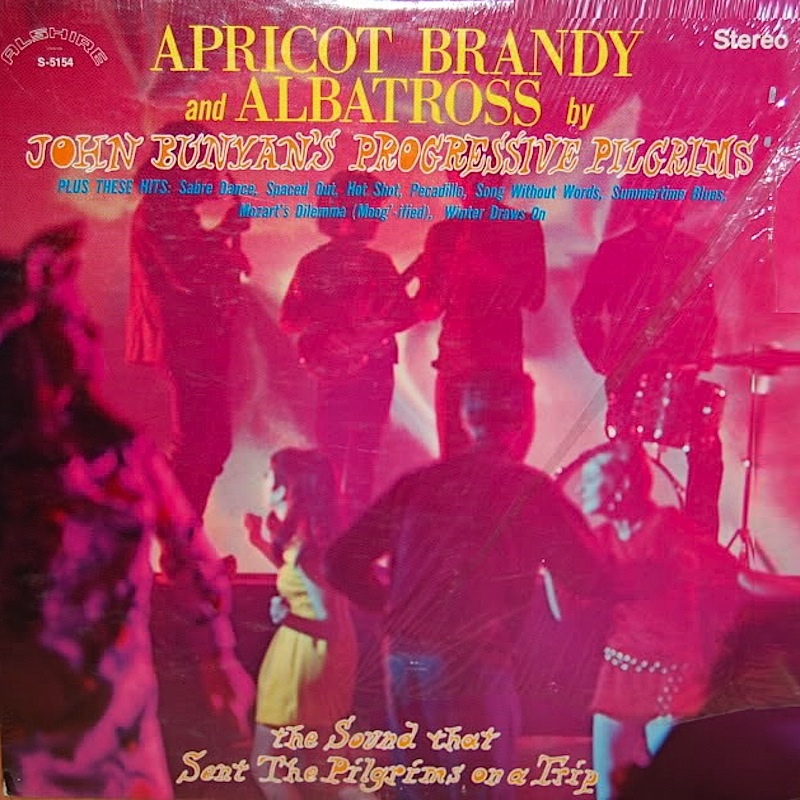
Artist: John Bunyan’s Progressive Pilgrims
Title: Apricot Brandy And Albatross
Year: 1969
Format: LP
Label: Alshire
The Berkeley, California-based Alshire Records was one of those budget labels that made its money with a seemingly endless catalog of MOR cocktail lounge albums, including the mind numbing 101 Strings series that seem to clog every charity store in the country. The label also dabbled in more contemporary sounds via albums by such studio entities as The Animated Egg and The Electric Firebirds. Add to that short list John Bunyan’s Progressive Pilgrims.
Namesake John Bunyan’s probably best known as the author of Pilgrim’s Progress,. Given the book describes the journey of a person seeking God and the struggles he encounters after becoming a Christian, one can only guess that the choice of names was meant to be funny.
Musically this set wasn’t a major departure from the label’s earlier stabs at rock and roll, though this time the marketing strategy was to attract fans of English hard rock (okay, “Hot Shot” sounded like something out of the Stax catalog). All but devoid of liner notes, the album says the set was recorded in London with recording director Jack Dorsey.
A doubtful claim. In all likelihood 1969′s “Apricot Brandy and Albatross” was recorded by anonymous, cash starved studio musicians – perhaps the same group responsible for the label’s earlier rock releases. Like the earlier albums, the set offered up a mixture of popular hits and similarly-styled originals.
An all instrumental collection, the covers weren’t half bad, though the rote performances really didn’t add much to tracks such as Fleetwood Mac’s “Albatross” or The Who’s “Summertime Blues”.
Elsewhere, credited to Martin Huckridge and Al Sherman, originals such as the freak out “Mozart’s Dilemma”, “Spaced Out” and “Winter Draws On” were full of fuzz guitar solos and screaming organs, making them surprisingly good for what were clearly throwaway efforts. All told one of the better exploitation LPs out there. (Bad Cat)
Track Listing
- Albatross
- Apricot Brandy
- Sabre Dance
- Mozart’s Dilemma
- Spaced Out
- Hot Shot
- Summertime Blue
- Winter Draws On
- Song Without Words
- Pecadillo
Willard Cantelon – LSD: Battle For The Mind (1966)
Artist: Willard Cantelon
Title: LSD: Battle For The Mind
Year: 1966
Format: LP
Label: Supreme
One of the all-time great Psych album covers: LSD Battle For The Mind. Willard Cantelon’s highly informative presentation on LSD… captured for eternity on vinyl. LSD: Battle For The Mind attempts to show the harm LSD is doing to 1960’s Society, unlike racism, sexism, war and killing all the black and brown people in the world. (huffduffer)
Track Listing
- LSD: Battle For The Mind
Marshall McLuhan – The Medium Is The Massage (1967)
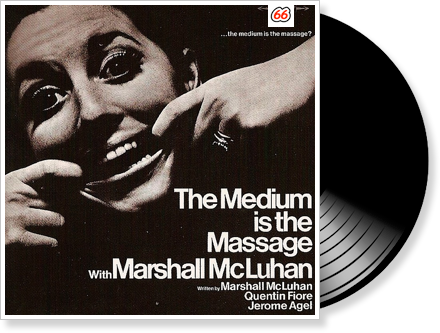
Title: The Medium Is The Massage
Year: 1967
Format: LP
Label: Columbia
In this article we will begin an examination of someone who most people do not know, but who is considered by many to be the first father and leading prophet of the electronic age, Marshall McLuhan.
A Canadian born in 1911, McLuhan became a Christian through the influence of G.K. Chesterton in 1937. He wrote his monumental work, one of twelve books and hundreds of articles, Understanding Media: The Extensions of Man, in 1964.
The subject that would occupy most of McLuhan’s career was the task of understanding the effects of technology as it related to popular culture, and how this in turn affected human beings and their relations with one another in communities.
Because he was one of the first to sound the alarm, McLuhan has gained the status of a cult hero and “high priest of pop-culture”. This status is not undeserved, and McLuhan said many things that are still pertinent today.
His thought, though voluminous, is frequently reduced to one-liners, and small sound bites, which sum up the more complicated content of his probing and rigorous examination of the media, a word that he coined. Concerning the new status of man in technological, and media-dominated society, he said:
If the work of the city is the remaking or translating of man into a more suitable form than his nomadic ancestors achieved, then might not our current translation of our entire lives into the spiritual form of information seem to make of the entire globe, and of the human family, a single consciousness?
In statements like this, McLuhan both announces the existence of a global village, another word he is credited for coining, and predicts the intensification of the world community to its present expression. All of this was done in the early 1960s at a time when television was still in its infancy, and the personal computer was almost twenty years into the future.
McLuhan is announcing what Lewis H. Lapham says is a world of people who worship the objects of their own invention in the form of fax machines and high speed computers, and accept the blessings of Coca-Cola and dresses by Donna Karan as the mark of divinity.
The fact that more people watch television than go to church is nothing new to us, but it was one of the tell-tale signs of a cultural shift in history for McLuhan; a shift which has been imperceptible to most, and devastating to all.
If anyone doubts McLuhan’s warning that “we become what we behold,” he should reflect on the consuming desire of many average teenagers to be like Michael Jordan, Madonna, or Britney Spears: a desire that has resulted in a culture of plastic surgery and drive-by shootings to obtain tennis shoes.
Objects of Desire
In our continuing examination of Marshall McLuhan, the patriarch of media criticism, we will explore the totalitarian techniques of American advertising and market research on the unsuspecting consumer. How this is accomplished, and the effects it has, were outlined in The Mechanical Bride, first published in 1951.
The book dealt with the influence of print media on the male and female psyche. The objective of advertising men, said McLuhan, is the manipulation, exploitation, and control of the individual. If this is true, then who, one might ask, was doing the controlling, and what was the desired effect?
The advertising companies were doing the controlling, and the desired effect was nothing loftier than selling products to unsuspecting customers. Making women into objects of desire by men, and then in turn selling the women the products to help them achieve the effect of desirability, accomplished the entire enterprise. The advertising men succeeded in creating a market where one did not previously exist.
The purpose here, and earlier for McLuhan, is not to vilify the advertising industry, rather it is to provide insight into how media functions. One such insight is McLuhan’s description of the contemporary mindset of a woman under the influence of advertising geniuses. He said:
To the mind of the modern girl, legs, like busts, are power points, which she has been taught to tailor, but as parts of the success kit rather than erotically or sensuously. She swings her legs from the hip . . . she knows that a “long-legged girl can go places.” As such, her legs are not intimately associated with her taste or with her unique self but are merely display objects like the grille on a car. They are date-bated power levers for the management of the male audience.
What McLuhan correctly ascertains is not the fact that women try to look attractive for men (presumably women have been doing this for a long time), but the idea of “polishing” each and every part for a kind of optimal performance.
The modern woman has been taught through advertising bombardments that every feature of her physical makeup can be enhanced for the specific purposes of gaining a husband, a promotion, or just getting a door opened.
As one might suspect, there is a male counterpart to this advertising bombardment. The overwhelming superwoman, the possessor of beauty and grace in degrees hitherto unimaginable, demands an impossibly high standard of virility from her male counterpart.
The result says McLuhan, are men who are readily captured by the gentleness and guile of women, but who are also surrounded by a barrage of body parts. The man is not won over, but slugged, and beaten down in defeat.
Technology as Extensions of the Human Body
In our continuing look at Marshal McLuhan, the man who coined the term “global village” and the phrase “the medium is the message,” we will reflect on what he had to say about the various ways human beings extend themselves, and how these extensions affect our relationships with one another. First, we must understand what McLuhan meant by the term “extension(s).”
An extension occurs when an individual or society makes or uses something in a way that extends the range of the human body and mind in a fashion that is new. The shovel we use for digging holes is a kind of extension of the hands and feet.
The spade is similar to the cupped hand, only it is stronger, less likely to break, and capable of removing more dirt per scoop than the hand. A microscope, or telescope is a way of seeing that is an extension of the eye.
Considering more complicated extensions, one might think of the automobile as an extension of the feet. It allows man to travel places in the same manner as the feet, only faster and with less effort. In addition, this extension enables one to travel in relative comfort in extreme weather conditions. Most individuals already understand the concept of extension, but many are unreflective when it comes to what McLuhan calls “amputations;” the counterpart to extensions.
Every extension of mankind, especially technological extensions, have the effect of amputating or modifying some other extension. An example of an amputation would be the loss of archery skills with the development of gunpowder and firearms. The need to be accurate with the new technology of guns made the continued practice of archery obsolete.
The extension of a technology like the automobile “amputates” the need for a highly developed walking culture, which in turn causes cities and countries to develop in different ways. The telephone extends the voice, but also amputates the art of penmanship gained through regular correspondence. These are a few examples, and almost everything we can think of is subject to similar observations.
McLuhan believed that mankind has always been fascinated and obsessed with these extensions, but too frequently we choose to ignore or minimize the amputations. For example, we praise the advantages of high speed personal travel made available by the automobile, but do not really want to be reminded of the pollution it causes.
Additionally, we do not want to be made to think about the time we spend alone in our cars isolated from other humans, or the fact that the resulting amputations from automobiles have made us more obese and generally less healthy. We have become people who regularly praise all extensions, and minimize all amputations. McLuhan believed that we do so at our own peril.
The Dangers of Over-extended Technology
We have discussed the idea of extensions and amputations caused by new technology, which is introduced into society. The automobile was previously mentioned as an extension of the foot. The car allows one to travel, just as the foot does, only faster and with less effort. The amputations which result would include loss of muscle strength in the under-utilized legs, and the reduction in the quality of air we breathe.
Something occurs when a medium like the automobile, used for transportation, becomes over-extended. The resulting amputations such as muscle atrophy, smog, and high-speed fatalities increase at a rate that challenges the benefits initially gained
Automobile fatalities, lung disease, and obesity caused by modern transportation begin to outweigh the benefits of getting to our destinations quicker and with less effort. The final movement is the reversal of the benefits. McLuhan said:
Although it may be true to say that an American is a creature of four wheels, and to point out that American youth attributes much more importance to arriving at driver’s-license age than at voting age, it is also true that the car has become an article of dress without which we feel uncertain, unclad, and incomplete in the urban compound.
To this observation might be added the fact that we train children from a very young age to stand within a few feet of high-speed vehicles without being afraid. Less than two hundred years ago a screaming locomotive or a high speed automobile would have caused a person to flee in terror for their lives.
We have slowly conditioned ourselves to not be afraid of something that is in fact extremely dangerous. Similarly, we know that speed limits of twenty miles an hour would almost certainly eliminate most car fatalities, but we also consider the advantages of getting to our destinations quicker to be worth the resulting death rate.
Proof of this casual acceptance of the disadvantages of the car could be imagined if one were to consider the fate of a political candidate who ran on a platform of reducing the national speed limit to twenty miles per hour. We know the advantages, even before implementation, but we choose to accept the disadvantages because there is a privileging of all types of technological extension, even deadly and horrific forms.
We are now prepared to consider the specific types of extensions realized by the television, mobile phone, and computer. If we take McLuhan’s lead then all of these must be simultaneously considered as extensions with both positive and negative amputations of previous technologies.
Four Questions Applied to Media
We are concluding our considerations of Marshall McLuhan’s pertinence with an examination of ideas found in his last work, The Global Village, published in 1989, twenty-five years after his monumental Understanding Media: The Extensions of Man. In his early works McLuhan focused on the rapid change in the five centuries since the development of the printing press and movable type, and the especially rapid developments of the twentieth-century.
McLuhan died in 1980 and was beginning to see the first fruits of the television generations as well as the fulfillment of some of his predictions. He was deeply concerned about man’s willful blindness to the downside of technology, yet McLuhan was not an irrational alarmist.
In his later years, and partially as a response to his critics, McLuhan developed a scientific basis for his thought around what he termed the tetrad. The tetrad allowed McLuhan to apply four laws, framed as questions, to a wide spectrum of mankind’s endeavors, and thereby give us a new tool for looking at our culture.
The first of these questions or laws is “What does it (the medium or technology) extend?” In the case of a car it would be the foot, in the case a phone it would be the voice. The second question is “What does it make obsolete?”
Again, one might answer that the car makes walking obsolete, and the phone makes smoke signals and carrier pigeons unnecessary. The third question asks, “What is retrieved?” The sense of adventure or quest is retrieved with the car, and the sense of community returns with the spread of telephone service. One might consider the rise of the cross-country vacation that accompanied the spread of automobile ownership.
The fourth question asks, “What does the technology reverse into if it is over-extended?” An over-extended automobile culture longs for the pedestrian lifestyle, and the over-extension of phone culture engenders a need for solitude.
With the radio and television we have simultaneous access to events on the entire planet. However, television culture diminishes, or amputates, many of the close ties of family life based on oral communication. The simple act of turning on a television can reduce a room of people to silence.
What is retrieved is the tribal or interrelated view of man. What it becomes or returns to is the global theater, where people are actors on a stage. One need only witness the event status of an airplane crash or weather disaster.
On McLuhan’s gravestone are the words “The Truth Shall Make You Free.” We do not have to like or even agree with everything that McLuhan said, but we should nevertheless remember that his life was dedicated to showing men the truth about the world they live in, and the hidden consequences of the technologies he develops. (Todd Kappelman)
Track Listing
- The Medium Is The Massage
The Flaming Ember – Westbound #9 (1970)
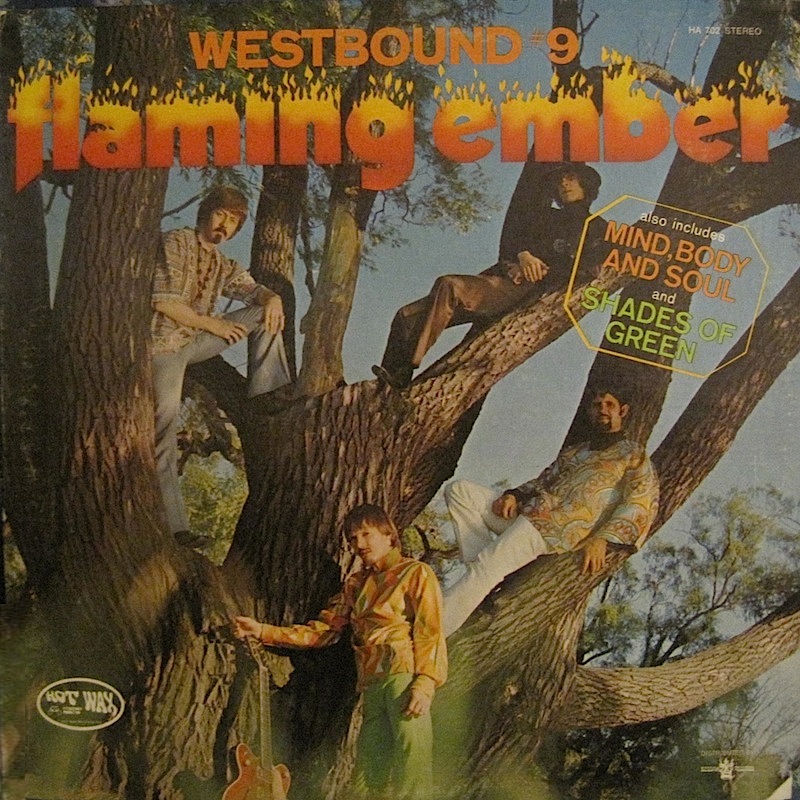
Artist: The Flaming Ember
Title: Westbound #9
Year: 1970
Format: LP
Label: Hot Wax
The Flaming Ember (Jerry Plunk drums, Bill Ellis electric piano, Joe Sladich lead guitar, Jim Bugnel bass guitar) was an American white soul band from Detroit, Michigan, who found commercial success starting in the late 1960′s.
The group originally formed in Detroit, Michigan in 1964. At that time, they were known as The Flaming Embers. In 1969, they signed with the newly formed Hot Wax Records, (the label founded by Brian Holland, Lamont Dozier, and Edward Holland, Jr.), after the band recorded for a number of smaller Detroit-area labels since 1965.
They recorded for Ed Wingate’s Ric Tic label in 1967, but when Berry Gordy, Jr.’s Motown Records purchased Golden World/Ric Tic from Wingate, the Flaming Ember chose not to sign with Motown.
The band dropped the “s” from its name and scored a pop and rhythm and blues hit with “Mind, Body and Soul” in 1969 (#26 on the US Billboard pop singles chart), their signature song (and heartland rock antecedent) “Westbound Number Nine” (#24 US pop, #15 US Billboard R&B chart), and “I’m Not My Brother’s Keeper” (#34 pop, #12 R&B), all released between late 1969 and late 1970.
The group’s follow-up efforts such as 1971′s “Stop the World and Let Me Off” were not as successful, and after changing their name to Mind, Body and Soul they spent the rest of the 1970s playing the Detroit bar circuit. (Wikipedia)
Track Listing
- Spinning Wheel
- Westbound #9
- Mind, Body And Soul
- Shades Of Green
- Going In Circles
- Why Don’t You Stay
- Flashbacks And Reruns
- This Girl Is A Woman Now
- Stop The World And Let Me Off
- Heart On (Loving You)
- Where’s All The Joy
- The Empty Crowded Room
The Flaming Ember – Sunshine (1971)
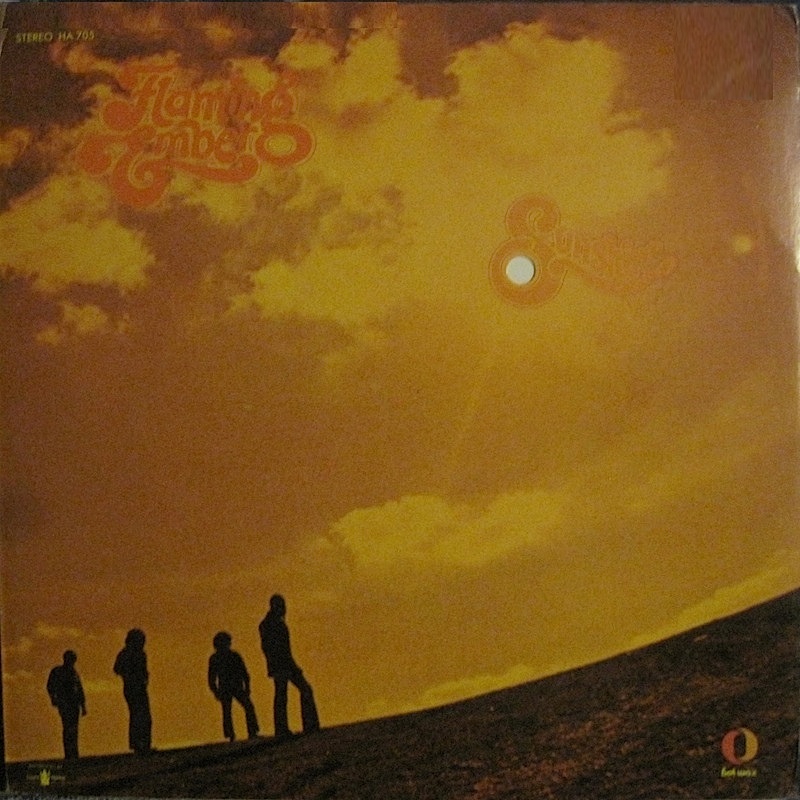
Artist: The Flaming Ember
Title: Sunshine
Year: 1971
Format: LP
Label: Hot Wax
Pretty decent acid/soul outfit on Holland/Dozier’s Hot Wax label. Like a version of the psychedelic era Temptations, but arguably a bit more consistent than any similar “Temp’s” Lp. Plays like a Temptations album as well with upbeat tracks mixed in with eerily similar sounding ballads like the title track. Some really nice upbeat Motown like acid/soul track’s like the opener “Living High Money Low” make this album worth hunting down. (PROGROCKASAURAUS RYM)
Track Listing
- Living High, Money Low
- 1200 Miles From Heaven
- Heart On Lovin’ You
- Stop The World (And Let Me Off)
- Sunshine
- Gotta Get Away
- I’m Not My Brother’s Keeper
- Ding Need Dong (To Ding-A Ling-A-Ding-Dong)
- One Step Beyond
- Ember Blues
Spider – Labyrinths (1972)

Artist: Spider
Title: Labyrinths
Year: 1972
Format: LP
Label: Capitol
Sensational new group, Spider (Karen Brian, Michael Clough, Rusty Cope and Michael Crowley) is here with a package of material sure to make the group a strong force on the scene. Backed by the finest sidemen (Chuck Findley, Ollit Mitchell, the Deasys, Clydie King, Allan Beutler, Jim Keltner, Max Bennett and more), with string and horn arrangements by Dee Barton and Jim Horn. Cuts include “Tell Me That You Love Me” and “Pass It On” (Billboard Magazine)
Track Listing
- May 16th
- Alice In Wonderland
- It’s Alright
- Little Love Song
- Tell Me That You Love Me
- Southwind
- Pass It On
- Can’t Let You Go
- Puppets
- Revival
- Burnin’