
Johnny Brower – Swamp Witches And Other Creatures (1977)
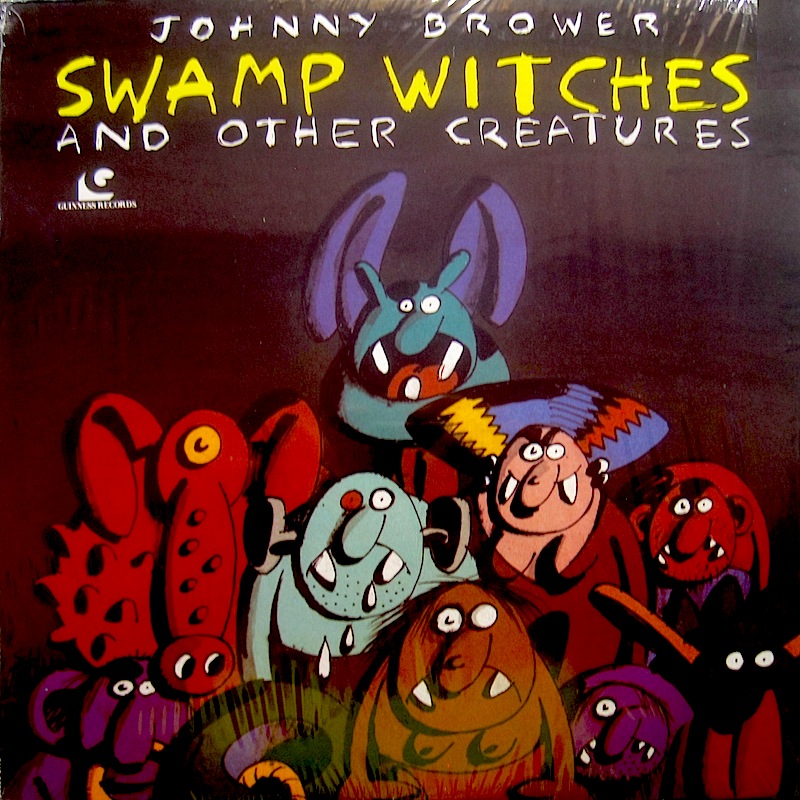
Artist: Johnny Brower
Title: Swamp Witches And Other Creatures
Year: 1977
Format: LP
Label: Guinness
Late 70′s U. S. Country-tinged Swamp-Pop w/fuzz-guitar on “House Of The Rising Sun” and some funky Cajun moves on “Swamp Witch Woman.”. Arranged moonshiner schlock w/loungy barstool rumble-moods plus a mind for the wacko-infected bozo-star… ; very obscure release on tax-loss Guinness Records label; file under semi-real person! (Klektic Fox)
Track Listing
- Once In A Lovetime
- My Friend The Bottle/My Friend The Glass
- House Of The Rising Sun
- Bad People
- Swamp Witch Woman
- Lord Save The Roses
- Nobody Like You
- Johnson, Jones, Baker & Brown
- Strangers
- Call Me Country
Anna Black – Thinking About My Man (1969)
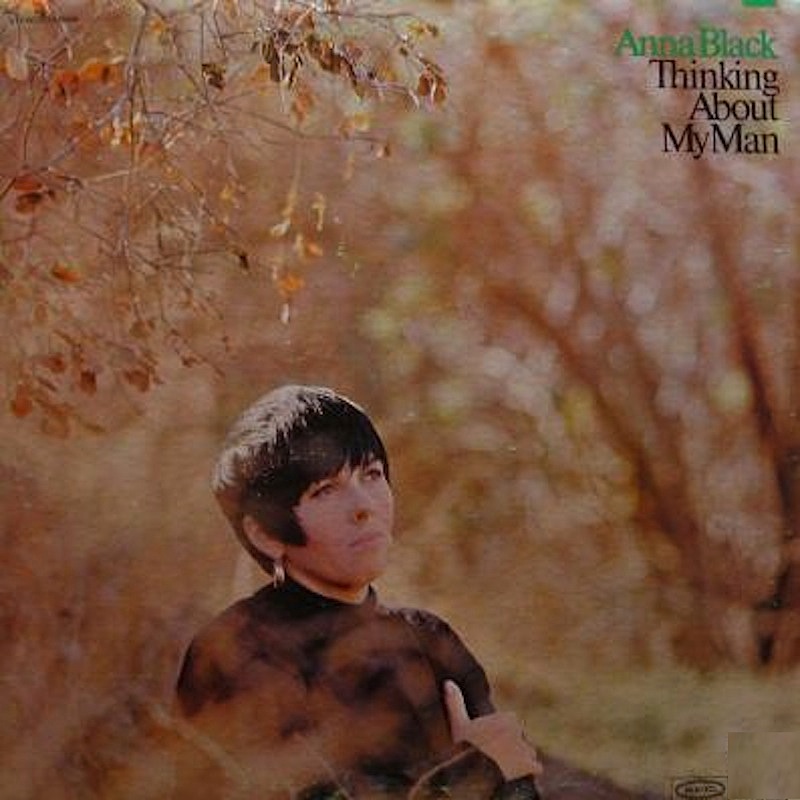
Artist: Anna Black
Title: Thinking About My Man
Year: 1969
Format: LP
Label: Epic
Anna Black’s second album for Epic, 1969′s Thinking About My Man, found her working on the model of her debut, with more of an emphasis on the role of sidemen and ensemble playing. Much of this was brought about by the addition of guitar legend James Burton to her band.
Although famous for his work with Ricky Nelson and Elvis Presley, Burton’s playing is simpatico with the demands of the late ’60s, his effect-laden guitar is never overpowering or detrimental to the songs. Burton’s wah-wah guitar solo on the sprightly version of “St. James Infirmary Blues” and the gritty, fuzz-fuelled funk version of “This Train” are highlights of the album.
More funk-based than her debut, Thinking relies on tightly arranged horns that recall the Stax or Muscle Shoals bands at their tightest, with a trumpet section that boasts jazz great Harry “Sweets” Edison, among others.
The jacket notes make mention of Janis Joplin, whom, in just a year, had become a huge seller for Epic’s mother label Columbia; yet Black brings Southern white and black music together more successfully than Joplin, who transformed her influences into something all her own.
Black’s delivery is more restrained — she’s no belter — but with an earthier, funkier voice. There’s less of a spotlight for her original songs this time around, although the ones she offers are strong, and work off the same horn-based soul riffs that permeate the album.
Country music still gets its due, and the title track is a prime example of a song incorporating both country and soul motifs, while “Hound Dog” is reworked as a down and dirty funk groove, with a good nod to Big Mama Thornton, the song’s originator (even though Burton gets a writing credit on the album). (Alex Stimmel)
Track Listing
- St. James Infirmary Blues
- This Train
- Sometimes I Feel Like A Motherless Child
- Little Bitty Bullfrog
- Market Man
- Thinkin’ ‘Bout My Man
- Devil Man
- 40 Years Sufferin’
- Hound Dog
- Death Bed Blues
Anna Black – Meet Anna Black (1968)
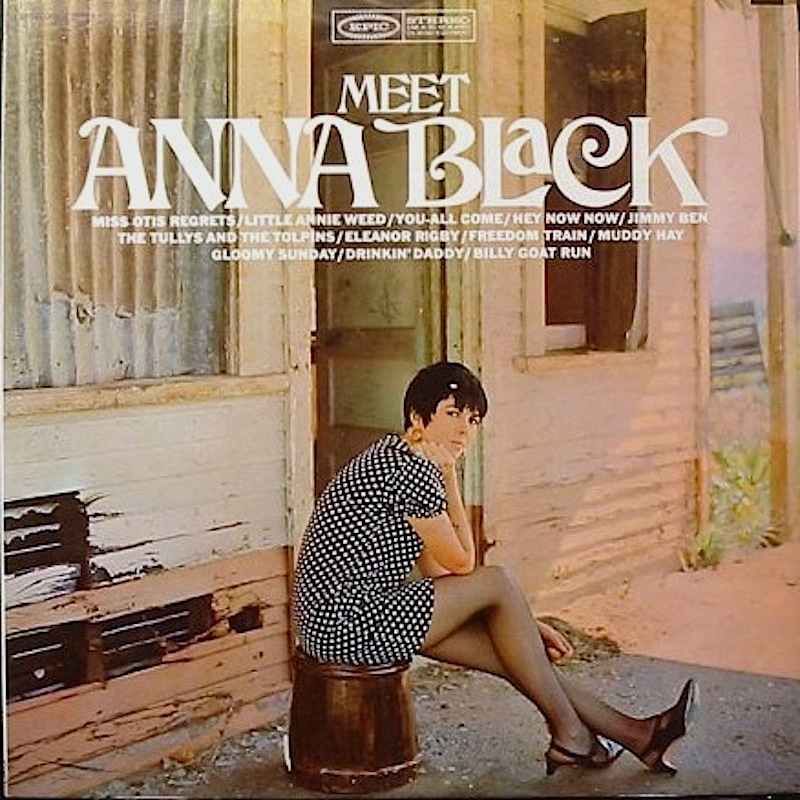
Artist: Anna Black
Title: Meet Anna Black
Year: 1968
Format: LP
Label: Epic
Beginning as it does with a slow, southern soul-style reworking of Cole Porter’s “Miss Otis Regrets,” listeners could be forgiven for thinking that Meet Anna Black, the sultry singer’s 1968 debut, would fit neatly into the then-waning category of popular music interpreters.
As soon as “Little Annie Weed” kicks in, however, it’s evident that this is going to be a different ride entirely. Stylistically diverse from song to song — most of which were written by Black, herself — Meet Anna Black is an overlooked gem in the vein of Southern white songstresses like Bobbie Gentry, and most notably in the country-funk of Jimmy Ben.
Gentry is probably the most apt comparison to Black, whose throaty voice can rouse songs to a boiling point and then calmly return them to placid ballads in a matter of seconds. Her own compositions are strong if not entirely original, noticeably all cut from the same cloth (also much like Gentry).
Her thoughtful and spooky rendition of “Eleanor Rigby” is a highlight, as is the back porch stomp of “Hey Now Now.” The simplicity of the songs is belied by the often bluesy and minor-key twists of Black’s melodies. Unfortunately, both of her albums for Epic have been out of print virtually since their release in the late ’60s, but each are well worth searching out. (Alex Stimmel)
Track Listing
- Miss Otis Regrets
- Little Annie Weed
- You-All Come
- Hey Now Now
- The Tullys & The Tolphins
- Jimmy Ben
- Eleanor Rigby
- Freedom Train
- Gloomy Sunday
- Muddy Hay
- Drinkin’ Daddy
- Billy Goat Run
Sarah – Sarah & Friends (1971)
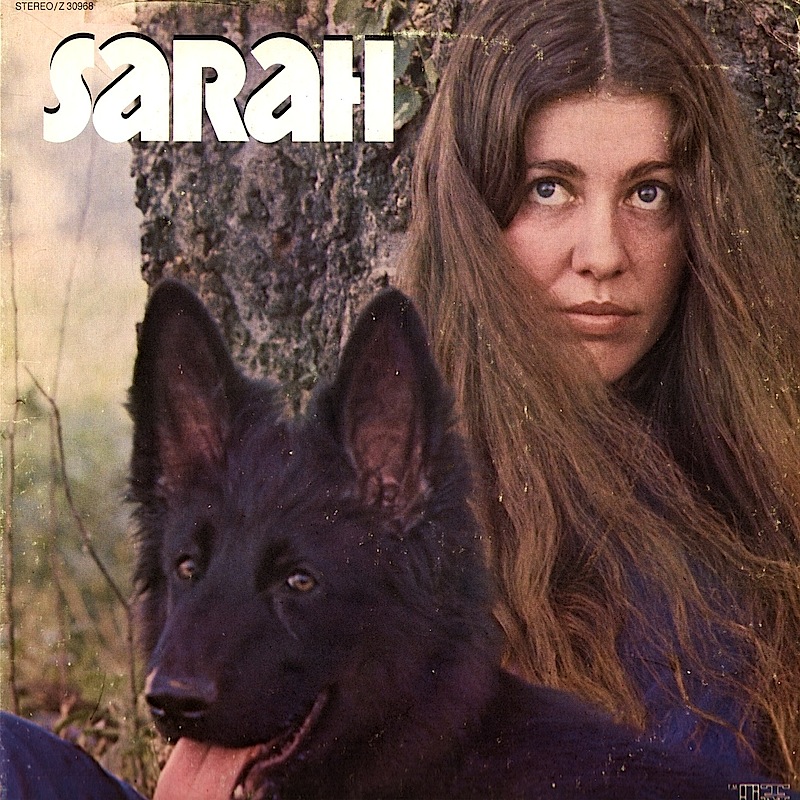
Artist: Sarah
Title: Sarah & Friends
Year: 1971
Format: LP
Label: TMI
Stolen somewhere on the internet by Hap Harlowe
Sarah & Friends (who is this Sarah?), is an excellent female R&B album produced and arranged by Steve Cropper who also performs on guitar. Other musicians include David Beaver (vocals), Paul Cannon (guitar), Jimmy Johnson (bass), David Mayo (organ-guitar-piano-vocals), Richie Simpson (drums), J.A. Spell (organ-piano), Pat Taylor (vocals) and Walter Ramsey (piano). Recorded at Trans Maximus Sound Studio Memphis, TN. Review pending. (Max Collodie)
Track Listing
- Fly By Night
- Cycles
- Big City Eye
- The Natural Order Of Things
- I’ve Told You For The Last Time
- Antique Age
- She Who Steals My Man
- Take It Like You Give It
- Like A Road Leading Home
- I’m Sticking With My Man
- Lord I Wonder Why
Dixie Lee Innes – Of The Original Caste (1972)
Artist: Dixie Lee Innes
Title: Of The Original Caste
Year: 1972
Format: LP
Label: Bell
Contributed by Eliot W.
Though born in Moose Jaw, Saskatchewan, Dixie Lee Stone relocated to Calgary with her family as a young child. While playing small coffee houses like The Pig’s Eye at the same time as undiscovered performers like Joni Anderson (later to be Joni Mitchell) and David Wiffen she managed a recording deal with Calgary label Sotan Records (home of The Echo Tones – featuring future members of the Stampeders). She recorded one single entitled “Come To Me” b/w “That’s How Sad Things Go” in 1966 shortly before meeting future husband Bruce Innes and his North Country Singers (featuring Graham Bruce on bass and Joseph Cavender on drums).
She was soon asked to join the group and they immediately set out on a cross Canada tour, eventually going to the US where they picked up second guitarist Bliss Mackie in Portland, Oregon, before settling in Los Angeles and changing their name to THE ORIGINAL CASTE. Through Innes’s former label, Dot Records, they recorded two singles including “I Can’t Make It Anymore” (1968) which was less than a blip on the music industry radar. However, after signing with TA Records, a label distributed by Bell Records (Columbia), in 1969, Innes met writers Dennis Lambert and Brian Potter, who would produce The Original Caste’s first album.
They struck pay dirt after releasing the duo’s “One Tin Soldier” that same year. The song made No. 6 on RPM Weekly chart and No. 34 on the Billboard Top-40 and went to #1 on the CHUM Chart. They charted even higher with “Mr. Monday” which hit No. 4 on RPM Weekly’s chart and No. 3 on the CHUM Chart in Canada. The two singles combined, worldwide, sold over three million copies. Despite the failure of “Mr. Monday” to chart in the US, they landed opening slots for the likes of BB King and Glen Campbell south of the border and made numerous TV appearances. “One Tin Soldier” had a revival of sorts in 1972 when it was featured in the movie ‘Billy Jack’, however it was not the Original Caste on the soundtrack but rather American band Coven featuring singer Jinx Dawson.
The singles made another round at radio and had significant sales after being re-issued. The husband and wife team of Dixie Lee and Bruce Innes would record together and as solo artists as a continued extension of their Original Caste recording contract through Bell. Dixie released a solo album called ‘Dixie Lee Innes Of The Original Caste’ featuring some of the biggest US session men including Larry Carlton, James Burton and a very young Michael McDonald (who would go on to be in the Doobie Brothers.)
With a switch to Century II Records out of Canada, the new four-piece version of the group (now with Gary Carlson on bass and Tom Doran on drums) released the ‘Back Home’ album in 1974. The new version of Original Caste toured into the mid-1970′s. Dixie Lee took time to record another solo album in Montreal in 1977. ‘Chinook’ was released on the indie label PRP Records. When the band made its final split in 1980 so did the Innes’; Dixie remarried and became a social worker in Vancouver, BC. (Canadian Pop Encyclopedia)
Track Listing
- Propinquity (I’ve Just Begun To Care)
- Black Paper Roses
- Too Much Pain
- Hymn
- Friends With You
- Four Strong Winds
- Seems Like A Long Time
- The Dolphins
- Sing Children Sing
- We’ve Got To Stay Together
Mississippi – Mississippi (1972)
Artist: Mississippi
Title: Mississippi
Year: 1972
Format: LP
Label: Fantasy
Mississippi was an Australian band (1972–1975), which featured some big names in Australian rock music, Graeham Goble, Beeb Birtles and Kerryn Tolhurst. The band started as Allison Gros in Adelaide, South Australia in 1970 and moved to Melbourne in 1971 where they recorded as Allison Gros, Drummond and in 1972 became Mississippi; this band eventually evolved into Little River Band by 1975.
“Allison Gross” is a traditional English folk ballad with the most widely recognised version recorded by Steeleye Span on their 1973 album Parcel of Rogues. The Adelaide based folk-rock band Allison Gros is believed to be named after this folk ballad and consisted of Graeham Goble (vocals, guitar), Russ Johnson (vocals, guitar) and John Mower (vocals, guitar).
They recorded one single on independent label Gamba “Naturally” released in 1970. The band moved to Melbourne in 1971 and signed to the Fable Records label and released two singles; “If I Ask You” and “All the Days”. Under the pseudonym Drummond they recorded a ‘chipmunk’ version of the 1950s rock song “Daddy Cool”, which spent seven weeks at the top of the Australian national charts from September 1971. The success of their single rode largely on the back of the success of Australian band Daddy Cool (see February 28, 2010 posts), who had scored a number one hit for 10 weeks with “Eagle Rock”, which Drummond’s single replaced at #1.
In 1972, the band became known as Mississippi and released a self-titled debut LP (AUS chart position #21), which featured the single “Kings of the World” (AUS chart position #7, 1972) on the Bootleg label, a label recently set up by Brian Cadd. In late 1972, Mississippi were joined by Beeb Birtles on bass and vocals and Derek Pellicci on drums. Birtles had been bassist with popular Australian band Zoot. 1973 saw several changes in line-up, a new single release “Early Morning” (AUS chart position #56, 1973) and supporting the Jackson Five Australian tour in October of that year.
In 1974 they appeared at the Sunbury music festival and released another single “Will I?” (AUS chart position #26, 1974). They did a tour of the UK in 1974, and after a disastrous tour, broke up. In London band members met up with former Masters Apprentices bassist Glenn Wheatley who agreed to become their manager, should they decide go back to Australia.
Wheatley was eager to return to Australia after spending some time working in the USA & the UK. In the UK, they also met up with Glenn Shorrock (ex-Twilights) who had also been in the UK for several years, without seeing much success and also wished to return home. From this nucleus, the Little River Band was born. In 1975, they returned to Australia and reformed, with the addition of Glenn Shorrock, firstly under the name Mississippi.
After a few months of touring, on the way to a gig in Geelong, Victoria one day, they changed their name to the Little River Band, which they took from a signpost along the road.Under the guidance of producer Glenn Wheatley, they became one of Australia’s most successful bands to make it big in the USA. (Wikipedia)
“As one of the line-ups prior to the later world-famous Little River Band the self-titled Mississippi album of 1972 gives a strong indication as to how this band’s songs would later evolve into the typical LRB sound. “Save the Land” and “Kings of the World” remind a lot of the songs contained on the Little River Band debut album, which was issued in 1975. Overall this is a jewel of its own in my record collection.” (azfrankie RYM)
Track Listing
- Save The Land
- Mr. Moondog
- Three Day
- All Through The Day
- Sweet World
- Feel Alone
- Do I
- Kings Of The World
- City Sunda
- When You’re Old
- Day Job Song
Roger Shriver – Roger Shriver (1972)
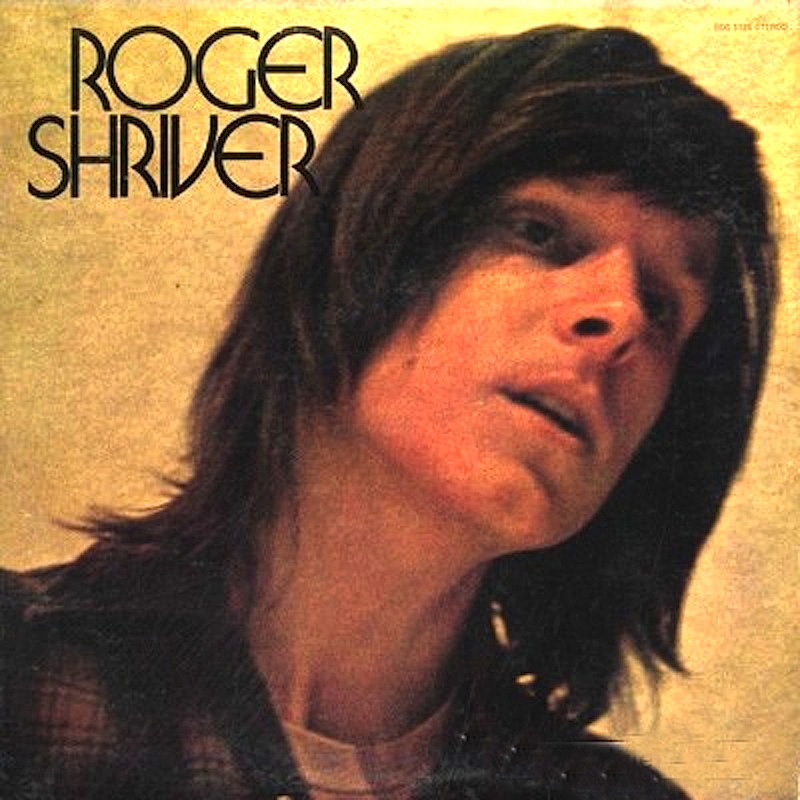
Artist: Roger Shriver
Title: Roger Shriver
Year: 1972
Format: LP
Label: Buddah
Contributed by Eliot W.
Excellent solo album by Roger Shriver released in the early ’70s. The album which is always hyped as folk psych, has a jazzy edge to it on tracks such as “Life Is Like A River”,”Temptation” and “Don’t You Ever Leave Me” and a rural country feel on cuts like “Nobody Special”, “Beautiful Dream” and “Silver Stones”.
In addition to Shriver on guitar and vocals, the album features some fine back-up musicians including Joe Farrell (tenor saxophone), Grady Tate (drums), Sam Brown (guitar), Bob Mann (guitar), Richard Davis (bass) and Marvin Stamm (trumpet) among others. Produced by Norman Schwartz (Skye Records) and recorded at National Recording Studios in March of 1972. (Bridget Bishop)
Track Listing
- Nobody Special
- Life Is Like A River
- Temptation
- New York Sidewalk Gratings
- A Man Of Good Intentions
- Silver Stones
- The Other Side Of A Woman
- The Carpenter, The Painter And The Gardener
- Beautiful Dream
- Love Is A Beautiful Color
- Don’t You Ever Leave Me
Steve Karliski – Gotta Keep Movin’ (1973)
Artist: Steve Karliski
Title: Gotta Keep Movin’
Year: 1973
Format: LP
Label: Perception
Steve Karliski was the youngest son of five children born to Ukrainian immigrant parents. From a very early age he loved music and was giving recitals before the age of 10. In his teens Steve started composing songs, both lyrics and music.
In the early 1960s after attending McGill University he headed for New York with his songs and became an instant success working with other songwriters Larry Kolbar, Barry Mann, Neil Sedaka and Carole King.
After moving to Nashville his country songwriting credits and #1 hits included “Yes, Mr. Peters”, which was featured on the TV show ’60 Minutes’. “Molly” was written during the Vietnam War and was recognized in writing by Senator Bob Dole in the US. Bobby Goldsboro released it as a single.
Many artists recorded Karliski’s songs including Billy Walker, Jack Greene, Freddie Hart, Norma Jean, Tommy Cash, Faron Young, Waylon Jennings, Wayne Newton, Teresa Brewer, Hank Williams Jr., Bobby Vinton, Tony Orlando, Patti Page, Tex Ritter, Frankie Lane, Gary Puckett and the Union Gap and many others.
He also wrote the soundtrack for several movies including ‘A Time to Sing’, ‘Old Before My Time’, and ‘Money Can’t Buy Happiness’ among others.
Karliski wrote or recorded more than two hundred songs but only ever recorded on album. He met fellow Canadian Ralph Murphy during his time in New York City and signed to Murphy’s Double M Records. Karliski wrote and produced 1973’s ‘Gotta Keep Movin’ LP.
Steve Karliski passed away in 2007 in Niagara Falls, where he had been living for more than 10 years. (The Canadian Pop Encyclopedia)
Track Listing
- Gotta Keep Movin’
- Takes A Woman Like You
- Ask Me Anything
- Home Comes The Hero
- And Then Came The Bad Years
- Molly
- For Loving You
- Not The Way They Used To
- At Least One Time
- Think Of The Good Times
Sly Boots – Notes On A Journey (1969)
Artist: Sly Boots
Title: Notes On A Journey
Year: 1969
Format: LP
Label: Faithful Virtue
Sly Boots were Michael Wendroff (guitars-vocals) and David Greenberg (guitar-vocals). The duo is also joined on this album by Thomas Caccetta (bass), Bugs (drums), Ronney Reiss (drums), Eric Kihs (keyboards) and Michael Jason (harmonica).
Wendroff would go on to release several solo recordings including Southpaw for Buddah Records and also work with Lou Reed among others in the seventies.
“A late 60s hippie folky rock group led by Michael Wendroff and David Greenberg. Deep thought lyrics and wistful acoustic jammy playing. Solid latenite charmer. ” (Acid Archives)
Track Listing
- Alien Mind (Cathrine II)
- Never Say Goodbye
- Girl From Missionary Ridge
- Notes On A Journey East
- Contrary Potatoes
- I’m Innocent
- Independent Lady
- Take Me For A Ride
- Notes On A Journey West
- Pass Through Like The Lightning
Dick Dodd – First Evolution Of Dick Dodd (1968)
Artist: Dick Dodd
Title: First Evolution Of Dick Dodd
Year: 1968
Format: LP
Label: Tower
A Mouseketeer on the original Mickey Mouse Club TV show, Dick Dodd went on to help pioneer the West Coast rock of the early ’60s. After playing drums and singing with the Casuals, Eddie & the Showmen, and the Bel-Airs, Dodd accepted an invitation to join the L. A.-based group the Standells, replacing Gary Leeds, who changed his name to Gary Walker and found fame with the Walker Brothers.
In addition to playing on the Standells’ 1966 hit tribute to Boston’s Charles River, “Dirty Water,” he appeared with the group in the 1967 film Riot on Sunset Strip. Working with the Standells’ manager, producer, and lyricist of “Dirty Water,” Ed Cobb, Dodd recorded a solo album, First Evolution, in 1968. Although he released two singles — “Fanny” b/w “Don’t Be Ashamed to Call My Name” and “Guilty” b/w “Requiem” — neither provided the hoped-for breakthrough and Dodd faded from the spotlight.
Three decades later, in November 1999, Dodd reunited with former Standells keyboardist/guitarist/vocalist Larry Tamblyn and guitarist Tony Valentino to perform for the Cavestomp! series at the Westbeth Theater in New York. An album recorded during their performance, Ban This! Live from Cavestomp!, was released in 2000. (allmusic)
Track Listing
- Lonely Weekends
- Tell The Truth
- Stone Blues Man
- You Lied To Your Daddy
- Under Construction
- Hope
- Twenty-Four Hours Of Loneliness
- Little Sister
- Mary, Mary Row Your Boat
- Here We Go Again