
The Road Home – Peaceful Children (1971)
Title: Peaceful Children
Year: 1971
Format: LP
Label: Dunhill
Bill Sprouse Jr. (aka Willy Sprouse, Jr., d. 5 September 1975) was a Christian evangelist, singer and songwriter, and the musical force behind two groups (both called The Road Home) in the early 1970s. Bill recorded several songs for a group called Maranatha and traveled extensively sharing the Gospel through his music. He was severely overweight and died at age 26. Sprouse is best-known for his songwriting, including “Shotgun Angel”, “Since I Met Jesus” and “Psalm Five”.
Prior to joining Maranatha, Sprouse led a secular incarnation of The Road Home which played extensively in Orange County, CA. They released an album on ABC/Dunhill Records titled “Peaceful Children” [DS 50104] in 1971. He is credited as “Willy Sprouse, Jr.” on percussion, vocals, and keyboard. His song “Love’s Gonna Get You Anyway” was supposedly sampled on the title track of DJ Krush’s 1996 album Meiso, featuring Black Thought and Malik B. of The Roots. (Wikipedia Excerpt)
Track Listing
- Peaceful Children
- Keep It In The Family
- Somebody Like You
- Something Special
- Comin’ Back Down
- Restitution
- So You Want To Be A Woman
- Love’s Gonna Get You Anyway
- One Tin Soldier
- Birds
Kathy Smith – Some Songs I’ve Saved (1970)
Title: Some Songs I’ve Saved
Year: 1970
Format: LP
Label: Stormy Forest
Originally released in 1970 on the miniscule Stormy Forrest label, Kathy Smith’s Some Songs I’ve Saved is no lost treasure on the level of, say, Linda Perhacs’ Parallelograms, no matter how much obscurantist collectors may want it to be. Stormy Forrest was Richie Havens’ label, and Havens’ signature blend of folk and jazz influences is all over this album musically, with flutes and upright bass alongside the acoustic guitars, strings, and Indian instruments.
But Smith is not a particularly soulful or jazzy singer: indeed, if anything, she’s oddly stiff and proper, over-enunciating her lyrics in songs like “Same Old Lady” like a much more mannered version of the early Judy Collins, when a looser, more rhythmically freewheeling approach would have worked better. Similarly, the songs are fine examples of the whole chamber folk school of female singer/songwriters from this era, but the arrangements are neither trippily psychedelic nor old-school Elizabethan enough to attract the full attention of the Judee Sill and Vashti Bunyan devotees.
Some Songs I’ve Saved is merely drearily competent, and at its best (the opening “Topanga,” the delicate ballad “If I Could Touch You”), it’s a solid L.A. folk-rock album in the early Joni Mitchell school. Don’t approach it expecting a magical lost treasure and you likely won’t be disappointed, but Some Songs I’ve Saved is a fairly slight curio overall. (Stewart Mason)
Track Listing
- Topanga
- What Nancy Knows
- A Vision Of Two Saints
- End Of World
- Same Old Lady
- Blackbird And The Pearl
- Russel: Gemeni II
- If I Could Touch You
- Circles Of Love
Kathy Smith – 2 (1971)
Title: 2
Year: 1971
Format: LP
Label: Stormy Forest
It was a bit difficult to trace background information on Kathy Smith. She was part of the California folkie scene, playing at local venues and coffeehouses. A legendary venue but rather unknown was Paradox where people like Tim Buckley, Jackson Browne, Steve Noonan, the Nitty Gritty Dirt Band, John McEuen, and Penny Nichols used to play. Nobody found out about the place so it had to close down.
The musicians found a new podium at the Troubadour. I am not sure around what time Kathy Smith started to share stages, and hang around with them, but especially with people like Penny Nichols, Pamela Polland and Jackson Browne (a close contact which explains how their songs ended up on her albums. Pamela Polland (also known from her album The Gentle Soul) was going to appear on her debut too).
Penny Nichols, who first sang with a bluegrass band with John, Bill & Alice McEuen (until John took Jackson Browne’s place in the Nitty Gritty Dirt Band), then formed a duo with Kathy Smith called the Greasy Mountain Butterballs which toured Vietnam in the fall of 1966. I read from a testimony of her days at the Troubadour how “Kathy was the first person I ever heard use the term “Love Generation”, and she was housemother to the bunch of us. And she had this 100 megawatt smile.”
Kathy Smith did record a couple of albums for Richie Havens’ Stormy Forest label in the early 70s, a label that didn’t really make it enough and was closed down pretty quickly. The albums pretty interesting personnel: Colin Walcott (only later he was going to focus much more on his sitar playing to become a great jazz fusion solo artist; he was part of the group Oregon around that time)*, Tony Levin, Jan Hammer, Artie Traum, jazz flutist Jeremy Steig, and Jim Fielder (Blood, Sweat & Tears) were among the players who appeared on either or both albums. The production (led by Mark Roth, engineered by Val Valentin) and partly beautifully orchestrated arrangements (and brass arrangements on the last track) are simply perfect.
From both albums she did, I still think the first one was most convincing. There is a certain hippie link factor involved in the songwriting, (on her second album she’s dressed up on a live occasion as a native Indian, not sure with which associations)°, of why couldn’t people all love each other ? Just once and a while her voice tries to mobilize others but only with certain songs, where she is convincing with more power. But mostly she sounds more sad and beautiful, like a gentle soul musing her songs, with the best attention and arrangements she could imagine to receive, leaving just a handful guitar-with-voice tracks more alone. (Singer Songwriters.Com)
Track Listing
- Lady Of Lavender
- It’s Taking So Long
- Rock & Roll Star
- Willie
- Fly Off With The Wind
- Seven Virgins
- For Emile
- Travel In A Circle
- Blessed Be The People
Teenage Rebellion – O.S.T. (1967)
Title: O.S.T.
Year: 1967
Format: LP
Label: Sidewalk
“Across the country, every Friday and Saturday night, they gather in the temples to perform ceremonial dances to a rhythm that seems to reach back in time. It’s called the beat.” A quickie documentary, originally paired on a drive-in double bill with “Mondo Mod,” claims to provide the lowdown on crazy teenage goings-on around the globe. We are shown glimpses of the Los Angeles Sunset Strip teen riots, The Paris student revolt, and the English mods and rockers running wild in Brighton. Things soon wind down to such critical issues of the day as go-go dancing, striped hip huggers, bikers, and surfing, all of which are seen to have worldwide popularity. (Alfie Hitchie)
Track Listing
- Teenage Rebellion
- Orgy Around The World
- The Geisha Girl
- The French Kiss
- The Young World
- Pot Party
- A Young Girl’s Mistake
- The Call Girl
- The Gay Teenager
- Make Love Not War
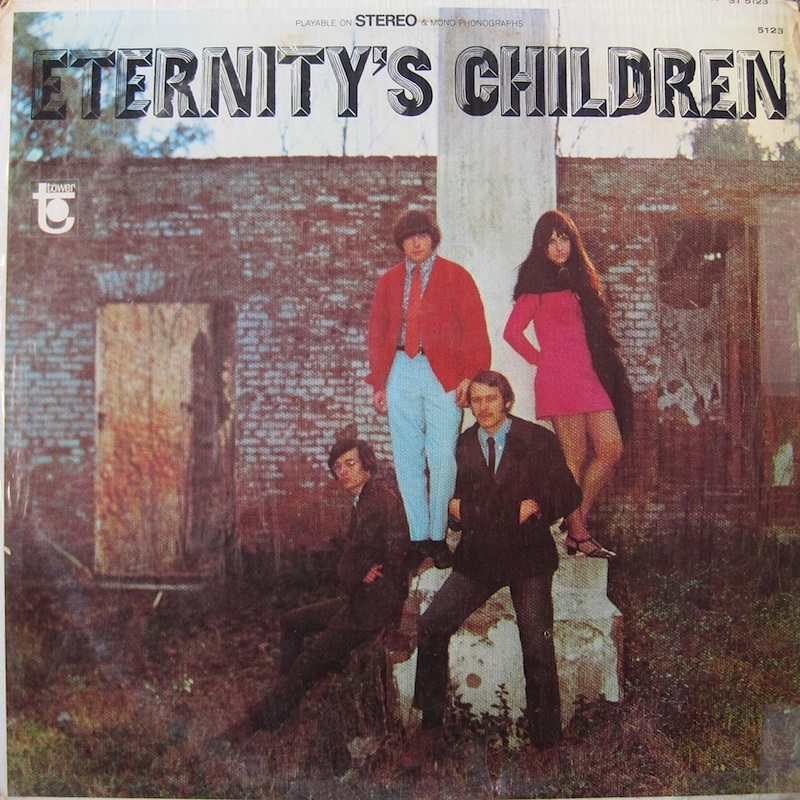
Eternity’s Children – Eternity’s Children (1968)
Title: Eternity’s Children
Year: 1968
Format: LP
Label: Tower
Sunshine pop cult favorites Eternity’s Children were formed in Cleveland, MS, in 1965 by singer/keyboardist Bruce Blackman and drummer Roy Whittaker, fellow students at Delta College. With the addition of lead guitarist Johnny Walker, rhythm guitarist Jerry Bounds, and bassist Charlie Ross, the group (originally dubbed the Phantoms) began developing the complex, overlapping vocal harmonies that remained the hallmark of their sound throughout their career.
According to Dawn Eden’s comprehensive liner notes in the 2002 Rev-Ola reissue Eternity’s Children, in 1966 the Phantoms relocated to Biloxi, becoming the house band in the basement nightclub of the Biloxi Hotel and backing visiting performers including Charlie Rich and B.J. Thomas.
With the addition of local folksinger Linda Lawley, the fledgling band adopted the more contemporary moniker Eternity’s Children, and after Baton Rouge health club magnate Ray Roy caught one of their live appearances, he convinced business partner Guy Belello to form a management company (Crocked Foxx Productions and Music), which soon signed the group to a contract.
Eternity’s Children quickly recorded a demo that made its way to A&M producer Allen Stanton, and in the spring of 1967 recorded their lone effort for the label, the David Gates-penned single “Wait and See.” (It was produced by Keith Olsen, the former Music Machine bassist best known as the production partner of studio wizard Curt Boettcher.) The record went nowhere, and despite touring as part of a package headlined by the Strawberry Alarm Clock, the Seeds, and the Blues Magoos, Eternity’s Children were quickly dropped by A&M. Crocked Foxx soon landed their charges a deal with Capitol’s tax-shelter subsidiary, Tower; Olsen again manned the boards, this time bringing Boettcher, who’d previously enjoyed massive success with vocal groups like the Association as well as his own Sagittarius and the Millennium.
Despite some flashes of brilliance, Eternity’s Children’s self-titled debut does not rank among the Boettcher/Olsen duo’s crowning achievements — both producers were distracted by other concurrent projects, and for every potential smash like the lilting first single “Mrs. Bluebird” or the beautiful “Again Again,” there was a “Rupert White” (which simply added a new vocal to a backing track issued the year earlier as the Chocolate Tunnel’s “The Highly Successful Rupert White”) or “You Know I’ve Found a Way” (which doesn’t even feature the group at all — a Boettcher production demo, it later resurfaced in much more complete form on Sagittarius’ Present Tense).
During production of the album, relations between the members of Eternity’s Children and their management became increasingly strained, and prior to the LP’s mid-1968 release, Blackman, Walker, and Bounds all exited. Only Blackman was replaced, by classically trained keyboardist Mike “Kid” McClain, previously of the Houston group the Neurotic Sheep. An appearance on American Bandstand spurred “Mrs. Bluebird” up the pop charts, but Tower did little to promote the single or the band, and after three weeks at number 69 on Billboard, both quickly plummeted out of the Hot 100. Eternity’s Children nevertheless reconvened to begin work on their second album, Timeless, this time recruiting Boettcher’s longtime engineer, Gary Paxton, to helm the sessions.
With primary songwriter Blackman now out of the mix, Ross, Lawley, and McClain all contributed original material, and Paxton also wrangled songs from future Byrds Clarence White and Gene Parsons. After Whittaker left the group sometime during the sessions, drummer Bo Wagner was brought into the studio to complete the tracks — coincidentally, Wagner would later join Blackman and Walker in their post-Eternity’s Children project, dubbed simply the Children. (Blackman and Walker finally achieved massive chart success in the mid-’70s as members of Starbuck, which scored the Top Five smash “Moonlight Feels Right.”) The album, titled Timeless, wrapped in late 1968, and promo copies of the first single, “Till I Hear It from You,” were soon dispatched to radio.
But when “Till I Hear It from You” caused little excitement among radio programmers, Tower abruptly scuttled Timeless’ U.S. release; the album did appear on Capitol’s Canadian branch (“Mrs. Bluebird” was a sizable hit north of the border). Desperate for a change in geography and approach, Eternity’s Children decamped to Memphis, home of Chips Moman’s legendary American Studios. Abandoning the lush, pristine production of their previous efforts for a more earthy, blue-eyed soul sound, the group teamed with Moman and ace session bassist Tommy Cogbill to record the single “The Sidewalks of the Ghetto.” It went nowhere — by now, Capitol was shuttering the entire Tower imprint, although one last Eternity’s Children single, the Spooner Oldham-penned “Blue Horizon,” slipped through the cracks, as did solo singles from Lawley (“When the World Turns”) and Ross (“A Railroad Trestle in California”).
Remarkably, there was one last gasp — Liberty Records, reeling from the loss of the 5th Dimension to rival Bell, seized upon Eternity’s Children as a replacement. They signed to record a single, “Alone Again,” but when Liberty was folded into parent company United Artists, the band was dropped. No subsequent recordings ever saw official release, but various Eternity’s Children lineups continued performing during the 1970s. (Jason Ankeny, All Music Guide)
Track Listing
- Again Again
- Rupert White
- Flowers
- My Happiness Day
- Lifetime Day
- Mrs. Bluebird
- Your World
- You Know I’ll Find A Way
- Little Boy
- Sunshine Among Us
The American Revolution – The American Revolution (1968)
Title: The American Revolution
Year: 1968
Format: LP
Label: Flick Disc
Wow, this was a weird one … Showcasing the talents of rhythm guitarist Richard Barcellona, drummer Daniel Derda, singer/keyboardist Eddie Haddad and bassist John Keith, The American Revolution came off as an unsuccessful cross between bubblegum pop and more conventional rock.
The band traced its roots to an earlier Los Angeles outfit known as The Band without a Name, which in turn traced part of it’s heritage to the poorly named Scottie and The Tissues.
By 1966 The Band without a Name featured former Scottie and the Tissues rhythm guitarist Richard Barcellona and bass player John Keith, future Beach Boy and solo act David Marks, and singer/keyboardist Eddie Haddad. The group found a manager in the form of dj/dance promoter Casey Kasem and found steady work playing L.A. dances and clubs. Through Kasem and Mike Curb they were hired as house band for American International Pictures.
The studio’s original marketing plan was apparently to turn the group into an in-house version of The Monkees, but their film legacy was limited to a couple of cameo appearances in AIP biker flicks and having a couple of songs included on the accompanying soundtrack LPs (Thunder Alley (as The Band with No Name), Born Wild (?), The Glory Stompers, and Wild In the Streets).
Signed by MGM’s short-lived Flick Disc subsidiary, the band’s 1968 debut “The American Revolution” found them working with three separate producers (the team of Michael Lloyd and Mike Curb, Harley Hatcher (who contributed several tracks and was also a Mike Curb associate), and Larry Brown). As was common at the time, much to the band’s irritation most of the tracks were recorded by studio musicians – in this case the Wrecking Crew (drummer Hal Blaine, guitarist James Burton, bassist Carol Kaye, and keyboardist Larry Knechtel). Adding to the band’s frustrations, most of their original material was passed over in favor of outside tracks suggested by the producers.
Only four of the ten tracks were group compositions with Hatcher responsible for three tracks, including the hideous ‘Prelude To Love’ (notable for one of the lamest guitar solos you’ll ever hear) and the equally bad ‘Come On and Get It’. With such a disjointed ‘birth’, it was probably to be expected that the resulting album was all over the musical spectrum, including haphazard stabs at Rascals-styled blue-eyed soul (‘Come On and Get It’), seriously bad Mersybeat knockoffs (‘Rainbow In the Rain’ sported what had to be the worst mock English accents I’ve ever heard’), Beatles-styled psych (the hysterically Sgt. Pepper knockoffs ‘In the Late Afternoon’ and ‘Opus #1′) and even Buckinghams-styled horn rock (‘Love Has Got Me Down’).
All four principles sang, but with the exception of King who was limited to lead vocals on the Lloyd-penned ‘Cold Wisconsin Nights’, none of them were particularly impressive singers (be sure to check-out their attempt at close-knit harmonies on ‘Crying Eyes and an Empty Heart’). In spite of the slightly off key vocal harmonies, given it actually rocker, that may have been the album’s stand out performance. Combined with the the fact they were given some horrible outside material to cover and you were left with an album that was pretty disappointing. Give them an extra star for the retro-cool album cover. (Bad Cat)
Track Listing
- Cold Wisconsin Nights
- Rainbow In The Rain
- Prelude To Love
- Show Me How To Cry
- Crying Eyes And An Empty Heart
- Come On And Get It
- In The Late Afternoon
- Keeping Your Love
- Opus # 1
- 10. Love Has Got Me Down
The Aquarians – Jungle Grass (1970)
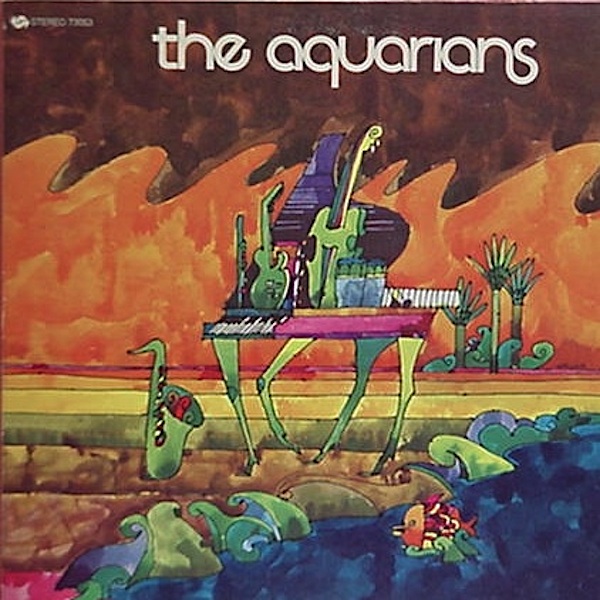
Title: Jungle Grass
Year: 1969
Format: LP
Label: UNI
Part of the strange California zodiac pop funk scene, the Aquarians took astrology rock in several interesting and generally unexplored directions. While primarily the brainchild of composer, arranger, and pianist Vladimir Vassilieff, the Aquarians were actually a supergroup of talented jazz musicians. Featuring Stan Gilbert, a much in-demand bassist at the time, and the incomparable Afro-Cuban percussion of Francisco Aguabella, the Aquarians blended a one love hippie philosophy with smooth, Latin-tinged jazz.
Their first, and only, album, Jungle Grass sounds close to related astrology rockers Friends of Distinction (which also featured Stan Gilbert) and the 5th Dimension. While evidencing a nominal interest in astrology, the tracks on Jungle Grass are, at the core, jazz with a heavy Afro-Cuban (evident in the percussion), and possibly a Brazilian Tropicalia (evident in the vocals), influence. On an album packed with talent, there are few solos and no showboating — the performance of each member is subservient to the groove.
On the opener, “Bayu-Bayu,” Aguabella lays down several beautiful fills over the sing-song vocal. “Batakum” features nice sax work by Joe Roccisano playing under the sign of Pharoh Sanders. A solid but not explosive album, Jungle Grass is definitely an under appreciated effort and is currently sought after by certain DJs for its little sampled piano flourishes and percussion breaks. (Brian Whitener, All Music Guide)
Track Listing
- Bayu-Bayu
- Adela
- The Aquarians
- What Do You Mean ?, What Do I Mean
- Excuses, Excuses
- Batakum
- The Head
- Saja/Jungle Grass
- Mucho Soul
The New Society – The Barock Sound (1966)
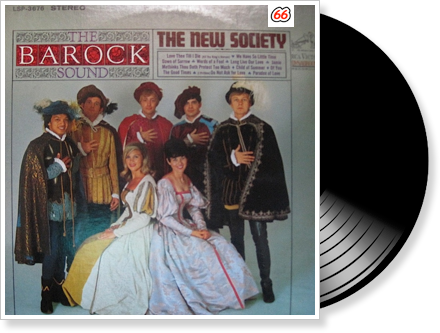
Title: The Barock Sound
Year: 1966
Format: LP
Label: RCA Victor
Assembled by Randy Sparks of the New Christy Minstrels and Back Porch Majority – Sparks after auditioning over 200 vocalists/musicians, the talented and carefully chosen seven members who made the line up on this recording were; Carol Stromme, Del Ramos (the brother of the Association’s Larry Ramos), Ted Anderson, Gary Miller, Carol Kimzey, Alan Parker and Larry Hickman. The New Society take baroque pop to a whole new level.
The cover photo of them dressed ridiculously in Renaissance clothing is not a joke. They seriously wanted to merge baroque culture with rock culture… Which they call “barock”. I can’t even count how many times they say stuff like “methinks, thou, willist, shalt” in their lyrics. Sometimes it sounds genuine, but it usually sounds like one big bubblegummy act.
The music really isn’t that bad. Its typical baroque pop/rock with lots of electric guitar and harpsichord. Plenty of folk is on hand as well. If I was to compare them to anyone, I’d say they’re like all those west coast sunshine and folk bands like: The Mamas & The Papas, Jefferson Airplane, New Christy Minstrals, etc. You can tell this was a failed experiment. But hey, they’re good for a laugh and the music’s alright.” (SleepObsessed RYM)
Track Listing
- Dawn Of Sorrow
- Of You
- Methinks Thou Doth Protests Too Much
- The Good Times
- Paradox Of Love
- Child Of Summer
- Love Thee Till I Die (All The King’s Horses)
- Long Live Our Love
- Words Of A Fool
- Jamie
- (I Prithee) Do Not Ask For Love
- We Have So Little Time
3s A Crowd – Christopher’s Movie Matinee (1968)
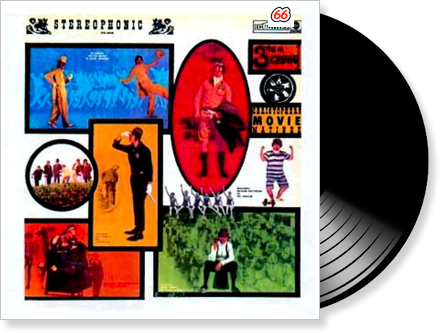
Title: Christopher’s Movie Matinee
Year: 1968
Format: LP
Label: Dunhill
3′s a Crowd was a folk rock band from Vancouver, British Columbia, Canada, that existed from 1964 to 1969. The group is particularly notable for its association with Cass Elliott, who co-produced the group’s sole album release. The album remains one of Elliott’s rare associations as a record producer.
The group was formed in 1964, and was originally called the Bill Schwartz Quartet (though no one named Bill Schwartz was actually in the group.) The group consisted of Donna Warner, Trevor Veitch and Brent Titcomb. In 1966, the group moved to Toronto, released two singles, and acquired new members Richard Patterson, David Wiffen and Comrie Smith. Smith was later replaced by Ken Koblun. In 1967 and 1968, 3′s a Crowd played the folk music clubs in Southern California, including the Ash Grove in West Hollywood and the Ice House in Glendale, sometimes bringing Jim and Jean as an opening act.<
In 1968, they recorded Christopher's Movie Matinee, their only album. The band broke up shortly after its release. The album was produced by Cass Elliot and Steve Barri. Bruce Cockburn, who briefly joined a later version of the group, does not perform on the album, though four of his songs are included. Donna Warner was the primary singer, but other band members, particularly David Wiffen and Brent Titcomb, also sang lead. They did a slow, military rendition of "(Let's) Get Together" by Chet Powers, and had a minor hit with their own song "Bird Without Wings". A signature tune at their concerts was their song "Wasn't It You".
Noted reviewer Richie Unterberger considers the album to be “an average, melt-into-the-crowd pop-folk-rock album, somewhat similar to The Mamas & the Papas and We Five (though closer to the We Five).” He also notes the presence on the record of Ken Koblun, Canadian bass player, associate of Neil Young during his early career and sometime bass player with Buffalo Springfield. Koblun had chosen to join 3′s a Crowd rather than continue with an early version of the Buffalo Springfield.
A related documentary, Christopher’s Movie Matinee, under the sponsorship of the National Film Board of Canada, was released in 1968, using some of the same songs and some of the same musicians. The film is about 1960s Canadian counterculture.
The band reformed briefly in 1969, and appeared on a Canadian variety television program entitled “One More Time”. By this point, however, none of the three original members remained in the group; the lineup consisted of Bruce Cockburn, Richard Patterson, David Wiffen, Colleen Peterson, Sandy Crawley and Dennis Pendrith. Cockburn soon left to pursue his solo career, and the group disbanded permanently in 1969.
Since then, Bruce Cockburn has had significant success as a solo act, as did Colleen Peterson and, for a time, David Wiffen. Sandy Crawley and Brent Titcomb also developed solo careers, while Richard Patterson, Dennis Pendrith and Trevor Veitch continued their careers as accompanists for many years after the breakup of the group. Donna Warner did not continue her music career after her departure from the group
Comrie Smith’s subsequent involvement as a professional musician does not appear to have been documented, although he was quoted extensively by “Mojo” magazine in a feature article about the release of Neil Young’s “Archives” CD boxed set – because Smith had backed Young on some of the early recordings. (Young’s associations with the group create their own fascinating web, what with both Smith and Koblun playing with him in his early days, and Donna Warner having sung with him in Toronto.) (Wikipedia)
Track Listing
- Let’s Get Together
- Coat Of Colors
- The Way She Smiles
- Wasn’t It You
- Gnostic Serenade
- Bird Without Wings
- I Don’t Wanna Drive You Away
- View From Pompous Head
- Don’t Mess Up A Good Thing
- Cotton Candy Man
- Christopher’s Movie Matinee
St. John Green – St. John Green [Mono] (1968)
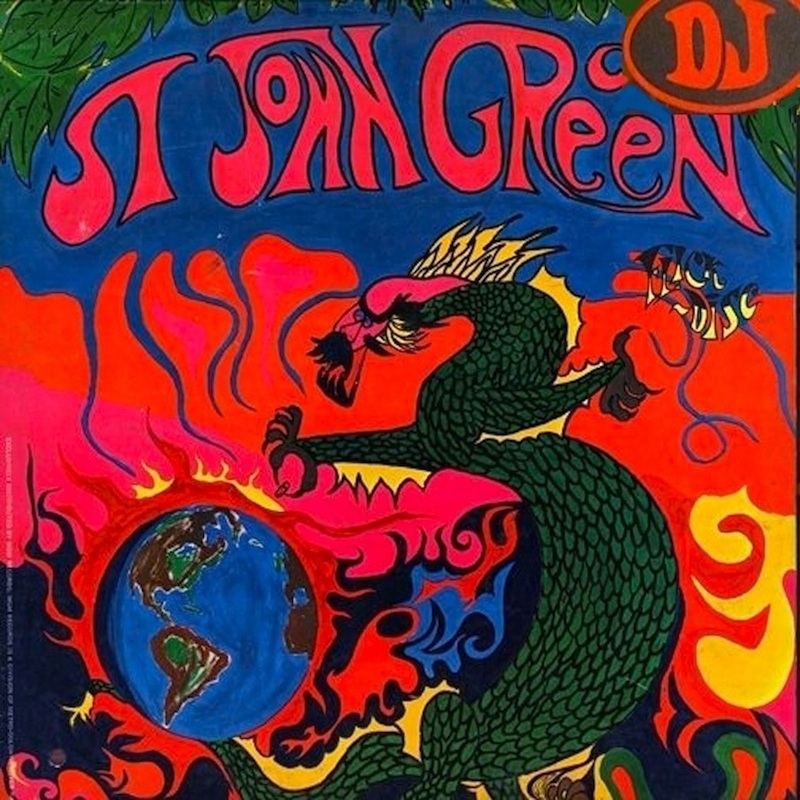
Title: St. John Green
Year: 1968
Format: LP
Label: Flick Disc
St. John Green consisted of Ed Bissot (bass-vocals), Vic Sabino (harmonica-vocals), Bill Kirkland (guitar), Mike Baxter (organ-vocals), and Shel Scott (drums).
Kim Fowley and Michael Lloyd co-produced this psychedelic opus with a “sanctified hippie vibe canyon music” as this Los Angeles area group might have described it; strange songs about the fires of hell and spacemen from Venus alternate with some anti ‘flower power’ songs and stoned sounding jams that show why they were touted by Fowley as the next in-thing they weren’t, of course, but a strong album all the same. (Jack Dominilla)
Track Listing
- 7th Generation Mutation
- Canyon Women
- Devil And The Sea
- Do You Believe
- Help Me Close The Door
- Messages From The Dead
- Goddess Of Death
- St. John Green
- Spirit Of Now
- Love Of Hate
- One Room Cemetary
- Shivers Of Pleasure