

Bloomsbury People – Bloomsbury People (1970)
Title: Bloomsbury People
Year: 1970
Format: LP
Label: MGM
As a teenager multi-instrumentalist, Sigmund Snopek III began a quest to find a way to combine rock music with classical music, electronics, and theater, a quest that led him to the University of Wisconsin-Milwaukee to study composition in the late ’60s.
He instantly set out to start a band, forming the Bloomsbury People in 1968. The band immediately gained a degree of local success, playing frequently around Milwaukee and the surrounding region and recording a couple of 45s over the next couple years. Their sound also earned acclaim in critical circles despite the inability of those critics to categorize the music (it was frequently saddled with the labels “psychedelic” or “classical” rock, or in some rare instances as “progressive”, rock years before the term was widely used).
The band released their self-titled debut album on MGM in 1970 and followed it up two years later with Virginia Woolf, although the latter was credited to Snopek III only, and the band disintegrated not long thereafter. The Bloomsbury People had been an important band in the late 1960s psychedelic/progressive music movement, playing to over 500,000 people at the Atlanta Pop Festival alongside Jimi Hendrix and other 60s icons.
Sigmund Snopek has been a dominant figure on the international musical scene since the late 1960s. Whether exercising his prodigious skills as composer, solo performer, bandleader, multi-instrument sideman or orchestrator, Snopek continues to share his creative spark with audiences across the country.
He has featured on recordings by many well-known artists including the Violent Femmes and many more. He developed a longstanding relationship with the Violent Femmes in the ’80s, in fact, he frequently joined the band in concert and on tours and finally joined them full-time in the 1990s. (Zzen Zero)
Track Listing
- Birdsong
- Witch Helen
- Have You Seen Them Cry
- Lake Of Sand
- State Of Confusion
- Golden Lion
- Pioneer Saint Of Death
- The Resurrection
- Demian
- So It Seems
- Suite: Classical #II
Disclaimer: The link below may point to content that is copyrighted. redtelephone66 only provides this link with the understanding that you are responsible for the content you download. redtelephone66 does not engage in music piracy, nor do we do host, fileshare, or otherwise trade in copyrighted works.

The Hobbits – Down To Middle Earth [Mono] (1967)

Title: Down To Middle Earth
Year: 1967
Format: LP
Label: Decca
The Hobbits were Jimmy Curtis’s project who released three records on Decca between ‘67 and ‘69 (the third as The New Hobbits), and Down to Middle Earth is their debut. It’s an amateurish and occasionally bewildering record, obviously kind of shameless psychedelic bandwagon exploitation, but the most bewildering thing about it is how completely brilliant some of it is somehow. The single “Daffodil Days” is pretty much a highlight of the sixties as far as I’m concerned–it sounds almost like a novelty record for the first few listens, with its alternating falsetto and goofily drawled vocals, airheaded verse lyrics and orchestration consisting only of “plink” and “beep”, until its thorough strangeness starts to sink in and it becomes clear that it’s near-perfect in most ways that matter.
The lyrics, it must be said, are often pretty stupid, but in a kind of adorable way, often incorporating turns of phrase that sound like grade school poetry: “Treats”, which, actually, is definitely another of the highlights of the album, centers, for example, around the chorus “Treats / Little itty-bitty treats that groove your head / Treats / Little itty-bitty treats that you can never buy for bread”. (This tendency carries over into their next album as well, as, I think, is made pretty evident by the album’s title being Men and Doors, which hardly even sounds like three words successfully put next to each other.) In spite of all of which “Treats” is great, with an unexpectedly huge and crunchy bass sound in the verses, and a chorus melody that is entirely treasurable.
None of this is to say that this is a great record, because I guess it isn’t. Most of it is good, and AMG’s bit about how “not every lost psych gem is worth its weight in gold–some are scarcely worth the vinyl they were pressed on” is garbage when said in reference to this album, but a lot of it is unremarkable. Worth picking up if you find it for significantly less than its Popsike value though. The “Daffodil Days” 45 is pretty cheap, I think. (Max Collodie)
Track Listing
- Down To Middle Earth
- I’m Just A Young Man
- Daffodil Days (The Affection Song)
- Break Away
- Treats
- Hands And Knees
- Let Me Run My Fingers Through Your Mind (Buy My Flowers)
- Out Of My Mind
- Clap Hands Til Daddy Comes Home
- Sunny Day Girl
Disclaimer: The link below may point to content that is copyrighted. redtelephone66 only provides this link with the understanding that you are responsible for the content you download. redtelephone66 does not engage in music piracy, nor do we do host, fileshare, or otherwise trade in copyrighted works.
St. John Green – St. John Green [Mono] (1968 Flick Disc LP)
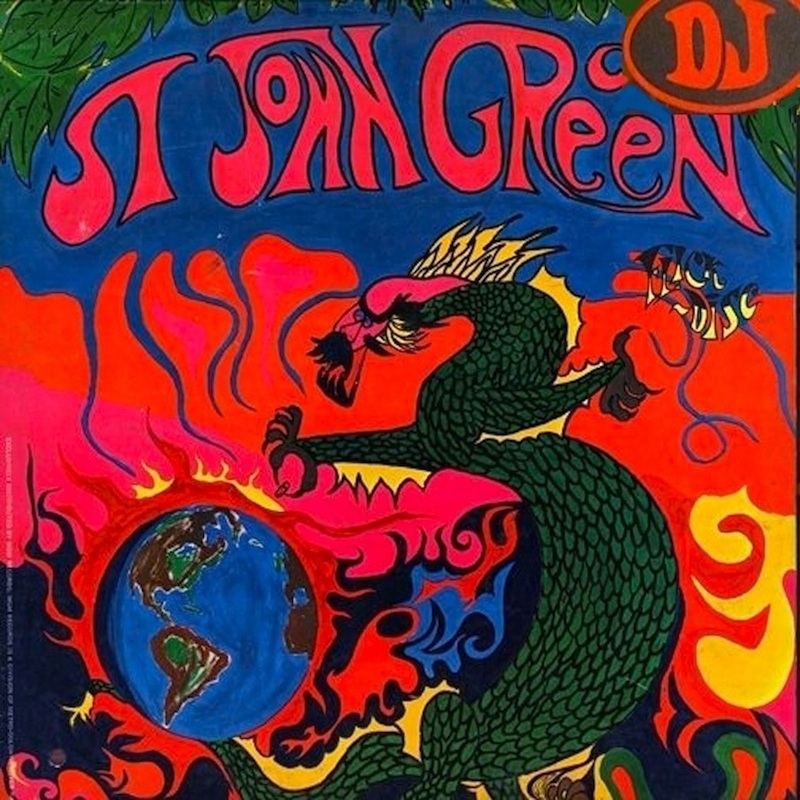
Title: St. John Green
Year: 1968
Format: LP
Label: Flick Disc
St. John Green consisted of Ed Bissot (bass-vocals), Vic Sabino (harmonica-vocals), Bill Kirkland (guitar), Mike Baxter (organ-vocals), and Shel Scott (drums).
Kim Fowley and Michael Lloyd co-produced this psychedelic opus with a “sanctified hippie vibe canyon music” as this Los Angeles area group might have described it; strange songs about the fires of hell and spacemen from Venus alternate with some anti ‘flower power’ songs and stoned sounding jams that show why they were touted by Fowley as the next in-thing they weren’t, of course, but a strong album all the same. (Jack Dominilla)
Track Listing
- 7th Generation Mutation
- Canyon Women
- Devil And The Sea
- Do You Believe
- Help Me Close The Door
- Messages From The Dead
- Goddess Of Death
- St. John Green
- Spirit Of Now
- Love Of Hate
- One Room Cemetary
- Shivers Of Pleasure
Disclaimer: The link below may point to content that is copyrighted. redtelephone66 only provides this link with the understanding that you are responsible for the content you download. redtelephone66 does not engage in music piracy, nor do we do host, fileshare, or otherwise trade in copyrighted works.
The Bonniwell Music Machine – The Bonniwell Music Machine [Original Vinyl Version] (1967)
Title: The Bonniwell Music Machine
Year: 1967
Format: LP
Label: Warner Brothers
Fans of garage and psych are probably familiar with this LA band of Talk Talk fame. Sean Bonniwell and the Music Machine released two records and a plethora of quality outtakes and are sadly remembered, if at all, for their sole hit record, Talk Talk.
The Music Machine covered themselves in black and played a grinding, relentless form of experimental garage rock.
Their music was full of tension and uneasiness, and many consider Bonniwell a tortured genuis.
Sean Bonniwell is really one of the grandfathers of punk rock. Rock critics and fans alike often forget how good the original band was. Talk Talk’s follow up was the brilliant People In Me which barely dented the charts and in early 66 Bonniwell unleashed Point of No Return, a track with a swirling mass of organ and futuristic blasts of guitar.
The Bonniwell Music Machine album above was recorded mostly with the original lineup who had recorded the 1966 debut. That debut was sabotaged, managers and producers forced Bonniwell to fill half the record with cover versions of current popular hits. Stellar originals battled it out with covers of Neil Diamonds’ Cherry Cherry and a respectable gutsy stab at Hey Joe. Their second album was released in 1967 and was a small victory for a band who had fought for absolute creative control. The recording sessions were tension fueled wars between management, Bonniwell, and the band. Eventually, the band left Bonniwell, feeling that he sided with management and ruled with an iron fist. Bonniwell Music Machine saw the band forge ahead and move beyond their garage roots.
The most popular song off the album, Double Yellow Line, was a real flame thrower, supposedly written while Sean was behind the wheel driving to the recording sessions! It was a unique statement that featured Bonniwell’s rants and hangups over some razor sharp guitars, a killer beat and strange fish bowl-like organ. Talk Me Down, Bottom of the Soul and the Eagle Never Hunts the Fly were just as vital and displayed Bonniwell’s alienation in spades. The Eagle Hunts was a monstrous, intense rocker with a wonderful fuzz meltdown that was supposedly disowned by the band during the recording sessions. Other strange pop songs like the psychedelic harpsichord-laden, harmony-rich Trap were a welcomed change in direction. Absolutely Positively was a fantastic fist pounding garage-punk anthem and Discrepancy was notable for two distinct vocalizations.
It’s always great to see a garage band enter the studio stoked about the possibilities of recording and come out creating their acid punk masterpiece. Bonniwell was definitely a rock star in his own mind, making this record their definitive statement. In 1969 Bonniwell would take a drastic left turn and release Close (see August 24, 2009 post), a solo album of crooner pop that showed little signs of the Music Machine’s past glories. (The Rising Storm)
Track Listing
- Astrologically Incompatible
- Double Yellow Line
- The Day Today
- Absolutely Positively
- Somethin Hurtin On Me
- The Trap
- Soul Love
- Bottom Of The Soul
- Talk Me Down
- The Eagle Never Hunts The Fly
- I’ve Loved You
- Affirmative No
- Discrepancy
- Me, Myself, And I
Disclaimer: The link below may point to content that is copyrighted. redtelephone66 only provides this link with the understanding that you are responsible for the content you download. redtelephone66 does not engage in music piracy, nor do we do host, fileshare, or otherwise trade in copyrighted works.
Plain Jane – Plain Jane (1969)
Title: Plain Jane
Year: 1969
Format: LP
Label: Hobbit
Underrated album on the same label as Sapphire Thinkers and Randy Holden. It’s generally described as “rural, ” but it’s not country at all. It’s more like a guitar pop album with a very laid back feel. In an understated way it anticipates the California rock of the 70s. Several songwriters create a surprisingly consistent sound. The vocals are very nice and the songs sneak up on you. “Not The Same” sounds like grade-A Badfinger. A pleasant surprise. (Acid Archives)
First off, other than what’s on the liner notes, good luck finding out much about this outfit. The line up featured singers/guitarists Don Gleicher and Barry Ray, and brothers David and Jerry Schoenfeld (drums and bass/keyboards respectively). This is speculation on my part, but I suspect the band originally hailed from New Mexico. That’s based on the fact that a ‘Don Gleicher’ was a member of a pair of mid-1960s New Mexico-based bands – The Monkeymen and The Piggy Bank.
Recorded at Hollywood’s I.D. Sound Studios with Les Brown Jr. handling the production duties, 1969’s “Plain Jane” was nothing short of fabulous. Featuring ten original tracks with all four members contributing material, the album showcased a mesmerizing blend of late-1960s country-rock, pop, and psych influences. Full of killer songs and breath-taking, slightly stoned vocals.
Hard to pick standouts since all ten tracks were worth hearing, but the opener ‘Who’s Drivin’ This Train’ sounded like Arlo Guthrie and the Grateful Dead having graduated from the John Philips top-40 songwriting academy, while ‘Not the Sam’ combined CSN&Y vocal harmonies with some ballistic drumming and a cool psych feel.
If I had any complaints, it was that these guys lacked a distinctive sound of their own, though in borrowing bits and pieces from other groups they came up with a wonderful aural stew. They also created one of those albums that was a blast to crank up and play spot-the-influences.
Okay, I’ll add that ‘Num-Bird’ was too country-flavored for my tastes. ‘You Can’t Make It Alone’ was what post-Monkees Michael Nesmith always yearned to sound like. ‘That’s How Much’ sported an odd mock-English feel – hum, kinda’ what Davy Jones always wanted to sound like … ‘Short Fairy Tale’ added some tasty jazzy guitar licks to the mix. And that was just side one. All hyperbole aside this is a classic lost album just waiting to be discovered !!! (RDTEN1 RYM)
Track Listing
- Who’s Drivin’ This Train
- You Can’t Make It Alone
- That’s How Much
- Short Fairy Tale
- Not The Same
- Num Bird
- What Can You Do?
- Fire Hydrant
- Silence
Disclaimer: The link below may point to content that is copyrighted. redtelephone66 only provides this link with the understanding that you are responsible for the content you download. redtelephone66 does not engage in music piracy, nor do we do host, fileshare, or otherwise trade in copyrighted works.
The Sunshine Company – Happy Is (1967)
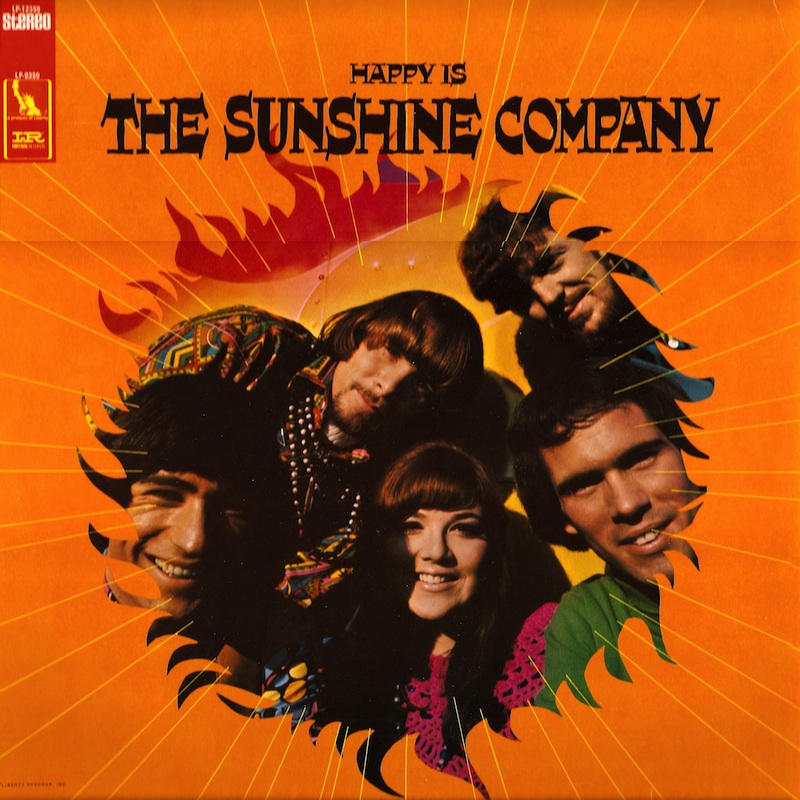
Title: Happy Is
Year: 1967
Format: LP
Label: Imperial
Formed in Los Angeles, California, USA in February 1967, the Sunshine Company was a psychedelic pop band that made a minor impact during its two-year existence. The quintet consisted of Mary Nance (vocals), Douglas ‘Red’ Mark (guitar/vocals), Maury Mansea (guitarist/pianist/vocalist), Larry Sims (bass) and Merel Bregante (drums). As their name would suggest, the group specialized in lightweight ‘flower-power’ music and dressed the hippie role to the hilt.
Shortly after forming the group was signed to Imperial Records. Similar in style to the Mamas And The Papas and Spanky And Our Gang, the Sunshine Company did not share their commercial success. Their first single, ‘Happy’, made it to number 50 in the USA in July 1967, while the follow-up, ‘Back On The Street Again’, reached number 36 in October. One more single, ‘Look, Here Comes The Sun’, ended their chart run when it peaked at number 56 in February 1968. The same year they became a sextet with the inclusion of Dave Hodgkins (acoustic guitar).
The Sunshine Company recorded three albums during 1967-68, but only the first, Happy Is The Sunshine Company, reached the charts. By 1969, the group had dissolved, with Mark forming Redeye and Bregante joining Loggins And Messina. (Internet Source)
Track Listing
- Children Could Help Us Find The Way
- Up, Up And Away
- I Need You
- Just Beyond Your Smile
- I Just Want To Be Your Friend
- Four In The Mornin’
- Warm In My Heart
- A Year In Jaine Time
- Rain
- Love Is A Happy Thing
- Back On The Street Again
- Happy
Disclaimer: The link below may point to content that is copyrighted. redtelephone66 only provides this link with the understanding that you are responsible for the content you download. redtelephone66 does not engage in music piracy, nor do we do host, fileshare, or otherwise trade in copyrighted works.
H.Y. Sledge – Bootleg Music (1971)
Title: Bootleg Music
Year: 1971
Format: LP
Label: SSS International
H. Y.Sledge at the time of this recording consisted of Richard Porter (guitar-piano-harpsichord-acoustic-vocals), Michael Eubank (organ-piano-acoustic-vocals), and Jan Pulver (bass-cowbell-gun shots-vocals). They were signed to Shelby Singleton’s SSS International label in 1971 and recorded this album in Nashville Tennessee.
H. Y. Sledge was a Tampa Florida band, and some of the members had backgrounds in 60s garage bands — Jan Pulver, for example, was in Those Five, who had recorded for the Paris Tower label. A couple members of the Outlaws were in H. Y. Sledge, so Outlaws fans have an interest in the album, Richard Porter played bass for the late sixties trio Wilkinson Tri-cycle who released an album on Date Records in 1969. (Jack Dominilla)
Track Listing
- Citation On Liberty
- Such An Easy Day
- Canadian Exodus
- Cellophane Lady/Nowhere To Go
- Ride The Waves
- I’m Your Brother
- Tamara
- Day Of Realization
- It’s In The Air
- Finding It
Disclaimer: The link below may point to content that is copyrighted. redtelephone66 only provides this link with the understanding that you are responsible for the content you download. redtelephone66 does not engage in music piracy, nor do we do host, fileshare, or otherwise trade in copyrighted works.
Hackamore Brick – One Kiss Leads To Another (1970)
Title: One Kiss Leads To Another
Year: Year
Format: LP
Label: Kama Sutra
Hackamore Brick are one of the great missing links in the late-’60s New York music scene. In some circles, the Brooklyn-spawned quartet is considered notable as the first band known to cite the Velvet Underground as a source of inspiration; all four members were part of the Velvet Underground Appreciation Society and one can, indeed, hear their influence throughout the music on Hackamore Brick’s album, One Kiss Leads to Another, cut for Buddah Records’ Kama Sutra imprint, no less.
Lou Reed’s singing style is in evidence throughout Chick Newman’s flat intonation, but other attributes here range further, eerily anticipating the minimalist charm of Jonathan Richman, while some of the material, such as the Bob Roman/Tommy Moonlight-authored “Peace Has Come,” makes one think of an embryonic Television. There was a lot of talent there and some good instincts about what to do with it, at least as a starting point. Not even the revived Buddha imprint had the courage or enough interest to reissue the album.
As for the band, they did elicit some interest at the time — the record was well-reviewed by the rock press of the time, and Hackamore Brick played a week at the Bitter End in Greenwich Village and seven weeks in St. Thomas in the Virgin Islands — in addition to their originals, their shows encompassed renditions of Chuck Berry, Leiber & Stoller, and Curtis Mayfield songs, and pop standards going back to “I’m in the Mood for Love”.”
They played around New York for a time and issued “Searchin’” as a 45, but a proposed second album never got recorded, reportedly over a disagreements about where to cut it, which led to the single’s being canceled. The group split up not long after that — Chick Newman and Tommy Moonlight stayed in the business, and played such celebrated venues as CBGBs, Max’s Kansas City, and Folk City, and even cut a whole album of material together in Austin, TX in the mid-’80s.
Finally, after a false start in 2003, Moonlight and Newman got together for a second bite at the apple as Hackamore Brick in 2008, recording the first new sides under that name in about 38 years. The six-song CD showed up in 2009, not long after their Kama Sutra debut showed up on CD. And follow-up recordings for 2009 were reportedly in the works, as of the summer of that year. ~ Bruce Eder, All Music Guide
Track Listing
- Reachin’
- Oh! Those Sweet Bananas
- I Watched You Rhumba
- Radio
- Peace Has Come
- Got A Gal Named Wilma
- I Won’t Be Around
- And I Wonder
- Someone You Know
- Zip Gun Woman
- Searchin’ [bonus 45 non lp]
Disclaimer: The link below may point to content that is copyrighted. redtelephone66 only provides this link with the understanding that you are responsible for the content you download. redtelephone66 does not engage in music piracy, nor do we do host, fileshare, or otherwise trade in copyrighted works.
Phantom’s Divine Comedy – Part 1 (1974)
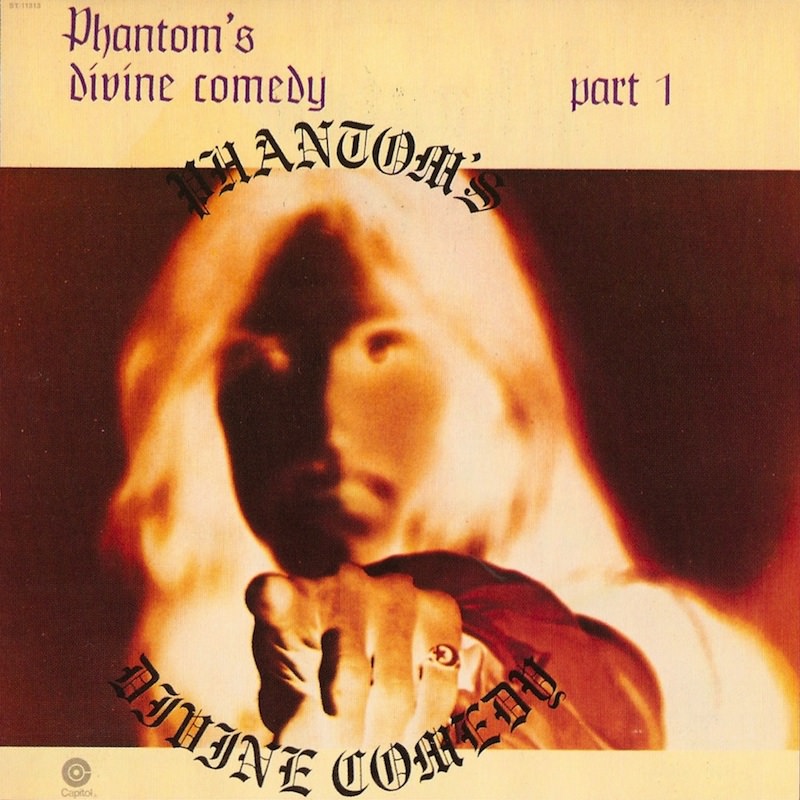
Title: Part 1
Year: 1974
Format: LP
Label: Capitol
No, it isn’t the Doors.. or Iggy POP or A. Pendragon.. nuff said! Now that this is out of the way lets discuss this album! Is it perfect? No? Is it original? Well it’s got some wide influences… I see this as a prog minded rock band. The guitar playing is right on (with some great fripp like tones).. the band is tight and the arrangements work to the songs advantage. Yes, there are moments that Tom Carson sounds a bit like Jimbo-but there are riffs that Black Sabbath would have loved to use… I personally love this album and have since 1974 (kayfabe58 RYM)
Track Listing
- Tales From A Wizard
- Devil’s Child
- Calm Before The Storm
- Half A Life
- Spiders Will Dance (On Your Face Will You Sleep)
- Black Magic/White Magic
- Merlin
- Stand Beside My Fire
- Welcome To Hell
Disclaimer: The link below may point to content that is copyrighted. redtelephone66 only provides this link with the understanding that you are responsible for the content you download. redtelephone66 does not engage in music piracy, nor do we do host, fileshare, or otherwise trade in copyrighted works.
Baba Ram Dass (Dr. Richard Alpert) – Here We All Are (1969)
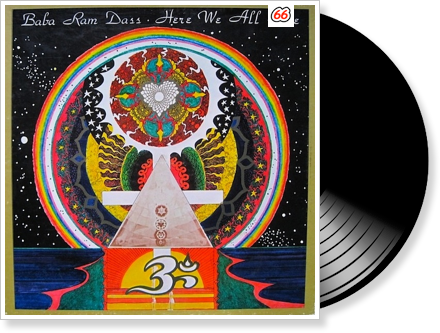
Title: Here We All Are
Year: 1969
Format: LP
Label: Yogananda
HERE WE ALL ARE is the story of the evolution of RICHARD ALPERT, from Harvard University professor and successful psychologist, to BABA RAM DASS, wandering sadhu of holy man. Describing his early days with TIMOTHY LEARY and his introduction to Psychedelics, BABA RAM DASS tells of his growing desire to stay permanently “high” and off his quest to find someone who really “knows”.
His search eventually leads to an agonizing barefoot trek through India and to his Guru, a totally conscious being living in a constant state of Sahaj Samhadi. BABA RAM DASS concludes with an explanation of one of the most exquisitely articulated systems for spiritual enlightment known to man, ths system of Ashtanga, or Raja Yoga, and shares with those on a similar journey his knowledge of how it all is in the universe.
Recorded live in the summer of 1969 in Vancouver, BC, Canada, produced by Inner Sound Productions of Yogananda Ashram Society, and manufactured by Rada Record Pressings of Burnaby, BC. 3 records, 6 sides, 2 hours and 10 minutes listening time. (Jack Dominilla)
Richard Alpert (born April 6, 1931), also known as Baba Ram Dass, is a contemporary spiritual teacher who wrote the 1971 bestseller Be Here Now. He is well known for his personal and professional association with Timothy Leary at Harvard University in the early 1960s. He is also known for his travels to India and his relationship with the Hindu guru Neem Karoli Baba.
Alpert was born to a prominent Jewish family in Newton, Massachusetts. His father, George Alpert, was one of the most influential lawyers in the Boston area and president of the New York, New Haven and Hartford Railroad, as well as one of the leading founders of Brandeis University and the Albert Einstein College of Medicine.
The youngest of three boys, Richard as a child was described as being engaging and loved by all—the family mascot. He went on to receive a Bachelor of Arts degree from Tufts University, master’s degree from Wesleyan University and doctorate (in psychology) from Stanford University.
After returning from a visiting professorship at the University of California, Berkeley, Alpert accepted a permanent position at Harvard, where he worked with the Social Relations Department, the Psychology Department, the Graduate School of Education, and the Health Service, where he was a therapist. He was also awarded research contracts with Yale and Stanford. However, perhaps most notable was the work he was doing with his close friend and associate, Dr. Timothy Leary.
Having only recently obtained his pilot’s license, Alpert flew his private plane to Cuernavaca, Mexico, where Leary first introduced him to teonanácatl, the Magic Mushrooms of Mexico. By the time Alpert made it back to America, Leary had already consulted with Aldous Huxley, who was visiting at M. I.T. Through Huxley and a number of graduate students they were able to get in touch with Sandoz, which had produced a synthetic component of ergot wheat fungus called LSD.
Alpert and Leary brought a test batch of both substances back to Harvard, where they conducted the Harvard Psilocybin Project and experimented with LSD relatively privately. Alpert was later dismissed from the university in 1963; according to Harvard President Nathan M. Pusey, Leary was dismissed for leaving Cambridge and his classes without permission or notice, and Alpert for allegedly giving psilocybin to an undergraduate. By this time, however, Alpert had already become disillusioned with academia and even described himself as feeling trapped in a meaningless game, and Leary had already left the university some weeks earlier.
The two soon relocated and continued their experiments unsupervised from a private mansion in Millbrook, New York, owned by Billy Hitchcock, an heir to the Mellon fortune. Famous poets, musicians and intellectuals of the time, such as Allen Ginsberg, Maynard Ferguson, the Grateful Dead, Marshall McLuhan and Ken Kesey, came from across the country to be part of what was going on there. Although they remained life-long friends, the two eventually began to part ways spiritually and philosophically as Leary continued to spread his mantra of “turn on, tune in, drop out,” while Alpert increasingly found his purpose in the Hindu ethic of serving others.
In 1967 Alpert traveled to India, where he met the American spiritual seeker Bhagavan Das. As he guided Alpert barefoot from temple to temple, Bhagavan Das began teaching him basic mantras and asanas, as well as how to work with beads. After a few months, Bhagavan Das led Alpert to his guru, Neem Karoli Baba, or as he is better known in the West, Maharaj-ji. Maharaj-ji soon became Alpert’s guru and gave him the name “Ram Dass,” which means “servant of God.” Under the guidance of Maharaj-ji, Ram Dass was instructed to receive teaching from Hari Dass Baba, who taught in silence using only a chalkboard.
While in India, Ram Dass also corresponded with Meher Baba; however, he remained primarily focused on the teaching of Hari Dass Baba. Among other things, Hari Dass Baba trained Ram Dass in raja yoga and ahimsa. It was these life-changing experiences in India that inspired Ram Dass to write the contemporary spiritual classic, Be Here Now, in which he teaches that everyone is a manifestation of God and that every moment is of infinite significance.
After his return to the United States in 1969, Alpert founded several organizations dedicated to expanding spiritual awareness and promoting spiritual growth, including Hanuman Foundation. Since then he has embraced a wide variety of spiritual traditions and practices, including guru kripa (grace of the guru) ; bhakti yoga focused on the Hindu spiritual deva Hanuman; meditation in various schools of Buddhism such as Theravada and Mahayana (including Tibetan and Zen) ; karma yoga; and Jewish studies.
In February 1997, he suffered a stroke which left him with expressive aphasia, however, he interprets his stroke as an act of grace and continues to travel giving lectures, as his health permits. When asked if he could sum up his life’s message Ram Dass replied, “I help people as a way to work on myself, and I work on myself to help people… To me, that’s what the emerging game is all about.” He was awarded the Peace Abbey Courage of Conscience Award in August 1991.
Ram Dass has long acknowledged his bisexuality. In the 1990s, he became more forthcoming while avoiding labels and pointing out that who we are “isn’t gay, and it’s not not-gay, and it’s not anything—it’s just awareness.” (Wikipedia)
Track Listing
- Here We All Are [Side One]
- Here We All Are [Side Two]
- Here We All Are [Side Three]
- Here We All Are [Side Four]
- Here We All Are [Side Five]
- Here We All Are [Side Six]
Disclaimer: The link below may point to content that is copyrighted. redtelephone66 only provides this link with the understanding that you are responsible for the content you download. redtelephone66 does not engage in music piracy, nor do we do host, fileshare, or otherwise trade in copyrighted works.