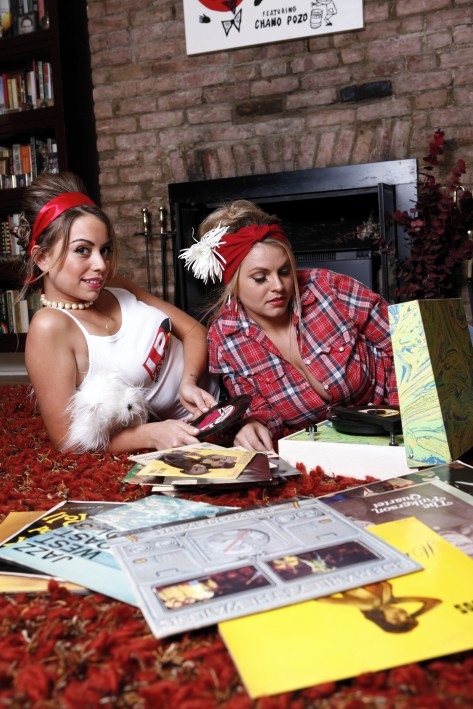

Sleepy Hollow – Sleepy Hollow (1972)
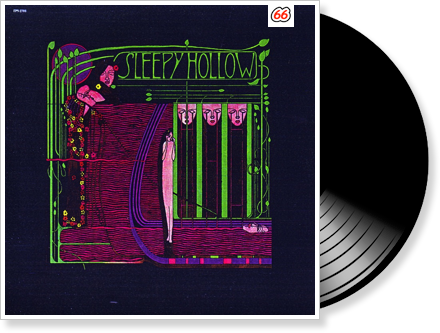
Title: Sleepy Hollow
Year: 1972
Format: LP
Label: Family Productions
Originally issued by Family Productions then reissued by Tiger Lily, a tax scam label, which was run by the head of Roulette, Morris Levy who was allegedly connected with the Genovese crime family and a model for Hesh on The Sopranos. They put out Lp pressings of demo tapes, sometimes without the knowledge of the bands.
Anyway, Sleepy Hollow is, according to wonkywhy over at RYM, as “Beatlesque aspirational sounds. About as good as a George Harrison solo album could aspire to”. While Brandting from RYM describes it as “Relatively weak pop, which in many places sounds exactly like the Beatles. Dominated by harmonies and pianos, this album has a few tracks that rock somewhat. “Talking Out of Turn” and “One Time” remain the highlights”. (Prairie Prince Minsky)
Track Listing
- Sincerely Yours
- One Time
- Take Me Back
- Talking Out Of Turn
- Lay It On The Line
- Love Minus You
- Lady
- Roller Coaster Man
- Hades
Disclaimer: The link below may point to content that is copyrighted. redtelephone66 only provides this link with the understanding that you are responsible for the content you download. redtelephone66 does not engage in music piracy, nor do we do host, fileshare, or otherwise trade in copyrighted works.

Bump – Bump (1970)
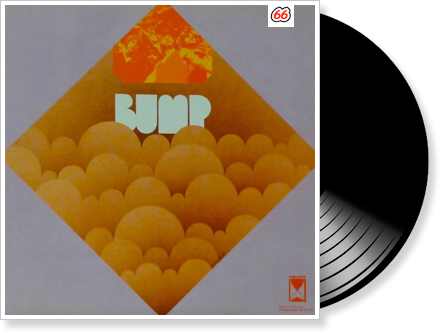
Title: Bump
Year: 1970
Format: LP
Label: Pioneer
Bump was formed in Detroit Michigan in 1969 around the talents of George Runyan (lead vocals & bass), Paul Lupien (keyboards, backing vocals), Jerry Greenberg (drums, backing vocals and Alan Goldman (guitar). During the late 60′s Bump built a solid reputation for themselves on the touring circuit and opened shows for such big names as Alice Cooper, Terry Reid and many others. In 1969 the band recorded two singles and their first album for the small Pioneer label.
he original pressing of the album released in 1970, is highly sought-after and fetch outrageous amounts on the collectors market. The music of Bump is an organ-based progressive pop sound in the British style. The songs are rich with keyboards and some fine guitar/organ interplay. While the material is quite pop orientated in places, the ten-minute closing “Lifeline, Decisions, You Can’t Even Think,” does have its moments and would please any progressive rock fan. Bump recorded a second album but it was never released. (Prairie Prince Minsky)
Track Listing
- Sing Into The Wind
- State Of Affairs
- Daydream Song
- Holly Thorndike
- Got To Get You Back
- Spider’s Eyes
- Clean Myself
- From My Slot
- Lifelines, Decisions, You Can’t Even Think
Disclaimer: The link below may point to content that is copyrighted. redtelephone66 only provides this link with the understanding that you are responsible for the content you download. redtelephone66 does not engage in music piracy, nor do we do host, fileshare, or otherwise trade in copyrighted works.
Milkwood Tapestry – Milkwood Tapestry (1969)
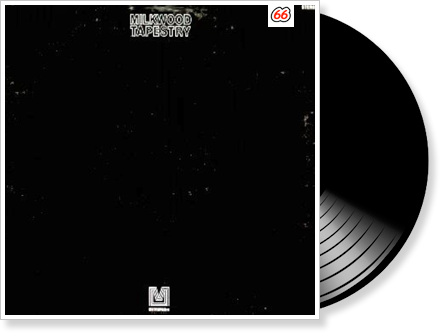
Title: Milkwood Tapestry
Year: 1969
Format: LP
Label: Metromedia
During the late sixties, the duo of Roland Antonelli and Joseph Ransohoff, known as Milkwood Tapestry, was a mainstay on the New York City rock circuit. Their musical style equally looked to British Isle folk bands such as Fairport Convention and The Incredible String Band, as well as acid rock bands like the Jefferson Airplane and Jethro Tull.They somehow successfully pulled off an intriguing balance between the two diametrically opposed styles.At one of their Greenwich Village performances, they met Donovan’s manager who in turn arranged for an audition for the pair before a group of Metromedia record executives.
They were signed on the spot and by 1969, Antonelli and Ransohoff had entered the studio to record the progressive lp simply tited Milkwood Tapestry. This was their only release complete with it’s flourishes of medieval minstrel hippie instrumentation and Elizabethian era Baroque lyricism, adding to a patina of delightful guilelessness, rustic charm, and a certain childlike whimsy. Sometimes the music takes a harder edge, with psychedelic overtones, fuzz guitar solos, acidic ebbs and flows, dark turns of melody, and wildly manic vocals from Ransohoff.
“Beyond The Twelve Mile Zone” and “Signs Of The Invisible Chalk” are prime examples, rising to and then retreating from electric crescendos before frantically bubbling again just before dramatic halts. “Journey-Less Ride” is also an excursion into exceedingly trippy territory, while “The Window Sill’s Song” is positively Left Banke caliber in it’s stateliness and mod pop flower power overtones. The rest has a certain heady, swilrling quality that makes consistently wonderful listening. (http://www.groovytunesday.com/)
Track Listing
- Beyond The Twelve Mile Zone
- Wonderous Fairy Tale
- The Window Sill’s Song
- Signs Of The Invisible Chalk
- Sunday Raindrops
- Journey-Less-Ride
- Seas Of Marshmellow Bees
- Look At Children
- Tockless Time Morning
- Pink Painted Butterfly
- Sunshine Castles
- The Purple Side Of Sunset
- The Jackal’s Cry
- We Are Together, Two
- A Moss Green Morning
- The Fall Of The Horses
- Frost At Twilight
- Big Blue Sky
- The Bell Of Juniper
Disclaimer: The link below may point to content that is copyrighted. redtelephone66 only provides this link with the understanding that you are responsible for the content you download. redtelephone66 does not engage in music piracy, nor do we do host, fileshare, or otherwise trade in copyrighted works.
Jim & Jean – People World (1967)
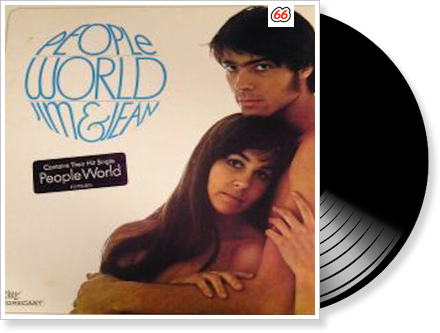
Title: People World
Year: 1967
Format: LP
Label: Verve Forecast
For their third (and subsequently final) album People World (1968), Jim Glover (guitar/vocals) and Jean Ray (vocals) veered farther away from the folk-rock blend that had informed their previous two long-players, settling into a comparatively pop-driven direction.
The platter is a mixture of solid originals and a wide array of interesting covers — especially the amalgamation of Phil Ochs’ “Ringing of Revolution” incorporating the garage rock anthem “Hang On Sloopy,” Bob Dylan’s “Like a Rolling Stone,” and Pete Seeger’s “Guantanamera.” Their interpretation of another Ochs composition, “Cross My Heart,” is one of the disc’s best offerings as Jim & Jean’s compact vocals are perfectly suited to the track’s heartening nature.
Despite People World being their only effort to impact the charts, it is a relatively haphazard collection, which may have something to do with the host of musical arrangers, conductors, and producers calling the shots behind the scenes. The lack of a unified sound does not detract from the strength of Ray’s trippy “Topanga Road” — a composition purportedly about the Buffalo Springfield’s March 20, 1968, drug bust which Jim & Jean narrowly avoided themselves — or the distinct Burt Bacharach-influenced score to “What’s That Got to Do With Me?”
Although undeniably indirect, “Hanoi Hoe-Down” melds a trippy Eastern-flavored melody that is shrouded in not so oblique references to the concurrent conflict in Vietnam. Glover’s “People World” concludes the LP with an upbeat and thoroughly optimistic viewpoint and became Jim & Jean’s only single to reach the Top 100, placing at number 94 despite being a formidable regional hit. (Lindsay Planer)
Track Listing
- Topanga Road
- Success
- What’s That Got To Do With Me?
- Get Out Of My Mind
- Rhythms Of Revolution
- Hanoi Hoe-Down
- The Planet June
- Playground
- Time Goes Backwards
- Sweet Water
- Cross My Heart
- People World
Disclaimer: The link below may point to content that is copyrighted. redtelephone66 only provides this link with the understanding that you are responsible for the content you download. redtelephone66 does not engage in music piracy, nor do we do host, fileshare, or otherwise trade in copyrighted works.
Jim & Jean – Changes (1966)
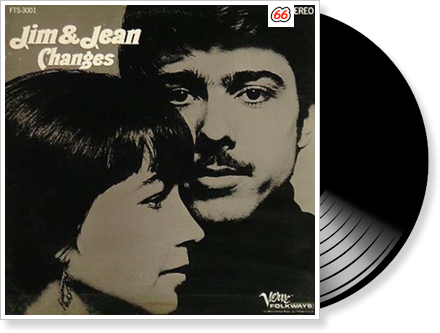
Title: Changes
Year: 1966
Format: LP
Label: Verve Folkways
The husband-and-wife team of Jim Glover (guitar/vocals) and Jean Ray (vocals) cut three long-players in the mid-’60s, during an era when primarily acoustic-based folk was synthesizing with edgier amplified electric rock. Their second LP, 1966′s Changes, noted this juncture as they advanced from the mold established by the likes of Ian & Sylvia and Richard & Mimi Fariña into a decidedly progressive style. This was similarly reflected in their material, combining several strong sides from Glover flanking some equally adept remakes.
Eric Anderson’s “Tonight I Need Your Lovin’” is an apt vehicle for demonstrating their charming blend and penchant for delivering decidedly pastoral melodies with undeniable flair. The pair wrap themselves around David Blue’s “Strangers in a Strange Land,” interpreting the number as a slightly dark yet slinky samba. Additionally, it is one of the two tracks with session instrumentalist Al Kooper (harpsichord/guitar). Phil Ochs — who provided the liner notes essay on the rear of the LP jacket — also contributes three tunes. Primary among these is the seven-plus minute “Crucifixion” featuring Harvey Brooks (bass) and Paul Harris (keyboards), both of whom augment Jim & Jean’s dual lead vocal.
Perhaps the most traditionally folky cover on Changes is the simple and unadorned reading of Bob Dylan’s “Lay Down Your Weary Tune,” which has more in common with his version than the Byrds’ recent reworking. Glover’s originals are easily among the best the album has to offer, marked by the opening “Loneliness” and the pop-driven “It’s Really Real.” They are tailored not only to the artists but to the entire freewheeling liberated mid-’60s ethos. Ray’s “One Sure Thing” drives a bit harder, matching if not exceeding the arguably better-known cover from Fairport Convention’s 1968 self-titled disc. (Lindsay Planer)
Track Listing
- Loneliness
- Tonight I Need Your Lovin’
- It’s Really Real
- Grand Hotel
- Crucifixion
- Changes
- Flower Lady
- About My Love
- Strangers In A Strange Land
- One Sure Thing
- Lay Down Your Weary Tune
Disclaimer: The link below may point to content that is copyrighted. redtelephone66 only provides this link with the understanding that you are responsible for the content you download. redtelephone66 does not engage in music piracy, nor do we do host, fileshare, or otherwise trade in copyrighted works.
Poet & The One Man Band – Poet & The One Man Band (1969)
Title: Poet & The One Man Band
Year: 1969
Format: LP
Label: Paramount
Poet & the One Man Band are known more for the groups some of the members joined later than for the obscure self-titled LP issued under the Poet & the One Man Band name in the late ’60s. Jerry Donahue and Pat Donaldson would soon move on to Fotheringay, the British folk-rock group fronted by Sandy Denny, and play on their sole album; guitarist Albert Lee, Tony Colton, Ray Smith, and Pete Gavin would form Heads, Hands & Feet.
Poet & the One Man Band is a fairly average psychedelic-era album with some slight resemblance to the late-period Zombies, though there’s some typical, and unmemorable, songs in a more straightforward, harder-rocking late-’60s British style. (Richie Unterberger, All Music Guide)
Track Listing
- Please Me, She’s Me
- The Days I Most Remember
- Jacqueline
- Now You’ve Hurt My Feelings
- Light My Fire And Burn
- Good Evening Mr. Jones
- The Fable
- Ride Out On The Morning
- Twilight Zone
Disclaimer: The link below may point to content that is copyrighted. redtelephone66 only provides this link with the understanding that you are responsible for the content you download. redtelephone66 does not engage in music piracy, nor do we do host, fileshare, or otherwise trade in copyrighted works.
Congress Alley – Congress Alley (1973)
Title: Congress Alley
Year: 1973
Format: LP
Label: Avco Embassy
Congress Alley were a group out of New York City. They were comprised of Lee Andrews (vocals), Jacqui Andrews (Lee’s wife) (vocals), Richard Booker (vocals), and Karen Briscoe (vocals).
The group was named after a song by the group called Orpheus. Congress Alley’s only album release was recorded at New York City’s Media Sound Studios, engineered by Jeff Lesser and produced by Vinny Testa. (Jack Dominilla)
Track Listing
- Are You Looking
- Anyway You Want Me
- Our House
- Loneliness Is
- God Bless The Children
- Congress Alley
- God Save America
- Fat Angel
- Golden Slumbers
- Time Is Yours
Charisma – Beast And Fiends (1969)
Title: Beast And Fiends
Year: 1969
Format: LP
Label: Roulette
Before the recording of the second album, Mike DeLisa decided to go his own way, leaving the job of lead vocalist to guitarist Tom. Beasts and Fiends was recorded at the Record Plant in NYC during the summer of 1970. The lead engineer was the top engineer in the business: Jack Hunt (the Woodstock album, Electric Ladyland), assisted by Dave Ragno (the Woodstock album), and Tom Fly (the Woodstock album, former drummer of Lother and the Hand People). While credit was given to Bruce McGaw and Ed Vallone for production, fact is the album was produced by Charisma with interference run by Jack Hunt.
Charisma was offered the option to record a third album for Roulette Records, but let it pass by. Probably a mistake. Both albums sold better in Europe than they did in the USA. All income went to Roulette Records. Charisma got squat. Same old story.
It looked like Charisma was headed for a breakup as drummer Rich Tortorigi and keyboardist Bob Mocarsky decided to leave the band, but Tom and Bernie located drummer Jim Roselle and keyboardist Mike Reynolds and decided to give it another go. Jim recruited Paul Midney to play saxes and flute, and Ray Mase to play trumpet, piccolo trumpet and coronetto. For a while, Charisma became Midney, named after Paul (?!!), but ended up changing their name back to Charisma. Paul eventually ended up leaving the group to do his own thing in the world of meditation and Ray went on to play with the American Brass Quintet.
About this time Charisma, along with sound engineers Ron Scalise (now at ESPN) and Norman Campbell (now in California) began building a recording studio. Charisma spent the next few years in the studio. But to be able to do that they were forced to compromise their principles by playing commercial music to raise money to pay for the studio addiction.
Charisma auditioned several singers as front men and finally decided on Brian Salke. Brian was not allowed to do the few non-commercial gigs that came up once in a while, but he did appear on some of Charisma’s homegrown recordings. In 1976, Charisma disbanded, leaving one incomplete recording. (Prairie Prince Minsky)
Track Listing
- Street Theatre
- The No-Tell Motel
- Dirty Pigs Don’t Get Far In This World
- Bizwambi/Ritual Dance Of The Reptiles
- Leopold’s Ghost
- The Age Of Reptiles
- Beasts And Fiends
- Pray For Lockjaw
Charisma – Charisma (1969)
Artist: Charisma
Title: Charisma
Year: 1969
Format: LP
Label: Roulette
Charisma came about from diverging roots emanating from 3 directions. The core of Charisma was Rich Tortorigi (drummer) and George Tyrell (bass player). Both were members of a New Britain, Connecticut soul band called The Mantiques. The Mantiques had been one of the three main horn-based bands in New Britain in the mid to late 60’s, along with Detroit Soul and The Paramounts. Paramounts drummer, Tyrone Lampkin went on to play with Gutbucket and the Parliament Funkadelics.
In 1968, Rich Tortorigi recruited Tom Majesky to play guitar with The Mantiques, following their breakup. Tom enlisted Bernie Kornowicz, former bassist of The Last Five, to share guitar and organ duties. The final addition to the group was folk singer Mike DeLisa to sing lead. Tom and Bernie brought the rock and roll element to the Mantiques and Mike brought the band an element of folkiness.
It was in 1969 that The Mantiques signed with Roulette Records as a convenient tax write off to record an album. The album was produced by Ed Vallone and most of the songs were penned by Bruce McGaw. During the recording of the album, the band fought over a new name with their new management. Finally given an ultimatum, The Mantiques became Charisma, a name they hated. The album was recorded at Incredible Sound Studios in NYC. Charisma attempted to take control of the writing and production, but were put in their place and ordered to record the songs as scripted. Being the obstinate egocentrists that they were, they turned the recording sessions into a parody of the original intent.
Following the recording of What’s It Like, the very first song on the album, (which, was in fact recorded at Vanguard Studios), there was a shakeup. George Tyrell quit the band, Bernie Kornowicz became the bass guitarist, Tom Majesky became the lead guitarist, and a new organist was recruited: Bob Mocarsky. The album was eventually completed. In the meantime, Tom, Bob and lyricist/art director Suzi Langlois began writing songs for a second album. (Prairie Prince Minsky)
Track Listing
- What’s It Like
- A Truth Emerged
- Happy Song
- Where Do We Go From Here?/Yesterday’s Folks
- Marianne
- Miss Willoughby
- Death Of Me
- Bang Bang
- If You’re Waitin’ For A Miracle
- Suzanne Gives
- Take Me Away
Spirit In Flesh – Spirit In Flesh (1971)
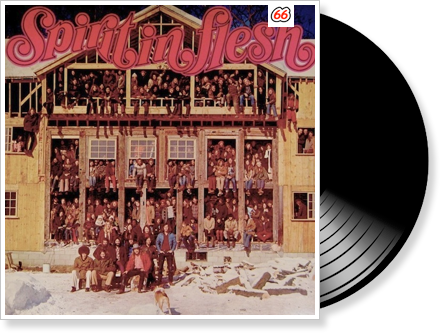
Title: Spirit In Flesh
Year: 1971
Format: LP
Label: Metromedia
Michael Metelica was born in 1950 and grew up in the small rural town of Leyden, Massachusetts. At age 16, he dropped out of high school and, after reading an article about the Hell’s Angels motorcycle gang, moved to California to join them. Repelled by their violent nature, he was instead drawn to the 1967 hippie Summer of Love, returning to Leyden the following year. In May of 1968, he asked a local blueberry farmer named Donnie Herron if he could build a treehouse on his land, and after receiving permission, lived there in solitary meditation, working for farmers for free and expecting nothing in return.
Needless to say, he became something of a local sensation and attracted his first following from among his boyhood friends. After the treehouse was destroyed in late 1968 by suspicious locals, Metelica and his little band wandered around the many hill towns in the area, gaining more members, teaching their view of spirituality at area churches and schools until by early 1970, they numbered around 50. Rules were mandated banning drugs, cigarettes, alcohol and sexual promiscuity and members practiced to purge themselves of their imperfections through meditation and intense encounter-group confrontation tactics. By then, Metelica knew that he had the makings of a deliberate community that was based on spiritual beliefs and practice.
The concept of spirituality was still new and uncharted in the late 1960’s but the group, now known as the Brotherhood of the Spirit, had as its spiritual advisor, a local farmer named Elwood Babbitt, a trance-medium in the Edgar Cayce tradition. Both Babbitt and Metelica believed that the Earth was about to undergo cataclysmic changes in preparation of the Aquarian Age. Babbitt, in particular, was getting information through his spirit guides who warned that humanity’s selfish and self-destructive behavior would cause nature to literally rebel in such a way as to cause widespread death and destruction.
These “Earth Changes” as they were called would be a precursor to the spiritual enlightenment of the Aquarian Age, the next step in the evolution of the human race. According to Babbitt, groups like the Brotherhood would be the harbingers of this new age, functioning as teachers of this higher wisdom to the shattered survivors of these worldwide cataclysms.
In March of 1970, The Brotherhood purchased a 25-acre property in Warwick, Mass and the group underwent the first of its many radical transformations. Their growth coincided with a countercultural migration as millions of young Americans, disenchanted with the “establishment” during the Vietnam War era, dropped out of universities and cities en masse and hit the road that summer looking for new venues.
The membership skyrocketed to 150 leading to the acquisition of an additional house in nearby Northfield, the building of a dormitory in Warwick and more stringent membership rules. Metelica became less involved with the commune, devoting most of his energy to the commune’s band “Spirit in Flesh” whose mission was to bring about the message of spirituality through the medium of rock and roll. In late 1970, Spirit in Flesh signed a contract with Metromedia records and the commune’s focus began to shift into a full-time promotion of the band.
Veterans of the Brotherhood of the Spirit consider the Warwick era as being the closest to their ideal of a spiritual community composed of independently inspired individuals. Their youthful enthusiasm allowed them to overcome the many hardships created by an insulated environment dedicated to personal growth and spiritual reflection.
For the many that came from urban backgrounds, Warwick introduced the realities of self-sufficiency through logging, house building, the cultivating and canning of homegrown food, and the ability to enjoy life without the distractions of mainstream media. Their spiritual belief system was based on aspects of Buddhism and New Age thinking mixed with an enlightened, almost Gnostic form of Christianity. Reincarnation, meditation, and the power of positive thought were considered to be major doctrines.
The years 1971-1972 were spent in frenzied activities surrounding Spirit in Flesh, including the printing of several thousand silk-screened posters that were placed all across the United States and even into parts of Europe. Because of the sluggish support from the record label, the commune devised its own guerilla tactics to promote the band which included marches in New York City, mass telephone call-ins to Metromedia, and infiltrating popular national TV talk shows to announce the band’s impending success. These tactics culminated in a concert at Carnegie Hall that was sparely attended. The first album, which featured the entire membership of the Brotherhood commune on its cover, sold less than 1000 copies.
Despite the attention focused on Spirit in Flesh, the Brotherhood had developed into an efficient entity which contradicted the accepted stereotype of lazy commune hippies. An elaborate infrastructure that included business management, child care, auto maintenance, farming and food production had been created to service the needs of its personnel. However, it also created controversy due to its members being briefly on welfare while Metelica was gifted with a Rolls-Royce.
There were also numerous run-ins with local selectmen about code violations concerning the commune’s houses and septic systems. By late 1972, the membership had expanded to nearly 300. It was during this time that the first public businesses were launched by the commune along with a magazine, the Free Spirit Press, which was sold along the East Coast from a rainbow-painted school bus.
In late 1972, the commune bought the Shea Theater block in Turners Falls, a decaying working-class town next to Greenfield, and made national headlines when Metelica issued an order to all members to either work a job or leave. By now, the Brotherhood of the Spirit had been featured in such media venues as the Wall Street Journal; Look, Family Circle, and Mademoiselle magazines as well as televised segments on 60 Minutes and the David Frost show. (History Of The Renaissance Community)
Track Listing
- Weight Of The World
- Blind Leading The Blind
- The Jack Baker Song
- Hear My Plea
- Riverside Song
- Fine Line
- Deny To Me
- The Meek Shall Inherit The Earth
- Flesh & Gut
- Clear The Way