
The Art Of Lovin’ – The Art Of Lovin’ (1968)
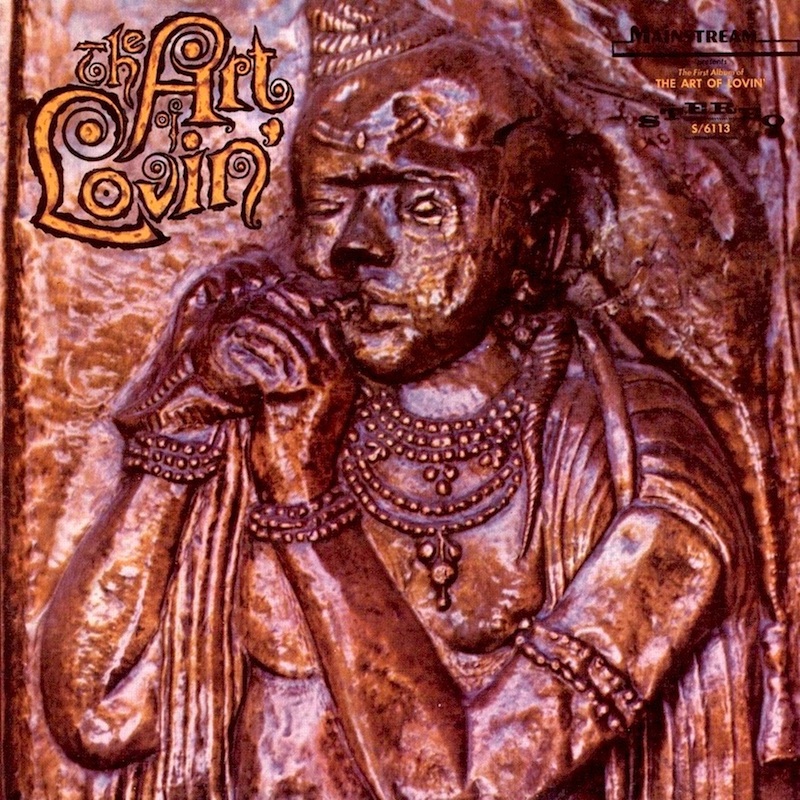
Title: The art Of Lovin’
Year: 1968
Format: LP
Label: Mainstream
A superb mixture of harmony-laden folk-rock and psychedelia from this Massachusetts band featuring guitarist Paul Applebaum’s compositions sung by Gail Winnick creating an Airplane-esque male/female vocal balance set against Applebaum’s lead guitar and a strong rhythm section. The album includes a great cover of Tim Hardin’s “Hang On To A Dream”. (Jack Dominilla)
Track Listing
- Paul’s Circus
- What The Young Minds Say
- You Got The Power
- Take A Ride
- Good Times
- Daily Prayer
- The First Time
- And I Have Seen Them All
- You’ll Walk Away
- (How Can We) Hang On To A Dream
- State Of Mind
Disclaimer: The link below may point to content that is copyrighted. redtelephone66 only provides this link with the understanding that you are responsible for the content you download. redtelephone66 does not engage in music piracy, nor do we do host, fileshare, or otherwise trade in copyrighted works.

Iron Butterfly – Heavy [Mono] (1968)
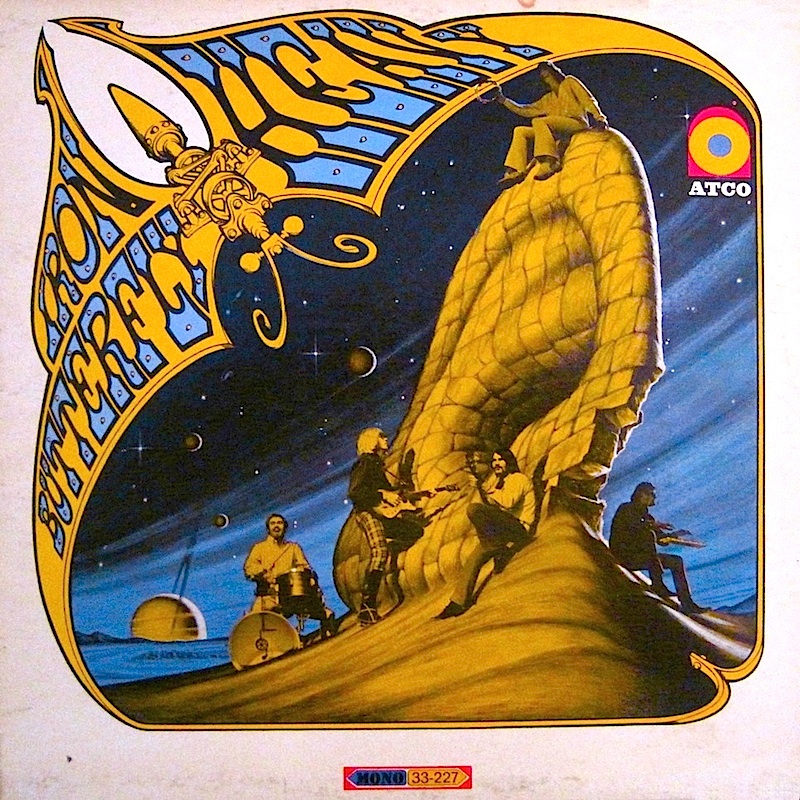
Title: Heavy
Year: 1968
Format: LP
Label: Atco
The mono version of Iron Butterfly’s “Heavy”. The original line-up on “Heavy” consisted of Doug Ingle / keyboards, vocals – Ron Bushy / drums Jerry Penrod / bass guitar – Darryl DeLoach / vocals – Danny Weis / guitar. “For me this is the most enjoyable Iron Butterfly album. It has got a good mixture of songs and has a psychedelic feel to it with “Look For The Sun”, “Fields Of Sun” perhaps elegies about the perils/thrills of LSD and its culture at the time of the mid sixties, “Iron Butterfly Theme” is one of the best instrumental pieces of the time at the very least, a very haunting tune and one of the best they wrote.
“Gentle As It Seems” and “You Can’t Win” were written by the same pairing of Danny Weiss and Danny De Loach, who both left soon after the album was released, but could not be more different. “Gentle As It Seems” is a forgettable piece of badly written tripe whereas “You Cant Win” is a cool psyche piece inspired by the Buffalo Springfield song “For What Its Worth”, with a very singable chorus and a song that became an Iron Butterfly live favorite, along with the album opener “Possession”. Good album with a very 60’s spirit about it.” (jonnydelux RYM)
Track Listing
- Possession
- Unconscious Power
- Get Out Of My Life, Woman
- Gentle As It May Seem
- You Can’t Win
- So-Lo
- Look For The Sun
- Fields Of Sun
- Stamped Ideas
- Iron Butterfly Theme
Disclaimer: The link below may point to content that is copyrighted. redtelephone66 only provides this link with the understanding that you are responsible for the content you download. redtelephone66 does not engage in music piracy, nor do we do host, fileshare, or otherwise trade in copyrighted works.
Iron Butterfly – In-A-Gadda-Da-Vida [Mono] (1968)
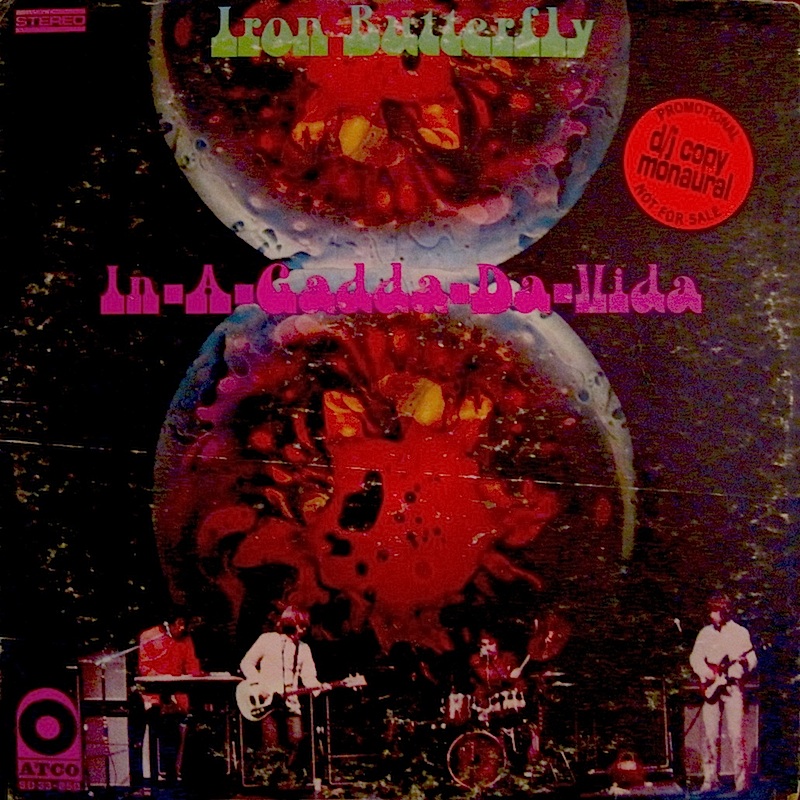
Title: In-A-Gadda-Da-Vida
Year: 1968
Format: LP
Label: Atco
THIS APPEARS TO BE A MONSTEROUSLY RARE PROMO-ONLY MONO MIX (BASS LINES ARE MUCH MORE PROMINENT THAN ON THE STOCK, COMMERCIALLY RELEASED PRESSING). FROM WHAT WE CAN DETERMINE, THIS IS NOT A STEREO-TO-MONO MIXDOWN COMMONLY FOUND IN THE LATE 60s AND EARLY 70s. (Bobdjukic recent eBay listing)
Track Listing
- Most Anything That You Want
- Flowers And Beads
- My Mirage
- Termination
- Are You Happy
- In-A-Gadda-Da-Vida
Disclaimer: The link below may point to content that is copyrighted. redtelephone66 only provides this link with the understanding that you are responsible for the content you download. redtelephone66 does not engage in music piracy, nor do we do host, fileshare, or otherwise trade in copyrighted works.
Tommy James & The Shondells – Hanky Panky (1966)
Title: Hanky Panky
Year: 1966
Format: LP
Label: Roulette
Tommy James & the Shondells — the very mention of their name, even to someone who doesn’t really know their music, evokes images of dances and the kind of fun that rock & roll represented before it redefined itself on more serious terms. And between 1966 and 1969, the group enjoyed 14 Top 40 hits, most of which remain among the most eminently listenable (if not always respected) examples of pop/rock.
The group was almost as much of a Top 40 radio institution of the time as Creedence Clearwater Revival, but because they weren’t completely self-contained (they wrote some, but not all, or their own hits) and were more rooted in pop/rock than basic rock & roll, it took decades for writers and pop historians to look with favor on Tommy James & the Shondells.
Tommy James was born Thomas Jackson on April 20, 1947, in Dayton, OH. He was introduced to music at age three, when he was given a ukulele by his grandfather. He was an attractive child and was working as a model at age four, which gave him something of a taste for performing.
By age nine he’d moved to the next step in music, taking up the guitar, and by 1958, when he was 11, James began playing the electric guitar. In 1960, with his family now living in Niles, MI, 13-year-old James and a group of four friends from junior high school — Larry Coverdale on guitar, Larry Wright on bass, Craig Villeneuve on piano, and Jim Payne on drums — got together to play dances and parties.
This was the original lineup of the Shondells, and they became good enough to earn decent money locally, and even got noticed by an outfit called Northway Sound Records, who recorded the quintet in a Tommy James original entitled “Judy” in 1962. That single didn’t make much noise beyond their immediate locale, but in late 1963, the group came to the notice of a local disc jockey starting up a new label called Snap Records. They cut four sides, two of which were issued and disappeared without a trace on their first Snap single.
The second Snap label release, “Hanky Panky,” was golden, at least in the area around Niles. A Jeff Barry/Ellie Greenwich song that the couple had already recorded under their nom de plume, the Raindrops, as a B-side that James and company had heard done by a rival band, “Hanky Panky,” had become part of James’ group’s stage act. It was enormously popular on-stage, and the Snap single took off locally in Niles and the surrounding area, but it never got heard any further away.
James and company picked up their marbles and went home, abandoning aspirations for a recording career in favor of pursuing music part time — the singer/guitarist took a day job at a record store and confined his music efforts to the nighttime hours. The two years that ensued, from early 1964 until 1966, saw the original Shondells break up, as members left music or were drafted. This didn’t seem to make much difference until a day came when James got an urgent request from a promoter to do a concert in Pittsburgh, PA.
Considering that the group had never even played there, he was puzzled. He soon found that the Snap Records single “Hanky Panky,” recorded back in 1963 and overlooked in Chicago and Detroit at the time, had suddenly broken out in Pittsburgh. A promoter, having found a copy of the Snap single in a used-record bin, had liked what he heard and gotten the record played locally at dances. In one of those fluky instances that made the record business in those days a complete marvel, people suddenly started requesting “Hanky Panky,” and in response to the demand, bootleggers began producing it, attributed to various labels — some sources estimate that as many as 80,000 copies were sold in Pittsburgh before the smoke cleared.
James saw what he had to do, but he no longer had a band and was forced to recruit a new group of Shondells. The lucky winners were the Raconteurs, a local Pittsburgh quintet. They became the Shondells, with Joe Kessler on guitar, Ron Rosman on keyboards, George Magura on sax, Mike Vale on bass, and Vinnie Pietropaoli on drums; Peter Lucia and Eddie Gray, respectively, replaced Pietropaoli and Kessler, and Magura and his saxophone didn’t last long in the lineup.
From near-total obscurity, this version of Tommy James & the Shondells went to playing to audiences numbering in the thousands, and were being courted by Columbia Records and RCA-Victor. It was Morris Levy and Roulette Records, however, who outbid everybody and won the group’s contract, and got a number one national hit with “Hanky Panky,” in the version cut by the original group nearly three years earlier. (Answers.Com Excerpt)
Disclaimer: The link below may point to content that is copyrighted. redtelephone66 only provides this link with the understanding that you are responsible for the content you download. redtelephone66 does not engage in music piracy, nor do we do host, fileshare, or otherwise trade in copyrighted works.
Sam The Sham And The Pharaohs – The Best Of (1966)
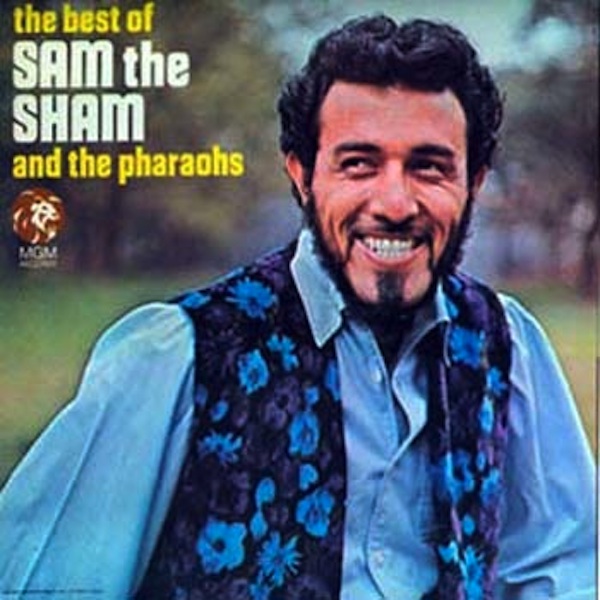
Title: The Best Of
Year: 1966
Format: LP
Label: MGM
Best known for their 1965 smash “Wooly Bully,” which helped introduce Tex-Mex rhythms to mainstream rock & roll, Sam the Sham and the Pharaohs were formed in Dallas by lead singer Domingo Samudio, who took the name Sam the Sham from a joke about his inability as a vocalist. The Pharaohs consisted of guitarist Ray Stinnet, bassist David Martin, saxophonist Butch Gibson, and drummer Jerry Patterson.
Before hitting it big with “Wooly Bully,” a song about Samudio’s cat, the band recorded the independent single “Haunted House,” which helped them get a deal with MGM. Following “Wooly Bully,” the group recorded a series of largely novelty singles, but only “Li’l Red Riding Hood” approached the success of its predecessor. Frustrated at being perceived as a talentless novelty act, Samudio broke up the Pharaohs in 1967 and recorded as the Sam the Sham Revue, and adopted the name Sam Domingo in 1970.
His lone solo LP, Sam, Hard and Heavy, featured slide guitarist Duane Allman, but failed to establish him as a major talent. Samudio contributed two songs to the 1982 film The Border and later moved to Memphis and became a street preacher. “Wooly Bully,” of course, remains a bar band staple. (Steve Huey, All Music Guide)
Track Listing
- Wooly Bully
- Red Hot
- Standing Ovation
- Mystery Train
- Ju Ju Hand
- Ready Or Not
- The Hair On My Chinny Chin Chin
- El Toro De Goro (The Peace Loving Bull)
- (I’m In With) The Out Crowd
- I Wish It Were Me
- Ring Dang Doo
- Li’l Red Riding Hood
Disclaimer: The link below may point to content that is copyrighted. redtelephone66 only provides this link with the understanding that you are responsible for the content you download. redtelephone66 does not engage in music piracy, nor do we do host, fileshare, or otherwise trade in copyrighted works.
Dino, Desi & Billy – I’m A Fool [Vinyl] (1965)

Title: I’m A Fool
Year: 1965
Format: LP
Label: Reprise
A Hollywood trio that were barely into their teens when they hit the charts in 1965, Dino, Desi & Billy anticipated the bubblegum fad with records that usually featured none of their own contributions, except their characterless vocals. That may be phrasing matters too kindly. The best bubblegum is far more distinctive and catchy than the lowest-common-denominator L.A. session pop-rock that they recorded. But they knew the right people, as they say in the business, which made them stars for a brief time, although they never had an ounce of credibility.
This mid-’60s trio were kind of a cross between the Monkees and Gary Lewis in a few key respects. Like Gary Lewis, their very opportunities to record came about primarily because of their distinguished Hollywood fathers. In the case of these guys, however, the nepotism was rather extreme: Dino was Dino Martin, son of singer/comedian Dean Martin, and Desi was the son of Lucille Ball and Desi Arnaz. Along with classmate Billy Hinsche, they began playing for fun. They’d barely gotten their equipment together when they auditioned for Dean Martin’s buddy, Frank Sinatra — who just happened to record for and run Martin’s label, Reprise. By the end of 1964, they’d released their first single for the label, although it was made clear to them that session musicians would handle the instruments.
Top producers and arrangers Lee Hazlewood, Billy Strange, and Jimmy Bowen would oversee the trio’s recording dates over the next couple of years. “I’m a Fool” made the Top Twenty in 1965; “Not the Lovin’ Kind” got into the Top Thirty a few months later. None of the group had reached the age of 15 yet, but there they were, playing to screaming crowds as a support act to a Beach Boys tour in 1965, and (for a few months) outselling Sinatra on his own label. This despite (or because of?) the fact that their music was innocuously bland in the extreme, making the Monkees (who also used a pool of L.A. session players) sound positively innovative and hard-nosed in comparison.
Dino, Desi & Billy never got into the Top Forty after 1965, but they recorded singles and albums for years to come (perhaps it would have caused tensions among their families if they hadn’t). They were the recipients of compositions by top pop-rock songwriters like Lee Hazlewood, David Gates, Boyce-Hart, Clint Ballard, Jr., and Bonner-Gordon. But it seemed like these songsmiths took care not to give them anything too good, in the manner of Goffin-King’s substandard leftovers for early ’60s teen idols.
Billy Hinsche’s sister married Carl Wilson, which probably helped the band secure a Brian Wilson composition (which Hinsche helped finish off) for one of their final Reprise singles in 1970, “Lady Love.” The group did start to get involved in their recording sessions, as players and composers, toward the end of the ’60s. But the talent wasn’t there, and in any case the results were much more pop than rock.
Perhaps it’s being unduly touchy to come down on the band so hard; they had no aspirations towards anything but wholesome fun, apparently, and 98% of other kids their age would have taken advantage of the same connections given the same silver spoons. Keep in mind, though, that bands like Dino, Desi & Billy took away valuable airtime and sales from much better groups that really needed it, in an era in which chart considerations were much more vital to ensure an ongoing career. And if you don’t believe that, look at the nosedive experienced after the mid-’60s by the Kinks–who, as it happened, were on Dino, Desi & Billy’s U.S. label, and may have been competing for the same promotional budget. (Richie Unterberger, All Music Guide)
Track Listing
- Not The Lovin’ Kind
- (I Can’t Get No) Satisfaction
- Mr. Tambourine Man
- I’m A Fool
- Like A Rolling Stone
- The Rebel Kind
- The Chimes Of Freedom
- It Ain’t Me Babe
- Boo-Hoo-Hoo (I Can Tell)
- So Many Ways
- Seventh Son
Disclaimer: The link below may point to content that is copyrighted. redtelephone66 only provides this link with the understanding that you are responsible for the content you download. redtelephone66 does not engage in music piracy, nor do we do host, fileshare, or otherwise trade in copyrighted works.
Tommy Roe – Sweet Pea [Mono] (1966)
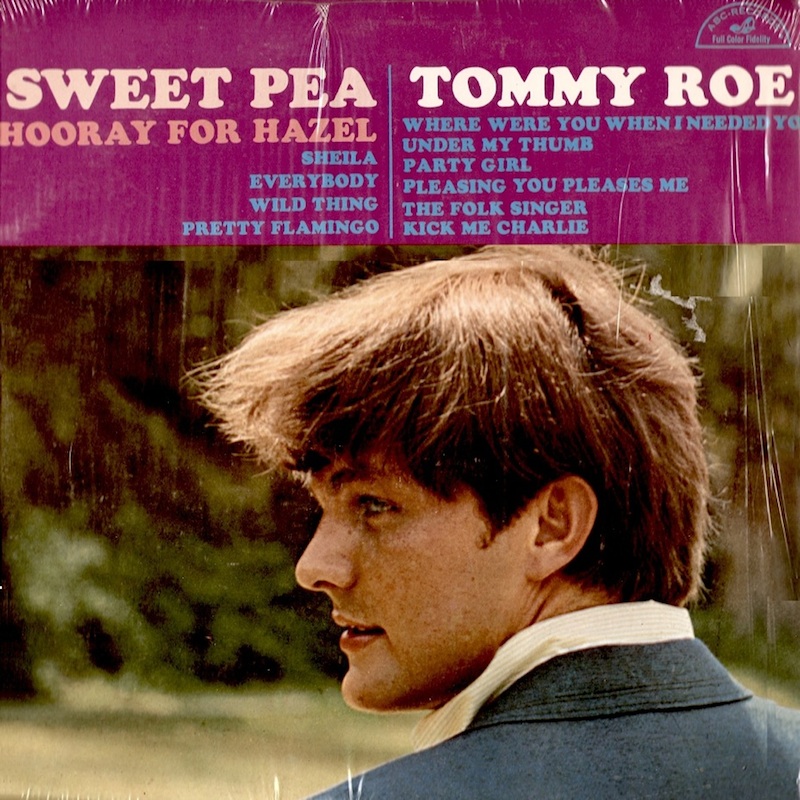
Title: Sweet Pea
Year: 1966
Format: LP
Label: ABC
Tommy Roe’s 1966 “Sweet Pea” album produced by Curt Boettcher was actually a compilation of previous singles, covers, and his two top ten hits of that year, “Sweet Pea” and “Hooray For Hazel”. The covers, remakes of 1966 hits “Where Were You When I Needed You”, “Wild Thing”, “Pretty Flamingo”, and “Under My Thumb” were signaling a change in Roe’s repertoire, and were a precursor to his two albums of 1967, “It’s Now Winter’s Day” and “Phantasy”. (Max Collodie)
Track Listing
- Hooray For Hazel
- Under My Thumb
- Pretty Flamingo
- Where Were You When I Needed You
- Wild Thing
- Sweet Pea
- Party Girl
- Everybody
- The Folk Singer
- Pleasing You Pleases Me
- Kick Me Charlie
- Sheila
Disclaimer: The link below may point to content that is copyrighted. redtelephone66 only provides this link with the understanding that you are responsible for the content you download. redtelephone66 does not engage in music piracy, nor do we do host, fileshare, or otherwise trade in copyrighted works.
Tommy Roe – Dizzy (1969)

Title: Dizzy
Year: 1969
Format: LP
Label: ABC
Kind of a bubblegum footnote, the title track “Dizzy” swirls and sways to a mock orchestral backing. It’s lighter than Ron Dante but can stand strong next to 1910 Fruitgum Co. and The Sugar Bears. A song “oldies” stations play at least once a week, once it’s on, it’s hard to turn the channel. The other nasty bubblegum classic has to be “Cinnamon” where our hero tries to bed yet another pre-teen cuttie. Does he succeed? I bet so. That was always the undercurrent in all great bubblegum songs: EVIL!
The rest of the album attempts more serious song matter and tries to compete with the final days of Beatles’ recordings where even they returned to their roots and abandoned “psychedelia”. I have to commend Roe for having the guts to issue this lp with a goofy graphic artist’s nightmare cover. Would look good next to THEIR SATANIC MAJESTIES REQUEST. After this album’s dismal death, Roe bought a tuxedo and tried his best to “grow up”. He also became a bore from then on. (Kupa99 RYM)
Track Listing
- Heather Honey
- Raining In My Heart
- Cinnamon
- A Dollar’s Worth Of Pennies
- Stormy
- Makin’ Music
- Money Is My Pay
- Proud Mary
- Gotta Keep Rolling Along
- Look Out Girl
- Dizzy
Disclaimer: The link below may point to content that is copyrighted. redtelephone66 only provides this link with the understanding that you are responsible for the content you download. redtelephone66 does not engage in music piracy, nor do we do host, fileshare, or otherwise trade in copyrighted works.
Toy Factory – Toy Factory (1970)
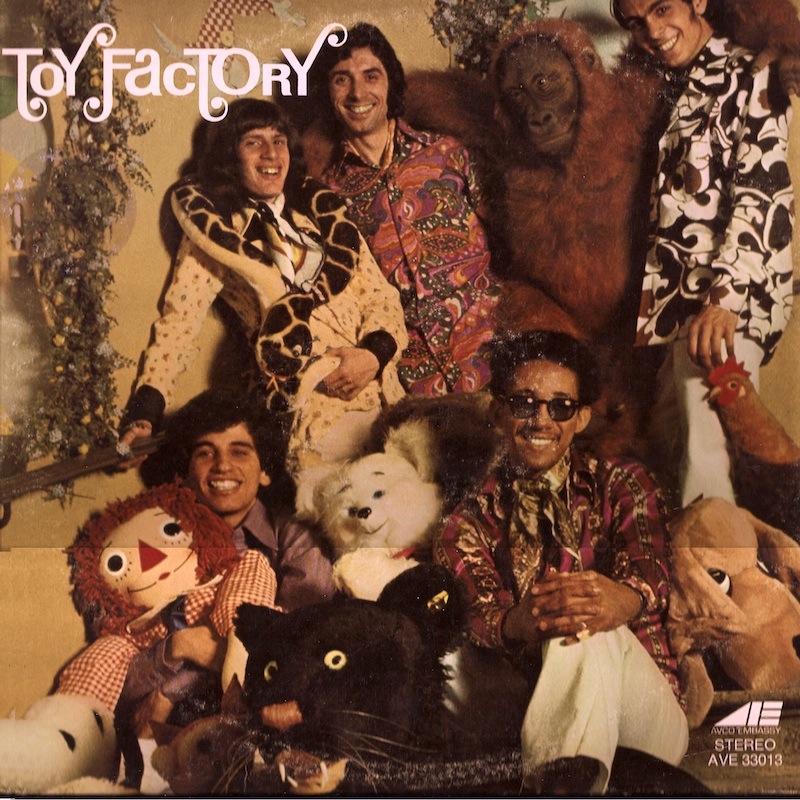
Title: Toy Factory
Year: 1970
Format: LP
Label: Avco Embassy
Though we haven’t been able to track down much bibliographical information on this late-60s bi-racial outfit, we think they were from Long Island, New York. From the liner notes on their LP we can also tell you Greg Weiss was the lead singer and was responsible for writing roughly half the material. The rest of the line up consisted of bassist Bill, guitarist Billy, drummer Joey and keyboard player Sal (great detail there).
Produced by Bernie Lawrence, the majority of 1970’s “Toy Factory” found the band trying to fight their way through rather faceless MOR pop. Lead singer Greg Weiss had a decent voice, but on tracks such as “What Is Youth”, “To Live or Die” and “Honey, Forever” he employed an irritating faux-English accent that recalled Davy Jones (he sounds like David Hemmings to me Bad Cat!!!). He also had an irritating habit of throwing mock sobs and groans into the mix (“When I’m with You” and “Honey Forever”).
Strike three were the occasional French lyrics (don’t pick on the French Bad Cat!!!) he tossed into the mix (“To Live or Die” and “Honey Forever”). Curiously, the band was at their best when they cut loose and go for a harder rock sound. In this case, the pseudo-psychedelic “No Rhyme To Orange” (sporting a nice fuzz guitar solo) and “Things” was a nifty slice of blue-eyed soul. “Summertime” also found the band turning in one of the weirdest George Gershwin covers we’ve ever heard (pretty decent guitar here too Bad Cat!!!). This one certainly won’t change your life, but it’s one of those period failures that’s worth checking out. (BAD CAT).
Track Listing
- What Is Youth
- To Live Or To Die
- Dear Girl
- Yesterday’s Love
- No Rhyme To Orange
- Summertime
- When I’m With You
- Things
- Honey Forever
- Little Girl
Disclaimer: The link below may point to content that is copyrighted. redtelephone66 only provides this link with the understanding that you are responsible for the content you download. redtelephone66 does not engage in music piracy, nor do we do host, fileshare, or otherwise trade in copyrighted works.
Tot Factory – Toy Factory (1970)
Title: Toy Factory
Year: 1970
Format: LP
Label: Avco Embassy
Though we haven’t been able to track down much bibliographical information on this late-60s bi-racial outfit, we think they were from Long Island, New York. From the liner notes on their LP we can also tell you Greg Weiss was the lead singer and was responsible for writing roughly half the material. The rest of the line up consisted of bassist Bill, guitarist Billy, drummer Joey and keyboard player Sal (great detail there).
Produced by Bernie Lawrence, the majority of 1970’s “Toy Factory” found the band trying to fight their way through rather faceless MOR pop. Lead singer Greg Weiss had a decent voice, but on tracks such as “What Is Youth”, “To Live or Die” and “Honey, Forever” he employed an irritating faux-English accent that recalled Davy Jones (he sounds like David Hemmings to me Bad Cat!!!). He also had an irritating habit of throwing mock sobs and groans into the mix (“When I’m with You” and “Honey Forever”).