

Morning Dew – Morning Dew [Vinyl] (1970)
Title: Morning Dew
Year: 1970
Format: LP
Label: Roulette
Midwest legends who cut a handful of great garage 45s before this swan song hippie rock LP, which unfortunately was issued way too late to make any impact. Rated highly by many, it’s a solid trip through Airplane/Cream /Butterfly dimensions mixing early heavy moves with strong folkrock/psych material.
Lack of macho vocals is a plus, and opening “Crusader’s Smile” is a classic. Reminds me of the Mainstream label sound, though this is more consistent. A good LP all over, but perhaps not enough of a mindblower to warrant the big price tag. True originals have “Bell Sound” stamped in the trail-off. (Patrick Lundborg)
“Good but overrated album that sounds fantastic on first listen but comes down to earth once you get used to it. Mostly it’s pretty mainstream, with solid vocals and performances and a few really great songs on side one. All of it is decent, but it lacks the kind of depth or originality that would give it classic status.” (Aaron Milenski)
Track Listing
- Crusader’s Smile
- Upon Living
- Young Man
- Then Came The Light
- Cherry Street
- Gypsy
- Something You Say
- Country Boy Blue
- Save Me
- Epic: Part One – The Mann
- Epic Part Two: – Death Is A Dream
Donovan – Liquid Sunshine Donovan (Compilation)
Title: Liquid Sunshine Donovan
Year:
Format: LP
Label: Epic (Unreleased)
An unreleased compilation album that showcases Don’s more psychedelic sides: “Outside” (side one) is a glittering necklace of his pop-psych jewels, while the flipside “Inside” features his more introspective, although equally psychedelic, songs arranged in a seamless suite. L.S.D. (get it?) sums up the era nicely, including cover artwork that is very much a product of its time, and it’s a shame it never saw release. There are even some added sonics to book-end the album, including a short collage fade-out to side two. A must-hear for any fan of sixties psych – Hail Atlantis! (Internet Source)
Track Listing
- Outside: Season Of The Witch/Sunshine Superman/Fat Angel/The Trip/Hurdy Gurdy Man/Atlantis
- Inside: Sunny Goodge Street/Peregrine/Tangier/Ferris Wheel/Three Kingfishers/Guinevere
Strawberry Alarm Clock – Good Morning Starshine
Title: Good Morning Starshine
Year: 1969
Format: LP
Label: UNI
The final SAC studio album (subsequent releases were compilations of one form or another) has neither the highs nor the lows of The World In A Sea Shell, and precious little that could be termed “psychedelia”.
The album’s best track, “Off Ramp Road Tramp” has more in common with the Doors’ “Roadhouse Blues” than it does with the swirling psychedelic madness that constituted SAC’s best work. It’s not bad, it’s just not Strawberry Alarm Clock music.
Part of the problem is that Ed King moved to bass with the departure of George Bunnell. New guitarist Jimmy Pitman is kinda like the guys that initially replaced Joe Walsh in the James Gang; he can play, but he can’t play!.
Additionally, although the band needed a new infusion of songwriting talent due to Bunnell’s departure, Pitman’s songs are simply average. “Me And The Township”‘s pro-flagwaving sentiments sound out of place at best (next thing you know, we’ll have a member of Moby Grape joining the marines!). “Write Your Name In Gold” and “Dear Joy” are amateurish ballads.
The rest of the band doesn’t fare much better. They recapture a hint of the old magic on “Small Package”, “You Put Me On Standby” and the wonderfully overwrought closer “Changes”, but SAC still doesn’t have the freedom to make the album they want to make. Their cover of “Good Morning Starshine” sounds more like a Spinal Tap spoof of the original band than anything else.
The label hoped it would give them the long-awaited hit follow-up to “Tomorrow”, but a competing version held the SAC to #87. The band surrounded the song with two versions of the frenetic rocker “Miss Attraction”, presumably in hopes of squeezing it off the album entirely. Unfortunately, two versions of the same song hinted that the group was running out of gas, and the overlong, stupid blues posturing of “Hog Child” proved it.
The 1997 Japanese reissue of the album is the one to have, as it collects all but one of the group’s post-album releases. Pitman penned “Desiree” and “Starting Out The Day” to round out 1969. Pitman and Weitz had both departed by 1970, and guitarist Paul Marshall was drafted in.
The idea of SAC without keyboards was troublesome enough, but UNI added insult to injury by saddling the group with yet another song they couldn’t stand (the wimpy “I Climbed The Mountain”) for their first single of the new decade.
They rebounded nicely with the pretty pop of “California Day”, then got a cameo in Russ Meyer’s Beyond The Valley Of The Dolls. Marshall penned two numbers for the soundtrack, the first of which “Girl From the City” was the top side of their final single. In a very strange marketing decision, the song “Three” was pegged as the B-side. Trouble was, “Three” had already been the B-side to both of the previous two singles!
This was questionable indeed, since Marshall’s other song from the film, the hard-driving “I’m Comin’ Home” was never issued by UNI at all, and can only be found on the film soundtrack, which was originally released on the 20th Century label. (ochsfan RYM)
Track Listing
- Me And The Township
- Off Ramp Road Tramp
- Small Package
- Hog Child
- Miss Attraction (version one)
- Good Morning Starshine
- Miss Attraction (version two)
- Write Your Name In Gold
- (You Put Me On) Standby
- Dear Joy
- Changes
- Desiree
- I Climbed The Mountain
- Three
- Starting Out The Day
- California Day
- Girl From The City
- Good Morning Starshine [Bonus Track Mono]
Strawberry Alarm Clock – The World In A Sea Shell (1968)
Title: The World In A Sea Shell
Year: 1968
Format: LP
Label: UNI
After the psychedelic fireworks of Wake Up… It’s Tomorrow, where would the music of Strawberry Alarm Clock go? “Sea Shell” is a beautiful soft pop opening. “Blues for a Young Girl Gone” is quite nice, but the next four tracks sound surprisingly mild. “An Angry Young Man” and “Lady of the Lake” don’t seem to fit the Alarm Clock style, though they are anything but bad. “Barefoot in Baltimore” follows, still not waking up the listener however lovely it is.
After “Wooden Woman”, “Heated Love” sounds slightly sharper, and then it comes: “Love Me Again”, Strawberry Alarm Clock as presented on Wake Up. Possibly a Top 5 song in the band’s catalogue and certainly a Top 2 song on this album, it really makes a contrast. “Eulogy” could be excellent if the singer didn’t sing out of key, and the instrumental “Shallow Expressions” leaves a psychedelic aftertaste which was missing on the first half of the album.
So, let’s face it: The World in a Sea Shell is no Wake Up… It’s Tomorrow. Let’s accept that it isn’t even near it. The revolution of the mind seems lost, and what is left is music – perhaps marinated in the zeitgeist of late 1968. And, hocus pocus, after all that sounds very good.
Forgetting the instant standout “Love Me Again” (and the final tracks from that on) for a while, the essence of The World in a Sea Shell is pretty songs; not from a psych-out but a soothing summer day – perhaps a little autumnal (late August/early September type), but gentle and warm.
Starting from the songs I knew beforehand, “Sea Shell” and “Barefoot in Baltimore” (SAC’s last Top 75 single) and embracing their soft but lively pop attitude, it appears that “Home Sweet Home”, “Wooden Woman” and – yes – the sitar-aided “An Angry Young Man” act their places finely.
Finally, every song on The World in a Sea Shell, including “A Million Smiles Away” and “Lady of the Lake”, can be called good. Probably a disappointment after Wake Up… It’s Tomorrow, but on the other hand, what wouldn’t be? (fairyeee RYM)
Track Listing
- Sea Shell
- Blues For A Young Girl Gone
- An Angry Young Man
- A Million Smiles Away
- Home Sweet Home
- Lady Of The Lake
- Barefoot In Baltimore
- Wooden Woman
- Heated Love
- Love Me Again
- Eulogy
- Shallow Impressions
Strawberry Alarm Clock – Wake Up… It’s Tomorrow (1968)
Title: Wake Up… It’s Tomorrow
Year: 1968
Format: LP
Label: UNI
About Wake Up… It’s Tomorrow, I can almost say that THIS IS IT. When I had just listened to it first time from the beginning to the end, I was surprised to notice I was almost disappointed. The reason: my mind wasn’t blown completely! After a few hours I was beginning to comprehend what that meant: the material is so damn excellent it was just about to blow my mind. I mean, in a most commonplace meaning it did, but not quite on a semi-literal level.
However, the album doesn’t begin perfectly, as “Nightmare of Percussion” leads the listener to its wonderland a bit clumsily. “Soft Skies, No Lies” works much better. Then comes “Tomorrow”, which is one of the three songs this album is famous for – the others being “Sit With the Guru” and “Pretty Song From Psych-Out.”
All those songs are at least excellent, superb, awesome – say it as you wish but definitely prime flower power era material. In between, “They Saw the Fat One Coming” is nice, “Go Back (You’re Going the Wrong Way)” is even a small masterpiece and “Curse of the Witches”, despite its doubtful drum intro (and duration), interestingly reveals a bit of what was going on below the surface of the semi-collective psyche of the flowery generation.
Speaking of revelations, in a way the three-piece suite “Black Butter” is one. The ‘Past’ fragment is a relatively ordinary SAC song, ‘Present’ goes totally psychedelic and far out, and ‘Future’ pleases the listener with a classic art-psych sunshine pop feel. I must admit I had preoccupations, but they appeared to be needless.
It seems, in this phase the guys could do anything. (Side note: According to Wikipedia, black butter or beurre noir is not completely ready until acid is added.) Now that I notice I have written something about all tracks but one, I have to add that “Sitting on a Star” is fine, too.
Wake Up… It’s Tomorrow may be the ultimate California hippie disc. The fact that it isn’t perfect (or Magical Mystery Tour or Smile) has got something to do with Strawberry Alarm Clock being Strawberry Alarm Clock, which is also the main reason why this stuff feels so wonderful.
The great Beach Boys/Association-type harmonies are not perfect but somehow SAC still manages to sound better than The Association often does. Excluding the opening track, the reasons why the album isn’t the essential masterpiece in the history of popular music are the reasons why the album is so incredibly attractive. (fairyeee RYM)
Track Listing
- Nightmare Of Percussion
- Soft Skies, No Lies
- Tomorrow
- They Saw The Fat One Coming
- Curse Of The Witches
- Sit With The Guru
- Go Back You’re Going The Wrong Way
- Pretty Song From Psych-Out
- Sitting On A Star
- Black Butter-Past
- Black Butter-Present
- Black Butter-Future
The Leathercoated Minds – A Trip Down The Sunset Strip (1967)
Title: A Trip Down The Sunset Strip
Year: 1967
Format: LP
Label: Viva
Released on Snuff Garrett’s newly formed Viva Records, 1967′s “A Trip Down The Sunset Strip” was billed as a concept piece – “In this album, we are trying to paint sound pictures of the Strip – the voices you hear above each recording are the actual voices of the Strip’s inhabitants. The traffic noises are real – recorded on location.
The songs contained in the album are “What’s happening” – most of them got their start in the Hollywood area and later became national hits.” Nothing like marketing … With Cale producing, there wasn’t anything wrong with top-40 covers such as ‘Psychotic Reaction’, ‘Over Under Sideways Down’ and ‘Kicks’.
While the covers were largely rote in nature, Cale and the Tillisons turned in some nice vocal performances. The one exception was Cale’s rather ragged vocal performance on Dylan’s ‘Mr. Tambourine Man’. Cale also distinguished himself via his guitar work. Among the highlights, while clearly added to the LP as filler material, were Cale’s four original instrumentals.
Anyone hearing ‘Sunset And Clark’, ‘Non-Stop’ or ‘Pot Luck’ will instantly know why Eric Clapton subsequently elected to record Cale’s ‘After Midnight’. Personal favorite; the rollicking ‘Eight Miles High’ cover. Killer guitars throughout. (Bad Cat)
Track Listing
- Eight Miles High
- Sunset And Clark
- Psychotic Reaction
- Over Under Sideways Down
- Sunshine Superman
- Non-Stop
- Arriba
- Kicks
- Mr. Tambourine Man
- Puff (The Magic Dragon)
- Along Comes Mary
- Pot Luck
Them – Them (1970)
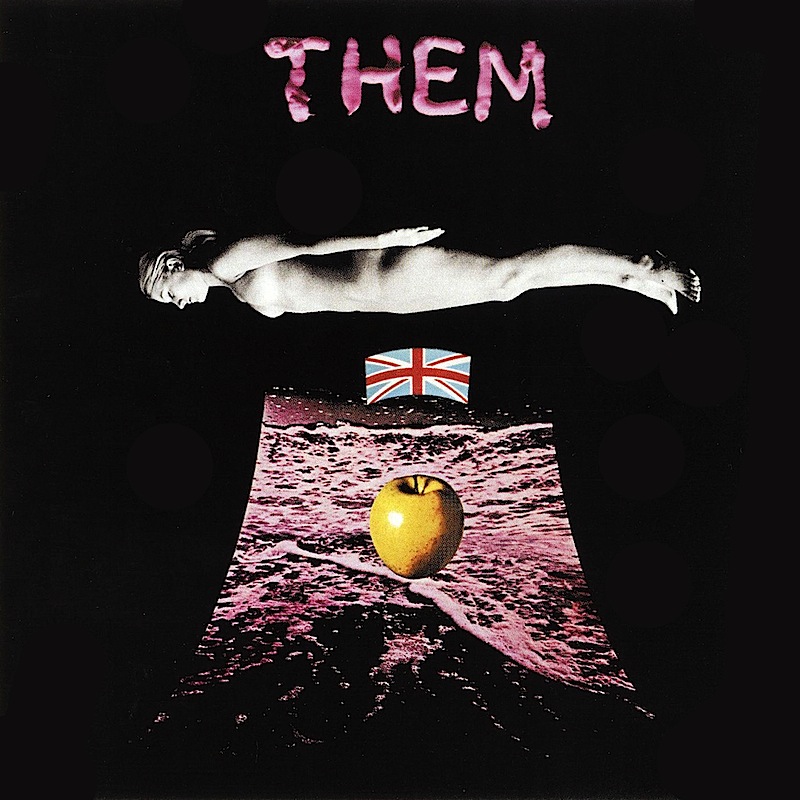
Title: Them
Year: 1970
Format: LP
Label: Happy Tiger
By 1970 Them’s stock was in steep decline. On the personnel front the band had imploded leaving bass player Alan Henderson standing as the lone link to Them’s Belfast roots.
On the business front things were equally unsettled with the band having been dropped by Capitol’s Tower subsidiary, leaving them signed with the small California-based Happy Tiger label (see also “In Reality” March 16, 2011 post.) To his credit, for better or worse Henderson tried to keep the Them nameplate afloat via 1969′s cleverly-titled “Them”.
Produced by Ray Ruff, the album was recorded in L.A. with support from singer/guitarist Jerry Cole (replacing Ken McDowell) and an uncredited drummer. (Ry Cooder reportedly provided guitar on several tracks.) Even though the album sounded like it was recorded in a rush and with very little financing, musically the collection was surprisingly diverse and impressive.
Admittedly, as lead singer Cole was an acquired taste, but his raspy voice (occasionally recalling AC/DC’s Bon Scott – check out his performance on the rocker ‘Jo Ann’), was well suited to the set’s urgent, raw sound. Quite diverse, the track lineup included stabs at country (‘Take A Little Time’), hard rock (‘I Keep Singing’) and the now-requisite psych (‘Memphis Lady’). (Bad Cat)
Track Listing
- I Keep Singing
- Lonely Weekends
- Take A Little Time
- You Got Me Good
- Jo Ann
- Memphis Lady
- In The Midnight Hour
- Nobody Cares
- I Am Waiting
- Just A Little
Gandalf – Gandalf [Vinyl] (1969)
Title: Gandalf
Year: 1969
Format: LP
Label: Capitol
This is one of those collections that rates higher than the sum of my individual track gradings, which I see are obsolete as I write this, so I won’t list them here until I re-listen to this. This is simply superlative late night psychedelia, soft and haunting in it’s nature, but possessing that “something extra” that is so difficult to verbalize.
The music is not particularly flashy, with only limited use of psych effects, and emphasises ballads over harder rock. I met bandleader Peter Sando personally at one of the biggest record shows in the U.S., in Manhattan, NY. My partner and I were manning our table, when a rather well dressed gentleman approached and asked if we happened to have an obscure album by a band named Gandalf.
He was rather surprised when we told him we did indeed have a copy in stock, and handed it to him after digging it out of it’s box. He smiled, and told us how rare it is, noting that this was the first copy he had seen in many years. He then proceeded to turn the record over, and holding the back cover band photo next to his face, asked us “which one do you think I am?”
As major fans of the record, both my partner and I were flabbergasted to discover we were talking with none other than Mr. Sando himself. He went on to tell us how the band were originally from Teaneck, NJ, and had found fertile night club gigging around the Greenwood Lake area near the NY state line.
He told us how their original name was the Rahgoos (of tomato sauce fame), and that the album tapes were sold to Capitol without the bands knowledge or consent, by their manager, and that it was Capitol who gave the band the much hipper name Gandalf, as well as the way cool cover image.
Hearing that we were both Djs on the radio, Sando was quick to stuff copies of his latest CD into our hands for possible airplay. Unfortunately, none of the mat’l even approached the quality of this album. Certainly one of U.S. psychedelia’s flagships, but it may not appeal as strongly to fans of heavy hard rock. (tymshifter RYM)
Track Listing
- Golden Earrings
- Hang On To A Dream
- Never Too Far
- Scarlet Ribbons
- You Upset The Grace Of Living
- Can You Travel In The Dark Alone
- Nature Boy
- Tiffany Rings
- Me About You
- I Watch The Moon
Jacobs Creek – Jacobs Creek (1969)
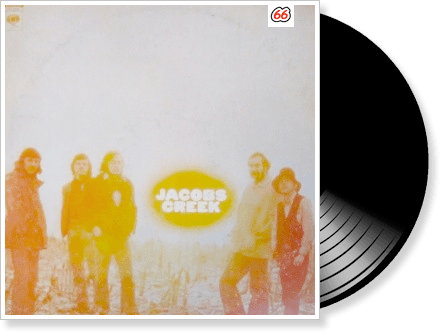
Title: Jacobs Creek
Year: 1969
Format: LP
Label: Columbia
Jacobs Creek consisted of Lon and Derek Van Eaton, Steve Burgh, Tim Case, and Bruce Foster. According to Acid Archives, the album is a “mixed bag of early rural rock, dreamy harmony vocal flower moves and heavier tracks with acid leads and BS & T moves. Cool long eastern track with sitar too. ”
Judging by the sleeve, i always thought this was strictly a rural rock lp, but it’s a pretty diverse album, with more of an early progressive psychedelic feel that features some nice harmonies and an array of instruments including harpsichord, sitar, slide banjo, saxes and keyboards. This album, along with MAN (see March 31, 2010 post) were two of the better releases on the Columbia label in 1969.
Lon and Derek Van Eaton would go on to release an album on Apple Records in 1972 entitled “Brother” (with some involvement from Ringo Starr and George Harrison) and another in 1974 for A&M Records called “Who Do You Out Do”, while Burgh next surfaced playing bass on David Bromberg’s own eponymous debut, beginning a session career that would quickly grow to include dates in support of John Prine, Steve Goodman, and Willie Nelson (1973’s classic Shotgun Willie).
Burgh spent much of the mid-’70s serving as musical director for Phoebe Snow, and in 1977 he contributed guitar to Billy Joel’s breakthrough effort The Stranger, appearing on the Grammy-winning “Just the Way You Are.” (Max Collodie)
Track Listing
1.Colors
2.Anonymous Verdict Suite (Jesus’ Return/Christian Man)
3.Everything’s Gonna Be Alright
4.Coming…The River
5.Do You Understand
6.What’s Around
7.A Love Song
8.Behind The Door
9.What You Hear
10.Lonely Fire
11.The Circle
12.Katharine
Bruce Palmer – The Cycle Is Complete [Vinyl] (1971)
Title: The Cycle Is Complete
Year: 1971
Format: LP
Label: Verve Forecast
Though the LP marked Palmer’s first recorded venture as frontman, he had been in bands since the early 1960s, when he joined the Swinging Doors in Toronto. In the mid-1960s he was in the British Invasion-like combo Jack London & the Sparrows, leaving before the release of their first single to join the Mynah Birds.
Fronted by singer Ricky James Matthews, the Mynah Birds eventually recruited a young Neil Young as guitarist in early 1966. The group got a contract with Motown and cut some unreleased tracks for the label in Detroit. But the sessions came to an end — as did the Mynah Birds — when Matthews was discovered to be AWOL from the American navy.
That was hardly the last to be heard from Matthews, however; he would resurface in the late 1970s as funk superstar Rick James, and long before that would play an unheralded role on Palmer’s solo album. Palmer and Young, in one of rock’s most famous and romantic legends, set off to Los Angeles in Young’s Hearse to try and find Young’s friend Stephen Stills to start a band.
They had no address for Stephen, but against incredible odds they found him when Stills and Richie Furay passed the Hearse going in the opposite direction on Sunset Boulevard in Hollywood. With the addition of drummer Dewey Martin, the musicians formed Buffalo Springfield, one of the greatest bands of the 1960s. Although Palmer didn’t sing or write any of the group’s material, his smoking, innovative bass lines were vital to the band’s power, and his back-to-the-audience stage posture added some enigmatic mystery to the act’s image.
Palmer’s stint in the Springfield, however, was stormy, as was the group’s entire career. He was busted for pot in early 1967 and deported back to Canada for a few months. While he managed to get back into the States and rejoin the band for the last half of ’67, another bust in early ’68 instigated his final exit from the group, to be replaced by Jim Messina.
He was considered for the bass slot in Crosby, Stills, Nash & Young the following year, but rehearsals didn’t pan out, although he does play on two tracks that surfaced on the CSNY box set in the early 1990s. That left him free to record his off-the-wall solo album for MGM.
“MGM approached me, [producer] Don Hall and [MGM executive] Michael Curb, to do an album,” Palmer remembered in John Einarson and Richie Furay’s There’s Something Happening Here: The Story of Buffalo Springfield: For What It’s Worth. “I went in and did a demo for them. It was the first time I had written or sang a song in my life. I wrote it the night before. So I went in, did the song, played several instruments so it sounded like a band, they loved it, signed a contract, and I went in and did two and [a] half hours of instrumental music with Rick James and seven or eight other people.
It was spontaneous music, over two hours long so I had to edit it down to 45 minutes.” James, still going by the name Rick Matthews, added percussion and sings-scats here and there, sounding like a cross between Stephen Stills and Stevie Winwood when he breaks into stream-of-consciousness vocalese on “Oxo.”
The rest of the backing crew included organist Ed Roth; conga player Big Black (aka Danny Ray), a jazzman who’d done a few albums on his own; and four members of the fine folk-rock-psychedelic-world fusion band Kaleidoscope, then in their dying days. Only one of the four, violinist Chester Crill, had been in Kaleidoscope’s first lineup; the others were drummer Paul Lagos, pianist Jeff Kaplan, and flute/oboe player Richard Aplan (aka Richard Aplanalp).
Kaleidoscope had just worked with Hall on the soundtrack to Zabriskie Point, also issued on MGM, on which Hall (a DJ on pioneering Los Angeles FM rock station KPPC) had been music coordinator. As Crill (who played on The Cycle Is Complete under one of his several outrageous pseudonyms, Templeton Parcely) explains, the quartet of Kaleidoscopers had been engaged to work on three projects at the same time.
One was Palmer’s record; one was an even more obscure LP by singer-songwriter Curt Newbury,Half a Month of May Days (on which James/Matthews also appeared, and which Hall also produced); and the other was a solo album by Big Black, which Crill isn’t even sure was released. To Crill’s recollection, “The basic tracks were Bruce, Kaplan, and drums. I think Kaplan kind of helped him chart it all out, ’cause I think it wasn’t everybody playing together. It wasn’t live. Everybody heard those cuts, just with guitar and maybe a little piano, and then they layered it over a couple hours, one at a time.
Everybody got one take. “If Kaplan show[ed] up on a session in those days, it was to try to make some sense out of it, ’cause he was a musicologist type. He would listen to something raw, and could write it up right away and kind of lead people in some kind of a way. It took a long time to get something out of it.”
There were like 900 layers on it. When I left, they had just gotten through doing two entire tracks on two of those really long ones of Aplanalp doing two oboe parts. By then, it was like chocolate mud.” When the album was finished, Palmer added in There’s Something Happening Here: The Story of Buffalo Springfield: For What It’s Worth, “I handed it to them [MGM] and they dropped their drawers. I gave them what I thought music was all about, not what they thought music was all about. That was what I intended to do. They released it and I retired. I had a laugh at the industry’s expense. I did that album and just had enough of the music business. I was seeing my friends turning into beets. Is this what I want to do? Is this what happened to music?”
The record must have sold little upon its release in 1971, judging from how impossible it is to turn up an original, though Lester Bangs did find time to pan it in Rolling Stone as “long, long jams in a kind of limp noodle middling Eastern-Space vein, like a DMT hangover from the psychedelic era.”
His laugh at the industry’s expense complete, Palmer made good on his promise to retire from the music scene, although he did play live with Neil Young briefly in the early 1980s (also appearing on Young’s Trans album), and formed the tribute band Buffalo Springfield Revisited in the mid-1980s. (Richie Unterberger)
Track Listing
- Alpha-Omega-Apocalypse
- Interlude
- Oxo
- Calm Before The Storm