
Odyssey – Odyssey (1969)
Title: Odyssey
Year: 1969
Format: LP
Label: Organic
Very strong garage-acid-blues psych rock and certainly as strong as most similar bands in this vein. Not to disagree with one of my fellow RYM’ers, whose taste and opinions very weirdly run strongly similar to mine, but most of these tracks are really tight and well written. The vocals aren’t the best you will ever hear but they are serviceable and nowhere near the worst I’ve heard.
My biggest disagreement tho’ comes from the poor production statement. To my ears, this sounds like it was recorded and mixed in a major studio instead of the private press it actually was. I have the Lion Records vinyl reissue and the mix-mastering is excellent. The bass and drums are way up front in the mix and crystal clear with none of those muddy qualities that are usually so prevalent on these self made albums. The lead guitarist is above average and when his turn comes, his guitar is right up front stinging and fuzzing.
This album rocks from front to back, with almost every track succeeding. The only misstep for me is the opening cut on side two, “Tied To The Rope”, and this less with the playing than the ahead of it’s time screaming first line of the chorus. Seems out of place and is a bit of a mood disruptor for me. Other than that, this is pretty much all aces. Highly recommended. (heyday2day RYM)
Track Listing
- Angel Dust
- Sally
- Churchyard
- You’re Not There
- Got To Feel It
- Tied By A Rope
- Society’s Child
- Denkys Boogie
- St. Elmos Fire
- Come Back
3s A Crowd – Christopher’s Movie Matinee (1968)
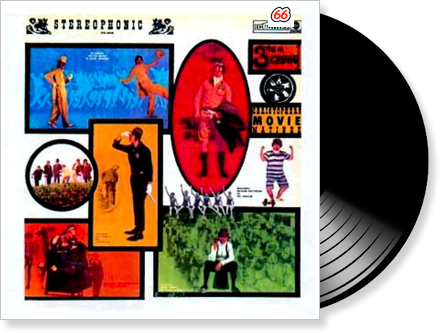
Title: Christopher’s Movie Matinee
Year: 1968
Format: LP
Label: Dunhill
3′s a Crowd was a folk rock band from Vancouver, British Columbia, Canada, that existed from 1964 to 1969. The group is particularly notable for its association with Cass Elliott, who co-produced the group’s sole album release. The album remains one of Elliott’s rare associations as a record producer.
The group was formed in 1964, and was originally called the Bill Schwartz Quartet (though no one named Bill Schwartz was actually in the group.) The group consisted of Donna Warner, Trevor Veitch and Brent Titcomb. In 1966, the group moved to Toronto, released two singles, and acquired new members Richard Patterson, David Wiffen and Comrie Smith. Smith was later replaced by Ken Koblun. In 1967 and 1968, 3′s a Crowd played the folk music clubs in Southern California, including the Ash Grove in West Hollywood and the Ice House in Glendale, sometimes bringing Jim and Jean as an opening act.<
In 1968, they recorded Christopher's Movie Matinee, their only album. The band broke up shortly after its release. The album was produced by Cass Elliot and Steve Barri. Bruce Cockburn, who briefly joined a later version of the group, does not perform on the album, though four of his songs are included. Donna Warner was the primary singer, but other band members, particularly David Wiffen and Brent Titcomb, also sang lead. They did a slow, military rendition of "(Let's) Get Together" by Chet Powers, and had a minor hit with their own song "Bird Without Wings". A signature tune at their concerts was their song "Wasn't It You".
Noted reviewer Richie Unterberger considers the album to be “an average, melt-into-the-crowd pop-folk-rock album, somewhat similar to The Mamas & the Papas and We Five (though closer to the We Five).” He also notes the presence on the record of Ken Koblun, Canadian bass player, associate of Neil Young during his early career and sometime bass player with Buffalo Springfield. Koblun had chosen to join 3′s a Crowd rather than continue with an early version of the Buffalo Springfield.
A related documentary, Christopher’s Movie Matinee, under the sponsorship of the National Film Board of Canada, was released in 1968, using some of the same songs and some of the same musicians. The film is about 1960s Canadian counterculture.
The band reformed briefly in 1969, and appeared on a Canadian variety television program entitled “One More Time”. By this point, however, none of the three original members remained in the group; the lineup consisted of Bruce Cockburn, Richard Patterson, David Wiffen, Colleen Peterson, Sandy Crawley and Dennis Pendrith. Cockburn soon left to pursue his solo career, and the group disbanded permanently in 1969.
Since then, Bruce Cockburn has had significant success as a solo act, as did Colleen Peterson and, for a time, David Wiffen. Sandy Crawley and Brent Titcomb also developed solo careers, while Richard Patterson, Dennis Pendrith and Trevor Veitch continued their careers as accompanists for many years after the breakup of the group. Donna Warner did not continue her music career after her departure from the group
Comrie Smith’s subsequent involvement as a professional musician does not appear to have been documented, although he was quoted extensively by “Mojo” magazine in a feature article about the release of Neil Young’s “Archives” CD boxed set – because Smith had backed Young on some of the early recordings. (Young’s associations with the group create their own fascinating web, what with both Smith and Koblun playing with him in his early days, and Donna Warner having sung with him in Toronto.) (Wikipedia)
Track Listing
- Let’s Get Together
- Coat Of Colors
- The Way She Smiles
- Wasn’t It You
- Gnostic Serenade
- Bird Without Wings
- I Don’t Wanna Drive You Away
- View From Pompous Head
- Don’t Mess Up A Good Thing
- Cotton Candy Man
- Christopher’s Movie Matinee
St. John Green – St. John Green [Mono] (1968)
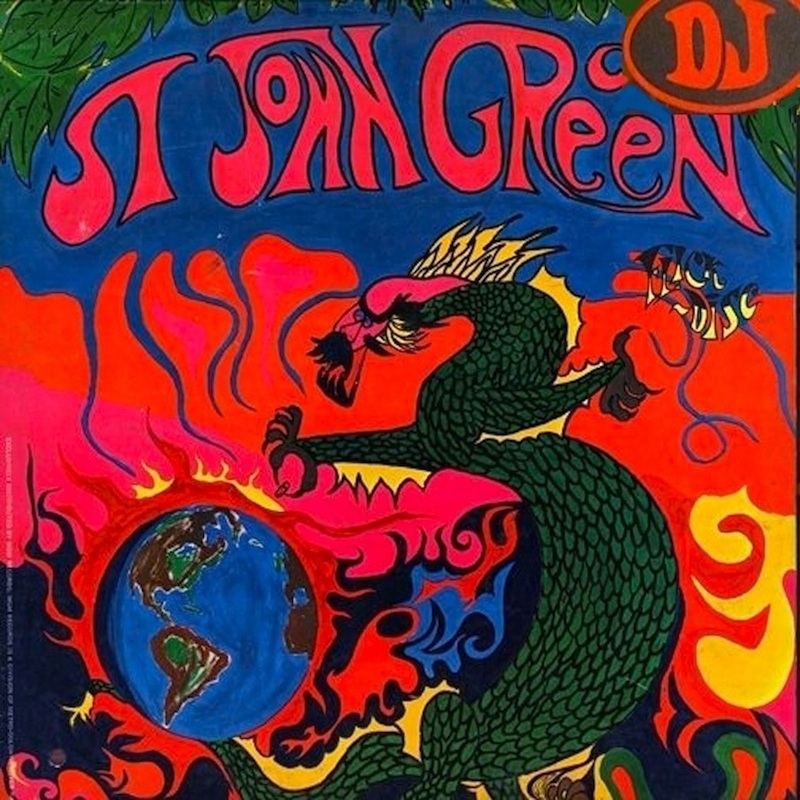
Title: St. John Green
Year: 1968
Format: LP
Label: Flick Disc
St. John Green consisted of Ed Bissot (bass-vocals), Vic Sabino (harmonica-vocals), Bill Kirkland (guitar), Mike Baxter (organ-vocals), and Shel Scott (drums).
Kim Fowley and Michael Lloyd co-produced this psychedelic opus with a “sanctified hippie vibe canyon music” as this Los Angeles area group might have described it; strange songs about the fires of hell and spacemen from Venus alternate with some anti ‘flower power’ songs and stoned sounding jams that show why they were touted by Fowley as the next in-thing they weren’t, of course, but a strong album all the same. (Jack Dominilla)
Track Listing
- 7th Generation Mutation
- Canyon Women
- Devil And The Sea
- Do You Believe
- Help Me Close The Door
- Messages From The Dead
- Goddess Of Death
- St. John Green
- Spirit Of Now
- Love Of Hate
- One Room Cemetary
- Shivers Of Pleasure
The Carolyn Hester Coalition – Magazine (1969)
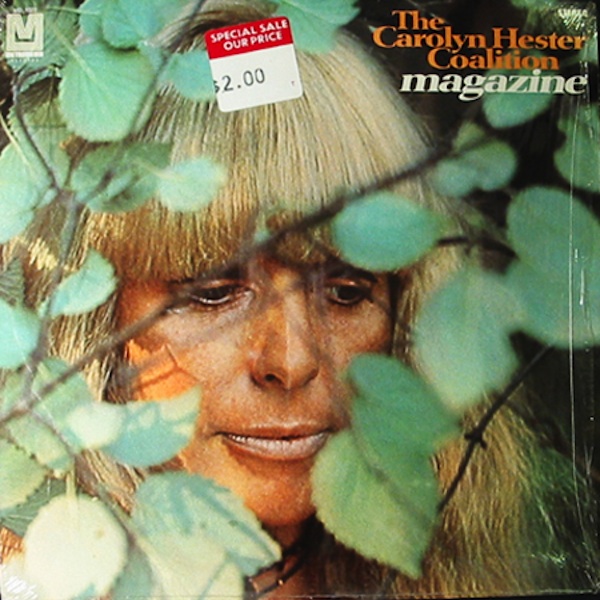
Title: Magazine
Year: 1969
Format: LP
Label: Metromedia
Traditional folk maven Carolyn Hester was an important part of the early-1960s Greenwich Village scene that nurtured Bob Dylan, Judy Collins, and a host of household names. Sticking with traditional songs, rather than writing her own, was her stock in trade. However, as the ‘60s progessed, Hester took a detour into psychedelic-tinged folk-rock with her band the Carolyn Hester Coalition.
Dressed up as she is in studio finery, she still shines most on the traditional and traditional-sounding songs like “St. James Infirmary, ” “The Beadmaker, ” and “Sir Robert the Lost Knight. ” The only real misstep is a rocked-up version of “Swing Low Sweet Chariot, ” but, hey, it was the ‘60s. (Max Collodie)
Track Listing
- Rise Like Phoenix
- Dedicated
- Plant The Crops In The Garden
- Beadmaker
- St. James Infirmary
- Just Follow Me
- (Sitting On The) Dock Of The Bay
- Sir Robert, The Lost Knight
- Calico Sky
- Swing Low Sweet Chariot
The Carolyn Hester Coalition – The Carolyn Hester Coalition (1968)
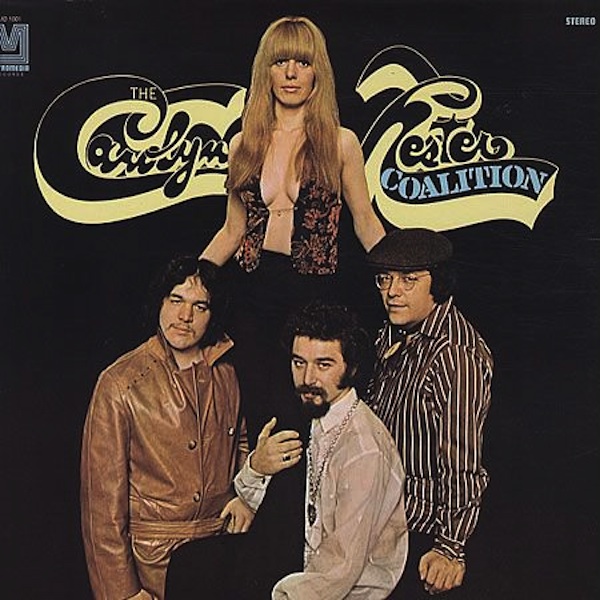
Title: The Carolyn Hester Coalition
Year: 1968
Format: LP
Label: Metromedia
Anyone into Hester’s earlier incarnation as a folk singer is likely to find her decision to turn to a more happenin’/commercial sound disappointing. On the other hand, anyone into this late-1960s psych-oriented effort is liable to find her earlier folk albums trite and dull.
The thought of a folkie turning to psych is probably a major turnoff to many folks. That’s unfortunate since once you get over Hester’s little girl lost voice, 1968’s “The Carolyn Hester Coalition” is surprisingly enjoyable.
With excellent backing from The Coalition (bassist/keyboard player Dave Blume, drummer Skeeter Camera and lead guitarist Steve Wolfe), material such as “Magic Man”, the fuzz guitar propelled “East Virginia” and “Half the World” offered up some excellent psych/rock numbers. Sure, Hester’s folkie roots were occasionally on display (“Tomorrow When I Wake Up”), and on tracks like “Big City Street” she bore an uncomfortable resemblance to Lulu. Luckily, those were the exceptions rather than the rule. Besides, Hester deserved an extra star for the album cover’s revealing blouse. (Bad Cat)
Track Listing
- Magic Man
- East Virginia
- Tomorrow When I Wake Up
- Be Your Baby
- Big City Street
- Half The World
- Let’s Get Together
- Hey, Jay
- Last Night I Had The Strangest Dream
- The Journey
- Buddha (Was Her Best Man)
Saint Steven – Saint Steven (1969)

Title: Saint Steven
Year: 1969
Format: LP
Label: Probe
This is one of the long, lost psych gems that I thought would never ever be reissued! Saint Steven was Steven Cataldo, onetime member of Mystic Soldiers, one of the greatest of all-time psych bands, from Boston. This was one of those records that came out of nowhere, was played on FM radio a bit and then disappeared without a trace. It was ABC/Probe Records, the same label as Soft Machine’s first album. I’ve tried in vain to find out more about this gem, but have never seen anything about it anywhere until now, nearly forty years after it was released in 1969.
Finally, here it is again with two bonus tracks and a lovely booklet explaining some of the mystery. Each side of the album was a suite, “Over the Hills” on side one and “The Bastich” on side two. The cover features “Saint Steven” hugging his guitar floating up in the clouds as the sun radiates around him with a drawing of a sea monster slithering down at the edge of the ocean. No musicians were listed inside, just the producer, engineer and cover design folks. The lyrics were included and are quite poetic with the feeling of dread buried beneath some of the warmer imagery. 1969 was the year when it felt like the positive forces of the sixties were coming to an end. The war in Vietnam and protests worldwide made things feels as if the world would end too soon.
Each of these songs balances the innocent with the darker forces that we all must confront. Saint Steven uses his own mythical figures, “Gladacadova” and “Ay-Aye-Poe-Day”, to add magic and mystery to his little tales. In the middle of “Poor Small”, the song stops and we get an excerpt from one of the Presidential elections in which some old woman is reading the tally of states and hitting a gavel.
The song continues and so does the tally in the background, it still reminds me of sad realities of life that we try to escape from with music. Although the original album was rather short (about 29 minutes), it still worked as one entire piece, amazing from the beginning to the end. I can’t compare it to any other bands, because it doesn’t really sound like anyone else, although I do hear a bit of Spirit in some of those hypnotic sustained guitar parts.” (Bruce Lee Gallanter)
Track Listing
- Over The Hills I
- Animal Hall
- Gladacadova
- Poor Small
- Ay-Aye-Poe-Day
- Grey Skies
- Over The Hills II
- Bastich I
- Voyage To Cleveland
- Sun In The Flame
- Bright Lights
- Louisiana Home
- Bastich II
The Tiffany Shade – The Tiffany Shade [Vinyl] (1968)

Title: The Tiffany Shade
Year: 1968
Format: LP
Label: Mainstream
Tiffany Shade was an American psychedelic rock band formed in 1966 in Cleveland, Ohio. They broke up 1968. They recorded and released one self-titled LP and two singles from the same album on the Mainstream label in 1968 prior to their demise.
Tiffany Shade was formed by keyboardist Bob Leonard (b. May 27, 1945), Folk Guitarist/vocalist Mike Barnes (b. May 21, 1948), 12-string guitarist/vocalist Barrow Davidian (deceased), bassist Rick Hohn, later replaced by bassist Robb Clarke-Murphy (b. September 26, 1944) and drummer Tom Schuster (b. February 1, 1949).
The group recorded one album and two singles for Jazz Producer Bob Shad’s Mainstream label. (US LP Release info: Mainstream S/T 56015, Stereo S/6105. UK LP release info: Fontana TL 5469). Both the US and UK platters were released in 1968. The Mainstream label also issues two Singles: “Would You Take My Mind Out For a Walk” / “One Good Reason” released as Mainstream 677 in 1968 & “An Older Man”/ “Sam” released as Mainstream 680 also released in 1968).
Shads’ Mainstream label was home to many other psychedelic bands in the late ’60′s including Janis Joplin’s first band Big Brother and the Holding Company(Mainstream S/6099 released in 1967), The Tangerine Zoo (Mainstream S/6107), Ellie Pop (Mainstream S/6115), The Superfine Dandelion (Mainstream S/6102), The Growing Concern (Mainstream S/6108) and most notably The Amboy Dukes.
On March 2, 1968, Tiffany Shade appeared at the Grande Ballroom in Detroit on the same bill as Big Brother and the Holding Company, the MC5 and the Pink Peech Mob. They also appeared at the Grande Ballroom again on April 5, 1968 along with The Troggs and the MC5. After Tiffany Shade album’s release, the band made numerous appearances in their hometown of Cleveland, Ohio and at the Sugarbush ski resort in Warren, Vermont before disbanding in late 1968. (Wikipedia)
Track Listing
- Would You Take My Mind Out For A Walk
- An Older Man
- Sam
- Jaguar City Blues
- A Very Grand Love
- Softly To Me
- No Reality
- One Good Reason
- A Quiet Revolution
- Not Worth The Pain
Maximillian – Maximillian (1969)

Title: Maximillian
Year: 1969
Format: LP
Label: ABC
Right off the bat you had to wonder about any band that was willing to allow megalomaniac liner notes such as: “And it came to pass in the year 1969 that Golgotha music was one of the few surviving vestiges of truth. It’s prophets of love and truth such as B.B. King, Bob Dylan, Donovan, Aretha Franklin, Arlo Guthrie, Joan Baez and others, sang the psalms of the time.
The crucifixion of the social heroes of the day, such as Dr. Mar Luther King Jr. President John F. Kennedy, Malcolm X, and Senator Robert F. Kennedy, had made even bigger demands on the importance and value of music, thus creating new prophets of lone and truth. Behold: Maximillian!”
So Maximillian was a New York-based African-American hard rock/psych trio, featuring the talents of singer Buzzy Bowzer (aka Maximillian), lead guitarist Mojack Maximillian, and bassist Moby Medina (aka Moby Maximillian). (okay the bassist was Puerto Rican.) The band somehow attracted the attention of producer/writer Teddy Vann who helped them score a contract with ABC. The result was 1969′s Vann produced “Maximillian”. With Bowzer writing most of the eight tracks, the resulting album was surprisingly unaccomplished. So where to start? Bowzer’s voice wasn’t particularly impressive.
Bellowing and frequently shrill, at least to my ears his performances evoked Jagger at his worst, or perhaps Eric Burdon at his most wasted. Bowzer had two singing styles – loud and louder. Forget the concept of subtlety on this one. Musically tracks like ‘Scar On My Memory’, ‘The Road Rat’ and ‘The Name of the Game’ offered up a weird mixture of grunge, heavy metal, and psych that managed to be discordant and irritating. Lead guitarist Mojack was certainly talented, but seemed trapped worshipping at the alter of Jimi Hendrix.
It frequently sounded like a series of stoned jam sessions that had gone terribly askew with each member apparently playing a different tune with orders to crank it up as loud as possible. Vann also added to the album’s irritating qualities by giving the collection a harsh, metallic edge. It literally sounded like they’d recorded some of these tracks in a bathroom stall.
You really are left to wonder how these guys got a recording contract with ABC, especially since the label was on a streak at that point in time having signed some truly impressive, if little known acts like Graffiti, Puzzle, Silk, etc. I’ll leave it at that . (RDTEN! RYM)
Track Listing
- Naked Ape
- Kickin’ 9 To 5
- Scar On My Memory
- The Road Rat
- Little Amazon
- The Name Of The Game
- New Lover
- Moby’s House
The Fraternity Of Man – The Fraternity Of Man (1968)
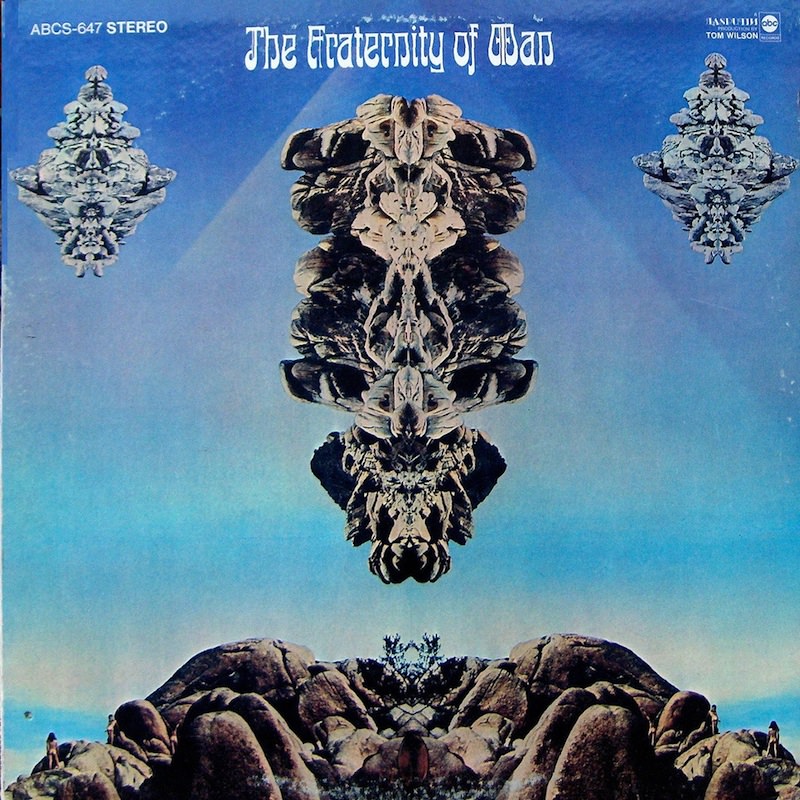
Title: The Fraternity Of Man
Year: 1968
Format: LP
Label: ABC
Fraternity Of Man is the band that forms the link between Frank Zappa & The Mothers, Lowell George & The Factory, Little Feat, and Captain Beefheart & His Magic Band. In his short period of existence between these ancestors, relatives and descendants, the band managed to record two albums, “Fraternity Of Man” in 1968, and “Get It On” in 1969, before fragmenting.
Elliot Ingber had joined the fifth line-up of the Mothers in time to participate in the recording of their first album “Freak Out!” in August 1966, the landmark double album produced by Tom Wilson. According to Zappa, he had to fire Ingber at the end of 1966, and in the course of 1967 the guitarist linked up with Warren Klein, Martin Kibbee and Richard Hayward, who had been three quarters of The Factory.
Along with fourth member Lowell George, The Factory had been recording (with Zappa producing) in the latter half of 1966 and early 1967 (see the Edsel Records CD by Lowell George & The Factory “Lightning Rod Man” – edcd 377). With the inclusion of Lawrence “Stash” Wagner (rather than George) on lead vocals, Fraternity Of Man set about their first album with Tom Wilson in the producer’s chair.
“Fraternity Of Man” was released on Abc Records in 1968 and featured a cover of “Oh No I Don’t Believe Tt” by Zappa (which he had yet to release himself), and “Don’t Bogart Me” which was subsequently featured in the film “Easy Rider” and its huge-selling soundtrack album, issued in 1969. (United Mutations)
Track Listing
- In The Morning
- Plastic Rat
- Don’t Bogart Me
- Stop Me, Citate Me
- Bikini Baby
- Oh No I Don’t Believe It
- Wispy Paisley Skies
- Field Day
- Just Doin’ Our Job
- Blue Guitar
- Last Call For Alcohol
- Candy Striped Lion’s Tails
Modality Stew – Modality Stew (1978)

Title: Modality Stew
Year: 1978
Format: LP
Label: UMP
Guitarist Sid Brown’s first brush with popular recognition came as a member of Detroit’s The Spike Drivers. Following the group’s mid-1960s breakup Brown followed half of the country to Berkeley, California where he remained active in music, as well as writing a yoga column for the Bezerkly Tribe.
By the mid-1970s Brown was living in Vancouver, Washington where he continued to write and record material. I’ll let the liner notes to 1978’s “Modality Stew” pick up the story: “The creation of a spontaneous and purposely under-produced album free of technologic overkill and deified gadgetry began in Spring, 1978. For more than a year I had been involved in a mostly unsatisfactory, negative and painful recording project. For me it was a year of alienation, loneliness and a gnawing-knowing stress.
As a disabled and dissapated (sic) rock n’ roll veteran, it was painfully reminiscent of the not-too-goof-old-days of working for a major label recording company, a cynical manager and jaded producers: a nightmare of exploitation and greed. The depression of repeating history as I guilt-tripped myself into signing an oppressive recording contract lifted as I flew to Athens. Floating in a transcontinental limbo I felt bewitched, bothers and bewildered. Escaping, arriving, still hauling lots of psychic baggage, I did almost all of my site seeing within … One infinitely long day, lost and abandoned on a resin-wooded mountainside in Crete, halfway around the world I knew where to be and what to do. Spring spoke: “Plant! Grow! Cultivate life!”
Returning home to the land of moist ferns towering evergreens and comforting comfrey bushes, the music was happily created and taped within a month. May you enjoy the music. May it warm, heal, stimulate and move you.”
So that should have pretty much primed you for the fact this isn’t going to be a set of Spike Drivers-styled folk rock. Instead, what you get is a largely acoustic and instrumental slice of new age feel-goodness. Mind you, this has to be one of the first entries in what was to become a mega selling nitch market and Brown certainly deserves considerable credit for coming up with some interesting genre hybrids including ‘Banjo Strange-O’ which offered up an unlikely mix of bluegrass and raga.
I’ll also be upfront and tell you that the laidback groove on tracks like ‘D-Sense/Descents’ and ‘Immamj’ makes this a perfect Sunday morning album, but by the same token this isn’t the most exciting collection you’ve ever put on your turntable so you probably won’t spin it at your next New Year’s celebration. Personal favorites include the neat East-meets-West instrumental ‘Ragu Improvisation’, Brown’s straight-ahead bluegrass ditty ‘Shady Grove’ (the pro-ecology message is both catchy and balanced) and ‘Sutra Blues’ which features some wild Yoko Ono-on-acid ‘gamak’ vocals from former Spike Driver Mary Carol Brown. (Bad Cat
Track Listing
- Karmic Strip
- Sense-Descents
- Banjo-Strange-O
- Ragu Improvisation
- Shady Grove
- Immahj
- I-Nis-Kim
- Sutra Blues