
The Bonniwell Music Machine – The Bonniwell Music Machine [Original Vinyl Version] (1967)
Title: The Bonniwell Music Machine
Year: 1967
Format: LP
Label: Warner Brothers
Fans of garage and psych are probably familiar with this LA band of Talk Talk fame. Sean Bonniwell and the Music Machine released two records and a plethora of quality outtakes and are sadly remembered, if at all, for their sole hit record, Talk Talk.
The Music Machine covered themselves in black and played a grinding, relentless form of experimental garage rock.
Their music was full of tension and uneasiness, and many consider Bonniwell a tortured genuis.
Sean Bonniwell is really one of the grandfathers of punk rock. Rock critics and fans alike often forget how good the original band was. Talk Talk’s follow up was the brilliant People In Me which barely dented the charts and in early 66 Bonniwell unleashed Point of No Return, a track with a swirling mass of organ and futuristic blasts of guitar.
The Bonniwell Music Machine album above was recorded mostly with the original lineup who had recorded the 1966 debut. That debut was sabotaged, managers and producers forced Bonniwell to fill half the record with cover versions of current popular hits. Stellar originals battled it out with covers of Neil Diamonds’ Cherry Cherry and a respectable gutsy stab at Hey Joe. Their second album was released in 1967 and was a small victory for a band who had fought for absolute creative control. The recording sessions were tension fueled wars between management, Bonniwell, and the band. Eventually, the band left Bonniwell, feeling that he sided with management and ruled with an iron fist. Bonniwell Music Machine saw the band forge ahead and move beyond their garage roots.
The most popular song off the album, Double Yellow Line, was a real flame thrower, supposedly written while Sean was behind the wheel driving to the recording sessions! It was a unique statement that featured Bonniwell’s rants and hangups over some razor sharp guitars, a killer beat and strange fish bowl-like organ. Talk Me Down, Bottom of the Soul and the Eagle Never Hunts the Fly were just as vital and displayed Bonniwell’s alienation in spades. The Eagle Hunts was a monstrous, intense rocker with a wonderful fuzz meltdown that was supposedly disowned by the band during the recording sessions. Other strange pop songs like the psychedelic harpsichord-laden, harmony-rich Trap were a welcomed change in direction. Absolutely Positively was a fantastic fist pounding garage-punk anthem and Discrepancy was notable for two distinct vocalizations.
It’s always great to see a garage band enter the studio stoked about the possibilities of recording and come out creating their acid punk masterpiece. Bonniwell was definitely a rock star in his own mind, making this record their definitive statement. In 1969 Bonniwell would take a drastic left turn and release Close (see August 24, 2009 post), a solo album of crooner pop that showed little signs of the Music Machine’s past glories. (The Rising Storm)
Track Listing
- Astrologically Incompatible
- Double Yellow Line
- The Day Today
- Absolutely Positively
- Somethin Hurtin On Me
- The Trap
- Soul Love
- Bottom Of The Soul
- Talk Me Down
- The Eagle Never Hunts The Fly
- I’ve Loved You
- Affirmative No
- Discrepancy
- Me, Myself, And I
Disclaimer: The link below may point to content that is copyrighted. redtelephone66 only provides this link with the understanding that you are responsible for the content you download. redtelephone66 does not engage in music piracy, nor do we do host, fileshare, or otherwise trade in copyrighted works.

Hackamore Brick – One Kiss Leads To Another (1970)
Title: One Kiss Leads To Another
Year: Year
Format: LP
Label: Kama Sutra
Hackamore Brick are one of the great missing links in the late-’60s New York music scene. In some circles, the Brooklyn-spawned quartet is considered notable as the first band known to cite the Velvet Underground as a source of inspiration; all four members were part of the Velvet Underground Appreciation Society and one can, indeed, hear their influence throughout the music on Hackamore Brick’s album, One Kiss Leads to Another, cut for Buddah Records’ Kama Sutra imprint, no less.
Lou Reed’s singing style is in evidence throughout Chick Newman’s flat intonation, but other attributes here range further, eerily anticipating the minimalist charm of Jonathan Richman, while some of the material, such as the Bob Roman/Tommy Moonlight-authored “Peace Has Come,” makes one think of an embryonic Television. There was a lot of talent there and some good instincts about what to do with it, at least as a starting point. Not even the revived Buddha imprint had the courage or enough interest to reissue the album.
As for the band, they did elicit some interest at the time — the record was well-reviewed by the rock press of the time, and Hackamore Brick played a week at the Bitter End in Greenwich Village and seven weeks in St. Thomas in the Virgin Islands — in addition to their originals, their shows encompassed renditions of Chuck Berry, Leiber & Stoller, and Curtis Mayfield songs, and pop standards going back to “I’m in the Mood for Love”.”
They played around New York for a time and issued “Searchin’” as a 45, but a proposed second album never got recorded, reportedly over a disagreements about where to cut it, which led to the single’s being canceled. The group split up not long after that — Chick Newman and Tommy Moonlight stayed in the business, and played such celebrated venues as CBGBs, Max’s Kansas City, and Folk City, and even cut a whole album of material together in Austin, TX in the mid-’80s.
Finally, after a false start in 2003, Moonlight and Newman got together for a second bite at the apple as Hackamore Brick in 2008, recording the first new sides under that name in about 38 years. The six-song CD showed up in 2009, not long after their Kama Sutra debut showed up on CD. And follow-up recordings for 2009 were reportedly in the works, as of the summer of that year. ~ Bruce Eder, All Music Guide
Track Listing
- Reachin’
- Oh! Those Sweet Bananas
- I Watched You Rhumba
- Radio
- Peace Has Come
- Got A Gal Named Wilma
- I Won’t Be Around
- And I Wonder
- Someone You Know
- Zip Gun Woman
- Searchin’ [bonus 45 non lp]
Disclaimer: The link below may point to content that is copyrighted. redtelephone66 only provides this link with the understanding that you are responsible for the content you download. redtelephone66 does not engage in music piracy, nor do we do host, fileshare, or otherwise trade in copyrighted works.
Kennelmus – Folkstone Prism (1971)
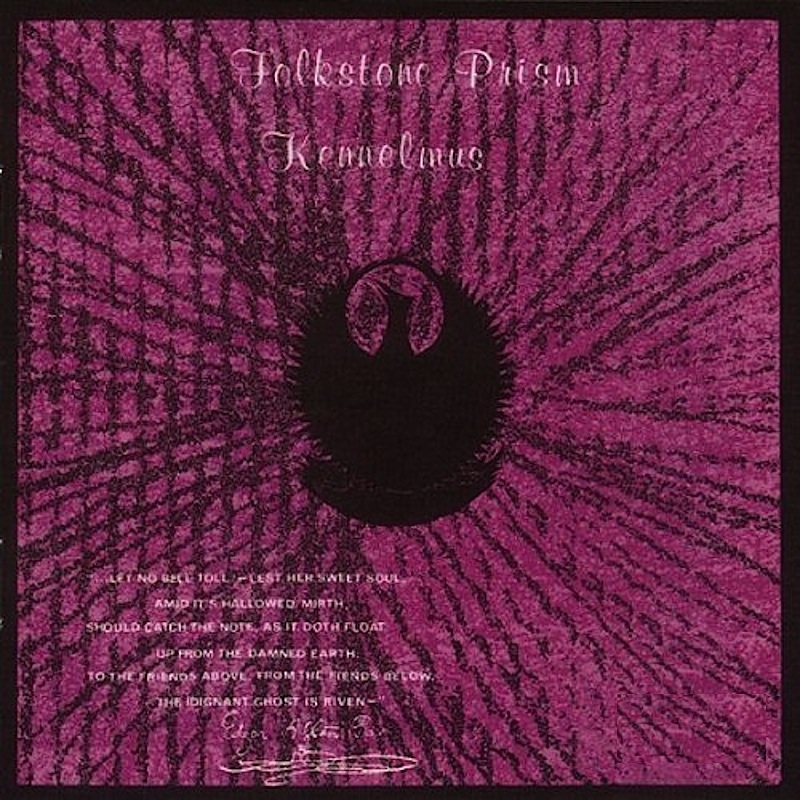
Title: Folkstone Prism
Year: 1971
Format: LP
Label: Phoenix International
In the early 1970s, Kennelmus was Arizona’s only psychedelic surf band. Their lone debut album is one of the true rarities of pyschedelia and is presented in its original form, sans any remixes or extra tracks.
The music, just as heralded as the album is rare, is an oddball head on collision of the Chantays, Quicksilver Messenger Service, Lee Hazlewood and Ennio Morricone & the Electric Prunes all rolled up into one gigantic head rush.
Listing individual tracks is almost senseless as the album was conceived as one long piece of continuous music, but selections like “I Don’t Know,” “Dancing Doris,” “Shapes of Sleep” and the closing “The Raven” have a hypnotic pull all their own. A true visionary piece or late psychedelic noodling, you be the judge, but definitely a band with a sound and a style all their own. (Cub Koda)
Track Listing
- I Don’t Know
- Patti’s Dream
- Dancing Doris
- Goodbye Pamela Ann
- Black Sunshine
- Think For Yourself
- The Bug The Goat & The Hearse
- Shapes Of Sleep
- Cloud Of Lead
- Mother Of My Children
- 1001 Twice
- Sylvan Shores
- Monologue
- The Raven
- Bulletin !!!
The Rabble – The Rabble (1968)
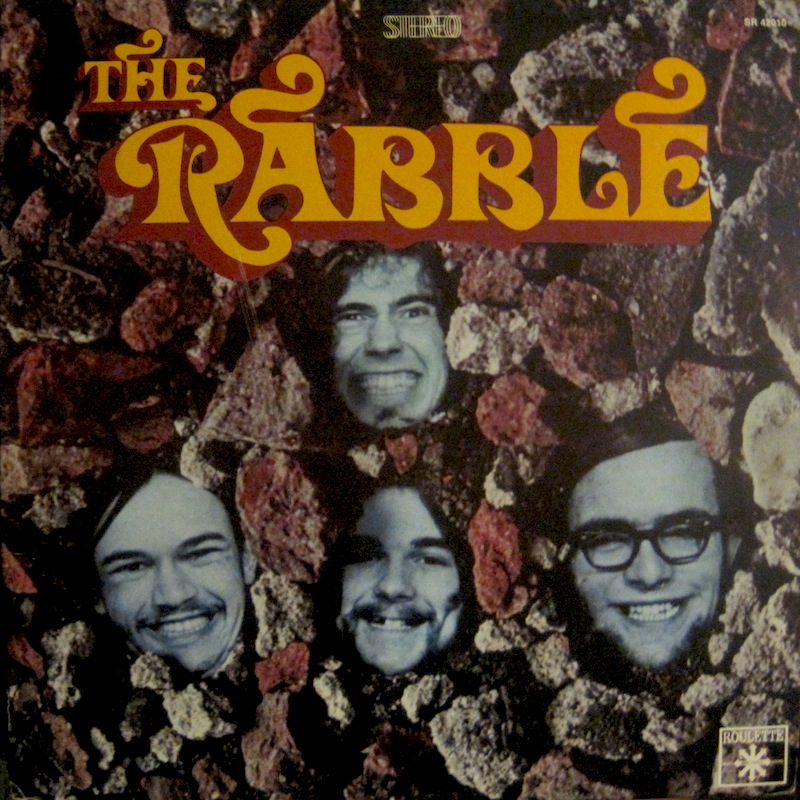
Title: The Rabble
Year: 1968
Format: LP
Label: Roulette
Formed in 1965, The Rabble were a psychedelic/garage act that hailed, originally from Pointe-Claire, Quebec on Montreal’s west island.
Their first single was the Mike Harris written “I’m Alaboundy Bam” released in 1966.
With no substantial support from RCA, and a failing debut single, the band recorded their next single, “Golden Girl”, in December 1966 which saw release in the summer of 1967 on Trans-World Records. Wynne replaced Brian Roberts in The Haunted. In turn, Roberts joined the Rabble.
Prior to the band’s self-titled debut album being recorded and released in 1967 on Trans-World Records, founding member and co-writer Rick Metcalfe left the group. The album was produced by CFOX (Pointe-Claire) radio personality Dean Hagopian.
On May 22, 1967 the band performed with The Isabella Blues Band, Leonard Cohen, and Buffy Sainte-Marie at the Queen’s Park “Love In” in Toronto which was attended by nearly 4,000 people.
Drummer Roberts was replaced by Teddy McMahon. The Rabble performed at Expo ’67′s Garden Of The Stars Pavilion.
The band’s follow-up effort, ‘Give Us Back Elaine’, was recorded through the end of 1967 into early 1968 and released in 1968 on Trans-World. By this time the band had played The New Penelope Coffee House and throughout Greater Montreal, Quebec City, Ottawa, Toronto, Kingston, as well as touring northern Ontario. In April of 1968 The Rabble substituted for Cream, who had canceled at the last minute, at The Paul Sauve Arena in Montreal to 5,000 fans. Despite the band’s unrehearsed show, they impressed the crowd with an hour-long set of songs consisting of their singles and album material.
Following this impressive show, promoter Donald K. Donald had to turn down engagements on their behalf because they were already booked on a tour of one-niters throughout Quebec and Ontario.
They soon secured a recording deal with Roulette Records in the US and toured California in 1968 to ‘underground’ music fans.
In May of 1968 the band was double-billed with the Guess Who in a ‘Wildest Pair’ tour at places such as the Loyola Arena and the Dorval Recreation Association. The group lasted through 1970 having released a final single on the Aquarius label.
Rick Metcalfe formed a band called Aeon with Al Birmingham in 1976; Pimm moved to Toronto and worked with Lighthouse’s Bob McBride and then Deja Vu and John Moran. He also did studio session work as guitarist. With a relocation to British Columbia, Pimm has been producing music at Canadian Concept Studios in Victoria, BC., and has played in Hawaii (5 times), Bangkok, Palm Springs, CA. He has recorded two Jazz instrumental albums and is working on a third one; David Wynne now works in Singapore. (Canadian Pop Encyclopedia)
Track Listing
- I Can Still Hear Them Laughing
- Black Potatoe
- Nothin’ But
- Rising Of The Sun
- The Crushing Hand Of Mother
- Golden Girl
- We’ll Bring You Flowers
- Can I Squeeze
- The Energy Ritual: I. House Of Cards II. What? III. Collapse Of The Sugar Plum Fairies IV. Genesis
- You Come On Too Strong [bonus single mono]
V.A. – West Coast Love-In (1967)
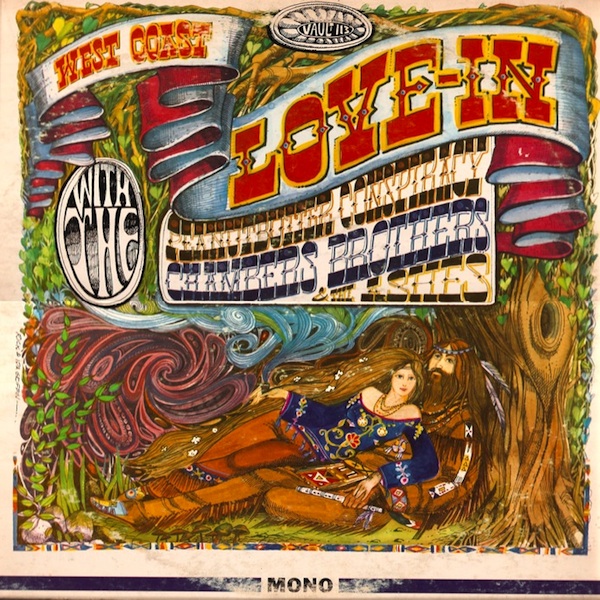
Title: West Coast Love-In
Year: 1967
Format: LP
Label: Vault
This compilation released by Vault Records in 1967 includes tracks recorded by the Peanut Butter Conspiracy prior to their signing to Columbia. It also includes tracks by The Ashes who included a number of musicians who went on to form the Peanut Butter Conspiracy.
The album is rounded out by four songs by the Chambers Brothers, who also signed to Columbia after their stint on Vault. (Jack Dominilla)
Track Listing
- Time Is After You [The Peanut Butter Conspiracy]
- One-Nine-Six-Seven [The Peanut Butter Conspiracy]
- Big Bummer [The Peanut Butter Conspiracy]
- Floating Dream [The Peanut Butter Conspiracy]
- Every Little Prayer [The Ashes]
- Is There Anything I Can Do [The Ashes]
- Dark On You Now [The Ashes]
- Roses Gone [The Ashes]
- (She Don’t Want To) Tie Me Down [The Chambers Brothers]
- Don’t Lose Your Cool [The Chambers Brothers]
- Girls, We Love You [The Chambers Brothers]
- There She Goes [The Chambers Brothers]
Arthur Lee Harper – Love Is The Revolution (1969)
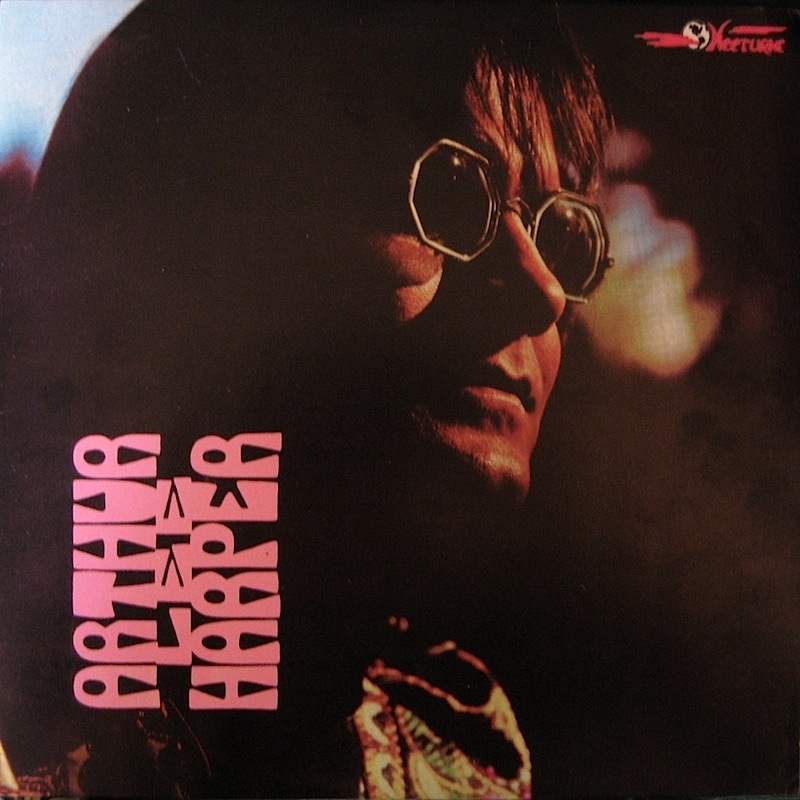
Title: Love Is The Revolution
Year: 1969
Format: LP
Label: Nocturne
In a move guaranteed to cause perpetual confusion among discographers and ’60s collectors, singer/songwriter Arthur Lee Harper billed himself simply as Arthur (no last name) on his first album, 1968′s Dreams and Images, and then as Arthur Lee Harper on his second and last, 1969′s Love Is the Revolution.
It’s the same guy who did both records, and he most assuredly has no connection with the famous Arthur Lee who led the group Love. Arthur, or Arthur Lee Harper, was as mild-mannered a folk-rock singer/songwriter as there was in the late ’60s, singing sad songs that emanated fearful uncertainty, as well as slight airs of self-pity and disengagement. His thin voice was so high it almost moved into a range associated with woman singers rather than male ones; if you’re looking for a reference point from the period who’s almost as obscure, there’s Bert Sommer, who had a similarly nearly girlish voice.
In some respects the records were much lower-volume, folkier variants of the orchestrated Baroque pop of the early Bee Gees, though of not nearly the same quality, with a reticence that made the late-’60s Bee Gees sound gutsy and forceful. Dreams and Images got at least a little distribution, as it was on Lee Hazlewood’s LHI label, but Love Is the Revolution got even less of a hearing, as it was privately pressed. The albums weren’t very good, but they were combined on a single-CD reissue in 2002 on the Papa’s Choice label. (Richie Unterberger All Music Guide)
Track Listing
- New Day
- Light Up Your Man
- Flowers After Childhood
- Strange Song
- Hymn
- Annie Moore
- I/Soldier/Time Love
- Songwriter Crusader
- Eleanor
- My Woman
Sum Pear – Sum Pear (1971)
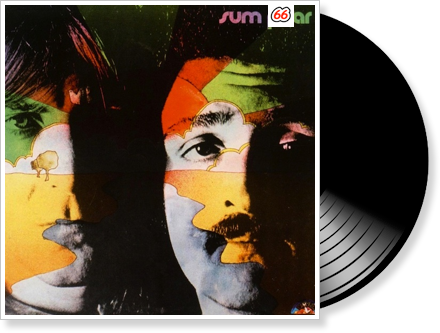
Title: Sum Pear
Year: 1971
Format: LP
Label: Euphoria
A Long Island New York-based (?) duo consisting of guitarist/keyboard player Sonny Hahn and singer/keyboard player Doug Miller, this is an outfit I don’t know much about, nor have I ever been able to dig up much on the pair.
Released by the small Euphoria label (apparently a short lived Jubilee offshoot), their sole release 1971′s “Sum Pear” was well worth looking for (though it’s relative rare and increasingly costly – I’ve seen two original copies in twenty years).
Produced by Bob Gallo, the set offered up a great mix of psych-influenced rockers (‘Better Get Down’), straight ahead rock (‘Bring Me Home America’), and more conventional folk rock (‘I Can See’). Miller had a nifty voice and Hahn’s penchant for feedback drenched guitar (check out the blazing ‘Got Me Tragedy’), were both strong selling points. Some interesting lyrics (yes I actually occasionally actually listen to the words) and the presence of a full backing band with a kick ass rhythm section in the form of bass player Bob Dorsa and drummer John Scaduto certainly didn’t hurt the proceedings.
With the pair writing virtually all of the material (a killer cover of Mickey Newbury’s ‘Down On Saturday’ being the lone non-original), highlights included ‘Hey Sun’, the wah-wah guitar propelled ‘What’s So Bad About Feelin’ Good’, the hyper-speed ‘I Need Lovin’”‘ and the horn-propelled ‘Thoughts of Slumber’. While it may not have been the year’s most original offering, the results were consistently entertaining making it one of those rare albums I’ve actually bothered to transfer to CD-R and my iPod. (Bad Cat)
Track Listing
- What’s So Bad About Feelin’ Good
- Better Get Down
- Save The Children
- Hey Sun
- Thoughts Of Slumber
- Bring Me Home America
- I Need Lovin’
- Down On Saturday
- I Can See
- Got Me Tragedy
- On My Way/Forget Yesterday Medley
Disclaimer: The link below may point to content that is copyrighted. redtelephone66 only provides this link with the understanding that you are responsible for the content you download. redtelephone66 does not engage in music piracy, nor do we do host, fileshare, or otherwise trade in copyrighted works.
Research 1-6-12 – In Research (1968)
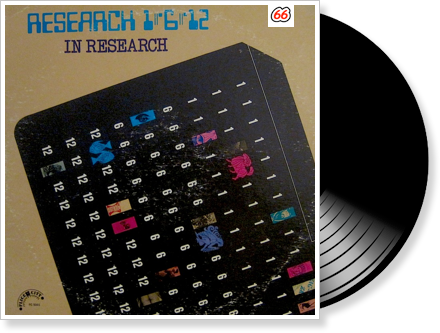
Title: In Research
Year: 1968
Format: LP
Label: Flick City
Welcome to the world of Research 1 6 12. This elusive record has long been a staple of psychedelia collector want lists and for good reason. At its best, Research 1 6 12’s In Research is moody psych cut with Them like guitar fuzz and smart ass pranks.
According to the Rabbi Morrie Yess, who played guitar in the band, Research 1 6 12 formed as the result of a gig in an Oxnard, California bowling alley. Somehow they made their way to Flick City, the record label of David Rollnick, who clawed his way into the music biz by managing the Cleftones. They recorded this one album which “aired on 75 FM stations across America” and promptly broke up. Rabbi Yess asumes that “sales were rather weak” and states that none of the band received any royalties from the record.
After the band broke up, Yess went to the “Holy Land…and studied Torah for about 7 years in a Rabbi College. been uninvolved with rock since 1978.” Dick Bozzi went into radio, pioneered the oldies/classic rock format, headed a major label subsidiary specializing in bringing back classic rock acts, and was last seen helping Kansas revive their career. Don Burns, “born in the backwoods of Tennessee” (according to the liner notes), disappeared, perhaps to back to the woods? Rabbi Yess mentions the “other two band members” besides Bozzi and him. So perhaps there is a fourth uncredited member. I don’t know. This is all the information I could get out of the Rabbi. (Max Collodie)
Track Listing
- Can You Baby
- Highway Song
- Pale Rose Gray
- The Grass Is Greener
- Juicy
- John
- Lip Smackin’ Good
- Omar
- The Feeling
- Lookin’ In The Toaster
- I Don’t Walk There No More
Disclaimer: The link below may point to content that is copyrighted. redtelephone66 only provides this link with the understanding that you are responsible for the content you download. redtelephone66 does not engage in music piracy, nor do we do host, fileshare, or otherwise trade in copyrighted works.
Bold – Bold (1969)
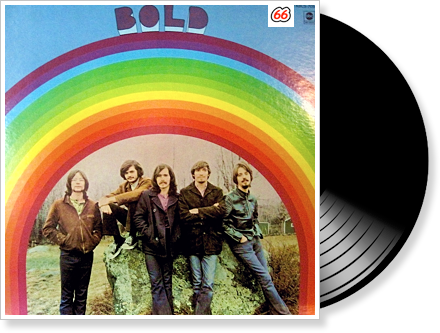
Title: Bold
Year: Year
Format: LP
Label: ABC
Hailing from the Pioneer Valley in Western Massachussetts, The Bold trace their beginnings back to the mid-1960s when band members met while attending the Umass in Amherst. As The Esquires, the group recorded a single in 1965 for the Salem label (‘Shake a Tail Feather’ b/w ‘Down the Track’). As ‘Steve Walker & the Bold’ the group recorded and released a 1966 single on Cameo (‘Gotta Get Some’ [song included on the Pebbles comilation] b/w ‘Robin Hood’). That was followed by a 1967 release for Dynovoice (‘Train Kept a-Rollin” b/w ‘I Found What I Was Looking For’. They also recorded and released an LP album on ABC records in 1969.
They were the house band at the Playboy Club in NYC in 1968 where they played 7 nights a week (and jam sessions on Sunday afternoon to boot!) for a full year. It is during this time that guitarist Bob La Palm is said to have met and taught Joe Walsh (then of The James Gang his techniques for using the echoplex effect on guitar (as is so elegantly exemplified in The Bold’s track “Free Fugue”, from the ABC album).
It is interesting to also note, perhaps uncoincidentally, that producer Bill Szymczyk (who later went on to produce Joe Walsh’s other band, The Eagles) took an interest in The Bold during this time period and went on to produce their only full length LP, titled “Bold”, on ABC records.
After The Bold broke up, Bob La Palm then joined Connecticut’s premier band,The Wildweeds (featuring Al Anderson of NRBQ fame) for a short time towards the end of that band’s career, and he is known to have played on at least one recording session with them, as well as numerous gigs. (last .fm)
Track Listing
Lullaby Opus Four
All I Really Want To Do
Friendly Smile
Changing Seasons
Factory [Version 3]
Crystal Chambers
Free Fugue
Child Of Love
For What It’s Worth
It’s All Over Now, Baby Blue
Words Don’t Make It
The Good Rats – The Good Rats (1969)
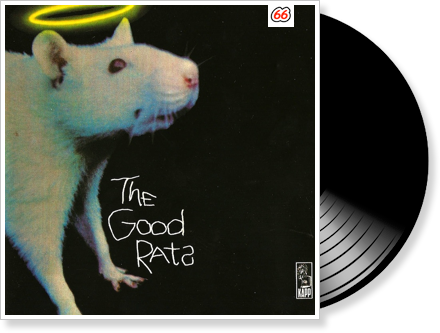
Title: The Good Rats
Year: 1969
Format: LP
Label: Kapp
While countless rockers started their careers in the New York suburb of Long Island before going on to worldwide success (Billy Joel, Twisted Sister, Steve Vai, Brian Setzer, Blue Öyster Cult, etc.), there have been countless acts that appeared poised for a breakthrough, but for whatever reason, fell short. Many longtime followers of Long Island-based rock would probably agree that tops on the ‘woulda/coulda/shoulda’ list were the Good Rats, a group who played at some of the East Coast’s best-known/biggest venues (Madison Square Garden, Nassau Coliseum, the Philadelphia Spectrum) during the ’70s, while opening for such big names as Aerosmith, Ozzy Osbourne, the Grateful Dead, Bruce Springsteen, Kiss, Journey, Heart, Styx, Meat Loaf, and Rush, among others.
Specializing in a tough form of bar band/hard rock (comparable to Led Zeppelin early on, before getting more commercial), quite a few band members have waltzed through the Good Rats’ ranks since their formation during the late ’60s, but through it all, lead vocalist Peppi Marchello has been present. Originally consisting of Marchello, drummer Joe Franco (later briefly a member of Twisted Sister), bassist/vocalist Lenny Kotke, plus a pair of guitarists/singers, John “The Cat” Gatto and Mickey Marchello. Debuting in 1969 with The Good Rats, a frustrating trend would soon follow for the group — their albums would be well-received by their large, local fan base and regional radio, but would fail to connect to other parts of the continent.
It was the group’s sophomore effort, 1974’s Tasty, that would spawn one of the Good Rats best-known songs: the jazzy title track, which remains a staple on Long Island-based classic rock radio. It was also around this time that the Good Rats caught the attention of guitarist Tommy Bolin (through a mutual friend), who was earning raves at the time due to his flashy guitar work for the likes of Billy Cobham and Deep Purple. Bolin was so impressed with the group that he had the management of one of his favorite clubs, Denver’s Ebbets Field, hire the group, which resulted in a jam session with Bolin and drummer Carmine Appice on a rousing cover of Cobham’s “Stratus,” which would appear years later on the Bolin compilation Bottom Shelf (Bolin sadly died from a heroin overdose two years later).
Although some groups would have quickly given up because of all the turbulence the Good Rats experienced, Marchello and company admirably continued to soldier ahead — continuing to issue strong yet overlooked albums (1978’s Rats to Riches and Birth Comes to Us All, 1979’s Rat City in Blue, and 1981’s Great American Music, the latter of which featured future Kiss guitarist Bruce Kulick). After laying low for a few years, Peppi put together a whole new version of the Good Rats in the early ’90s, featuring his son, guitarist Gene Marchello, who was a member of the short-lived-’80s pop-metal outfit, Marchello. After their rebirth, the Good Rats began issuing all-new studio albums, including 1996’s Tasty Seconds and 2002’s Play Dum. The original lineup of the Good Rats has been known to sporadically reunite for gigs, such as a pair of shows in Rochester, New York, in October of 1998, which saw the ‘new’ Good Rats open for the original Good Rats. ~ Greg Prato, All Music Guide
Track Listing
- We Are The Good Rats
- Joey Ferrari
- For The Sake Of Anyone
- Anybody Got The Time
- My Back Is Achin’ (And My Mind Is No Better)
- The Hobo
- If You Stay By Me
- Gotta Get Back
- The Truth Is Gone
- Family Portrait
- Stop, Look And Listen [bonus non-lp]
Disclaimer: The link below may point to content that is copyrighted. redtelephone66 only provides this link with the understanding that you are responsible for the content you download. redtelephone66 does not engage in music piracy, nor do we do host, fileshare, or otherwise trade in copyrighted works.