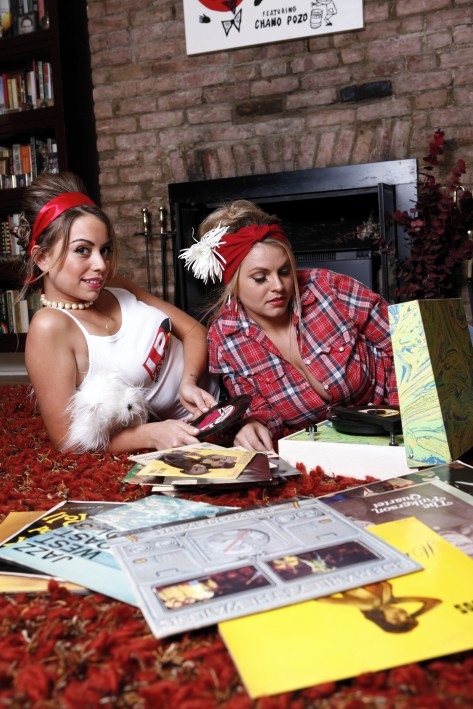

Ferris Wheel – Ferris Wheel (1970)
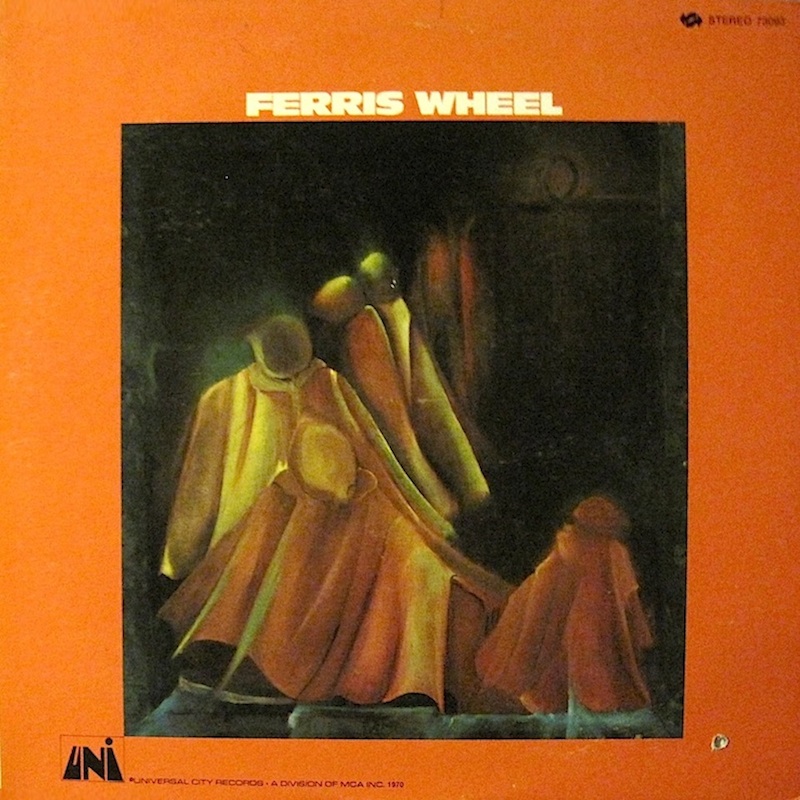
Title: Ferris Wheel
Year: 1970
Format: LP
Label: UNI
The Ferris Wheel were one of England’s great lost musical treasures of the mid- to late ’60s — immensely popular among club audiences, they were never able to translate their ability to win over crowds into chart success, but they made some great records while they were trying. The group came together out of the remnants of two earlier British bands, Emile Ford & the Checkmates and West Five. Dave Sweetman (saxophone), George Sweetman (bass, vocals), and Barry Reeves (drums) had played in the Checkmates, the backing band to Emile Ford (who was half-brother to Dave and George Sweetman), while Mike Liston (keyboards, vocals) had been with a group called the West Five.
Trinidad-born Diane Ferraz (vocals) had recorded as part of the duo of Diane & Nicky, in tandem with vocalist Nicky Scott, under the auspices of Simon Napier-Bell, best remembered as the second manager of the Yardbirds; guitarist Keith Anthony filled up the last instrumental spot in the group. The band’s original name was Diane Ferraz & the Simon’s Triangle, but that arrangement — with the others designated as Ferraz’s backing group — proved awkward and irrelevant when the whole act gelled as a unit, and Sweetman and Liston also both proved good vocalists in their own right. For a new name, they selected the Ferris Wheel, taking off from Ferraz’s family name.
The Ferris Wheel quickly became one of the most popular club acts in England, with their mix of soul music spiced with the influence of the psychedelic music that was starting to spread across the pop world. Vocally, their sound was centered around Motown, but instrumentally they were very much a part of the London scene of the time — there were no Mellotrons or sitars, but lots of guitar arabesques and extended ornate organ swells, and all of it was woven together well with the soul sound. Ferraz showed herself capable of crossing swords with Diana Ross or Martha Reeves or, together, all three vocalists could sound as smooth as the Fifth Dimension.
The group was signed to Pye Records by producer John Schroeder, who was, himself, a major figure in soul music in England, having arranged for the release of many of Motown Records’ early singles on that side of the Atlantic. It was Schroeder who decided to break the group by issuing a complete LP, Can’t Break the Habit, rather than starting with a single. This was a bold and appropriate decision — the group’s range was so great and its command of various musical idioms so strong, and its act honed so well after six months of playing clubs, that it was well capable of delivering a dozen worthwhile songs. The Supremes, Carla Thomas, and other influences abounded, and all were given a unique spin. A trio of singles followed, drawn from the album, but none of them charted.
The sextet stayed together for another year, but there followed a label switch and numerous membership changes over the next couple of years, most notably Ferraz’s departure (from the music business as well, to raise a family), to be replaced by Marsha Hunt and then Linda Lewis. The group issued one more album, a self-titled release on Polydor in England and the MCA subsidiary label Uni in America (though they never had any impact in the United States. In subsequent years, George Sweetman passed through the lineup of Medicine Head, while Barry Reeves joined Blossom Toes and Brian Auger & the Trinity, and latter-day drummer Dennis Elliott was subsequently a member of Foreigner.
The group was mostly forgotten during the later ’70s and ’80s, and Can’t Break the Habit was one of the rarest LP releases in the Pye catalog. The burgeoning nostalgia for mid-’60s mod and “freakbeat” records, coupled with the ubiquitous Northern soul boom of the late ’90s, seemed to make a rediscovery not only called for but likely. In 2000, Sequel Records issued an expanded edition of Can’t Break the Habit, complete with annotation that included reminiscences by Diane Ferraz. (Bruce Eder, All Music Guide)
Track Listing
- Keeper Of The Keys
- Ivory Tower
- Child Of The City
- Song For Alice
- Movie Queen
- The Tightrope Walker (And His Daughter)
- I Know You Well
- Where Lily’s Gone
- Little Indians
- Sunday Times
- The Ugly Duckling
- Diamonds Rely On
Pookah – Pookah (1969)
Title: Pookah
Year: 1969
Format: LP
Label: United Artists
Pookah were John Ippolito (vocals-bass-guitar),Pat Cupo (organ-piano-ondioline),and Dave Ranaletta (vocals-drums-pecussion). This is a strange one, an early example of American progressive rock that has really been panned by the critics (it’s not that bad… is it?), an acquired taste for sure, like rubbing alcohol. (Jack Dominilla)
Track Listing
- Blue And Peaceful
- In A Field
- Tomorrow’s The Day
- Things Don’t Matter
- Broken Dream
- Kickin’ A Can
- Merlin’s Party
- Lady Ostrich
- Ha! Ha! I Can Fly
- The Heat
- Rain On Your Grave
The Corporation – The Corporation (1969)
Title: The Corporation
Year: 1969
Format: LP
Label: Capitol
To my ears, the weakest of their three LP’s, though not to say that this is a weak album, by any means. Compared to their other releases, this one is slightly more commercial sounding, no doubt a product of improved production.
This one also contains prog influences, probably more than the others, and less psych flavor overall. There is still some fuzz guitar, lots of organ, and some flute, but the primary focus is mostly on their vocal harmony this time around. A solid and consistent record. (tymeshifter RYM)
Track Listing
- I Want To Get Out Of My Grave
- Ring That Bell
- Smile
- Highway
- Drifting
- India
Bloomsbury People – Bloomsbury People (1970)
Title: Bloomsbury People
Year: 1970
Format: LP
Label: MGM
As a teenager multi-instrumentalist, Sigmund Snopek III began a quest to find a way to combine rock music with classical music, electronics, and theater, a quest that led him to the University of Wisconsin-Milwaukee to study composition in the late ’60s.
He instantly set out to start a band, forming the Bloomsbury People in 1968. The band immediately gained a degree of local success, playing frequently around Milwaukee and the surrounding region and recording a couple of 45s over the next couple years. Their sound also earned acclaim in critical circles despite the inability of those critics to categorize the music (it was frequently saddled with the labels “psychedelic” or “classical” rock, or in some rare instances as “progressive”, rock years before the term was widely used).
The band released their self-titled debut album on MGM in 1970 and followed it up two years later with Virginia Woolf, although the latter was credited to Snopek III only, and the band disintegrated not long thereafter. The Bloomsbury People had been an important band in the late 1960s psychedelic/progressive music movement, playing to over 500,000 people at the Atlanta Pop Festival alongside Jimi Hendrix and other 60s icons.
Sigmund Snopek has been a dominant figure on the international musical scene since the late 1960s. Whether exercising his prodigious skills as composer, solo performer, bandleader, multi-instrument sideman or orchestrator, Snopek continues to share his creative spark with audiences across the country.
He has featured on recordings by many well-known artists including the Violent Femmes and many more. He developed a longstanding relationship with the Violent Femmes in the ’80s, in fact, he frequently joined the band in concert and on tours and finally joined them full-time in the 1990s. (Zzen Zero)
Track Listing
- Birdsong
- Witch Helen
- Have You Seen Them Cry
- Lake Of Sand
- State Of Confusion
- Golden Lion
- Pioneer Saint Of Death
- The Resurrection
- Demian
- So It Seems
- Suite: Classical #II
Game – Game (1970)
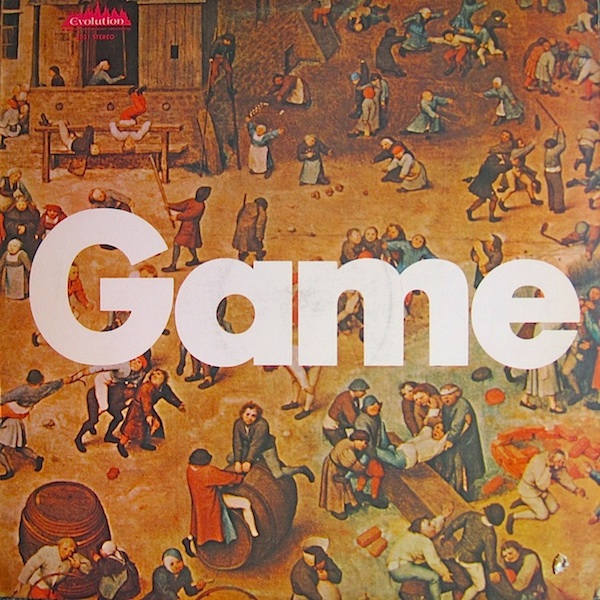
Title: Game
Year: 1970
Format: LP
Label: Evolution
Singers/guitarists Eddie Keating and Chuck Kirkpatrick, drummer Scott Kirkpatrick, keyboard player Les Luhring and singer/bassist George Terry had all been members of the Southern Florida based Proctor Amusement Company. The band had become quite popular throughout the region, even recording a couple of singles and an unreleased LP for the New York based Faithful Virtue label before calling it quits. While Proctor Amusement Company had come to an end, by 1969 the five were playing Southern Florida clubs as Game.
Released by Faithful-Virtue (also released on the Evolution Label), 1969’s “Game” is an interesting debut. Co-produced by manager/mentor Steve Goldberg and Chuck Kirkpatrick, musically the set’s all over the place, including stabs at conventional pop, progressive (‘Entrance’), rock (‘Fat Mama’) and even showing off some jazzy interludes (check out side two’s ‘Disturbance/We Turn To You’). Normally such a diverse album wouldn’t make all that much of an impression with me, but this is one of those exceptions.
While most bands have a hard time finding one good singer, Game wasn’t hurt by having three in the form of Keating, Chuck Kirkpatrick and Terry. The fact that Keating and Luhring wrote some nifty melodies and were capable of turning in ear candy harmony vocals didn’t hurt the end results either (check out Luhring’s ‘Discovering You’). To be honest, material such as ‘Make Some Music’ and ‘Stop, Look & Listen’ sounds a couple of years ahead of it’s time… had it been released in say 1976 it probably would have blown an AOR outfit like Kansas off the radio. Unfortunately the set went nowhere. (RDTEN1 RYM)
Track Listing
- Entrance/What’s Goin’ Through My Head
- Discovering You
- Fat Mama
- Make Some Music
- Stop, Look & Listen
- Disturbance/We Turn To You
- Sermon
- Girl Next Door
- Exit
Rare Bird – As Your Mind Flies By (1970)
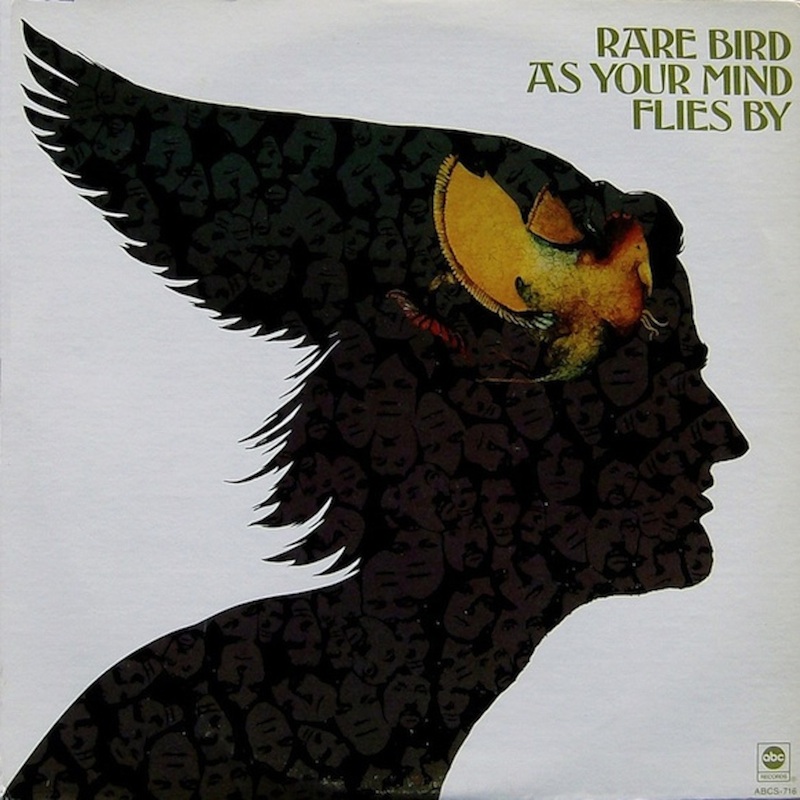
Title: As Your Mind Flies By
Year: 1970
Format: LP
Label: ABC
I must be one of the few who actually think their self-entitled album was actually better than As Your Mind Flies By. While the music on this followup has matured, it seems as if they became even more pop-oriented, like on “What You Want To Know” and “I’m Thinking”. I find these two pieces to drag on a bit. Then there’s “Down on the Floor” which is mainly a harpsichord-dominated piece. Without a doubt, the real highlight on side one is the heavy and aggressive “Hammerhead”.
Here the band is exploring more or less the same kind of prog other bands of the time like Gracious, Cressida, Beggars Opera, even the satanic act Black Widow, etc. were doing. Incredible piece. But what I totally forgot to mention, is all four pieces feature the voice of bassist Steve Gould, another one of my favorite rock vocalists, this guy certainly don’t get the attention that say Peter Gabriel, Peter Hammill, or even Roger Chapman gets, and he’s up there, as far as I’m concerned.
Side two is taken up by a four part movement called “Flight”. This is without a doubt their most ambitious piece, they even went so far as adding a choir, and even an experimental passage that’s much like the Krautrock bands of the time. But for some reason, I seem to like the progressive experiments of their debut (“Beautiful Scarlet”, “God of War”, “Iceberg”) better, but of course, “Flight” is not bad, even if parts remind me of “Beautiful Scarlet”.
This was unfortunately the last album with the original lineup of Steve Gould, David Kaffenetti, Mark Ashton, and Graham Field. Field went on to form a band called Fields and Ashton moved on to other things (nothing I think was of interest to prog fans). The remaining Rare Bird members recruited new members (including two guitar players) and switched to Polydor. As for As Your Mind Flies By, I still recommend it to those who like early prog rock. (Proghead72 RYM)
Track Listing
- What You Want To Know
- Down On The Floor
- Hammerhead
- I’m Thinking
- Flight: As Your Mind Flies By
- Flight: Vacuum
- Flight: New York/Central Park
- Devil’s High Concern [non lp single]
The Masters Of Deceit – Hensley’s Electric Jazz Band & Synthetic Symphonette (1969)

Title: Hensley’s Electric Jazz Band & Synthetic Symphonette
Year: 1969
Format: LP
Label: Vanguard
An experimental fusion between underground rock and unconventional jazz. This four piece band has it’s strength in the guitar playing of Steve Blum and keyboardist Tom Hensley who successfully unite jazz and psychedelic rhythms. (Prairie Prince Minsky)
Track Listing
- Shining
- Boxes
- The Grand Illusion
- Long Hard Journey
- Mirror
- Pieces: Together: Pieces
Madura – II (1973)

Title: II
Year: 1973
Format: LP
Label: Columbia
Madura was a 1970s rock/fusion band from Chicago, United States. After the break up of Bangor Flying Circus (1969), Alan DeCarlo and Hawk Wolinski formed Madura. Only one personal change was made: drummer Michael Tegza was replaced with one of the best renowned drummers in the world: Ross Salomone.
David “Hawk” Wolinski, previous Shadows of Knight member, Alan DeCarlo and Ross Salomone recorded two albums produced by the Chicago producer James William Guercio. Hawk Wolinski later became a member of Rufus and Chaka Khan, and a successful producer and songwriter. Alan DeCarlo and Ross Salomone both appeared on Chicago keyboard player Robert Lamm’s 1974 solo album “Skinny Boy,” and Ross Salomone also appeared on albums by Chicago, Air Supply, Gerard, and Hollins & Star.
Madura can be seen and heard live on a short concert scene in J.W. Guercio’s movie Electra Glide in Blue (1973) playing a part of Free from the devil. This is also included on the album from the movie. David Wolinski also appears as an actor in the movie, playing the part of “David, the VW bus driver.”
The band’s name “Madura” was inspired by the Meenakshi temple in Madurai. (Wikipedia)
Track Listing
- Livin’ In America
- Doctor Honoris Causa
- I’m In The Mood For Love
- If You Got The Dime
- First Time
- My Favorite Things/Funky Broadway
- Windy One
- Stagger Lee
- Save The Miracle
Madura – Madura (1971)

Title: Madura
Year: 1971
Format: LP
Label: Columbia
After the break up of Bangor Flying Circus (1969), Alan DeCarlo and Hawk Wolinski formed Madura. Only one personal change was made: drummer Michael Tegza was replaced with one of the best renowned drummers in the world: Ross Salomone.
David “Hawk” Wolinski, previous Shadows of Knight member, Alan DeCarlo and Ross Salomone recorded two albums produced by the Chicago producer James William Guercio. Hawk Wolinski later became a member of Rufus and Chaka Khan, and a successful producer and songwriter. Alan DeCarlo and Ross Salomone both appeared on Chicago keyboard player Robert Lamm’s 1974 solo album “Skinny Boy,” and Ross Salomone also appeared on albums by Chicago, Air Supply, Gerard, and Hollins & Star.
Madura can be seen and heard live on a short concert scene in J. W. Guercio’s movie Electra Glide in Blue (1973) playing a part of Free From The Devil. This is also included on the album from the movie. David Wolinski also appears as an actor in the movie, playing the part of “David, the VW bus driver.”
The band’s name “Madura” was inspired by the Meenakshi temple in Madurai (Wikipedia)
Track Listing
- Hawk Piano
- Drinking No Wine
- Dreams
- Plain As Day
- My Love Is Free
- Free From The Devil
- My My What A World
- Stimulation
- Don’t Be Afraid
- Damnation
- See For Yourself
- I Think I’m Dreaming
- It’s A Good Time For Loving
- Trapped
- Johnny B. Goode
- Realization
- Man’s Rebirth Through Childbirth (Part 1)
- Man’s Rebirth Through Childbirth (Part 2)
- Joy In Old Age By Way Of Self Observation
- Talking To Myself
The Music Asylum – Commit Thyself (1970)

Title: Commit Thyself
Year: 1970
Format: LP
Label: United Artists
In the late ’60’s, United Artists was one of those labels that specialized in signing unknown, often brilliant psych bands, and subsequently letting them die a quick death in the marketplace through utter lack of promotion. Music Asylum was one such band.
This album is in a psych – jazz vein, but is less commercial than other releases in that sub – genre.
The album is divided between lengthy excursions, and titles that are more fragments than songs. Within these grooves, you’ll find original adventurous explorations (“Garbage”, “In My World”, and the lumbering, hypnotic “Plastic People”), jaunty throwaways (“Louie’s Tune”), and Godz -like avant strangeness (“Tube Along With Me”), along with a cover of Dylan’s then – unreleased “Million Dollar Bash”. Though un – noticed then and now, this album ranks with the A – side of Tim Buckley’s Lorca in its power to mesmerize the listener. (ochsfan RYM)
Track Listing
- Mouse
- Star Dreams (Nebulous)
- In My World
- Flite Of The Tick Bird
- Tube Along With Me
- Plastic People
- Days Of The Night
- Louie’s Tune
- Million Dollar Bash
- Garbage
- Everyone