
People – Both Sides Of People (1969)
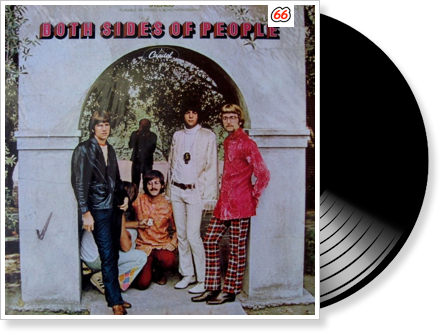
Title: Both Sides Of People
Year: 1969
Format: LP
Label: Capitol
People’s second album, “Both Sides Of People” was released after the departure of Larry Norman. The record included material that was leftover from the “I Love You” sessions, featuring three Norman compositions “I’ve Got You On My Mind”, “Hasty Heart”, and “She’s A Dancer” all featuring Norman’s vocals. (Max Collodie)
Track Listing
- I’ve Got You On My Mind
- Hasty Heart
- You’ll Never Know For Sure
- Think
- Hey Sweetheart
- Lucky John
- She’s A Dancer
- Pirate Bill
Disclaimer: The link below may point to content that is copyrighted. redtelephone66 only provides this link with the understanding that you are responsible for the content you download. redtelephone66 does not engage in music piracy, nor do we do host, fileshare, or otherwise trade in copyrighted works.

People – There Are People And There Are People (1970)
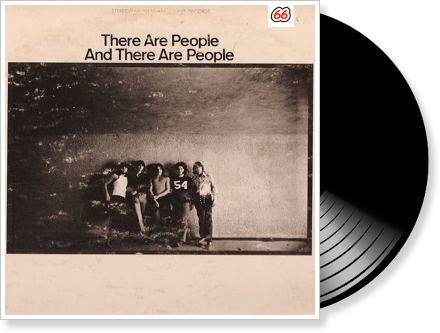
Title: There Are People And There Are People
Year: 1970
Format: LP
Label: Paramount
After releasing two albums for Capitol Records, People signed on with Paramount Records
releasing “There Are People” in 1970. The group went through several personnel changes, added brass, and has a funkier sound on this Lp compared to the psychedelia of the first two albums. (Max Collodie)
Track Listing
- For What It’s Worth
- Crosstown Bus
- How Does It Feel
- We’re Off To See The Wizard
- There’s A Man
- Miss Jane
- The Other Side
- Maple Street
- Sunshine Lady
- It’s Making Me Crazy
- The Willie Tell Experience
Disclaimer: The link below may point to content that is copyrighted. redtelephone66 only provides this link with the understanding that you are responsible for the content you download. redtelephone66 does not engage in music piracy, nor do we do host, fileshare, or otherwise trade in copyrighted works.
Sleepy Hollow – Sleepy Hollow (1972)
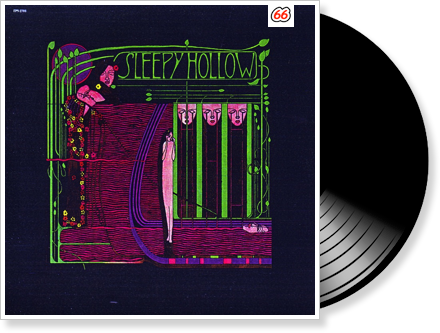
Title: Sleepy Hollow
Year: 1972
Format: LP
Label: Family Productions
Originally issued by Family Productions then reissued by Tiger Lily, a tax scam label, which was run by the head of Roulette, Morris Levy who was allegedly connected with the Genovese crime family and a model for Hesh on The Sopranos. They put out Lp pressings of demo tapes, sometimes without the knowledge of the bands.
Anyway, Sleepy Hollow is, according to wonkywhy over at RYM, as “Beatlesque aspirational sounds. About as good as a George Harrison solo album could aspire to”. While Brandting from RYM describes it as “Relatively weak pop, which in many places sounds exactly like the Beatles. Dominated by harmonies and pianos, this album has a few tracks that rock somewhat. “Talking Out of Turn” and “One Time” remain the highlights”. (Prairie Prince Minsky)
Track Listing
- Sincerely Yours
- One Time
- Take Me Back
- Talking Out Of Turn
- Lay It On The Line
- Love Minus You
- Lady
- Roller Coaster Man
- Hades
Disclaimer: The link below may point to content that is copyrighted. redtelephone66 only provides this link with the understanding that you are responsible for the content you download. redtelephone66 does not engage in music piracy, nor do we do host, fileshare, or otherwise trade in copyrighted works.
Bump – Bump (1970)
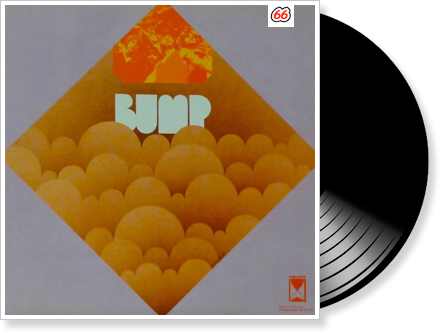
Title: Bump
Year: 1970
Format: LP
Label: Pioneer
Bump was formed in Detroit Michigan in 1969 around the talents of George Runyan (lead vocals & bass), Paul Lupien (keyboards, backing vocals), Jerry Greenberg (drums, backing vocals and Alan Goldman (guitar). During the late 60′s Bump built a solid reputation for themselves on the touring circuit and opened shows for such big names as Alice Cooper, Terry Reid and many others. In 1969 the band recorded two singles and their first album for the small Pioneer label.
he original pressing of the album released in 1970, is highly sought-after and fetch outrageous amounts on the collectors market. The music of Bump is an organ-based progressive pop sound in the British style. The songs are rich with keyboards and some fine guitar/organ interplay. While the material is quite pop orientated in places, the ten-minute closing “Lifeline, Decisions, You Can’t Even Think,” does have its moments and would please any progressive rock fan. Bump recorded a second album but it was never released. (Prairie Prince Minsky)
Track Listing
- Sing Into The Wind
- State Of Affairs
- Daydream Song
- Holly Thorndike
- Got To Get You Back
- Spider’s Eyes
- Clean Myself
- From My Slot
- Lifelines, Decisions, You Can’t Even Think
Disclaimer: The link below may point to content that is copyrighted. redtelephone66 only provides this link with the understanding that you are responsible for the content you download. redtelephone66 does not engage in music piracy, nor do we do host, fileshare, or otherwise trade in copyrighted works.
Charisma – Beast And Fiends (1969)
Title: Beast And Fiends
Year: 1969
Format: LP
Label: Roulette
Before the recording of the second album, Mike DeLisa decided to go his own way, leaving the job of lead vocalist to guitarist Tom. Beasts and Fiends was recorded at the Record Plant in NYC during the summer of 1970. The lead engineer was the top engineer in the business: Jack Hunt (the Woodstock album, Electric Ladyland), assisted by Dave Ragno (the Woodstock album), and Tom Fly (the Woodstock album, former drummer of Lother and the Hand People). While credit was given to Bruce McGaw and Ed Vallone for production, fact is the album was produced by Charisma with interference run by Jack Hunt.
Charisma was offered the option to record a third album for Roulette Records, but let it pass by. Probably a mistake. Both albums sold better in Europe than they did in the USA. All income went to Roulette Records. Charisma got squat. Same old story.
It looked like Charisma was headed for a breakup as drummer Rich Tortorigi and keyboardist Bob Mocarsky decided to leave the band, but Tom and Bernie located drummer Jim Roselle and keyboardist Mike Reynolds and decided to give it another go. Jim recruited Paul Midney to play saxes and flute, and Ray Mase to play trumpet, piccolo trumpet and coronetto. For a while, Charisma became Midney, named after Paul (?!!), but ended up changing their name back to Charisma. Paul eventually ended up leaving the group to do his own thing in the world of meditation and Ray went on to play with the American Brass Quintet.
About this time Charisma, along with sound engineers Ron Scalise (now at ESPN) and Norman Campbell (now in California) began building a recording studio. Charisma spent the next few years in the studio. But to be able to do that they were forced to compromise their principles by playing commercial music to raise money to pay for the studio addiction.
Charisma auditioned several singers as front men and finally decided on Brian Salke. Brian was not allowed to do the few non-commercial gigs that came up once in a while, but he did appear on some of Charisma’s homegrown recordings. In 1976, Charisma disbanded, leaving one incomplete recording. (Prairie Prince Minsky)
Track Listing
- Street Theatre
- The No-Tell Motel
- Dirty Pigs Don’t Get Far In This World
- Bizwambi/Ritual Dance Of The Reptiles
- Leopold’s Ghost
- The Age Of Reptiles
- Beasts And Fiends
- Pray For Lockjaw
Charisma – Charisma (1969)
Artist: Charisma
Title: Charisma
Year: 1969
Format: LP
Label: Roulette
Charisma came about from diverging roots emanating from 3 directions. The core of Charisma was Rich Tortorigi (drummer) and George Tyrell (bass player). Both were members of a New Britain, Connecticut soul band called The Mantiques. The Mantiques had been one of the three main horn-based bands in New Britain in the mid to late 60’s, along with Detroit Soul and The Paramounts. Paramounts drummer, Tyrone Lampkin went on to play with Gutbucket and the Parliament Funkadelics.
In 1968, Rich Tortorigi recruited Tom Majesky to play guitar with The Mantiques, following their breakup. Tom enlisted Bernie Kornowicz, former bassist of The Last Five, to share guitar and organ duties. The final addition to the group was folk singer Mike DeLisa to sing lead. Tom and Bernie brought the rock and roll element to the Mantiques and Mike brought the band an element of folkiness.
It was in 1969 that The Mantiques signed with Roulette Records as a convenient tax write off to record an album. The album was produced by Ed Vallone and most of the songs were penned by Bruce McGaw. During the recording of the album, the band fought over a new name with their new management. Finally given an ultimatum, The Mantiques became Charisma, a name they hated. The album was recorded at Incredible Sound Studios in NYC. Charisma attempted to take control of the writing and production, but were put in their place and ordered to record the songs as scripted. Being the obstinate egocentrists that they were, they turned the recording sessions into a parody of the original intent.
Following the recording of What’s It Like, the very first song on the album, (which, was in fact recorded at Vanguard Studios), there was a shakeup. George Tyrell quit the band, Bernie Kornowicz became the bass guitarist, Tom Majesky became the lead guitarist, and a new organist was recruited: Bob Mocarsky. The album was eventually completed. In the meantime, Tom, Bob and lyricist/art director Suzi Langlois began writing songs for a second album. (Prairie Prince Minsky)
Track Listing
- What’s It Like
- A Truth Emerged
- Happy Song
- Where Do We Go From Here?/Yesterday’s Folks
- Marianne
- Miss Willoughby
- Death Of Me
- Bang Bang
- If You’re Waitin’ For A Miracle
- Suzanne Gives
- Take Me Away
Spirit In Flesh – Spirit In Flesh (1971)
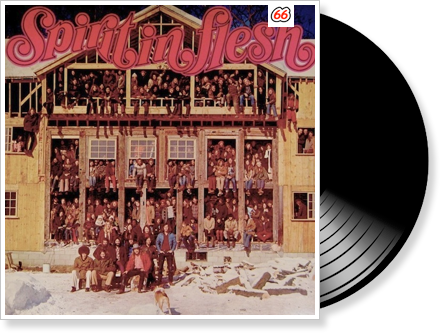
Title: Spirit In Flesh
Year: 1971
Format: LP
Label: Metromedia
Michael Metelica was born in 1950 and grew up in the small rural town of Leyden, Massachusetts. At age 16, he dropped out of high school and, after reading an article about the Hell’s Angels motorcycle gang, moved to California to join them. Repelled by their violent nature, he was instead drawn to the 1967 hippie Summer of Love, returning to Leyden the following year. In May of 1968, he asked a local blueberry farmer named Donnie Herron if he could build a treehouse on his land, and after receiving permission, lived there in solitary meditation, working for farmers for free and expecting nothing in return.
Needless to say, he became something of a local sensation and attracted his first following from among his boyhood friends. After the treehouse was destroyed in late 1968 by suspicious locals, Metelica and his little band wandered around the many hill towns in the area, gaining more members, teaching their view of spirituality at area churches and schools until by early 1970, they numbered around 50. Rules were mandated banning drugs, cigarettes, alcohol and sexual promiscuity and members practiced to purge themselves of their imperfections through meditation and intense encounter-group confrontation tactics. By then, Metelica knew that he had the makings of a deliberate community that was based on spiritual beliefs and practice.
The concept of spirituality was still new and uncharted in the late 1960’s but the group, now known as the Brotherhood of the Spirit, had as its spiritual advisor, a local farmer named Elwood Babbitt, a trance-medium in the Edgar Cayce tradition. Both Babbitt and Metelica believed that the Earth was about to undergo cataclysmic changes in preparation of the Aquarian Age. Babbitt, in particular, was getting information through his spirit guides who warned that humanity’s selfish and self-destructive behavior would cause nature to literally rebel in such a way as to cause widespread death and destruction.
These “Earth Changes” as they were called would be a precursor to the spiritual enlightenment of the Aquarian Age, the next step in the evolution of the human race. According to Babbitt, groups like the Brotherhood would be the harbingers of this new age, functioning as teachers of this higher wisdom to the shattered survivors of these worldwide cataclysms.
In March of 1970, The Brotherhood purchased a 25-acre property in Warwick, Mass and the group underwent the first of its many radical transformations. Their growth coincided with a countercultural migration as millions of young Americans, disenchanted with the “establishment” during the Vietnam War era, dropped out of universities and cities en masse and hit the road that summer looking for new venues.
The membership skyrocketed to 150 leading to the acquisition of an additional house in nearby Northfield, the building of a dormitory in Warwick and more stringent membership rules. Metelica became less involved with the commune, devoting most of his energy to the commune’s band “Spirit in Flesh” whose mission was to bring about the message of spirituality through the medium of rock and roll. In late 1970, Spirit in Flesh signed a contract with Metromedia records and the commune’s focus began to shift into a full-time promotion of the band.
Veterans of the Brotherhood of the Spirit consider the Warwick era as being the closest to their ideal of a spiritual community composed of independently inspired individuals. Their youthful enthusiasm allowed them to overcome the many hardships created by an insulated environment dedicated to personal growth and spiritual reflection.
For the many that came from urban backgrounds, Warwick introduced the realities of self-sufficiency through logging, house building, the cultivating and canning of homegrown food, and the ability to enjoy life without the distractions of mainstream media. Their spiritual belief system was based on aspects of Buddhism and New Age thinking mixed with an enlightened, almost Gnostic form of Christianity. Reincarnation, meditation, and the power of positive thought were considered to be major doctrines.
The years 1971-1972 were spent in frenzied activities surrounding Spirit in Flesh, including the printing of several thousand silk-screened posters that were placed all across the United States and even into parts of Europe. Because of the sluggish support from the record label, the commune devised its own guerilla tactics to promote the band which included marches in New York City, mass telephone call-ins to Metromedia, and infiltrating popular national TV talk shows to announce the band’s impending success. These tactics culminated in a concert at Carnegie Hall that was sparely attended. The first album, which featured the entire membership of the Brotherhood commune on its cover, sold less than 1000 copies.
Despite the attention focused on Spirit in Flesh, the Brotherhood had developed into an efficient entity which contradicted the accepted stereotype of lazy commune hippies. An elaborate infrastructure that included business management, child care, auto maintenance, farming and food production had been created to service the needs of its personnel. However, it also created controversy due to its members being briefly on welfare while Metelica was gifted with a Rolls-Royce.
There were also numerous run-ins with local selectmen about code violations concerning the commune’s houses and septic systems. By late 1972, the membership had expanded to nearly 300. It was during this time that the first public businesses were launched by the commune along with a magazine, the Free Spirit Press, which was sold along the East Coast from a rainbow-painted school bus.
In late 1972, the commune bought the Shea Theater block in Turners Falls, a decaying working-class town next to Greenfield, and made national headlines when Metelica issued an order to all members to either work a job or leave. By now, the Brotherhood of the Spirit had been featured in such media venues as the Wall Street Journal; Look, Family Circle, and Mademoiselle magazines as well as televised segments on 60 Minutes and the David Frost show. (History Of The Renaissance Community)
Track Listing
- Weight Of The World
- Blind Leading The Blind
- The Jack Baker Song
- Hear My Plea
- Riverside Song
- Fine Line
- Deny To Me
- The Meek Shall Inherit The Earth
- Flesh & Gut
- Clear The Way
Pendulum & Co. – Pendulum & Co. (1971)
Title: Pendulum & Co.
Year: 1971
Format: LP
Label: Perception
Pendulum & Co. were a Boston area band that were signed to Jimmy Curtiss’ Perception label in late 1970. The album according to Fuzz, Acid & Flowers has been described as rural psych but is more of a mix of folk, rock and psych mostly reminiscent of a style similar to C, S & N. There’s some nice tracks here ranging from the mellow “Sleep My Lady” to the dark closer “Loneliness”. (Max Collodie)
Track Listing
- St. Patricks Cathedral
- Sleep My Lady
- Wherefore & Why
- Good-Bye
- Troubling Me
- Ticket Stubs
- Tell Me You’re Free
- After The Storm
- Strange
- Wooden Rocking Horse
- Chrome Street Blues
- Sunday Morning High
- Loneliness
Disclaimer: The link below may point to content that is copyrighted. redtelephone66 only provides this link with the understanding that you are responsible for the content you download. redtelephone66 does not engage in music piracy, nor do we do host, fileshare, or otherwise trade in copyrighted works.
The Electric Undergound – Guitar Explosion (1967)
Title: Guitar Explosion
Year: 1967
Format: LP
Label: Premier
Yet another in a long line of psych exploitation albums described by Acid Archives as “lame jazzy rock” This one is bad, you have been warned!!! (Max Collodie)
Track Listing
- The Ultimate Trip
- Psychedelic Snow
- Heaven Is Too High
- Sound Of Flowers
- Down With It
- Underground Freakout
- Aerial Flipout
- Milt’s The Man
- Granny’s Act
- Flower Spots
Disclaimer: The link below may point to content that is copyrighted. redtelephone66 only provides this link with the understanding that you are responsible for the content you download. redtelephone66 does not engage in music piracy, nor do we do host, fileshare, or otherwise trade in copyrighted works.
Thundertree – Thundertree (1970)
Title: Thundertree
Year: 1970
Format: LP
Label: Roulette
We’ve always been amazed at how many great (and often unknown) bands spring from Minnesota. Must have something to do with the long, cold winters that force folks into indoor activities… That said, this is an album where the isolated reviews we’d read really didn’t say much of note – the effort was described as likeable, but extremely rare. Not much to go on …
In terms of biographical information we know nothing about this outfit. From the liner notes we know the line up consisted of guitarist Bill Hallquist, drummer Rick IiaBraaten, keyboardist John Meisen, bass player Terry Tilley and vocalist Dervin Wallin. We also know the album was recorded at UA Studios in Minneapolis, Minnesota and was produced by Meisen.
Musically 1970′s “Thundertree” was pretty impressive. Featuring all original material, tracks such as “Head Embers”, “Summertime Children” and “In the Morning” (the latter including a great fuzz guitar solo), offered up an attractive mix of psych and more rock oriented moves. Admittedly it wasn’t exactly earth shattering, and Wallin wasn’t any great shakes as lead singer, but his occasionally screechy voice was well suited to the band’s guitar and keyboard propelled repertoire. Highlights included “Dusty Road” (always liked the stabbing organ and church chorus) and the side long suite “1225″ which powered by Hallquist’s solo, starts out like a ton of bricks. (Bad Cat)
Track Listing
- Head Embers
- At The Top Of The Stairs
- Summertime Children
- In The Morning
- Dusty Road
- 1225 (I. Alone Am I – II. Softly – III. I Travel Along – IV. Not Well Liked – V. With A Tailored Image – VI. The Sun Is Shinin’ For Me)
Disclaimer: The link below may point to content that is copyrighted. redtelephone66 only provides this link with the understanding that you are responsible for the content you download. redtelephone66 does not engage in music piracy, nor do we do host, fileshare, or otherwise trade in copyrighted works.