
Pan – Pan (1973)
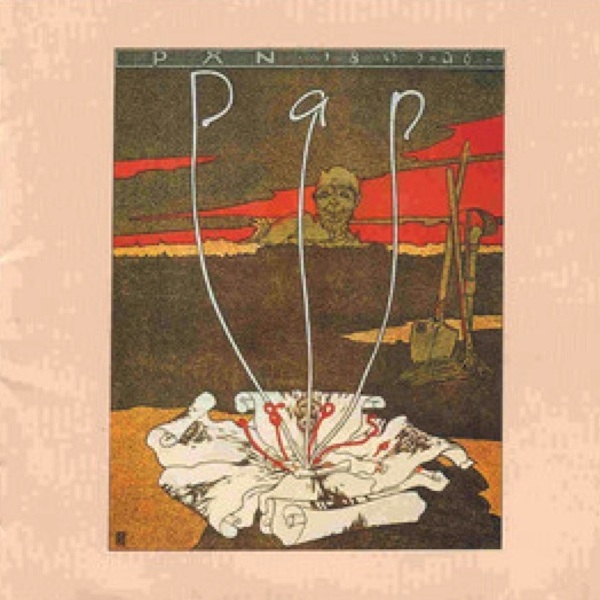
Title: Pan
Year: 1973
Format: LP
Label: Columbia
Excellent west-coast folk/rock gem featuring Ron Elliott of Beau Brummels fame… Dense acoustic/electric textures weavin’ lines for 10 captivating songs, laid-back dreamy moods with fine string arrangents,shaky,rockin’ lanes building quite an athmo-halo of melodic grace…sublime production with Val Garay involvments who also plays guitars…Ron wrote all the songs,this sound is rather lost in time now… (Philmarie RYM)
Track Listing
- Long Way Home
- Lady Honey
- The Puppet
- Garbage Man
- Ain’t Got The Strings
- More Than My Guitar
- Sad Rag Doll
- Delinga De Mattei
- Love Glow (Calamity Jane)
- Dancing To The Band/Dreams
Disclaimer: The link below may point to content that is copyrighted. redtelephone66 only provides this link with the understanding that you are responsible for the content you download. redtelephone66 does not engage in music piracy, nor do we do host, fileshare, or otherwise trade in copyrighted works.

The Joyous Noise – Wanderingman (1972)
Title: Wanderingman
Year: 1972
Format: LP
Label: Capitol
The Joyous Noise consisted of Dennis Dragon (who did some gigs as the Byrds drummer at the end of their career), Lee Montgomery, Marc McClure, Happy Smith, and Lance Wakely.
The album can be best described as Country Blues with some great guitar picking and slide guitar (“Slide On The Light”), yet there are many different hints of “other” sounds like the Randy Bachman type lead in “Rock And Roll Road Cowboys”, or the later Beau Brummel sound, as evident on the track “Clear Light”. There’s also the beautiful Ray Charles inspired ballad “Harry On Sunday” that has that famous “San Francisco” horn sound.
The album’s centerpiece is Elliott’s side-long, three part “Wanderingman Suite”, which follows the same blueprint of what he previously accomplished on “The Candlestickmaker” album, where the interplay of the acoustic and electric guitar on “Everyman” bring to mind another San Francisco group, Quicksilver, and the vocals take a more David Clayton Thomas approach. (Jack Dominilla)
Track Listing
- Rock And Roll Road Cowboys
- Slide On The Light
- Silver Guitar
- Clear Light
- Harry On Sunday
- Wanderingman Suite: Part I – Everyman Part II – Story Road Part III – Winter
Disclaimer: The link below may point to content that is copyrighted. redtelephone66 only provides this link with the understanding that you are responsible for the content you download. redtelephone66 does not engage in music piracy, nor do we do host, fileshare, or otherwise trade in copyrighted works.
Dewey Martin And Medicine Ball – Dewey Martin And Medicine Ball (1971)
Title: Dewey Martin And Medicine Ball
Year: 1971
Format: LP
Label: UNI
Dewey Martin — born Walter Milton Dwayne Midkiff — grew up in the Ottawa, Canada, area and began playing the drums at age 13. One of his first bands, the Jive Rockets, featured future Staccatos guitarist Vern Craig). Martin eventually moved to the U.S., and ended up in Nashville, where he became a touring drummer with Faron Young, Roy Orbison, the Everly Brothers, Patsy Cline and others. Along the way, he adopted the surname Martin; his childhood mispronunciation of Dwayne led to “Dewey” becoming his first name. In 1964, Martin ended up in Seattle, where he played drums on Sir Raleigh and the Coupons’ British Invasion-styled cover of “White Cliffs of Dover”.
The single was successful in Los Angeles, so Martin moved there and recruited a new Sir Raleigh and the Coupons lineup from members of the Sons of Adam. They had released four singles — for A&M, Jerden andTower– by early 1966 (later compiled as One Buffalo Heard) before Martin left to join the Modern Folk Quartet, briefly, and the Dillards. He was mainly looking to play country-rock, however, and in the spring of 1966, was invited to join a group calling themselves the Herd. They were soon to become better known as Buffalo Springfield. Martin remained with the band until they dissolved in May 1968. In October, Martin formed the New Buffalo Springfield (later shortened to New Buffalo) with bassist Robert C Apperson, drummer/vocalist Don Poncher, rhythm guitarist/vocalist David Price, horn player Jim Price and lead guitarist Gary Rowles.
In early 1969, Price left to join Delaney & Bonnie, and when Apperson split, he was replaced by former Bobby Fuller Four bassist Randy Fuller. Rowles eventually lost interest too, quitting to join Arthur Lee’s Love. Martin recruited guitarist Bob (“B.J.”) Jones, and guitarist/keyboardist/vocalist Joey Newman and they decided on a new name, Blue Mountain Eagle. Atco Records signed the group, but in July of 1969, before recording their album, Martin left for a solo deal with UNI Records. He formed Dewey Martin and Medicine Ball, with lead guitarist Billy Darnell, keyboard player/vocalist Peter Bradstreet, steel guitarist Buddy Emmons, and bassist Harvey Kagen (ex-Sir Douglas Quintet).
They cut several tracks in November 1969, credited only to Martin, and began recording an album in April 1970. Kagen left before the sessions were over, and was replaced by Stephen Lefever, and then by Fuller (who had quit Blue Mountain Eagle), moving over to guitar after bassist Terry Gregg joined. Bruce Palmer also helped out during the recording of Dewey Martin & Medicine Ball. Despite positive reviews, the group were soon dropped from UNI. They recorded another album’s worth of songs for RCA, but only one single was released, in 1971.
Martin became a car mechanic in the late seventies. In the mid-’80s, he joined Pink Slip (alongside former Byrds bassist John York), the Roberts-Meisner Band, and finally, Bruce Palmer’s Buffalo Springfield Revisited, before retiring. In 1991, he formed Buffalo Springfield Again with guitarist Billy Darnell, but the group dissolved. In 1997, Dewey Martin and Buffalo Springfield were inducted into the Rock and Roll Hall of Fame. (Bryan Thomas)
Track Listing
- Indian Child
- Right Now Train
- Silent Song Thru The Land
- Maybe Baby
- Recital Palmer
- Yesterday
- The Devil And Me
- I Do Believe
- Race Me On Down
- Change
Disclaimer: The link below may point to content that is copyrighted. redtelephone66 only provides this link with the understanding that you are responsible for the content you download. redtelephone66 does not engage in music piracy, nor do we do host, fileshare, or otherwise trade in copyrighted works.
Bob Morrison – Friends Of Mine (1971)
Title: Friends Of Mine
Year: 1971
Format: LP
Label: Capitol
Bob Morrison was born in Mississippi. His father was a juke box operator who brought home boxes of new records every two weeks exposing Bob to rhythm and blues, country, and “pop” music at an early age. What began as an interest became a passion. He started listening to the radio with commercial ears, giving his dad great tips on what songs he thought were destined to become hits.
A Biloxi native, Bob went to Mississippi State University on a track scholarship, and graduated with a degree in nuclear engineering–not exactly a prerequisite for his eventual career path!
Morrison started writing and performing songs in clubs during college. While certainly having the math skills to project the odds of success in the music business, the passion in his heart lead the way. Before long, he had built a following up and down the east coast and landed a recording contract with Columbia Records in New York. Soon after, he moved to the west coast, where still another talent emerged, and he inked a deal with Screen-Gems Columbia as an actor.
Bob’s first album, self-penned for Capitol Records, was entitled “Friends of Mine” His first commercial success happened in 1973 after he moved to the “third coast”, Nashville, Tennessee, and signed an exclusive writer’s deal with Combine Music. “The River’s Too Wide”, recorded by Olivia Newton-John, would prove to be the first in a long list of major hits written or co-written by Bob Morrison.
Over the next several years, Bob co-wrote “Angels, Roses, and Rain”, #1 on the charts as recorded by Dickey Lee, “Midnight Angel”, recorded by Barbara Mandrell, and Reba McEntire’s first top ten hit, “Up To Heaven”. His “You’re the One (In a Million)” recorded by the Oak Ridge Boys, was later used by the ABC network as their promotional song.
In 1978,1980,1981, and 1982, Bob was ASCAP’s Songwriter of the Year. In 1979, he and co-writer Debbie Hupp received Grammy awards for “You Decorated My Life”, a big hit for artist Kenny Rogers. Along with the ASCAP honor in 1980, Bob was also voted Writer of the Year from the Nashville Songwriter’s Association, International. He has nearly fifty individual song awards from the American Society for Composers, Authors, and Publishers, and over two hundred major recordings to his credit. (Prairie Prince Minsky)
Track Listing
- Tell The Riverboat Captain
- She’s Gonna Be A Friend Of Mine
- Lila
- Lazy Lady Jane
- I’m Gonna Move On
- If You’d Like To Be A Lady
- Song For Wendy
- It’s Not Easy
- Sweet Sounds Of September
- You’re The One
Disclaimer: The link below may point to content that is copyrighted. redtelephone66 only provides this link with the understanding that you are responsible for the content you download. redtelephone66 does not engage in music piracy, nor do we do host, fileshare, or otherwise trade in copyrighted works.
The Eclectic Mouse – Everything I’ve Got (1970)
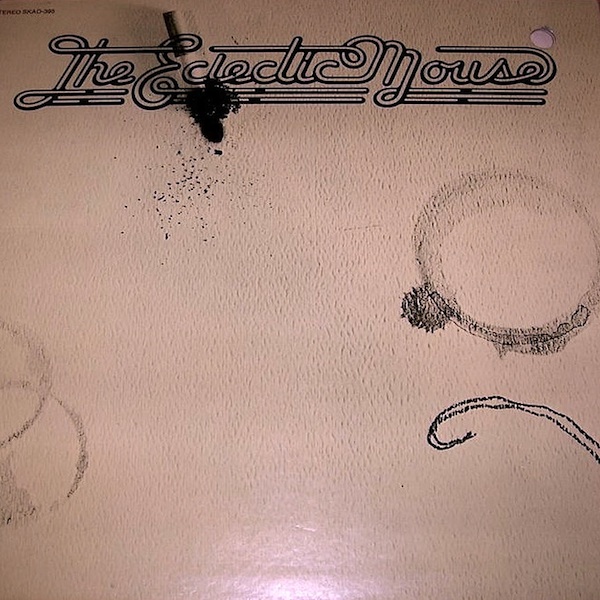
Title: Everything I’ve Got
Year: 1970
Format: LP
Label: Capitol
The Eclectic Mouse was the nickname of master percussionist Steve Forman, who released one LP and a supporting 45 on Capitol Records in 1969 under that moniker. The album, titled ‘Everything I’ve Got’ (subtitled ‘Suite for Voice, Wind Ensemble, Percussion and Electric Instruments’), is a very interesting one to say the least, with highly original “movements” that feature numerous wind and percussion instruments and were all written, arranged and conducted by Forman himself. The stand out track on the record is the amazing ‘Where Do the Hounds Go?’, which can be best described as a highly energetic fusion of paranoid “jazz from hell” and rock.
Other highlights not to be missed include ‘Modal Chant’, ‘Pre-Dawn Retrospective Chant’ and ‘You’d Never Be There’. The LP was engineered by Jack Miller and co-produced by Miller and George Laibe. Other musicians featured on the album include Jerry Manfredi (bass), Rick Felix (tuba), Barry Downs (trumpet), Billy Gonzales (trumpet), John Renner (tenor saxophone), Ernie Santos (alto saxophone), Ben Harvey (trombone), Joe N. Corral (flute), Tim Downs (drums), Dennis Lynde (guitar), John Smart (French horn), Kristen Engstrand (piano, organ), Harry Anglum (vocals) and Jack Wilkerson (vocals).
Little is known of Forman’s past other than he was classically trained in Phoenix, AZ and was a contract member of the Phoenix Symphony. Forman is now a well respected and very successful percussionist residing in the L.A. area. He has performed percussion duties on numerous well known albums, movie scores and TV shows and owns and operates Tambourine Studio in Highland Park, CA. (Technicolor Web Of Sound)
Track Listing
- 1st Movement: Everything I’ve Got Belongs To You
- 2nd Movement: Where Do The Hounds Go?
- 3rd Movement: Trialogue
- 4th Movement: Discovery
- 5th Movement: Pre-Dawn Retrospective Chant
- 6th Movement: Spirit Singing
Disclaimer: The link below may point to content that is copyrighted. redtelephone66 only provides this link with the understanding that you are responsible for the content you download. redtelephone66 does not engage in music piracy, nor do we do host, fileshare, or otherwise trade in copyrighted works.
The Yellow Payges – Vol. 1 (1968)
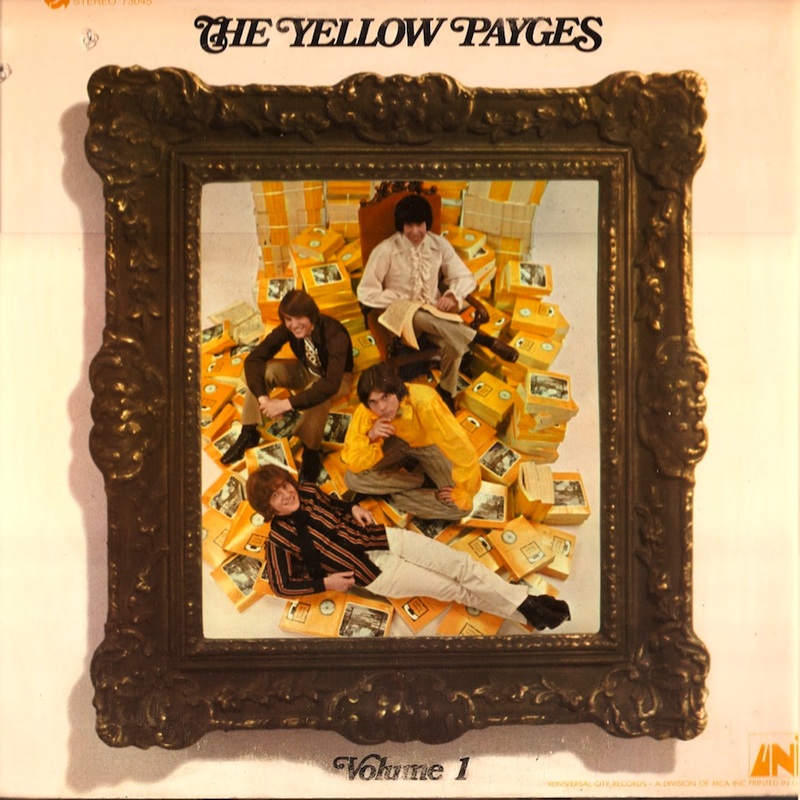
Title: Vol. 1
Year: 1968
Format: LP
Label: UNI
Garage rockers the Yellow Payges formed in Torrance, California in the fall of 1965 — while attending a performance by friends the Palace Guard at the Hollywood club the Hullabaloo, vocalist Dan Hortter took the stage to sing a rendition of “I’m a Man,” so impressive that club owner Gary Bookasta hired Hortter’s own band to back the Newbeats two weeks later. The problem was, Hortter’s previous band, the Driftones, had dissolved months earlier, but he quickly assembled a new Driftones’ lineup including guitarists John Knox and Larry Tyre, bassist Herby Ratzloff, and drummer Terry Rae, also a member of the Palace Guard. Rae resigned almost immediately after the Newbeats gig, with drummer Dan Gorman signing on in time for the group to change its name to the Yellow Payges.
They were soon playing the Hullabaloo on a steady basis, with Bookasta signing on as manager — in 1966, Knox, Tyre, and Ratzloff exited, with guitarists Bob Norsoph and Randy Carlisle, and bassist Mike Rummans signing on in their stead. When Norsoph and Carlisle quit soon after, Rummans moved to guitar, with Jim Lanham briefly assuming bass duties prior to the addition of bassist Teddy Rooney, son of Hollywood legend Mickey Rooney. In 1967, this Yellow Payges lineup issued their debut single, the Showplace label effort “Never See the Good in Me” — “Jezebel” followed later that year, and both records generated enough local buzz to earn the band a contract with major label UNI.
In addition to releasing their label debut “Our Time Is Running Out,” in late 1967, the Yellow Payges closed out the year as part of Dick Clark’s Happening ‘67, a package tour which traveled to 45 U.S. cities in 45 days. In mid-’68, both Rummans and Rooney exited, with Hortter and Gorman quickly recruiting guitarists Bill Ham and Bob Barnes, both products of Fort Worth, Texas (a geographic quirk resulting in some confusion as to the band’s actual hometown). On August 16, the Yellow Payges played their biggest-ever show, appearing at the Hollywood Bowl on a bill headlined by the Animals, the Rascals and Tommy James & the Shondells; they spent much of the year to follow supporting their singles “Childhood Friends” and “Crowd Pleaser” on tour with the Animals, later spending six months opening for the Beach Boys.
The band’s debut LP, Vol. 1, appeared on UNI in mid-’69, generating the singles “Never Put Away My Love for You,” and “Vanilla on My Mind”; “Follow the Bouncing Ball” appeared in 1970, and their cover of the warhorse “I’m a Man” (a nod to Hortter’s big break) fell just two slots shy of cracking the Billboard Hot 100. Somewhat ironically, it was a campaign with AT&T that spelled the Yellow Payges’ demise: hired by Wall Street advertising firm Cunningham & Walsh as part of a phone company-sponsored campaign designed to appeal to young audiences, the band was forced to appear in commercials in yellow satin ruffled shirts, effectively destroying their credibility and their momentum. After one final single, “Moonfire,” the Yellow Payges dissolved in late 1970 — Barnes later backed Kinky Friedman under the alias Roscoe West, and also collaborated with T-Bone Burnett. (Jason Ankeny, All Music Guide)
Track Listing
- The Two Of Us
- Little Woman
- Friends
- Boogie Woogie Baby
- Crowd Pleaser
- Moonfire
- Devil Woman
- Never Put Away My Love For You
- I’m A Man/Here ‘Tis
Disclaimer: The link below may point to content that is copyrighted. redtelephone66 only provides this link with the understanding that you are responsible for the content you download. redtelephone66 does not engage in music piracy, nor do we do host, fileshare, or otherwise trade in copyrighted works.
Roxy – Roxy (1969)
Title: Roxy
Year: 1969
Format: LP
Label: Elektra
One of the most infamous ‘names’ in Canadian rock is Bob Segarini. The native of Stockton, California began his musical journey amidst the 50’s crowd, growing up while caught in Beatlemania. After moving to LA, his first formal band was a local group called The Ratz, with Gary Duncan, who’d later go on to form Quicksilver Messenger Service.
Soon after he formed Family Tree with guitarist/keyboardist Jimmy De Cocq, singer Michael Dure, Van Slater on drums and bassist Bill (Kootch) Trochim. They soon gained an almost cult-like following on the West Coast music scene. They released their only lp in the summer of ‘68 on RCA Records – MISS BUTTERS an album that Elton John credits in his top 20 and very influential to his own solo career. Despite the moderate success of the lead off track “Birthday/Dirgeday”, “Melancholy Vaudeville Man” and “Miss Butters Lament” co-written by Harry Nilsson, they soon disbanded.
Segarini and DeCocq formed Roxy with bassist/singer Randy Bishop soon after, releasing one album in the spring of 1969 on Elektra. But again, one record was all she wrote for that band as well, despite the success of “Love Love Love”, the eerie and moody “Yesterday’s Song” and “Rock and Roll Circus”. Jim De Cocq split from Roxy soon after its release, reportedly due to an argument that ensued over the LAST cigarette during a late night recording session. He would go on to a moderately successful solo career with Lee Michaels.
Segarini and Bishop meanwhile collaberated on their next project almost immediately after Roxy’s demise, and were joined by ‘Earnie’ Earnshaw (drums), Mike Stull (guitar), and former Family Tree member ‘Kootch’ Trochim to form The Wackers. (Canadian Classic Rock)
Track Listing
- Love Love Love
- Sing A Song
- New York City
- Somebody Told You
- Love For A Long Time
- Windy Day
- You Got A Lot Of Style
- I Got My Friends
- Yesterday’s Song
- Rock And Roll Circus
Disclaimer: The link below may point to content that is copyrighted. redtelephone66 only provides this link with the understanding that you are responsible for the content you download. redtelephone66 does not engage in music piracy, nor do we do host, fileshare, or otherwise trade in copyrighted works.
The Deep Six – The Deep Six (1966)
Title: The Deep Six
Year: 1966
Format: LP
Label: Liberty
From Southern California, this obscure five-man, one-woman pop-folk-rock group issued a self-titled album on Liberty in 1966. From the sounds of things (and the look of the group on the cover), they were a pop-oriented folk group hastily adapting to the folk-rock craze, with their white bread folk roots showing far more strongly than any newfound rock sensibilities. In this sense, as well as the all-over-the-place repertoire of the LP, they recalled the We Five, although they weren’t as good and there was a glossier Los Angeles sheen to the production.
The harmonies and their bent toward bittersweet melodies also bore some similarities to the Mamas & the Papas and the Peanut Butter Conspiracy, though they weren’t even remotely the same league as the Mamas & the Papas and not nearly as rock-oriented as the Peanut Butter Conspiracy. Their best song, the original “Rising Sun,” had an uncharacteristically gutsy fuzz guitar line, played as if the guitarist was afraid of burning fingers if the tone was sustained too long, and saw some regional airplay.
The Deep Six started out as a San Diego folk trio, evolving into a bigger folk-rockish band after they became the house band for the La Mesa folk club the Land of Oden, co-owned by their co-manager, Ken Mansfield. “Rising Sun,” according to the liner notes to the expanded Rev-Ola CD reissue of Deep Six, included a young Jim Messina on guitar, and made number three in Los Angeles, where the group based themselves for part of their short career.
Much of the music on their records (which, in addition to the LP, included a few non-LP singles) was played by top Hollywood session musicians, including Glen Campbell, Carol Kaye, Mike Deasy, Al Casey, Larry Knechtel, Ray Pohlman, and Barney Kessel; David Gates contributed some arranging. Neither the album nor the follow-up singles to “Rising Sun” sold well, and the group disbanded shortly afterward, with Barry Kane (who had been in the New Christy Minstrels and a duo with Barry McGuire) joining the lineup as the replacement for original member Dave Gray near the end.
After Deep Six, Ken Mansfield went on to work for Capitol Records and served as the first U.S. manager of Apple Records. Bassist Dann Lottermoser joined Stone Country, which did one album for RCA, and included noted country-rock singe/-songwriter Steve Young. The Deep Six album was reissued on CD, with all five of their non-LP songs added as bonus tracks, by Rev-Ola in 2003. (Richie Unterberger, All Music Guide)
Track Listing
- Paint It Black
- When Morning Breaks
- Unlock The Door
- What Would You Wish From The Golden Fish
- Somewhere My Love
- A Groovy Kind Of Love
- Solitary Man
- Counting
- Rising Sun
- Winds Of Morning
- Why Say Goodbye
- Where Were You When I Needed You
- Strollin’ Blues
- Things We Say
- I Wanna Shout
- Image Of A Girl
- C’mon Baby
Dunn & McCashen – Mobius (1969)
Title: Mobius
Year: 1969
Format: LP
Label: Capitol
This duo mixes popsike and singer-songwriter folk and have put together a pretty solid album here. It’s most well known for “Lydia Purple,” which would be covered by the Collectors and the Giant Crab, but there are a number of equally good songs beside it. My favorites are “Hitchcock Railway,” (also known via a cover version, by Joe Cocker), which has a killer bass part and cool trippy percussion effects, and “Rindy,” which has lovely harmonies.
A few of the songs have iffy horn and woodwind arrangements that contribute to a music hall feel that doesn’t really work. Otherwise, though, this is a strong genre piece that would be worth hundreds if it was a private press. The lyrics are a cut above the norm too. Ex-Deep Six. (Acid Archives)
Track Listing
- Hitchcock Railway
- Lydia Purple
- Charlie The Fer De Lance
- Liquid Opinion
- Secret Caves
- Sad Side Of Nowhere
- Rindy
- Corners
- Goodbye Friends
- You Think You’ve Got Problems!
- Sooner Or Later
Disclaimer: The link below may point to content that is copyrighted. redtelephone66 only provides this link with the understanding that you are responsible for the content you download. redtelephone66 does not engage in music piracy, nor do we do host, fileshare, or otherwise trade in copyrighted works.
Beast – Beast (1969)
Title: Beast
Year: 1969
Format: LP
Label: Cotillion
Formed in Denver, Colorado, Beast featured the talents of drummer Larry Ferris, keyboardist Gerry Fike, woodwind player Mike Kearnes, bassist Kenny Passarelli. singer David Raines, trumpet player Dominick Todero and former Super Band guitarist Robert Yeazel.
Following the loss of horn player Todero and bassist Passarelli (replaced by Roger Byrant), 1970′s cleverly-titled “Beast” was released on the Evolution label. Continuing their partnership with producer Norman Petty the album was again recorded at Petty’s Clovis, New Mexico studios. Musically the collection wasn’t too different from the debut. Anyone familiar with Lighthouse or Sugarloaf styled horn rock will be pretty comfortable with most of the material.
Slightly more varied than the debut, the flute propelled “Communication” and “Don’t You Think It’s Time?” reflected a quasi-jazzy feel, while the harmony rich “Inlook” sounded like an Association-styled slice of pop and “Move Mountain (You Got It)” found the band taking a stab at conventional hard rock. The overall effect was professional, if a little short on originality and inspiration … Packaged in one of the year’s uglier covers (credit to Charles E. Murphy), the set vanished without a trace, followed in short order by the band.
Following the band’s break up Ferris and Yeazel joined Sugarloaf, while Pasarelli hooked up with Joe Walsh in Barnstorm, followed by an extended career as an in-demand sessions player. (RDTEN! RYM)
Track Listing
- Prelude For Today / Floating (Down By The River)
- Spaceman
- Alley Sam (I Feel A Change)
- Goin’ Downtown
- Listen
- Cannabis Sativa L
- Ev’ry Man Hears Different Music
- Love Like
- Dear Ruth
- When We Rise
- (Strange Places Like) Santo Domingo
- On My Way
- Treat Her Right
- Wow Wow
Disclaimer: The link below may point to content that is copyrighted. redtelephone66 only provides this link with the understanding that you are responsible for the content you download. redtelephone66 does not engage in music piracy, nor do we do host, fileshare, or otherwise trade in copyrighted works.