
Elephants Memory – Angels Forever (1974)
Title: Angels Forever
Year: 1974
Format: LP
Label: RCA Victor
The Elephant’s Memory’s Angels Forever has the five men looking more like saints than angels on the cover. Stan Bronstein’s vocals on “Running Man” are as lightweight as the song. The late Jimmy Miller tracked a killer version of “I Heard It Through the Grapevine” with this group in the ’80s, a female vocalist over mesmerizing instrumentation.
This music from a decade before represents a band with much potential still struggling for identity. After releases on Buddah and Metromedia in the late ’60s and 1970, this is a different and revamped EM. Only Bronstein and drummer Rich Frank remain (he was listed as Reek Havoc on the Take It to the Streets release), and the changes in lineup were not as beneficial as those that would make a band like Blue Cheer so interesting.
“Face the Day” and “Going to a Party” show little musical expertise and less songwriting intrigue, making for really tough stuff — tough to listen to. “Rock & Roll Streaker” is the bastard-son sequel to Ray Stevens’ “The Streak” from this very same year, and if one song did not need a sequel, “The Streak” was it. “La Sopa” is the most interesting thing on side one, a Spanish-flavored instrumental showing that this version of the group actually had chops not seen on the more frivolous previous tracks.
Side two is much more interesting, a cover of the Otis Redding/Ray Charlesnugget “Tell the Truth” (by songwriter Lowman Pauling) sounds like it could be Delaney & Bonnie by way of Derek & the Dominoes — and with the flavor of the Dominoes “Tell the Truth,” though that Clapton composition is an entirely different tune. Bronstein and Frank’s “First to See the Last of Me” is reggae-pop, and here the band as an anachronism works and works well. They go back to their ’60s sound and all is not lost.
The title track is a failed experiment but everything else on side two really works, keyboard player Chris Robison’s “Tonite” the best original on the disc. With the right production it could have been a big ’70s hit, a surprising diamond in the rough that demands repeated spins. The fabulous Thunderthighs (who backed Lou Reed, Genya Ravan, and many others) shows up, adding something special to the mix.
Boy, if there were a few “Tonite”-type songs on this, Angels Forever would almost get the fame of the group’s recordings with John Lennon, Yoko Ono, and David Peel. “Hoochie Coochie Rockin Information Man” ends the album and sounds a lot better than the title may indicate. Angels Forever is a real Jekyll & Hyde project, but has enough good stuff to make it a keeper. (Joe Viglione, All Music Guide)
Track Listing
- Running Man
- Face The Day
- Going To A Party
- Rock ‘N’ Roll Streaker
- La Sopa
- Angels Forever
- Tell The Truth
- First To See The Last Of Me
- Tonite
- Hoochie Coochie Rockin Information Man
Disclaimer: The link below may point to content that is copyrighted. redtelephone66 only provides this link with the understanding that you are responsible for the content you download. redtelephone66 does not engage in music piracy, nor do we do host, fileshare, or otherwise trade in copyrighted works.

Elephants Memory – Take It To The Streets (1970)
Title: Take It To The Streets
Year: 1970
Format: LP
Label: Metromedia
New York had its fair share of bands, but because the city was (and still is) so diverse it’s hard to say that there was a distinct New York sound (outside of the 60s folk circuit), unlike places like Detroit or San Francisco. Take It to the Streets reflects this, as the band demonstrates skill with a multitude of styles. But instead of mixing them together, the band tends to shift between genres mid-song, and as a result there’s little emphasis on soloing. So what does Elephant’s Memory sound like?
Like a crazed rock band with auxiliary horns (Myron Yules on trombone and lead vocalist Stan Bronstein on saxophone) and left-wing pro-revolution lyrics. The opening track and supposed hit single “Mongoose” is a good example. One of their more conventionally structured songs, it sounds like a rough-and-tumble Chicago – African rhythms, gravely lead vocals, horns and a catchy chorus.
But the very next song, “Power”, showcases their radical political views with a primitive fast paced Detroit-sounding song driven by Rick Frank’s 1-2 drumming and shouts of “hey” (you can almost hear the fists being pumped in the air). The middle section turns into a trade off between two people shouting revolutionary advice before the horns completely change the tone of the song by entering mariachi style, without a change in the the beat.
But hand in hand with their protest lyrics is a good sense of humor, seen in lines like (“Rip up the judge / rip up the mail”) or tracks like pianist Myron Yules’ “I Couldn’t Dream” which is a catchy parody of overly serious hipster jazz, right down to the nonsensical lyrics. The rest of the album is at complete odds any attempt to simply think of them as “rock-jazz,” because it is mostly angry left-wing country rock. But it’s cleverly done – “She’s Just Naturally Bad” is a trashy delight with a women sing-along line in the chorus (“I’m just naturally bad,” of course).
Another example is “Piece Now”, where Detroit meets San Francisco in terms of sound, but the song is constructed with a counterpoint. Or what do you do with “Damn”, where the Beatles-country-rock ends, only to be followed by a Memphis Soul horn section that gets prolonged in hilarious fashion? The album is fascinating and smart, with only one track that doesn’t quite match the rest (“Ivan” another country rock tune).
The band is Stan Bronstein (lead vocals, tenor sax), Myron Yules (trombone, piano), Rick Frank credited as Reek Havoc (drums), John Ward (bass), David Cohen (guitar, keyboards), Guy Peritore (guitar) and Mike Rose (guitar). Bronstein and Frank are the only consistent ones credited with writing the songs (along with other members). No, I have no idea which guitarist does what. Produced by Ted Cooper. (Tripod)
Track Listing
- Moongoose
- Power
- Piece Now
- Tricky Noses
- She’s Just Naturally Bad
- I Couldn’t Dream
- Damn
- Ivan
Disclaimer: The link below may point to content that is copyrighted. redtelephone66 only provides this link with the understanding that you are responsible for the content you download. redtelephone66 does not engage in music piracy, nor do we do host, fileshare, or otherwise trade in copyrighted works.
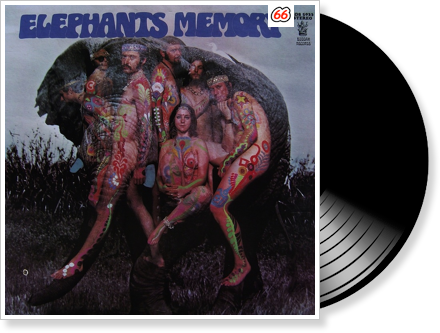
Elephants Memory – Elephants Memory (1969)
Title: Elephants Memory
Year: 1969
Format: LP
Label: Buddah
Elephant’s Memory were a seemingly wild bunch of folks from NYC who integrated jazz, rock, and some folk elements to form some freak out rock songs along with some more whimsical compositions, which brings me to the only real highpoint of this album: “Old Man Willow”, the seven minute mini-epic made somewhat legendary from its use in MIdnight Cowboy.
And it’s a major highpoint; a cosmic Warhol/Factory esque kaleidoscope of technicolor trippyness and space-girl notions, utilized three decades later by the likes of Stereolab and Broadcast. What a great song. As for the rest, ahhhhhhhh… (ignatius RYM)
Track Listing
- Don’t Put Me On Trial No More
- Crossroads Of The Stepping Stone
- Jungle Gym At The Zoo
- Super Heep
- R.I.P.
- Band Of Love
- Takin’ A Walk
- Hot Dog Man
- Old Man Willow
- Yogurt Song
- Brief Encounters
Disclaimer: The link below may point to content that is copyrighted. redtelephone66 only provides this link with the understanding that you are responsible for the content you download. redtelephone66 does not engage in music piracy, nor do we do host, fileshare, or otherwise trade in copyrighted works.
Edwards Hand – Stranded (1970)
Title: Stranded
Year: 1970
Format: LP
Label: RCA Victor
Rod Edwards and Roger Hand formed this inventive, psychedelic/progressive pop outfit after briefly recording as Picadilly Line. Having worked with George Martin on their self-titled debut, Edward’s Hand began recording at Morgan Studios in 1970, attempting to create a harder and more progressive sound than before. There where no nervous second album vibes here! The album is comprised of evocative and intelligent progressive pop songs immaculately produced featuring Edward’s and Hand’s distinctive harmonies to the fore.
The second half of the album is effectively a concept of alienation and isolation, covered in the 7 minute title track and the 12 minute epic ‘Death Of A Man.’ which includes an incredible ‘orchestra duelling-with-Moogs’ mid section followed by a beautifully majestic and Beatles-like coda.
The line drawing of a Southern Sheriff, ties in with the lyrics of ‘Sheriff Myras Lincoln’ — a song about an American racist policeman — and was subsequently banned and replaced with different artwork by RCA in the U.S. Clearly more confident and adventurous lyrically on this album, Edward’s Hand also had more time with George Martin during the pre-production stages. This preparation time, an intelligent lyric writing team and George’s complex yet concise orchestral arrangements give their second LP a much worldlier and unique feel. (Forced Exposure)
Track Listing
- Suite US: I. US Flag
- Suite US: II. Sheriff Myras Lincoln
- Suite US: III. Revolution’s Death Man!
- Suite US: IV. Encounter
- Suite US: V. Hello America
- Stranded
- Winter
- Death Of A Man: I. Die When You Must Die II. The Strife Is O’er The Battle Done III. He Is Gone IV. This May Sound Strange V. The Sentence Is Life
Disclaimer: The link below may point to content that is copyrighted. redtelephone66 only provides this link with the understanding that you are responsible for the content you download. redtelephone66 does not engage in music piracy, nor do we do host, fileshare, or otherwise trade in copyrighted works.
Train – Costumed Cuties (1970)
Title: Costumed Cuties
Year: 1970
Format: LP
Label: Vanguard
Train supposedly were a Danish band that relocated to the U.S. and signed with Vanguard possibly because of their connections with Mike Tschudin who was a member of another Vanguard group at the time, The Listening.
The original band included Garland Jeffreys and were managed by Mike Lang and Artie Kornfeld but were dropped after the Woodstock Festival demanded all their attention. They reformed without Jeffreys and with Tschudin producing, released this progressive psych album in 1970. (Max Collodie)
Track Listing
- Oink Oink
- Bishop Pawn Three
- Guest Hotel
- Screw You
- Lily White
- Dreams And Realities
- Costumed Cuties
- Hasting’s Worth Resolved
- Toe Jam
- Abolene Gold
- Love Is All
- Road Race
Disclaimer: The link below may point to content that is copyrighted. redtelephone66 only provides this link with the understanding that you are responsible for the content you download. redtelephone66 does not engage in music piracy, nor do we do host, fileshare, or otherwise trade in copyrighted works.
Touch – Touch (1968)
Title: Touch
Year: 1968
Format: LP
Label: London/Coliseum
Most fans of progressive rock tend to assume that the genre came into being in the U.K. somewhere around the time that the Nice changed tack from the psychedelia of songs like “Flower King of Flies” and “Diamond Hard Blue Apples of the Moon” in favor of monkeying around with Sibelius and Tchaikovsky. Yet there’s an equally strong case to be made for Touch’s one remarkable album, recording sessions for which began as early as 1968, as the true progenitor of prog. The difference is that by the time Keith Emerson was whipping up a media frenzy for his on-stage knife-wielding, Touch were already plummeting earthwards.
The band was essentially the brainchild of keyboard player Don Gallucci, already assured a footnote in rock history as a 16-year-old member of the Kingsmen. In fact, it’s his piano that introduces what most people consider to be the definitive version of “Louie, Louie.” By the mid-’60s he’d left to form his own moderately successful band, Don & the Goodtimes, alongside vocalist Jeff Hawks, guitarist Joey Newman, and, later, bassist Bruce Hauser and drummer John Bordonaro.
The band inevitably began to gravitate away from its R&B roots toward music of a more cosmic mien around 1967, and the name change to Touch soon followed. Gallucci in particular was now composing music that owed as much to jazz and classical forms as it did to rock, and when the band began rehearsing his new material in a Moorish-style castle in the Hollywood Hills, word quickly spread that something special was afoot.
Soon, record company execs were being lured to the castle, plied with drugs, and exposed to the band’s formidable sonic assault. A bidding war ended with Coliseum/London Records snapping them up for the then exorbitant fee of $25,000. Recording sessions commenced shortly after at Sunset Sound. It was at this point that the Touch sessions began to acquire legendary status, as a succession of rock superstars began to join the assembled freaks and partygoers drawn by the Touch vibe to hear for themselves what all the fuss was about. Mick Jagger was the first, followed by Jimi Hendrix and Grace Slick. For his part, Hendrix ended up so impressed that he rented studio time just so he could listen to the whole album.
Gallucci, still only 19, grandiloquently called the album “a spiritual quest put to music, a search for the Holy Grail of its generation by way of sound.” But when the record company suggested that Touch take their spiritual quest on the road, Gallucci bluntly refused, insisting that it would have been impossible to re-create the music’s complexities live. Soon, with their advance spent and sales dwindling, the bandmembers were reduced to using the antique furniture in their rental house for firewood. They split shortly after, leaving other bands to pursue their Holy Grail of sound.
Gallucci’s extraordinary potential was never fulfilled. Aside from the odd abortive film soundtrack, he worked briefly as a producer, helming albums by the Stooges and Tom Waits before leaving the music business entirely for a career in real estate. As for his band’s legacy, Touch were hailed as inspirational by bands like Yes, Kansas, and Uriah Heep, but their influence has never been even remotely reflected in the sales of their sole album, which only received its first CD release in 1993. (Christopher Evans, All Music Guide)
Track Listing
- We Feel Fine
- Friendly Birds
- Miss Teach
- The Spiritual Death Of Howard Greer
- Down At The Circe’s Place
- Alesha And Others
- Seventy Five
Disclaimer: The link below may point to content that is copyrighted. redtelephone66 only provides this link with the understanding that you are responsible for the content you download. redtelephone66 does not engage in music piracy, nor do we do host, fileshare, or otherwise trade in copyrighted works.
The Alan Bown – The Alan Bown (1968)
Title: The Alan Bown
Year: 1968
Format: LP
Label: Music Factory
Alan Bown made an improbable rock star — though it could be argued that he was never really a “star.” With the trumpet as his instrument, he wasn’t even a terribly likely rock & roll bandleader, but he definitely was that, and for a lot of years. And if his bands’ recordings had been as successful as their live shows, he’d likely have been a star and then some.
Any musical aspirations that he harbored were invisible until he completed a stint in the Royal Air Force at the outset of the 1960s. He found a music scene that was booming throughout England with an important extension to Germany, and which encompassed not only rock & roll but also blues, R&B, and jazz. The latter two areas were where Bown’s interest lay, and he was soon a member of a group called the Embers that was booked into the Star Club in Hamburg, Germany, working on the same bills as such Liverpool-based artists as Tony Sheridan, the Beatles, the Undertakers, et al.
He returned to England after the extended engagement and joined the John Barry Seven, led by the trumpeter/arranger John Barry. He was actually more involved with the group than Barry, whose burgeoning careers as a record producer and film music composer were taking off in a big way and keeping him busy outside of performing. When Barry disbanded the group in 1964, Bown picked up the pieces and formed an outfit of his own — his proposed name was ABC, standing for Alan Bown Community, but at the behest of his manager he chose the Alan Bown Set instead. The sextet was an immediate success as a live act, and it became an audience and critical favorite in London.
Oddly enough, Bown and company never even thought about a recording contract, intending the band as a vehicle for steady work for themselves, doing what they enjoyed. It wasn’t until a couple of years into their history that Tony Reeves (the future member of Colosseum), an A&R man for Pye Records, spotted the Alan Bown Set and got them under contract, which resulted in a string of 45s and half of an LP called London Swings that included part of their live show, in tandem with Jimmy James & the Vagabonds. The Pye contract ended in late 1967, and the group was then signed to the British division of MGM Records, to an imprint called Music Factory.
By this time, they’d modified their image and sound — the interest in R&B and soul was fading somewhat in the London clubs, even as psychedelic music was starting to become all the rage. And so, for its MGM/Music Factory releases, a somewhat longer-haired and more flamboyant version of Bown’s band was seen, and in lieu of the Alan Bown Set, the group was simply known as the Alan Bown!, complete with exclamation point. They cut a song called “We Can Help You,” which had originated with the British band Nirvana — and the Alan Bown version started to make a splash in England in terms of exposure.
But on the week of the record’s actual release, disaster struck on both sides of the Atlantic simultaneously. A strike at the plant where the record was pressed and due to ship from prevented its release, at precisely the moment when it had to be in stores. And MGM Records chose to abandon the Music Factory label — though the Alan Bown! would remain with the company on the MGM label proper, this also meant that the company abandoned all promotional and distribution efforts involving the Music Factory releases.
“We Can Help You,” despite a string of promotional appearances by the band on its behalf (including the television show Top of the Pops), was left to die and rot on the vine, and the accompanying LP, called Outward Bown, was ignored. A pair of singles that followed, “Toyland” b/w “Technicolour Dream” and “Story Book” b/w “Little Lesley,” both failed to chart. The album included the group’s psychedelic pop version of Bob Dylan’s “All Along the Watchtower,” which the Alan Bown! had been doing in their live shows as well — the record label would never consider it for a single release, but Jimi Hendrix (who apparently knew their version) was more successful with his own Track Records label and got a hit single out of the same song.
A contract with Deram Records, the progressive rock imprint of English Decca, followed, along with a pair of singles and a self-titled LP, and there was also a lineup shift that, for a time, brought Robert Palmer into the group as its lead singer. But despite a lot of touring and television exposure, and the reconstituting of its sound and image in a much more progressive rock vein, the group’s moment had clearly passed by the start of the new decade. Even a signing to the Island label failed to re-ignite their commercial prospects, though Bown did keep a version of the band — including Mel Collins on saxophone — together for touring purposes as late as 1972.
After that last tour, Bown himself — following a short stay in a band called Jonesy — moved on to a producer’s spot with British CBS Records, where he was one of those involved with the signing of Mott the Hoople and Sailor. By the 1980s, he had long since abandoned performing in favor of the business side of the music business, and started his own production and publishing company. Thanks to the continued reissue of his ’60s-era recordings, however, he remains a much-loved and fondly remembered figure as a performer, from the British beat era into the psychedelic period. (Bruce Eder, All Music Guide)
Track Listing
- Toyland
- Magic Hankerchief
- Mutiny
- Little Lesley
- All Along The Watchtower
- Sally Green
- Penny For Your Thoughts
- Story Book
- Technicolour Dream
- We Can Help You
- Love Is A Beautiful Thing
- Violin Shop
- You’re Not In My Class
- My Girl The Month Of May
Disclaimer: The link below may point to content that is copyrighted. redtelephone66 only provides this link with the understanding that you are responsible for the content you download. redtelephone66 does not engage in music piracy, nor do we do host, fileshare, or otherwise trade in copyrighted works.
The Paupers – Magic People (1967)

Title: Magic People
Year: 1967
Format: LP
Label: Verve Forecast
The group was formed as The Spats in Toronto during 1964 by ex-Riverside Three drummer Skip Prokop (born Ronn Prokop, December 13, 1943 in Hamilton, Ontario, Canada) and rhythm guitarist/vocalist Bill Marion aka Bill Misener (born in Hamilton, Ontario, Canada). The other original members comprised lead guitarist Chuck Beal (born April 6, 1944 in Scarborough, Ontario, Canada) and bass player Denny Gerrard (born February 28, 1947 in Scarborough, Ontario, Canada).
According to legend, The Spats rehearsed for 40 hours a week, sometimes on a 13-hour a day shift, and as a result became one of Toronto’s tightest acts. After changing their name to The Paupers in early 1965, the group attracted the attention of local manager Duff Roman, who signed them to Toronto’s independent label Red Leaf. In March 1965, the label issued Prokop and Marion’s “Never Send You Flowers” as the group’s debut single and it soon became a modest local hit, as did the follow up “If I Told My Baby”. During August, the group appeared at the Canadian National Exhibition’s under 21 club with David Clayton-Thomas & The Shays.
As 1966 dawned, the band signed a new deal with Duff Roman’s label Roman Records which issued the group’s next single “For What I Am”. A cover of “Long Tall Sally” followed in the spring of 1966, by which point the group had parted with Roman (who subsequently became program director of CKFH) and signed up with Bernie Finkelstein (later Bruce Cockburn’s longstanding manager). However, shortly after a show at the El Patio on July 24, 1966, Marion left (after his wife gave him an ultimatum) and subsequently recorded a solo single before moving into production work and playing with The Last Words.
Adam Mitchell joins for classic Paupers line up
In his place, The Paupers recruited Scottish émigré Adam Mitchell (born November 24, 1944 in Glasgow, Strathclyde, Scotland) from the CommonFolk (a folk group featuring Doug Bush, Ian Rankin and Bruce Whitehead), apparently on an hour and a half’s notice. Mitchell quickly asserted himself as the group’s new lead singer and chief songwriter with Skip Prokop and debuted with the band at the Broom and Stone in Scarborough on August 14, 1966.
Finkelstein signed the new line-up to New York label MGM shortly afterwards and on September 24 the group made a prestigious appearance at a 14-hour pop music show held at Toronto’s Maple Leaf Gardens, featuring 14 top local bands. The following month, on October 2, the band supported Wilson Pickett at the Club Kingsway in Toronto. Later that year, on December 11, The Paupers (together with Ottawa band, The Children) supported The Lovin’ Spoonful at Toronto’s Maple Leaf Gardens.
The group’s live reputation began to spread and in early 1967, Bob Dylan’s manager, Albert Grossman, convinced Finkelstein to sell his interests in the group. Grossman re-negotiated the MGM contract and signed the band to its associate label Verve Forecast. The group’s debut single with Mitchell, “If I Call You By Some Name” was released and reached #31 on Canada’s RPM chart, the band’s biggest hit. Apparently The Paupers hated it, feeling that it wasn’t representative of their music.
Upstaging Jefferson Airplane
The single was followed by a well-received appearance at New York’s Cafe Au Go Go from February 21-March 5 1967 supporting Jefferson Airplane, where apparently they “blew the latter away”. The group remained in the city to cut its debut album with Rick Shorter and then set out for a series of concerts on the West Coast including several appearances at San Francisco’s Fillmore Auditorium and the Monterey International Pop Festival on June 16.
Back in Toronto in late summer, the band issued its latest single “Magic People”, which was followed by an album of the same name. MGM then sent the group on a $40,000 promotional tour where they played 17 US cities in a month. The tour included an appearance at New York’s Cafe Au Go Go opening for Eric Clapton’s band Cream, scheduled for September 28-October 1 (but cut short due to faulty equipment) and headlining at the Grande Ballroom in Detroit with The MC5 in support on November 3-5, 1967.
Paupers lose inspirational bass player
In November 1967, The Paupers debut album, “Magic People” peaked at US #178, but its modest success was overshadowed by Denny Gerrard’s departure in early 1968. His replacement was bass player/vocalist Brad Campbell from Marion’s previous group The Last Words. Around the same time, The Paupers also added (for live purposes) former BTB4 keyboard player Peter Sterbach, but he only stayed for about a month.
In January 1968, a final single had been lifted from The Paupers’ debut album, “Think I Care” (considered by many to be the early group’s definitive song), but it failed to chart. Prokop started to grow restless and was soon drawn into the lucrative session world; he duly appeared on Peter, Paul & Mary’s single “I Dig Rock And Roll” and Richie Havens’ album “Something Else” amongst others.
The band continued to play high profile dates and on February 24, supported The Jimi Hendrix Experience and The Soft Machine at the CNE Coliseum in Toronto. This was followed by a second US tour, which proved to be as memorable as the first – in April (2-4) the group was playing in Chicago at the Kinetic Playground when Martin Luther King was assassinated and narrowly missed the subsequent riots.
Prokop leaves to form Lighthouse
During July, the group added John Ord (born April 3, 1945 in London, England) from The Fraser Loveman Group and The Nuclear Tricycle on keyboards, who debuted with the band at the Grande Ballroom in Detroit early the following month.
Internal problems however, continued to dog the band. Following a final date at New York’s Electric Circus running from August 29-September 1, Prokop left to form Lighthouse, while Campbell joined Janis Joplin’s Kozmic Blues Band. The band’s second album “Ellis Island” was released in the aftermath of the group’s break up and was a maturer offering than the debut. Side two included (arguably) the band’s best work and on several tracks, the Japanese instrument the koto was employed. A final single, Mitchell’s “Cairo Hotel” (later recorded by McKendree Spring) was released simultaneously, but failed to chart.
Playing to pay off debts
In October, a new line-up of The Paupers featuring Mitchell, Beal and Ord was formed (to pay off the existing debt) with original bass player Denny Gerrard (who’d played with McKenna Mendelson Mainline in the interim). Roz Parks (born April 15, 1945 in Picton, Ontario, Canada) from Edward Bear and Magic Circus completed the line up. The new Paupers’ line up debuted at the Night Owl in Toronto on October 26-27 and continued to play locally to positive reviews.
Gerrard, however, soon left followed by Mitchell in April 1969. The remaining members brought in James Houston (born May 25, 1946 in Belfast, Northern Ireland), who had previously played with Parks in the Magic Circus, and bass player Mel O’Brien, and returned to the local club scene. Later that year, the Houston-led line up returned to the Night Owl for a show running from August 7-8 but broke up later that month.[edit]
Aftermath
Mitchell briefly embarked upon a solo career, playing the folk circuit in Ontario and then worked as a producer for the likes of McKenna Mendelson Mainline and Linda Ronstadt. Gerrard joined Luke & The Apostles briefly before forming Jericho in March 1970. Beal worked as a record producer and manager, and was last heard of working at the Canadian National Institute for the Blind, producing a talking book series. Ord’s band backed Chuck Berry in the summer of 1969. Houston formed his own eponymous band, Houston and worked with Parks and Gerrard in Tranquillity Base. (Max Collodie)
Track Listing
- Magic People
- It’s Your Mind
- Black Thank You Package
- Let Me Be
- Think I Care
- One Rainy Day
- Tudor Impressions
- Simple Deed
- My Love Hides Your View
- You And Me
- One Rainy Day (With Harmonica Intro Mono) [bonus cut]
- If I Call You By Some Name [bonus cut]
- Copper Penny [bonus cut]
- White Song [bonus cut]
Disclaimer: The link below may point to content that is copyrighted. redtelephone66 only provides this link with the understanding that you are responsible for the content you download. redtelephone66 does not engage in music piracy, nor do we do host, fileshare, or otherwise trade in copyrighted works.
The Paupers – Ellis Island [Mono] (1968)

Title: Ellis Island
Year: 1968
Format: LP
Label: Verve Forecast
The band’s second album “Ellis Island” was released in the aftermath of the group’s break up and was a maturer offering than the debut. Side two included (arguably) the band’s best work and on several tracks, the Japanese instrument the koto was employed.
A final single, Mitchell’s “Cairo Hotel” (later recorded by McKendree Spring) was released simultaneously, but failed to chart. (Wikipedia)
Track Listing
- South Down Road
- Cairo Hotel
- Can’t Go On
- Another Man’s Hair On My Razor
- Numbers
- Oh That She Might
- Yes I Know
- Ask Her Again
- Julliana
Disclaimer: The link below may point to content that is copyrighted. redtelephone66 only provides this link with the understanding that you are responsible for the content you download. redtelephone66 does not engage in music piracy, nor do we do host, fileshare, or otherwise trade in copyrighted works.
Status Quo – Messages From The Status Quo (1968)
Title: Messages From The Status Quo
Year: 1968
Format: LP
Label: Cadet Concept
Over the course of some 25 years and 30 albums Status Quo have become major stars in their native England. Unfortunately, in spite of occasional brushes with the American charts, the group’s never managed to attract much attention in the States.
The group’s roots can be traced to 1962 when school friends Mike “Francis” Rossi and Alan Lancaster formed a jazz combo. With the addition of drummer John Coghlan and keyboard player Jesse Jaworski the band began playing school dances and local clubs as The Spectres. Replacing Jaworski with Roy Lynes in 1965 the group signed with the small Piccadilly label. After releasing three unsuccessful singles the group changed it’s name to Traffic Jam. Unfortunately, after Traffic Jam’s first single (“Almost But Not Quite”) was banned by the BBC the group was dropped from Picadilly’s recording roster.
Left without a contract the band found itself forced into the role of back up band for stablished acts such as Madeline Bell and Tommy Quickly. Adding to their problems, the band found themselves threatened with a lawsuit from Island Records which was concerned with the similarity between the Traffic Jam name and that of Steve Winwood’s Traffic. Traffic Jam quickly became Status Quo.
Following the addition of guitarist Richard Parfitt the band was signed to Pye Records (Chess’ Cadet Concept subsidiary acquiring American distribution rights). Produced by John Schroeder, their 1968 debut “Picturesque Matchstickable” showcased an entertaining, if uneven collection of psychedelic pop. In one of those odd marketing moves the English and American releases differed significantly. Retitled “Messages from the Status Quo” for the American market, Cadet Concept opted for new cover art, as well as a different track listings – covers of The Lemon Pipers’ “Green Tambourine” and Tommy Roe’s “Sheila” dropped in favor of original material.
Musically the set was surprisingly impressive, tracks such as “Black Veils of Melancholy”, “Sunny Cellophane Sky” and “Technicolor Dreams” opting for a heavy psychedelic influence, while “Ice In the Sun” (Written with ’50s rocker Marty Wilde) and a cover of The Bee Gees “Spicks and Specks” offered up a lighter, more commercially oriented attack. Released as a single, the instantly recognizable title track b/w “Gentlemen Joe’s Sidewalk Cafe” provided the band with their only American top 40 hit. In spite of the hit and two brief American promotional tours, the LP failed to attract much domestic attention, Cadet Concept quickly electing to drop it’s American distribution rights. (Bad Cat)
Track Listing
- Black Veils Of Melancholy
- When My Mind Is Not Live
- Ice In The Sun
- Elizabeth Dreams
- Gentleman Joe’s Sidewalk Cafe
- Paradise Flat
- Technicolor Dreams
- Spicks And Specks
- Sunny Cellophane Sky
- Pictures Of Matchstick Men
Disclaimer: The link below may point to content that is copyrighted. redtelephone66 only provides this link with the understanding that you are responsible for the content you download. redtelephone66 does not engage in music piracy, nor do we do host, fileshare, or otherwise trade in copyrighted works.