
Raw – Raw Holly (1971)
Title: Raw Holly
Year: 1971
Format: LP
Label: Coral
Raw Holly is a tribute album of sorts to Buddy Holly hits by the British band Raw which was produced by veteran British musician Miki Dallon and featuring the vocals of Ian Campbell and the guitar & sitar of Zed Jenkins. Ironically, the album was released on Holly’s U. S. label Coral Records. (Jack Dominilla)
Track Listing
- Raining In My Heart
- Baby My Heart
- Little Baby
- Well All Right
- Love’s Made A Fool Of You
- Rock Me My Baby
- Midnight Shift
- Maybe Baby
- Listen To Me
- What To Do
- Not Fade Away
Stephen Miller – Stephen Miller (1970)
Title: Stephen Miller
Year: 1970
Format: LP
Label: Philips
Solo album by Stephen Miller, organ/vocalist for Linn County. Miller is joined on this album by Elvin Bishop and members of his band. A pretty decent album of southern blues rock. (Jack Dominilla)
Track Listing
- Got Frustration
- Have Your Mind Gone Dead
- Honeydripper
- It’s A Fact Of Life
- Man On The Move
- Pink Steam
- Pipeliner
- Sea Cruise
Disclaimer: The link below may point to content that is copyrighted. redtelephone66 only provides this link with the understanding that you are responsible for the content you download. redtelephone66 does not engage in music piracy, nor do we do host, fileshare, or otherwise trade in copyrighted works.

Melting Pot – Fire Burn, Cauldron Bubble (1971)
Title: Fire Burn, Cauldron Bubble.
Year: 1971
Format: LP
Label: Ampex
Melting Pot consisted of Jerry Thompson (drums-percussion), Dick gentile (organ-piano-lead vocals), Kenny Tibbets (bass-organ-lead vocals), Howie McGurty (tenor sax-barritone sax-trumpet), Steve Nichols (trombone), Bill Witherspoon (tenor sax-barritone sax-lead vocals), Paul Hmurovich (trumpet), Mickey Smith (lead guitar) and Joe Rudd (lead guitar).
“Melting Pot was a Rock Funk outfit that released at least two albums. Of the two, this is the better (yes, but this is a noisy rip SS). The band’s sound is very similar to Blood, Sweat & Tears (i think it’s closer to Chicago, SS) with a mix of Rock and Soul, right down to the vocals sounding alike. Actually, the music is usually better than the singing such as on As I Lay Dying that has a really funky guitar riff. That’s followed by the soulful Feeling Alright. Even better is a cover of Kool & The Gang’s self-titled fast paced instrumental Funk cut. The slow groove of Tell The Truth is also pretty good.” (Soul Strut)
Track Listing
- Fugue To Rosie
- Await The Coming Day/Why Be Lonely
- As I Lay Dying
- Feeling Alright
- Welcome To The Party
- Kool And The Gang
- Sunday Tree
- Tell The Truth
Pepper Tree – You’re My People (1971)
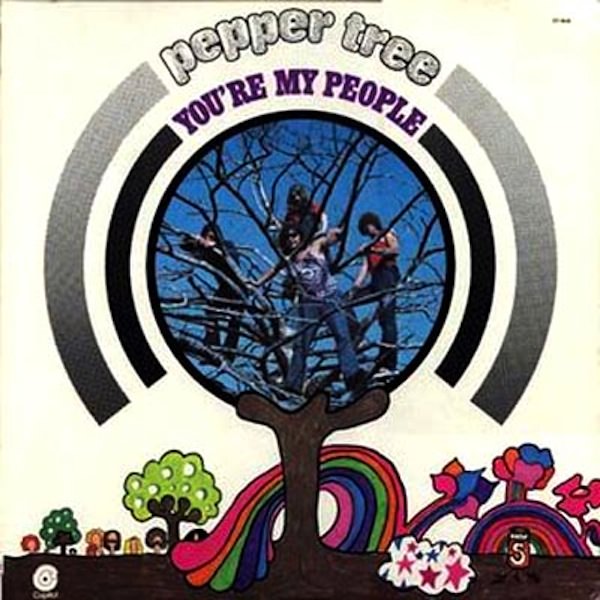
Title: You’re My People
Year: 1971
Format: LP
Label: Capitol
The Pepper Tree was the culmination of a handful of bar bands in Nova Scotia, formed when drummer Tim Garagan left his band Friends of The Family and got together with guitarist Ritchie Richmond and Lenny Brennan on bass when those two left their previous group Lost Children in ‘67. They soon augmented their sound with Tony Argent as a second guitarist, ex of The Outcasts. To set themselves apart from the rest they then persuaded friend Bonnie Oulton to take on lead vocal duties.
Beginning with their first show in Hubbards, NS, they honed their chops playing the bars and continued to refine and diversify their sound when Argent was replaced by keyboardist Bob Quinn and Doug Billard, ex of Central Nervous System replaced Oulton on vocals in mid ‘68. Developing an acid/psychadelic meets Partridge Family sound unique to the area, they were noticed one night by a talent scout who recommended they cut a demo and send it to Capitol Records.
The basement tape impressed Capitol’s Wayne Paton enough he signed them to a deal in ‘69 and took them to Toronto’s Nimbus 9 Studios to work with Jack Richardson (Alice Cooper, Bob Seger, Guess Who). Capitol only wanted original material, and they came out with “Everywhere,” backed with “Mr Pride,” both written by Garagan. Next up was “Shine Light Shine” and its b-side “Hometown Girl.” Though neither single was a ’smash hit’, both charted and impressed label execs enough they encouraged the band to move to Toronto, closer to the studios and closer to the obviously huger potential market.
But some members were unwilling to make the move, and the band was basically reinvented, as Billard, Brennan and Richmond all stayed home. Jim White, ex of Axis, who Billard had played with back home on the coast with both Central Nervous System and Five Sounds was friends with Garagan and Quinn and was now living in Toronto as well. He agreed to be the new guitarist. And after Cornerbrook, NFLD native Chris Brockway answered an ad to fill in the bass position, the next phase of the band was set.
With Capitol confident enough in the band’s ability, Garagan took on the lead vocal chores, and they made their mark on the Ontario circuit and moved to Alliston, ON in 1970. Paton convinced them to drop ‘The’ from their name, and they began writing material for an album and brought back Jack Richardson when they went into RCA’s Toronto studios. YOU’RE MY PEOPLE was released the next summer, which ran the gamut of psychadelic and pop sounds. Garagan was the chief songwriter, contributing on or writing himself all but Quinn’s “How Many Times.”
The album featured the nearly six-minute live favourite “Airplane” – complete with an organ solo, and the album’s two singles, “Try” and the title track, with its melancholy “From A Candle” as the b-side. The album was released Stateside in the spring of ‘71, after White left the group. American copies actually mistakenly credited new guitarist Joel Zemel, a Halifax native, as the guitarist.
Not totally satisfied with the band, Capitol urged the band to pick up a new frontman, and Matt Minglewood, formerly of Universal Power and a fellow Maritimer was brought in on guitars and lead vocalist. But his tenure was short, and left to form Cold Duck before year’s end. His replacement, Terry Hatty, also had a short stay in the band and was also gone after only a few months, putting Garagan back again as lead vocalist.
They released “Love Is A Railroad,” a Quinn composition as a single, which actually featured the already departed Zemel on guitars. The band continued to find east coast’ers, as they picked up Halifax’s Rick Edgett as his replacement, though he was replaced before long by Paul Butler. The band continued on the circuit, playing mostly eastern Canada dates but ventured into the US as well. They continued to try experimenting with their sound while maintaining their identity.
With Paul White producing, they cut “Midnight Lady,” “Teach Me How To Fly,” “Put A Smile On Your Face” and “Funky Music” as singles all by the summer of ‘72, none of which lived up to label execs expectations. The revolving door continued to spin, and founders Garagan and Quinn were both gone by the spring of ‘73. Brockway brought in Brian Too Loud Macleod as the new drummer, who’d previously played with Garrison Hill, and Ralph Parker to replace Quinn on keyboards.
Now there were not only no original members left, but the band had lost its Nova Scoitian identity entirely, as Brockway, Parker, Macleod and Butler were all Newfoundlanders. The band toiled away for the remainder of the year after being dropped by Capitol, but packed it in by the spring of ‘74. The lineup featuring Tim Garagan, Zemel, White and Brockway enjoyed a few shows and a few beers during a brief reunion in ‘91, two decades after their album’s release.
Garagan and Quinn both joined Molly Oliver a couple years after originally leaving Pepper Tree and moved back to Nova Scotia. After that band’s demise in the mid 70’s, Quinn became a songwriter for the likes of Roger Whittaker before forming Quincepts Productions Ltd, while Garagan became a session musician, as did Richmond before becoming an ordained minister. Brockway went on to play with Rhinegold, which also featured Lawrence Gowan, Brutus for a short time, then an early version of Wrabit, Hanover Fist and Lee Aaron. White and Argent’s paths would cross again shortly after the band’s demise, forming Snakeye and releasing one lp in ‘75.
Hatty formed Ram, another short-lived east coast band with only one lp under its belt. Billard went on to a moderately successful, albeit short solo career, charting with the single “I’ve Lost My Place” in ‘75 with United Artists. Zemel and Edgett still have on again, off again projects, and Macleod went on to tour with Edward Bear before playing with Chilliwack and then forming The Headpins. He went on to become a Juno Award-winning producer before succumbing to cancer in 1992. (canadianbands.com)
Track Listing
- You’re My People
- Carry On
- How Many Times
- Try
- Airplane
- Oh Yeah
- Yellow Man
- Turn Around
- I Could Not Control It
- From A Candle
- Workin’
Manchild – Manchild 1 (1972)
Title: Manchild 1
Year: 1972
Format: LP
Label: Capitol
Not to be confused with the late seventies Chicago soul group or the power rock trio from Miami for that matter, this Manchild was from Louisiana and consisted of David Bankston (lead vocals-high harmony-acoustic & electric guitar), Sherman Bernard (piano-bass-accordion-percussion), Sam Broussard (lead guitar-bass-mandolin-middle harmony) and Neale Lundgren (lead vocals-acoustic guitar-fife-drums-percussion).
The group was also joined by studio personnel including Kenny Malone (drums-percussion), Frosty Horton (bass) and Buddy Spicher (viola-violin- fiddle).
Lundgren had previously recorded as a soloist for Columbia and Epic Records in the 60s and in the 1980s became a Benedictine monk and recorded an album of original musical compositions documenting his years in the monastery entitled “Time Of The Harvest”.
Broussard as a teenager had shared the stage with the likes of Ramblin’ Jack Elliot, Sonny Terry, Brownie McGee and Dave Van Ronk. He went on to do studio work with Michael Martin Murphy, Nicolette Larson, Foster & Lloyd and Jimmy Buffet.
Bankston is a well known veteran of the American music landscape, after the break up of Manchild, he spent many years performing in musical theater and opera, and is currently associate professor of music at Coastal carolina University.
The album was recorded in Nashville under the auspices of Billy Sherill and is a strange but delightful mixture of progressive folk and rock that’s vocally similar in style to groups such as America or Loggins & Messina or instrumentally to “Shady Grove” era Quicksilver (that piano arpeggio in “Miss Mis’sippi sounds like it came from that lp’s “Flute Song”) some nice tracks here from “High Tailin’ Blues” and the yodeling vocal of “Love Dance” to the fifty-ish “City Lights” and “Song For A Dead Man”. (Prairie Prince Minsky)
Track Listing
- Live Right, Die Right/Cotton Eyed Joe
- High Tailin’ Blues
- Love Dance
- Dancing People
- Song For A Dead Man
- Going Home
- Land Lady
- City Lights
- Daddy
- Miss Mis’sippi
- One Fine Morning
The Ides Of March – World Woven (1972)
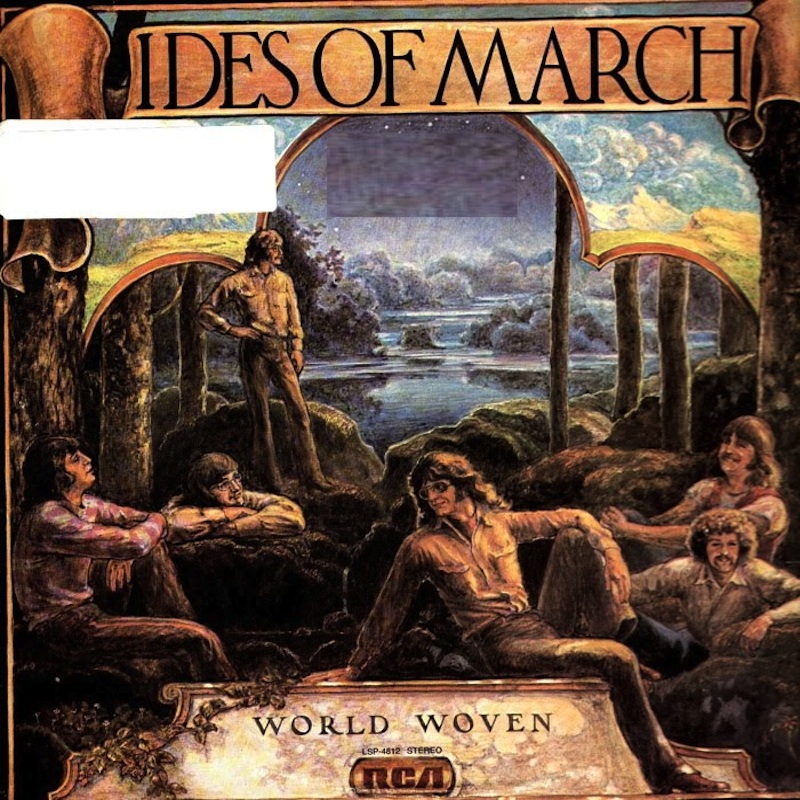
Title: World Woven
Year: 1972
Format: LP
Label: RCA Victor
In 1972, the Ides Of March moved to RCA Records and released World Woven,. At this point, the band departed from the “brass” sound (though one song featured a single trumpet) and the album produced no hit singles. (Wikipedia Excerpt)
Track Listing
- Mother America
- Baby’s Gonna Grow
- Diamond Fire
- Children
- Mellow Your Soul
- Landlady
- Flip Side
- Colorado Morrow
- All Join Hands
Gas Mask – Their First Album (1970)
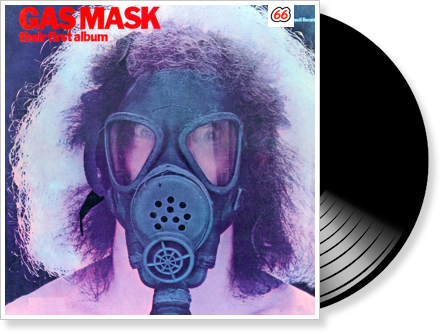
Title: Their First Album
Year: 1970
Format: LP
Label: Tonsil
Gas Mask were Ray Brooks (bass), Bill Davidson (guitar), Richard Grando (reeds), David Gross(sax), Nick Olivia (keyboards), Bobby Osborne (vocals,) Enrico Raja (trumpet), and James Strassburg (drums). (I remember seeing Grando in the credits of Earth Opera’s second lp, “American Eagle Tragedy”)
Signed to the small New York Tonsil label, the band’s 1970 debut “Their First Album” teamed them with producer Teo Macero. Musically the comparison with BS&T simply couldn’t be missed. Backed by a BS&T-styled horn section (Richard Grando, David Gross and Enrico Raja), singer Bobby Osborne’s growl came off as little more than a David Clayton-Thomas wannabe.
With Olivia responsible for the majority of the material (Gross contributing two selections), tracks such as “If You Just Think of Me”, “Light the Road” and “Just Like That” weren’t bad (particularly if you liked early BS&T). On the other hand, why bother when the original was readily available? Sales proved non-existent; certainly not helped by a dumb name and one of the year’s ugliest album covers. (Jack Dominilla)
Track Listing
- If You Just Think Of Me
- Light The Road
- The Immigrant
- Just Like That
- Thank You My Dear
- I’ll Go Blind
- The I Ching Thing
- Watch Myself Grow Tall
- Nothing To Do Today
- Young Man
Black Pearl – Black Pearl (1969)
Title: Black Pearl
Year: 1969
Format: LP
Label: Atlantic
Black Pearl was composed of Bernie “B.B” Fieldings (vocals), Bruce Benson (guitar), Oak O’Connor (drums), Geoffrey Morris (guitar), Tom Mulcahy (guitar) and Jerry Causi (bass). Morris, Causi and Benson had been members of the Barbarians, a 60s garage band noted for their extreme long hair for the times and their single, ” Are You a Boy or Are You A Girl”. The Barbarians were also noted for the band’s drummer, Moulty, who had lost one hand in a childhood accident and consequently played drums with a hook.
The band was formed after Barbarians’ singer and drummer Moulty refused to travel to Boulder, Colorado for a two week engagement. A new drummer, Oak O’Connor, plus Mulcahy and Fieldings, joined with ex-Barbarians Morris, Causi and Benson, all initially based in Boston, to form Black Pearl in 1967. The band relocated from Boston to San Francisco, after a period of time in Colorado.
Fieldings, who was white, was a wild showman who modeled his stage presence on that of James Brown. His admiration for James Brown was evident on the group’s live album, which contains a twelve minute version of James Brown’s “Cold Sweat”. As noted by one reviewer, “Black Pearl crank out some hard rockin’ psych-rock music with the most ferocious drumbeats you’ve heard in awhile.” The band’s three guitar lineup was considered to be both unique and powerful, being a format also found in contemporaries Moby Grape and Buffalo Springfield.
Black Pearl released two albums, Black Pearl (1969) and Black Pearl – Live! (1970), with the second being less well-received than the first. (Wikipedia)
Track Listing
- Crazy Chicken
- Thinkin’ ‘Bout The Good Times
- White Devil
- Mr. Soul Satisfaction
- Forget It
- Climbing Up The Walls
- Bent Over
- Endless Journey
- Reach Up
Rare Earth – Dreams/Answers (1968)
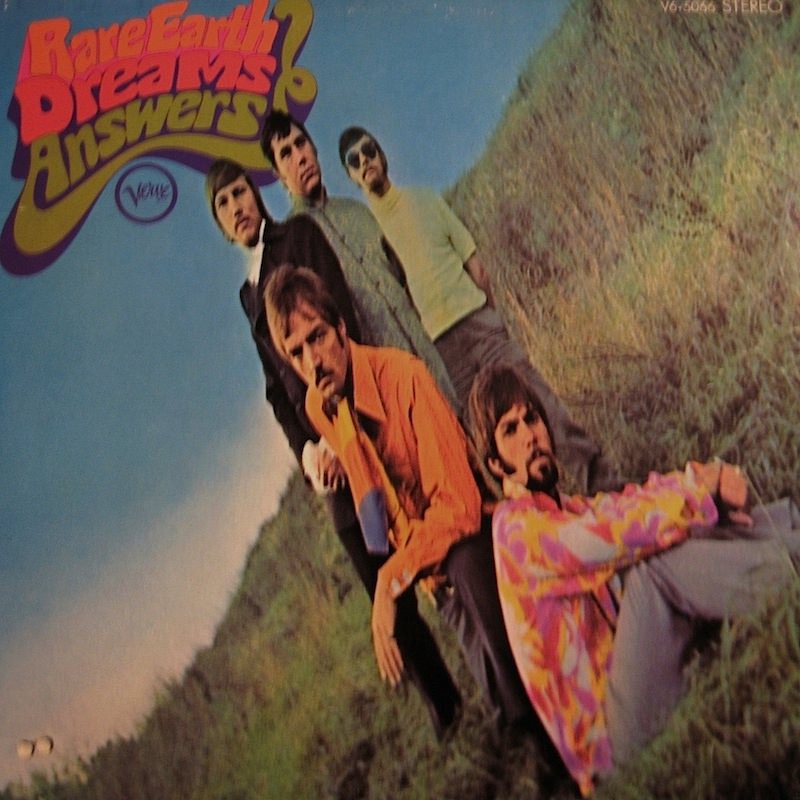
Title: Dreams/Answers
Year: 1968
Format: LP
Label: Verve
Rare Earth began as an R&B band called the Sunliners in Detroit in 1961. Of the musicians who would be part of the band dubbed Rare Earth, only sax player Gil Bridges and drummer Pete Rivera were present. John Parrish joined on bass in 1962. Rod Richards became a guitarist with the group in 1966.
Keyboardist Kenny James came into the fold the same year. After years of doing the club circuit, the group changed their name to Rare Earth and released Dreams/Answers on Verve. The album received little reaction and the group was picked up by Motown Records as the first act on their yet-to-be-named new label. Rare Earth suggested to Motown that the label name their new subsidiary after the band and Rare Earth Records was born. (Gary Hill)
Track Listing
- Stop/Where Did Our Love Go
- 6-3-4-5
- King Of Rainy Country
- New Rochelle
- Land Of Nod
- Mothers Oats
- Red Apple
- Get Ready
- Morning
- Searchin’
- Yesterday On Third Avenue
- Sidewalk Cafe
Lotti Golden – Motor-Cycle (1969)
Title: Motor-Cycle
Year: 1969
Format: LP
Label: Atlantic
I look forward to a time when labels will once again release hard-driving soul albums that play out like one long, campy musical. I guess R. Kelly’s episodic soap opera “Trapped in the Closet Pts. 1-whatever” is sort of in the ballpark, but while Kels offers his own Serge Gainsbourgian lecherousness, Lotti Golden leads us into the bizarre excursions of the late-’60s underground freaks. So fertile was the music scene of that period that an album of restlessly epic roadhouse suites could be released on a major label.
Golden gets help on Motor-Cycle from an impeccably arranged Atlantic Records session band. They give the album a wall-of-sound heft when called for and lay the foundation, in the midst of all that brass, with a flawless, swinging rhythm team. Then, at key moments, the curtain goes up and they’ve got rows of saxes, trumpets, vibes, and churchfuckingbells behind them, and you begin to realize that this is not the same song and dance. Furthermore, everyone is committed never to repeat the same progression for more than, say, 30 seconds, but also knows that at some point the song will return to each segment, just to remind you how great it was the first time around.
So, there’s that, and the emcee for this aberrant cabaret is Lotti Golden, nexus of the intemperate adventure starring a cast of sex fiends, drug addicts, and other proponents of the In The Now school of living. Motor-Cycle is exactly the sort of hazy deviant party you always hoped the late-’60s was. It plays out roughly like this: Lotti’s got a thing for this kid Michael, who “lets me ride his motorcycle. ” But Michael’s truth machine was starting to breakdown, so she heads to Fay’s, the meet-up spot for her coterie of malcontents. Anabell’s gonna be there, Silky’s gonna be there, Billy is gonna drop by, Celia’s gonna come by. But for Fay, whose French poodles keep her satisfied, it’s her doctor’s pills that keep her high, and she’s in trouble with the meds.
“Hey man, did you hear what happened to Fay? Yeah, it’s really a drag, what a bring-down. So where do you want to go? Rosie’s? That’s cool. Out of sight man, we’ll dig it! ”
And so the whole party up and moves to Rosie’s. No pause for introspection on poor Fay’s demise, no lessons learned, none of that crap; the good times must roll on. That’s kind of the M. O. of Motor-Cycle. If something heavy happens, slow the music down for a second, give a wail, then move on. With a crowd this colorful, there’s always another story to tell. Silky “had to get married quick in her mama’s red dress in a civil courthouse in Georgia. ” Her baby was baptized on a Monday, an occasion for Lotti to sip milk from a champagne glass in the rain. Problem is, Silky’s got a thing for drag queens, who have great parties but make shitty fathers.
Silky wants a straight man this time, a real butch guy. A bit of soul searching ensues, but not enough to interrupt the groove. Fact is, that groove is so infectious and permeating that you really have to pay attention to pick up on all the freaky storylines. It’s much simpler and just as pleasurable to latch onto that bass-line and horn hook and just ride along.
Motor-Cycle is that rare party record that’s got a bizarre story behind it while still being a freak-show record that you can throw on at dance parties. To make a crude comparison, it’s as if The Velvet Underground recorded for Motown. In short: debauchery with a beat. Dig it. (Path)
Track Listing
- Motor Cycle Michael
- Gonna Fay’s
- A Lot Like Lucifer
- The Space Queens
- Who Are Your Friends
- Get Together (With Yourself)
- You Can Find Him