
Earthquake – Earthquake (1971)
Title: Earthquake
Year: 1971
Format: LP
Label: A&M
Originally Purple Earthquake, the band drew its influences from rock and blues bands of the, such as the Kinks, Muddy Waters and the Yardbirds, and played clubs and ballrooms in California in the late 1960s. They were managed by Matthew K. Kaufman, who won them a contract with A&M Records, where they released two albums, “Earth Quake ” (1971) and “Why Don’t You Try Me?” (1972) but with little commercial success.
After experiencing frustration at what he saw as A&M’s incompetence in handling the band, Kaufman set up Beserkley Records in 1973. Earth Quake released four albums on Beserkley between 1975 and 1979, as well as working with other musicians including Jonathan Richman (who they backed on his 1974 recording of “Roadrunner”), Greg Kihn (who sang backing vocals on some of their records), and guitarist Gary Phillipet (aka Gary Phillips – previously of John Cipollina’s Copperhead). The band split up in the early 1980′s, but a compilation album, “Sittin in the Middle of Madness”, was issued in 2000. G. Phillipet sadly passed away in 2007. (Wikipedia)
Track Listing
- Tumbleweed
- Distance Between
- Summer Song
- Things
- Guarding You
- Wind Keeps Blowing
- Look Out Your Window
- Blurry Eyes
- Tickler
Disclaimer: The link below may point to content that is copyrighted. redtelephone66 only provides this link with the understanding that you are responsible for the content you download. redtelephone66 does not engage in music piracy, nor do we do host, fileshare, or otherwise trade in copyrighted works.

The Blue Things – The Blue Things [Mono Vinyl] (1966)
Title: The Blue Things
Year: 1966
Format: LP
Label: RCA Victor
The Blue Things got together in 1964 as a vocal trio, the Blue Boys, in Hays, Kansas, where Mike Chapman, Richard Scott and Rick “Laz” Larzalere were members of the Barons, a popular group led by Jim Fetters. The band was Chapman’s idea and he came up with the name. In the early days they wore blue suits onstage.
Before the Barons, Chapman had played with the Upbeats while attending Salina High School and Bethany College in Lindsborg. Between the Upbeats and the Barons, Mike made a short trip to California, where he played with Pat & Lolly Vegas of Redbone and the Marketts before returning to Kansas. After choosing music over school Mike’s dad gave him $100 toward his trip to the coast.
Prior to the Barons, Richard Scott had played with a Manhattan jazz trio, a short-lived blues band, an earlier version of the Barons, a band called the Spinners, and he had played for three years with the Flippers (later known as the Fabulous Flippers) in Hays until his health forced him to drop out.
While with the Flippers Scott made at least one trip to a recording studio, but the work didn’t get beyond acetate. With Richard on bass, Mike on lead guitar and Laz on drums, the three Blue Boys would often open for the Barons, then join the others onstage. The three decided that to complete the break from the Barons they needed a rhythm guitar player who could sing.
They found more than that when they auditioned Mike Chapman’s roommate Val Stecklein. Mike and Val performed as a folk duo around Hays when other obligations allowed, and Stecklein had played with Scott in a rock band called the Dukes back in 1960 before turning his back on rock and roll for folk music.
Val had already recorded a demo of two original songs, “Desert Wind” and Nancy Whiskey”, at Damon Studios in Kansas City with the Hi-Plains Singers and an album with a Ft. Hays State College group called the Impromptwos. The album was recorded by Lawrence’s Audio House on December 8, 1963 in the Ft. Hays State Memorial Union’s Black and Gold Room.
The Impromptwos was a group of fourteen singers, with eight doubling as instrumentalists. Stecklein was the featured vocalist on the album, singing four songs and playing guitar. His photo appears on the back of the album’s cover. While in the Impromptwos, Val wrote songs, and the group performed three of them at the “Poise ‘n’ Ivy” concert in February 1964. After Val had moved on to the Blue Boys, the Impromptwos released a second album, “The Impromptwos Hit The Road”, in the spring of 1966.
The Blue Boys spent the summer of 1964 touring much of Kansas, Nebraska and Colorado with their folk rock/Merseybeat sound. That summer they signed up with Jim Reardon, who had been selling sweatshirts in Holly, Colorado, for management, and he took them to John Brown of Mid-Continent Entertainment. They were booked out of Reardon’s home in Beloit initally, and then out of Manhattan the following fall and winter. When Brown moved Mid-Continent to Lawrence, so he could attend the University of Kansas, Reardon and the Blue Boys followed.
Promotions began in earnest, with sweatshirts featuring the band’s logo (designed by Reardon), a fan club, and daily reports on KOMA Radio in Oklahoma City. In those days, most small AM radio stations and some larger ones signed off the air at sunset, and it was 50,000 watt clear-channel powerhouses like KOMA that kept teenagers on the plains entertained at night. According to John Brown, the spots on KOMA weren’t a product of brilliance, but of laziness.
He just got tired of putting up posters and passing out flyers. Those messages on the the radio made stars out of the Blue Boys and the other Mid-Continent acts, the Fabulous Flippers, the Red Dogs, Spider & the Crabs, the Rising Sons and the Young Raiders. Commercials for the Blue Boys appearances often featured Conway Twitty’s MGM recording of “Lonely Blue Boy.”
Stecklein and the others had been writing songs and decided it was time to record some of them. July 7, 1964, at Damon Studios in Kansas City, the Blue Boys recorded four songs. In September, they went back to Damon and recorded four more. Thirty copies of each of the July acetates and forty copies of each of the September acetates were made. Two more Blue Boys songs have appeared on acetate, but the recording date of “Good Times Gone Bad” and “Coney Island” remains a mystery since it does not appear in Vic Damon’s studio log. A copy of this acetate was auctioned a few years ago by a Dutch record collector.
The Damon Recordings helped the Blue Boys get a deal with Ruff Records of Amarillo, Texas, in October, and they went to the Sullivan Studios in Oklahoma City that December to cut their first single, “Mary Lou” b/w “Your Turn To Cry”. To avoid confusion with the late Jim Reeves’ back-up band, who had continued recording for RCA after Reeves’ death, the Blue Boys became the Blue Things.
The band’s name was two words on all of their records, but one word (Bluethings) on their fan club materials and in much of their advertising. The band did one more single on Ruff, “Pretty Thing–Oh” b/w “Just Two Days Ago”. Three of the guys helped out on a Buddy Knox single (Ruff 1001 “Jo Ann” b/w “Don’t Make A Ripple”). Knox had his own band, but it was supplemented by Val on tambourine, Richard on bass and Mike adding guitar overdubs. The three Kansans also contributed vocal harmonies. Richard Scott played bass on some singles by Ray Ruff’s Checkmates, too. The Blue Things were signed to RCA Victor in August of 1965.
The band had attracted attention on a trip to Nashville to play behind Mid-Continent singer Jim Dale. Session musicians (including Ray Stevens, Floyd Cramer & Jerry Corrigan) ended up playing on Dale’s Monument Records single “Mountain Dew”, but the Blue Things were signed to RCA. The first Blue Things single for the label was “I Must Be Doing Something Wrong”, an original written by Val Stecklein, Mike Chapman and Richard Scott in their car on the way from a gig in Missoula, Montana, to Nashville.
The recording featured an additional voice doubling up on the chorus. Gordon Stoker, the bass singer with the Jordanaires, became the only session singer to appear on a Blue Things record. The flipside was a cover of Dale Hawkins’ “La Do Da Da”. The record was issued with a picture sleeve, which was uncommon for new groups back then. There was a new face in the picture, because by October Rick Larzalere had been replaced by Bobby Day.
According to manager John Brown, neither Larzalere or Day actually played on the single. “Laz” had dropped out of the band to concentrate on school, and the drummer they took with them couldn’t keep a steady beat. Session drummer Jerry Carrigan played on that first RCA single, and when the Blue Things returned to Kansas the first order of business was to find a permanent drummer.
They went through several before Mike Chapman found Bobby Day playing at the Blue Pacific in Salina with the Impacts. Mike sent him to Lawrence to audition for Val and Richard, which he did at the legendary Red Dog Inn. Two weeks later he was with the Blue Things to stay. Prior to the Impacts, Day had played in Salina’s Measles. He’d also played behind Oklahoma rocker Wes Reynolds on a tour of Colorado, Wyoming, Montana and the Dakotas.
The second single for RCA, “Doll House” b/w “The Man On The Street” was a victim of timing according to Richard Scott. “Time” magazine had published a cover story on questionable song lyrics just before the single’s release. Scott claims that disc jockeys and program directors were afraid to play “Doll House” because it was about a young girl’s life as a prostitute. Ads for “Doll House” featured a drawing by Val Stecklein’s roommate S. Clay Wilson, who later found fame with his work in San Francisco’s “Zap Comix.”
Twelve songs recorded by the Blue Things on the band’s first two trips to Nashville were collected together for a self-titled album in the fall of 1966. Record collectors now pay as much a $100 for a copy of the album “The Blue Things” which listed for $2.98 in mono and $3.98 in stereo originally. Since RCA didn’t make a jukebox version of the album, John Brown took his copy of the master tapes to Lawrence’s Audio House and had “soft-cut” acetates made of several of the album’s song for local jukebox play. The Blue Things used to record at Audio House, but none of what they did there was released for nearly a decade.
While their album was popular with Blue Things fans, by the time it came out the band had moved past the folk rock/Merseybeat sound that RCA favored. For a group that was always defining the cutting edge for bands on the plains, music didn’t stand still for the Blue Things.
And life didn’t stand still for the band’s manager Jim Reardon. Unhappy with aspects of the deal with RCA and having lost $5000 of his own money on the deal, he left Mid-Continent and the Blue Things. Reardon moved to Hays, where in December ’65 he opened his own club called the Dark Horse Inn and his own booking agency which became almost as big as Mid-Continent over the next few years. These days Reardon is a Topeka attorney and a long-time member of the Topeka city council.
The Blue Things’ third Nashville session and last with Val Stecklein produced one of the finest examples of psychedelia ever–”Orange Rooftop Of Your Mind” b/w “One Hour Cleaners”. Both sides were written by Val & Mike, with Richard helping write “One Hour Cleaners”. Bobby Day’s backward countdown on “One Hour Cleaners” is his only recorded vocal. In 1975, when Alan Betrock asked the readers of his publication “The Rock Marketplace” to name the records they most wanted to add to their collections, one of the top five mentioned was the Blue Things’ “Orange Rooftop”.
All of the Blue Things records for RCA were engineered by Jim Malloy and were produced by the late Felton Jarvis, who is best remembered for his long assocition with Elvis Presley. Kris Kristofferson, Nilsson and Ray Stevens played on various sessions. While the Blue Things’ records are prized now, it is their live performances that fans remember most. A typical set went like this: the original “Doll House” followed by a Beatles medley of “Paperback Writer”/ “Nowhere Man’/”I Saw Her Standing There”/”Twist And Shout”/”Rain”/ “Day Tripper”, then Love’s “My Little Red Book”, Summer In The City”, “Shapes Of Things” and finally, “I’m A Man” and “My Generation”.
Bobby had to cut out his drum head and use marching sticks to get the volume he wanted. Mike usually played blue guitars, everything from a ’56 Stratocaster to a Danelectro guitarolin, a longhorn with a three octave scale, rigged with built-in fuzztone and special pickups. Chapman supposedly burned a guitar onstage one night at the Johnson County Rec Center (later Coya’s Castle) in suburban Kansas City, a couple of years before Jimi Hendrix would do something similar.
Richard Scott was ambidextrous, so he would keep his bass on a saxophone strap so he could switch from right to left handed play and back in midsong. The Blue Things drew their biggest crowds in Tulsa, Omaha and Wichita, introducing light shows and smoke machines to the Midwest.
In the spring of 1967, Val Stecklein’s health forced his departure from the Blue Things. He did not return so he was replaced by Larry Burton of Topeka’s Jerms. Burton not only took over on lead vocals and rhythm guitar, but he played keyboards, which added to the band’s sound. Larry sang lead on the band’s next single, a great version of “Twist And Shout”, but the flipside “You Can Live In Our Tree” featured Val Stecklein’s vocals. It had been recorded at the same time as “Orange Rooftop”.
The fifth and final single for RCA was a cover of the Spencer Davis Group’s “Somebody Help Me”. The odd B-side sounded like a cross between the New Vaudeville Band and the Mothers of Invention. Richard Scott sang the lead vocals on “Yes My Friend” thru a megaphone to achieve the desired effect.
After playing and singing with the Blue Things for a few more months and on an Audio House session, a collection of covers (“East West”, “Talk Talk”, “My Generation”, “Hey Joe”, etc.) which has survived on acetate, Larry Burton was drafted and has never been heard from again. He was replaced by Mike Kelley, who the Blue Things found playing in Hays with the Playmate Blues Band. Before long the band’s music evolved again, and Kelley’s friend from the Playmate Blues Band Rich Bisterfeldt was brought in as a second drummer.
Promoter John Brown has to be credited with much of the success the Blue Things enjoyed, but his dominance of the Midwest music scene made it possible for him to get 60% of the royalties from the Blue Things’ album, 30% of their union wages during recording sessions and 30% of their songwriting royalties thru owning the publishing rights.
The Blue Things broke with Mid-Continent Entertainment in early 1968. Unfortunately, Mid-Continent owned the group’s name. For a few months the band played the area as Cracker Barrel, but at their last appearance ever in Lawrence, at the Wesley Foundation April 18, 1968, they unveiled a new name: Fyre. Richard Scott had come up with the name to reflect a new R&B sound.
The guys in Fyre, except for Bobby Day, planned a move to California. Mike Doyle of the Jerms took his place and played on the band’s final recording session at Audio House, at which four songs were recorded. Two of them were Doyle originals…”I’m Gonna Leave You” and “Things That Could”. Mike Chapman also wrote a song for the session, while the fourth was a group effort. Chapman went out to L.A. a couple of weeks earlier than the others to check things out and to set up some gigs.
In June, 1968 the remaining members moved to California. Soon after arriving on the West Coast, Fyre was scheduled to play for Senator Robert Kennedy’s post-primary election celebration. The guys were on their way to the Ambasssador Hotel, when they heard the news on their limo’s radio that Kennedy had been shot! A couple of weeks later Fyre was playing at the Whiskey a Go-Go. The Blue Things’ original record producer Ray Ruff signed Fyre to Dot and planned to release recuts of the four Audio House sides that have remained unissued.
The band then went on tour with a Van Morrison-less version of Them, another band Ruff had produced. The last dates on the tour were at the Electric Theatre in Chicago, opening for Frank Zappa and the Mothers of Invention. Following the tour, Fyre broke up and the members scattered. Some went back to Kansas while others returned to California, continued to perform concerts, and toured for 14 months before disbanding entirely.
The Blue Things have never held a reunion concert. A collection of their song catelog was released on CD in 1995 and a reissue of ther 1966 album on CD was planned six years later. To demonstrate the respect the Blue Things commanded in their native land, bassist Richard Scott mentioned in the 2001 reissue of their sole album that Barton “asked that we do “Doll House” because we were the only people that she knew that would do it the way she wanted it.”
Unfortunately, Val died in 1987 in Kansas. Mike has continued to perform, write and record and has had a successful career in the audio industry in Georgia, Richard has toured with several name groups as bassist and vocalist, played in the orchestra for the stage play “Hair”, owned a concert sound reinforcement company and has had a successful career in the audio industry in California as well as continuing to write and record his own music and Bobby owns a cabinet company in Kansas. (Wikipedia)
Track Listing
- High Life
- Girl Of The North Country
- Doll House
- La Do Da Da
- Look Homeward Angel
- It Ain’t No Big Thing, Babe
- Ain’t That Lovin’ You Baby
- I Can’t Have It Yesterday
- Now’s The Time
- The Man On The Street
- I Must Be Doing Something Wrong
- Honor The Hearse
The Litter – Distortions (1967)
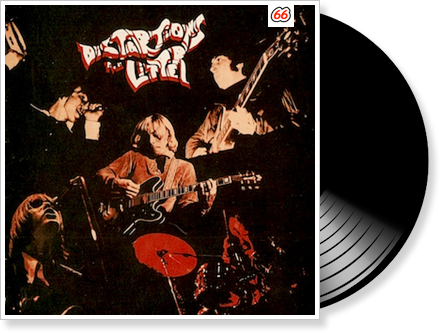
Title: Distortions
Year: 1967
Format: LP
Label: Warwick
The Litter were one of Minneapolis’ most popular garage bands. Their origins can be traced back to two mid 60s garage bands, the Victors and the Tabs. In late 1966 the Litter recorded their first single, Action Woman backed by a cover of the Who’s Legal Matter. The A side was not a Litter original but a Ted Kendrick composition. Ted Kendrick produced Action Woman which was eventually released off the Scotty label sometime in early 67.
From the intro, Action Woman is a flame thrower garage punk single with snarling vocals and one of the great extended guitar solos courtesy of Bill Strandlof. Many feel this single was one of rock n roll’s finest ever and quite possibly Minnesota’s answer to the Stones’ Satisfaction. At this point the group were asked to record an album, since Action Woman enjoyed modest local success. Bill Strandlof recorded a great conventional garage track in Soul Searching (another Kendrick original) before he was replaced with Zippy Caplan.
Over the years the Litter’s impact has dimmed, possibly due to the group’s lack of original material and the recent excavation of other, newer great 60s rock rarities (which emphasize original material). With the exception of one brief guitar instrumental The Mummy and the above tracks, all of Distortions is padded out with covers of classic British Invasion singles.
The group stumble when covering the Who’s Substitute but give Legal Matter a good punky reading with some nice fuzz guitar breaks. I’m a Man is given the Yardbirds’ treatment with tons of swirling feedback, thick guitar distortion, and insane white noise – this is one of the best versions I’ve ever heard! Codine displays some solid folk rock chops with powerful drum work and a slowed down arrangement. Somebody Help Me (Spencer Davis Group), Rock My Mind (Yardbirds) and What’cha Gonna Do About It? (Small Faces) are energetic and full of fuzz, angry vocals, driving guitars, and pummeling beats.
With the exception of Substitute, Distortions is a very good garage rock platter worth owning. In some ways Distortions is similar to another classic cover heavy lp, garage band T. C. Atlantic’s Live At The Bel-Rae Ballroom. The Litter would go on to record two more lps before breaking up. Caplan would go on to record a very worthwhile early 70’s hard rock lp with Lightning. (The Rising Storm)
Track Listing
- Action Woman
- Whatcha Gonna Do About It?
- Codine
- Somebody Help Me
- Substitute/The Mummy
- I’m So Glad
- A Legal Matter
- Rack My Mind
- Soul- Searchin’
- I’m A Man
Disclaimer: The link below may point to content that is copyrighted. redtelephone66 only provides this link with the understanding that you are responsible for the content you download. redtelephone66 does not engage in music piracy, nor do we do host, fileshare, or otherwise trade in copyrighted works.
Wool – Wool (1969)
Title: Wool
Year: 1969
Format: LP
Label: ABC
The group originally emerged out of the Finger Lakes area of New York. Lead guitarist Ed Wool had made one single three years earlier as Ed Wool & The Nomads (GAWD! How many “Nomads” were there in the ’60′s anyway?!), before signing Wool to Neil Diamond’s “Armada Productions” and ABC Records for this disc.
The group’s biggest asset was Wool’s smokey-voiced sister, Claudia. The band sags when she tries to belt it out on covers of The Band’s “To Kingdom Come”, and Big Brother’s “Combination Of The Two” (Joplin, she ain’t!), but she shines on softer numbers like Chip Taylor’s “Any Way That You Want Me”, and brother Ed’s atmospheric “If They Left Us Alone Now”.
They manage to lay down a funky bass line on the album’s best track, “Love, Love, Love, Love, Love”, but their other attempts at “soul” fall flat. “I Don’t Like You Anymore” sounds like it was cobbled together using pieces from “You’re All I Need To Get By” and “I’m Losing You”.
The interminable “Funky Walk” is a laughingly bad attempt to invoke the spirit of James Brown. If not for some inventive drumming on the last five minutes of the song, you’d swear the record was stuck. Try to imagine The Osmonds doing a version of Sly Stone’s “Don’t Call Me Nigger, Whitey”, and you’ll get the idea.
There’s just not enough of anything here (material, inspiration, musicianship) to warrant a major-label album deal. Couple this with the fact that the band thanks Ed & Claudia’s parents in the liner notes for their “rehearsal cottage” and the whole thing seems like a vanity project designed to keep the kids out of trouble.
The group would manage to wax two more singles for Columbia before folding. These days, The Ed Wool Band busies itself playing weddings and bar mitzvahs in New York State. Long Live Rock & Roll! (ochsfan RYM)
Track Listing
- Love, Love, Love, Love, Love
- Combination Of The Two
- If They Left Us Alone Now
- To Kingdom Come
- I Don’t Like You Anymore
- Anyway That You Want Me
- It Was Such A Lovely Night (Loving You Tonight)
- The Boy With The Green Eyes
- Funky Walk
The Illusion – If It’s So (1970)
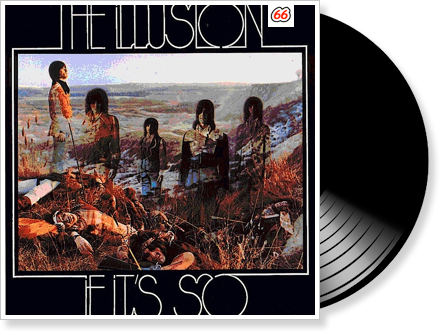
Title: If It’s So
Year: 1970
Format: LP
Label: Steed
By some standards, the Illusion were one of the most successful unknown psychedelic bands of their generation — unknown, yes, but with three LPs to their credit on the Steed label. Their personnel included Michael Ricciardella (drums), Richie Cerniglia (guitar), Chuck Alder (bass), Mike Maniscalco (guitar, keyboards), and John Vinci (vocals).
The Steed label released “Illusion”, “Together”, and “If It’s So” between 1969 and 1970. Illusion was interesting enough to observers to merit a release in England in 1969. By 1971, the Illusion’s albums were being sought by kids who’d never heard the band play. (Bruce Eder, All Music Guide)
Track Listing
- Man
- Let’s Make Each Other Happy/When I Metcho Baby
- Collection
- If It’s So/Life Cycle Theme/Dr Stone
- Excerpt From Recuverdas De Alhambra
Disclaimer: The link below may point to content that is copyrighted. redtelephone66 only provides this link with the understanding that you are responsible for the content you download. redtelephone66 does not engage in music piracy, nor do we do host, fileshare, or otherwise trade in copyrighted works.
Banana And The Bunch – Mid-Mountain Ranch (1972)
Title: Mid-Mountain Ranch
Year: 1972
Format: LP
Label: Warner Brothers/Raccoon
Snippets of bluegrass, rock, jazz, and lachrymose ballads put together in the same laid-back style that characterized the last few Youngbloods sets.
Recorded at a point where the group’s east-coast-era inventiveness was just beginning to be overwhelmed by their west-coast-era laziness. It’s a huge plus to hear Youngbloods-style music not dominated by Jesse Colin Young. (ochsfan RYM)
Track Listing
- Back In The U.S.A.
- My True Life Blues
- Vanderbilt’s Lament
- Interlude
- Double Interlude
- Sittin’ Alone In The Moonlight
- In Foggy Old London
- Before The Sun Goes Down
- New Sail Away Ladies
- Ocean Of Diamonds
- Familiar Patterns
- Great Blue Heron
- Honky Tonk Blues
- Lucas Valley Breakdown
- The Rights Of Man
Disclaimer: The link below may point to content that is copyrighted. redtelephone66 only provides this link with the understanding that you are responsible for the content you download. redtelephone66 does not engage in music piracy, nor do we do host, fileshare, or otherwise trade in copyrighted works.
Jeffrey Cain – For You (1970)
Title: For You
Year: 1970
Format: LP
Label: Warner Brothers
Special Thanks to Peter M. for the post.
Not much is known about Jeffrey Cain other than the fact that he released two albums, “For You” and “Whispering Thunder” (see previous post), for Jesse Colin Young’s Warner Bros. imprint Raccoon records.
The Raccoon label was responsible for some of the greatest sides of hippie soul and country folk released in the 70s. It boasted a roster of Jesse Colin Young, Michael Hurley and the Youngbloods. (magicistragic)
Track Listing
- Saw A Man
- Heavenly Blue
- Moonshine Is The Sunshine
- Not I The Seed
- Houndog Turkey
- Color Blind
- Mr. Governor
- Poem For My Friends
- Aubrey
- Lost In Space
- Run On Along
- For You
Jeffrey Cain – Whispering Thunder (1972)
Title: Whispering Thunder
Year: 1972
Format: LP
Label: Warner Brothers/Raccoon
This is Jeffrey Cain’s second album and it should appeal to fans of Loudon Wainwright’s early work since both artists use country and folk as a canvas for their own bitter, biting observations. Bob Dylan and the Youngbloods are also strong influences although he is more enamoured of southern-fried rock and roll licks on many of the tracks.
He is at his best on the opener “Soul Train” which is blue eyed soul by way of Nashville. Love this track and it stands as one of the best twangy tracks of the early 70s. “Pack Up Your Sorrows” is a heartbreakingly simple tune that offers a sentiment straight out of a Hallmark card.
However, his request that a lover pack up her sorrows and share her burden with him just gets me all choked up. On a slightly negative note, I get the sense that his odes to moonshine and farming are somewhat tongue in cheek, but that is just my own paranoia. Like down home country by way of Woodstock? Whispering Thunder is right up your alley. (magicistragic)
Track Listing
- Soul Train
- Memphis
- Queen Of England
- Peace Sign Blues
- When I’m Thirsty
- Mockingbird
- Whispering Thunder
- Mighty Moe
- Bless My Soul
- Moonshine Is The Sunshine
- Pack Up Your Sorrows
- Aurora Borealis
The Human Zoo – The Human Zoo (1968)
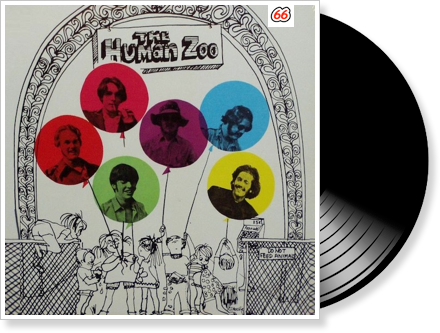
Title: The Human Zoo
Year: 1968
Format: LP
Label: Accent
The Human Zoo consisted of Jim Cunningham (vocals), Bob Dalrymple (bass), Larry Hanson (guitar-keyboards), John Luzadder (guitar), Kim Vydaremy (drums) and Roy Young (vocals).
This album continually gets panned in reviews, (believe me, we’ve all heard worse) but that hasn’t stopped collectors from putting down big $$$ for a copy.
“A Californian band, whose album is extremely mediocre. The haunting finale, The Time Was Over is the best track. Despite my lack of enthusiasm, (I think it’s CRAP), I must admit it’s now a minor collectors’ item.
The LP fails because they’re not sure what bag they’re in. First there’s some bits of good acid-guitar, some heavyish mainstream rock, but then some funk and some Blood, Sweat and Tears brassy soul-rock on top of some dirgeful material doesn’t help.” (Fuzz, Acid & Flowers)
Track Listing
- It’s Got To Be
- Na-Na
- Help Me
- I Don’t Care No More
- Funny
- Late To My Resurrection
- When Papa Started Drinking
- Gonna Take Me A Ride
- Stone Sassy Fox
- Human Zoo
- The Time Was Over
Rig – Rig (1970)
Title: Rig
Year: 1970
Format: LP
Label: Capitol
Looking back 40 years ago there couldn’t be many bands on the Capitol label that are currently as obscure or unknown as Rig. But there was a time in 1970 when the FM radio would play daily the opening track “Have a Cigar”.
Being on a major label the LP was available in all the record shops and retail outlets. The only problem was the band broke up right after the release and to my knowledge never toured. Although I don’t recall the source, I remember the media giving recognition to Rig as being one of the most promising bands to prematurely disband.
We are left with a very good if not exceptional album filled with engaging progressive pop that has a few gems and almost no dead wood. Most of the songs were penned and sung by Kendell Kardt behind his piano and guitar.
Besides “Have a Cigar” he also is responsible for the gospel sounding “Sister Eliza Brookman”. Don Kerr also provides some great writing especially on the country tinged “I Wonder Why”. Unfortunately both Kardt and Kerr would virtually disappear only appearing on maybe a couple of albums by singer songwriter Jim Post. (otismidnight RYM)
Track Listing
- Have A Cigar
- I Wonder Why
- Evening At Home
- Quiet Lady
- Sister Liza Bookman
- My Sweet Woman
- Mr. Rich Man
- Please Stick Around
- Carousel
- Laughing Trees
- Last Time Around