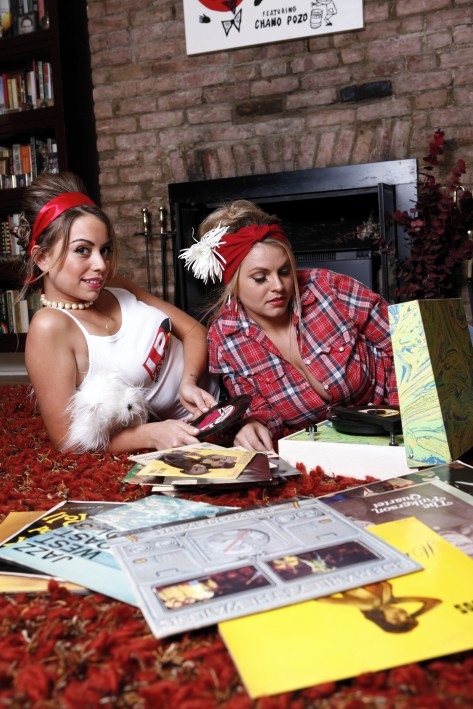

3s A Crowd – Christopher’s Movie Matinee (1968)
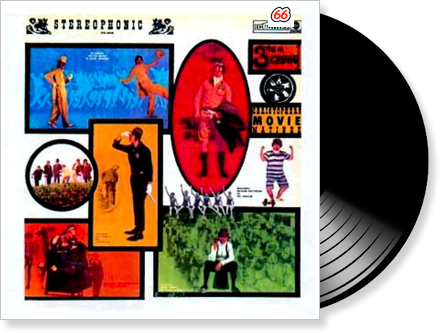
Title: Christopher’s Movie Matinee
Year: 1968
Format: LP
Label: Dunhill
3′s a Crowd was a folk rock band from Vancouver, British Columbia, Canada, that existed from 1964 to 1969. The group is particularly notable for its association with Cass Elliott, who co-produced the group’s sole album release. The album remains one of Elliott’s rare associations as a record producer.
The group was formed in 1964, and was originally called the Bill Schwartz Quartet (though no one named Bill Schwartz was actually in the group.) The group consisted of Donna Warner, Trevor Veitch and Brent Titcomb. In 1966, the group moved to Toronto, released two singles, and acquired new members Richard Patterson, David Wiffen and Comrie Smith. Smith was later replaced by Ken Koblun. In 1967 and 1968, 3′s a Crowd played the folk music clubs in Southern California, including the Ash Grove in West Hollywood and the Ice House in Glendale, sometimes bringing Jim and Jean as an opening act.<
In 1968, they recorded Christopher's Movie Matinee, their only album. The band broke up shortly after its release. The album was produced by Cass Elliot and Steve Barri. Bruce Cockburn, who briefly joined a later version of the group, does not perform on the album, though four of his songs are included. Donna Warner was the primary singer, but other band members, particularly David Wiffen and Brent Titcomb, also sang lead. They did a slow, military rendition of "(Let's) Get Together" by Chet Powers, and had a minor hit with their own song "Bird Without Wings". A signature tune at their concerts was their song "Wasn't It You".
Noted reviewer Richie Unterberger considers the album to be “an average, melt-into-the-crowd pop-folk-rock album, somewhat similar to The Mamas & the Papas and We Five (though closer to the We Five).” He also notes the presence on the record of Ken Koblun, Canadian bass player, associate of Neil Young during his early career and sometime bass player with Buffalo Springfield. Koblun had chosen to join 3′s a Crowd rather than continue with an early version of the Buffalo Springfield.
A related documentary, Christopher’s Movie Matinee, under the sponsorship of the National Film Board of Canada, was released in 1968, using some of the same songs and some of the same musicians. The film is about 1960s Canadian counterculture.
The band reformed briefly in 1969, and appeared on a Canadian variety television program entitled “One More Time”. By this point, however, none of the three original members remained in the group; the lineup consisted of Bruce Cockburn, Richard Patterson, David Wiffen, Colleen Peterson, Sandy Crawley and Dennis Pendrith. Cockburn soon left to pursue his solo career, and the group disbanded permanently in 1969.
Since then, Bruce Cockburn has had significant success as a solo act, as did Colleen Peterson and, for a time, David Wiffen. Sandy Crawley and Brent Titcomb also developed solo careers, while Richard Patterson, Dennis Pendrith and Trevor Veitch continued their careers as accompanists for many years after the breakup of the group. Donna Warner did not continue her music career after her departure from the group
Comrie Smith’s subsequent involvement as a professional musician does not appear to have been documented, although he was quoted extensively by “Mojo” magazine in a feature article about the release of Neil Young’s “Archives” CD boxed set – because Smith had backed Young on some of the early recordings. (Young’s associations with the group create their own fascinating web, what with both Smith and Koblun playing with him in his early days, and Donna Warner having sung with him in Toronto.) (Wikipedia)
Track Listing
- Let’s Get Together
- Coat Of Colors
- The Way She Smiles
- Wasn’t It You
- Gnostic Serenade
- Bird Without Wings
- I Don’t Wanna Drive You Away
- View From Pompous Head
- Don’t Mess Up A Good Thing
- Cotton Candy Man
- Christopher’s Movie Matinee
St. John Green – St. John Green [Mono] (1968)
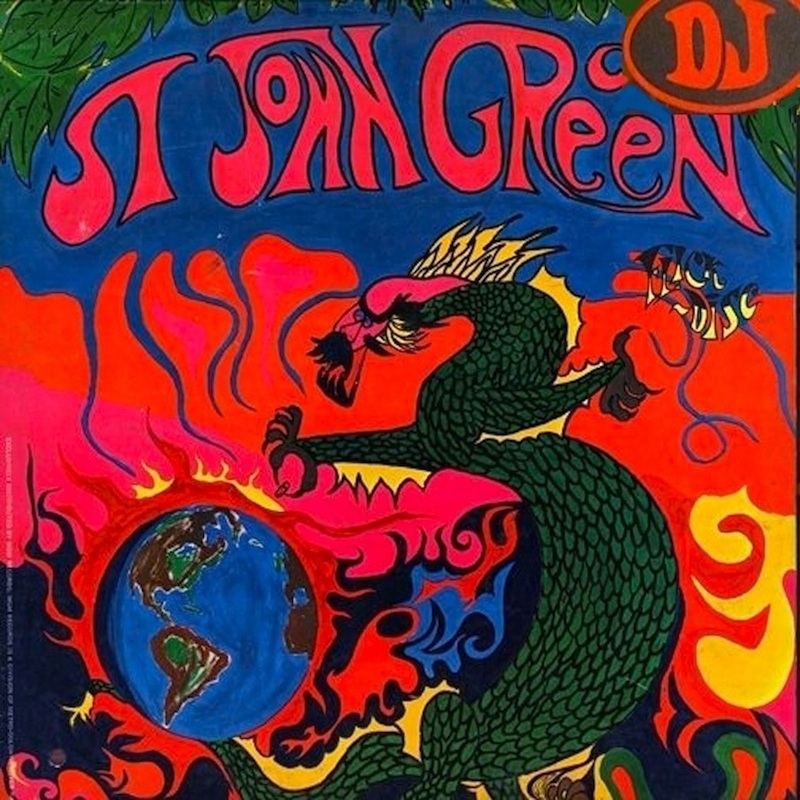
Title: St. John Green
Year: 1968
Format: LP
Label: Flick Disc
St. John Green consisted of Ed Bissot (bass-vocals), Vic Sabino (harmonica-vocals), Bill Kirkland (guitar), Mike Baxter (organ-vocals), and Shel Scott (drums).
Kim Fowley and Michael Lloyd co-produced this psychedelic opus with a “sanctified hippie vibe canyon music” as this Los Angeles area group might have described it; strange songs about the fires of hell and spacemen from Venus alternate with some anti ‘flower power’ songs and stoned sounding jams that show why they were touted by Fowley as the next in-thing they weren’t, of course, but a strong album all the same. (Jack Dominilla)
Track Listing
- 7th Generation Mutation
- Canyon Women
- Devil And The Sea
- Do You Believe
- Help Me Close The Door
- Messages From The Dead
- Goddess Of Death
- St. John Green
- Spirit Of Now
- Love Of Hate
- One Room Cemetary
- Shivers Of Pleasure
The Carolyn Hester Coalition – Magazine (1969)
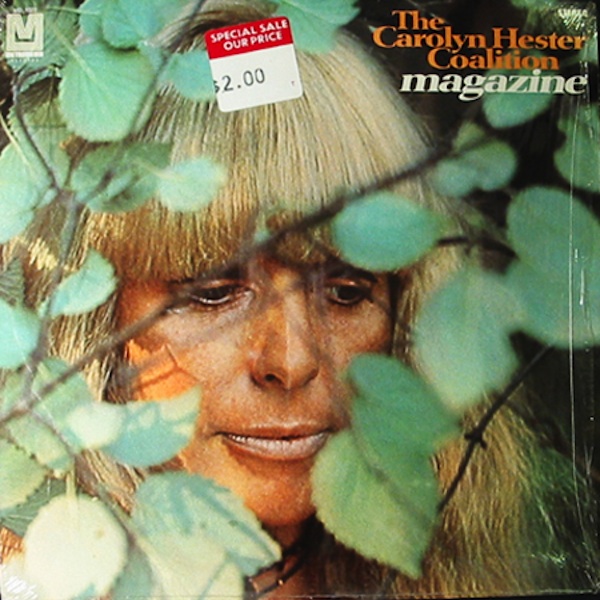
Title: Magazine
Year: 1969
Format: LP
Label: Metromedia
Traditional folk maven Carolyn Hester was an important part of the early-1960s Greenwich Village scene that nurtured Bob Dylan, Judy Collins, and a host of household names. Sticking with traditional songs, rather than writing her own, was her stock in trade. However, as the ‘60s progessed, Hester took a detour into psychedelic-tinged folk-rock with her band the Carolyn Hester Coalition.
Dressed up as she is in studio finery, she still shines most on the traditional and traditional-sounding songs like “St. James Infirmary, ” “The Beadmaker, ” and “Sir Robert the Lost Knight. ” The only real misstep is a rocked-up version of “Swing Low Sweet Chariot, ” but, hey, it was the ‘60s. (Max Collodie)
Track Listing
- Rise Like Phoenix
- Dedicated
- Plant The Crops In The Garden
- Beadmaker
- St. James Infirmary
- Just Follow Me
- (Sitting On The) Dock Of The Bay
- Sir Robert, The Lost Knight
- Calico Sky
- Swing Low Sweet Chariot
The Carolyn Hester Coalition – The Carolyn Hester Coalition (1968)
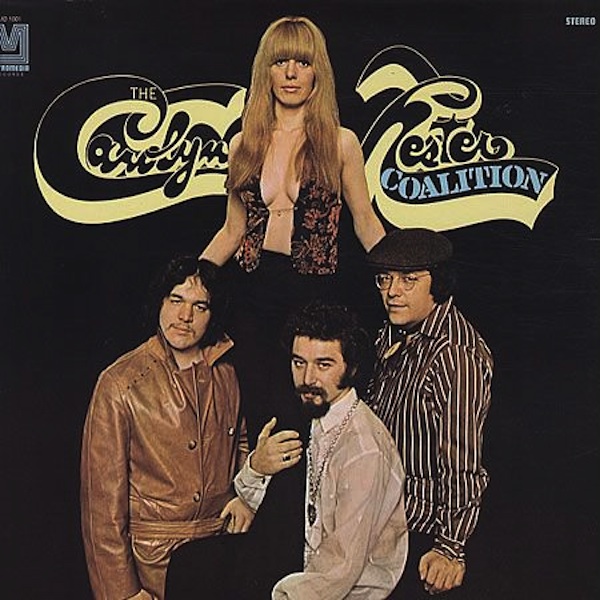
Title: The Carolyn Hester Coalition
Year: 1968
Format: LP
Label: Metromedia
Anyone into Hester’s earlier incarnation as a folk singer is likely to find her decision to turn to a more happenin’/commercial sound disappointing. On the other hand, anyone into this late-1960s psych-oriented effort is liable to find her earlier folk albums trite and dull.
The thought of a folkie turning to psych is probably a major turnoff to many folks. That’s unfortunate since once you get over Hester’s little girl lost voice, 1968’s “The Carolyn Hester Coalition” is surprisingly enjoyable.
With excellent backing from The Coalition (bassist/keyboard player Dave Blume, drummer Skeeter Camera and lead guitarist Steve Wolfe), material such as “Magic Man”, the fuzz guitar propelled “East Virginia” and “Half the World” offered up some excellent psych/rock numbers. Sure, Hester’s folkie roots were occasionally on display (“Tomorrow When I Wake Up”), and on tracks like “Big City Street” she bore an uncomfortable resemblance to Lulu. Luckily, those were the exceptions rather than the rule. Besides, Hester deserved an extra star for the album cover’s revealing blouse. (Bad Cat)
Track Listing
- Magic Man
- East Virginia
- Tomorrow When I Wake Up
- Be Your Baby
- Big City Street
- Half The World
- Let’s Get Together
- Hey, Jay
- Last Night I Had The Strangest Dream
- The Journey
- Buddha (Was Her Best Man)
Crystal Mansion – Crystal Mansion (1969)

Title: Crystal Mansion
Year: 1969
Format: LP
Label: Capitol
The Crystal Mansion had their roots in R&B (they started as the Secrets in the 1960’s, then changed their name and recorded an album for Capitol in 1969 (see below post for more info)…
Track Listing
- For The First Time
- I Used To Be A Boy
- Everything’s In Love Today
- Country
- Hallelujah
- Somethin’ For You
- The Thought Of Loving You
- And It Takes My Breath Away
- Barbara
- Wishful Thinking
- Rhapsody
- Goin’ To The Fields
The Crystal Mansion – The Crystal Mansion (1972)

Title: The Crystal Mansion
Year: 1972
Format: LP
Label: Rare Earth
… and also had a minor hit in 1970 with the single ‘Carolina in My Mind’) ; the good news is that by 1972 they had begun to include elements of psychedelic and progressive rock into their music. And when the shifts in tempo and the breaks don’t cause undue stress on the construction of the tracks, they can be as groovy as the band Rare Earth ever were.
The first track, ‘There Will Always Be More, ’ is searching at first, but eventually builds up to a heavy groove. The rest of the album follows that concept—on the whole, Crystal Mansion made good use of their funky qualities, but also showed that they had strong influences from the psychedelic and progressive rock scene.
Slower sections reveal some weaknesses, but when Crystal mansion mix R&B and rock into a more straightforward stew, and don’t look too deep into the psych or progressive rock cauldron, they can be irresistible. The most direct song is ‘Somebody Oughta Turn Your Head Around, ’ one of the few moments when Crystal Mansion manages to fully take advantage of their funky setting and the talents of percussionist Mario Sanchez, who adds a driving groove to the track. (Anazitisi Records)
Track Listing
- There Always Will Be More
- Bad City Ways
- I Love You
- Satisfied
- A Song Is Born
- Somebody Oughta Turn Your Head Around
- Boogieman
- Let Me Get Straight Again
- Peace For A Change
- Earth People
Dada – Dada (1970)
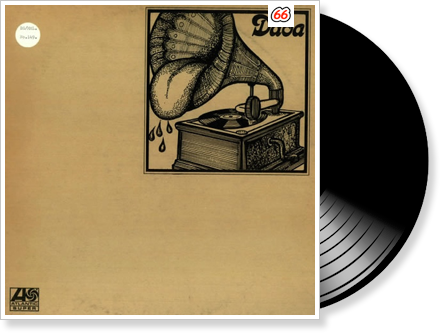
Title: Dada
Year: 1970
Format: LP
Label: Atco
Dada consisted of Elkie Brooks (vocals), Paul Korda (vocals), Pete Gage (guitar, bass), Robert Palmer (vocals).
This group named themselves after the artistic movement that began in Switzerland some ninety years ago. The group tries to sound avant-garde, as witnessed by their strange, vaguely menacing cover of the Stones’ “The Last Time”, and the equally weird faux- gospel original, “Seed of Peace”. They seem to want to create a jazz-influenced rock sound along the same lines as Erwin Schulhoff’s melding of jazz and classical in the twenties, but what’s here isn’t far enough away from mainstream rock to embrace the original Dadaist “tabula rasa “ concept.
The whole thing just ends up sounding muddled and unrealized, no matter how many times they invoke the name of Tristan Tzara. The closest the group ultimately comes to anything reminiscent of their namesakes is their irreverent album cover. Just as the original movement couldn’t sustain itself, neither could this group. After this release, they gradually morphed into Vinegar Joe. (ochsfan RYM)
Track Listing
- Big Dipper
- The Last Time
- This Is My Song
- Seed Of Peace
- Organ Interlude
- Tonite Is
- She Walks Away
- Aspen, Colorado
- Eyes Of The Warren
- Jasamin
- Dada
Saint Steven – Saint Steven (1969)

Title: Saint Steven
Year: 1969
Format: LP
Label: Probe
This is one of the long, lost psych gems that I thought would never ever be reissued! Saint Steven was Steven Cataldo, onetime member of Mystic Soldiers, one of the greatest of all-time psych bands, from Boston. This was one of those records that came out of nowhere, was played on FM radio a bit and then disappeared without a trace. It was ABC/Probe Records, the same label as Soft Machine’s first album. I’ve tried in vain to find out more about this gem, but have never seen anything about it anywhere until now, nearly forty years after it was released in 1969.
Finally, here it is again with two bonus tracks and a lovely booklet explaining some of the mystery. Each side of the album was a suite, “Over the Hills” on side one and “The Bastich” on side two. The cover features “Saint Steven” hugging his guitar floating up in the clouds as the sun radiates around him with a drawing of a sea monster slithering down at the edge of the ocean. No musicians were listed inside, just the producer, engineer and cover design folks. The lyrics were included and are quite poetic with the feeling of dread buried beneath some of the warmer imagery. 1969 was the year when it felt like the positive forces of the sixties were coming to an end. The war in Vietnam and protests worldwide made things feels as if the world would end too soon.
Each of these songs balances the innocent with the darker forces that we all must confront. Saint Steven uses his own mythical figures, “Gladacadova” and “Ay-Aye-Poe-Day”, to add magic and mystery to his little tales. In the middle of “Poor Small”, the song stops and we get an excerpt from one of the Presidential elections in which some old woman is reading the tally of states and hitting a gavel.
The song continues and so does the tally in the background, it still reminds me of sad realities of life that we try to escape from with music. Although the original album was rather short (about 29 minutes), it still worked as one entire piece, amazing from the beginning to the end. I can’t compare it to any other bands, because it doesn’t really sound like anyone else, although I do hear a bit of Spirit in some of those hypnotic sustained guitar parts.” (Bruce Lee Gallanter)
Track Listing
- Over The Hills I
- Animal Hall
- Gladacadova
- Poor Small
- Ay-Aye-Poe-Day
- Grey Skies
- Over The Hills II
- Bastich I
- Voyage To Cleveland
- Sun In The Flame
- Bright Lights
- Louisiana Home
- Bastich II
The Tiffany Shade – The Tiffany Shade [Vinyl] (1968)

Title: The Tiffany Shade
Year: 1968
Format: LP
Label: Mainstream
Tiffany Shade was an American psychedelic rock band formed in 1966 in Cleveland, Ohio. They broke up 1968. They recorded and released one self-titled LP and two singles from the same album on the Mainstream label in 1968 prior to their demise.
Tiffany Shade was formed by keyboardist Bob Leonard (b. May 27, 1945), Folk Guitarist/vocalist Mike Barnes (b. May 21, 1948), 12-string guitarist/vocalist Barrow Davidian (deceased), bassist Rick Hohn, later replaced by bassist Robb Clarke-Murphy (b. September 26, 1944) and drummer Tom Schuster (b. February 1, 1949).
The group recorded one album and two singles for Jazz Producer Bob Shad’s Mainstream label. (US LP Release info: Mainstream S/T 56015, Stereo S/6105. UK LP release info: Fontana TL 5469). Both the US and UK platters were released in 1968. The Mainstream label also issues two Singles: “Would You Take My Mind Out For a Walk” / “One Good Reason” released as Mainstream 677 in 1968 & “An Older Man”/ “Sam” released as Mainstream 680 also released in 1968).
Shads’ Mainstream label was home to many other psychedelic bands in the late ’60′s including Janis Joplin’s first band Big Brother and the Holding Company(Mainstream S/6099 released in 1967), The Tangerine Zoo (Mainstream S/6107), Ellie Pop (Mainstream S/6115), The Superfine Dandelion (Mainstream S/6102), The Growing Concern (Mainstream S/6108) and most notably The Amboy Dukes.
On March 2, 1968, Tiffany Shade appeared at the Grande Ballroom in Detroit on the same bill as Big Brother and the Holding Company, the MC5 and the Pink Peech Mob. They also appeared at the Grande Ballroom again on April 5, 1968 along with The Troggs and the MC5. After Tiffany Shade album’s release, the band made numerous appearances in their hometown of Cleveland, Ohio and at the Sugarbush ski resort in Warren, Vermont before disbanding in late 1968. (Wikipedia)
Track Listing
- Would You Take My Mind Out For A Walk
- An Older Man
- Sam
- Jaguar City Blues
- A Very Grand Love
- Softly To Me
- No Reality
- One Good Reason
- A Quiet Revolution
- Not Worth The Pain
Wilderness Road – Sold For The Prevention Of Disease Only (1973)

Title: Sold For The Prevention Of Disease Only
Year: 1973
Format: LP
Label: Reprise
Wilderness Road was a rock band founded in 1968 by musicians Warren Leming, Nate Herman, and relatives Andy and Tom Haban. The group, which performed an elaborate stage show, drew on American folklore, and was active in the Anti-War, and Peace Movements of the late Sixties and early Seventies central to Chicago’s counterculture movement of the period.
Both Leming and Herman were writer/musicians who came out of theatrical/musical backgrounds, and the Road’s blend of original songs, many of them satirical, and performance features like: the Dope Report, a critique of the Drug Culture then prominent; the Gospel Hour-: a musical analysis of Fundamentalist Christian radio and politic; and Ricky and the Balloons, a Fifties revival band that urged listeners to “Come on down to the Del Vino Lounge”, made the band an eclectic mix of the satirical and singular.
The band’s first album was a film scenario disguised as rock album, but could not be labeled a “concept” project for fear that it would not attract an audience.
The group produced two albums: Wilderness Road (Columbia Records), and Sold for the Prevention of Disease Only (Warner Reprise). The band was managed by Ron Oberman, who had previously worked for Mercury records (he headed their publicity department.)
Oberman, following an unsolicited letter to the band, brought them to Columbia, where they were signed by A and R man, Alan Rinde. The band had established a significant audience in Chicago through their performances at The Wise Fools Pub, and were the first rock band to have drawn audiences to Chicago’s Lincoln Ave., in Old Town, an area of the city now known for its bars, musical venues, and restaurants.
[edit]Performance history
The ensemble was road managed by Ray Ward, who oversaw the bands national and Mid Western tours. They frequently opened for Sha Na Na, the 50s revival act.
[edit]Member histories
Herman, who was a mandolin, dobro, piano and guitar player, had met Leming (guitar and banjo) at the famous The Second City (1616 N. Wells St., Chicago). Both were satirists and deeply influenced by American roots music: Herman having fronted The Absolute Truth String Band, and Leming, with Ray Tate: The Urban Renewal Boys, two of Chicago’s first “urban Bluegrass” groups. Leming had been a folk musician and had worked with Byrds founder Jim (later Roger) McGuinn and guitarist song-writer Richard Toups.
Herman, a multi-instrumentalist, had founded a Chicago rock group: The Moving Violations, which featured pianist Bob Hoban, and guitarists Paul Ostrof and Carmi Simon.
[edit]Later history
The Road began its Chicago career doing benefits for the Chicago Seed (underground newspaper), and to raise funds for the Chicago Conspiracy Trial, which followed Chicago’s 1968 “the whole world is watching” Democratic National Convention, where violence ended Vice President Hubert Humphrey’s political career in what was later termed “a police riot”.
The Road left Columbia in the early 1970s, and were immediately signed by Warner Reprise following a club date in San Francisco. They spent two months at L.A.’s Tropicana Motel (home to Andy Warhol and Tom Waits) while recording Sold for the Prevention of Disease Only, which was criticised by DJs and record company execs for a condom image: the album’s title refers to a slogan then seen on condom machines.
With the waning of the anti-mercantilist “hippy” movements and the marginalizing of the Peace Movement through the election of Richard Nixon, the Road’s activist audience was soon overwhelmed by Glam Rock, and the consumerist putsch which ended FM Progressive radio, and the independent “counter cultural” bands shot at airplay.
The Road has been compared with The Byrds; Canada’s: The Band, The Amazing Rhythm Aces, and a number of other groups who created original material and an audience among the “counter culture.” They are to be found under Alt Americana, Alt, and Acid Country, Country and Americana on website and collector venues. (Wikipedia
Track Listing
- Pot Of Gold
- Rock Garden
- A.M.A.
- The Gospel
- Reno
- Bored
- Long Winter
- The Authentic British Blues