
Tommy James & The Shondells – Hanky Panky (1966)
Title: Hanky Panky
Year: 1966
Format: LP
Label: Roulette
Tommy James & the Shondells — the very mention of their name, even to someone who doesn’t really know their music, evokes images of dances and the kind of fun that rock & roll represented before it redefined itself on more serious terms. And between 1966 and 1969, the group enjoyed 14 Top 40 hits, most of which remain among the most eminently listenable (if not always respected) examples of pop/rock.
The group was almost as much of a Top 40 radio institution of the time as Creedence Clearwater Revival, but because they weren’t completely self-contained (they wrote some, but not all, or their own hits) and were more rooted in pop/rock than basic rock & roll, it took decades for writers and pop historians to look with favor on Tommy James & the Shondells.
Tommy James was born Thomas Jackson on April 20, 1947, in Dayton, OH. He was introduced to music at age three, when he was given a ukulele by his grandfather. He was an attractive child and was working as a model at age four, which gave him something of a taste for performing.
By age nine he’d moved to the next step in music, taking up the guitar, and by 1958, when he was 11, James began playing the electric guitar. In 1960, with his family now living in Niles, MI, 13-year-old James and a group of four friends from junior high school — Larry Coverdale on guitar, Larry Wright on bass, Craig Villeneuve on piano, and Jim Payne on drums — got together to play dances and parties.
This was the original lineup of the Shondells, and they became good enough to earn decent money locally, and even got noticed by an outfit called Northway Sound Records, who recorded the quintet in a Tommy James original entitled “Judy” in 1962. That single didn’t make much noise beyond their immediate locale, but in late 1963, the group came to the notice of a local disc jockey starting up a new label called Snap Records. They cut four sides, two of which were issued and disappeared without a trace on their first Snap single.
The second Snap label release, “Hanky Panky,” was golden, at least in the area around Niles. A Jeff Barry/Ellie Greenwich song that the couple had already recorded under their nom de plume, the Raindrops, as a B-side that James and company had heard done by a rival band, “Hanky Panky,” had become part of James’ group’s stage act. It was enormously popular on-stage, and the Snap single took off locally in Niles and the surrounding area, but it never got heard any further away.
James and company picked up their marbles and went home, abandoning aspirations for a recording career in favor of pursuing music part time — the singer/guitarist took a day job at a record store and confined his music efforts to the nighttime hours. The two years that ensued, from early 1964 until 1966, saw the original Shondells break up, as members left music or were drafted. This didn’t seem to make much difference until a day came when James got an urgent request from a promoter to do a concert in Pittsburgh, PA.
Considering that the group had never even played there, he was puzzled. He soon found that the Snap Records single “Hanky Panky,” recorded back in 1963 and overlooked in Chicago and Detroit at the time, had suddenly broken out in Pittsburgh. A promoter, having found a copy of the Snap single in a used-record bin, had liked what he heard and gotten the record played locally at dances. In one of those fluky instances that made the record business in those days a complete marvel, people suddenly started requesting “Hanky Panky,” and in response to the demand, bootleggers began producing it, attributed to various labels — some sources estimate that as many as 80,000 copies were sold in Pittsburgh before the smoke cleared.
James saw what he had to do, but he no longer had a band and was forced to recruit a new group of Shondells. The lucky winners were the Raconteurs, a local Pittsburgh quintet. They became the Shondells, with Joe Kessler on guitar, Ron Rosman on keyboards, George Magura on sax, Mike Vale on bass, and Vinnie Pietropaoli on drums; Peter Lucia and Eddie Gray, respectively, replaced Pietropaoli and Kessler, and Magura and his saxophone didn’t last long in the lineup.
From near-total obscurity, this version of Tommy James & the Shondells went to playing to audiences numbering in the thousands, and were being courted by Columbia Records and RCA-Victor. It was Morris Levy and Roulette Records, however, who outbid everybody and won the group’s contract, and got a number one national hit with “Hanky Panky,” in the version cut by the original group nearly three years earlier. (Answers.Com Excerpt)
Disclaimer: The link below may point to content that is copyrighted. redtelephone66 only provides this link with the understanding that you are responsible for the content you download. redtelephone66 does not engage in music piracy, nor do we do host, fileshare, or otherwise trade in copyrighted works.

Tommy Roe – Sweet Pea [Mono] (1966)
Title: Sweet Pea
Year: 1966
Format: LP
Label: ABC
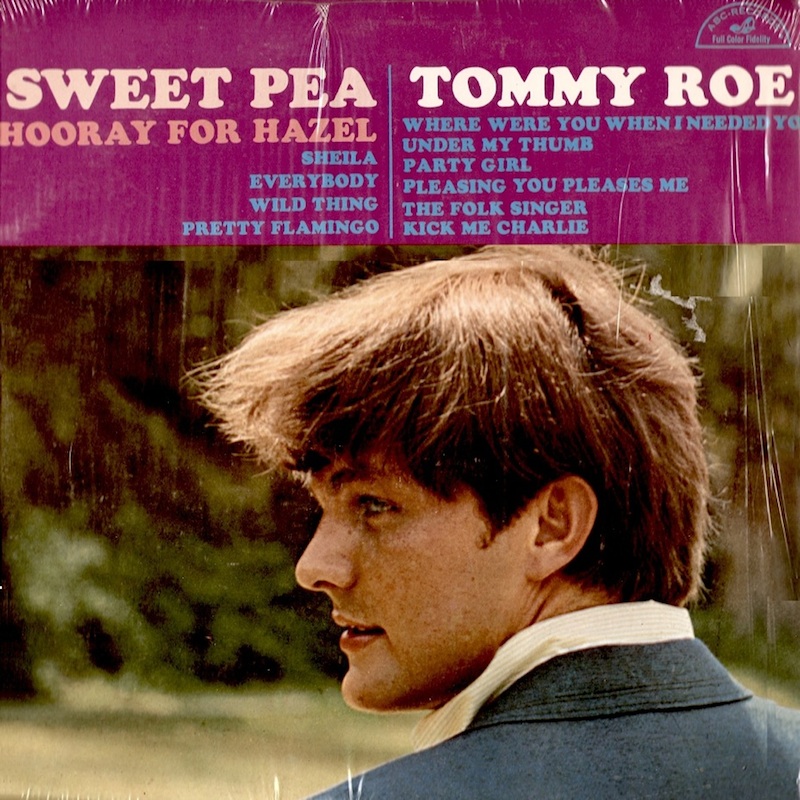
Tommy Roe’s 1966 “Sweet Pea” album produced by Curt Boettcher was actually a compilation of previous singles, covers, and his two top ten hits of that year, “Sweet Pea” and “Hooray For Hazel”. The covers, remakes of 1966 hits “Where Were You When I Needed You”, “Wild Thing”, “Pretty Flamingo”, and “Under My Thumb” were signaling a change in Roe’s repertoire, and were a precursor to his two albums of 1967, “It’s Now Winter’s Day” and “Phantasy”. (Max Collodie)
Track Listing
- Hooray For Hazel
- Under My Thumb
- Pretty Flamingo
- Where Were You When I Needed You
- Wild Thing
- Sweet Pea
- Party Girl
- Everybody
- The Folk Singer
- Pleasing You Pleases Me
- Kick Me Charlie
- Sheila
Disclaimer: The link below may point to content that is copyrighted. redtelephone66 only provides this link with the understanding that you are responsible for the content you download. redtelephone66 does not engage in music piracy, nor do we do host, fileshare, or otherwise trade in copyrighted works.
Tommy Roe – Dizzy (1969)

Title: Dizzy
Year: 1969
Format: LP
Label: ABC
Kind of a bubblegum footnote, the title track “Dizzy” swirls and sways to a mock orchestral backing. It’s lighter than Ron Dante but can stand strong next to 1910 Fruitgum Co. and The Sugar Bears. A song “oldies” stations play at least once a week, once it’s on, it’s hard to turn the channel. The other nasty bubblegum classic has to be “Cinnamon” where our hero tries to bed yet another pre-teen cuttie. Does he succeed? I bet so. That was always the undercurrent in all great bubblegum songs: EVIL!
The rest of the album attempts more serious song matter and tries to compete with the final days of Beatles’ recordings where even they returned to their roots and abandoned “psychedelia”. I have to commend Roe for having the guts to issue this lp with a goofy graphic artist’s nightmare cover. Would look good next to THEIR SATANIC MAJESTIES REQUEST. After this album’s dismal death, Roe bought a tuxedo and tried his best to “grow up”. He also became a bore from then on. (Kupa99 RYM)
Track Listing
- Heather Honey
- Raining In My Heart
- Cinnamon
- A Dollar’s Worth Of Pennies
- Stormy
- Makin’ Music
- Money Is My Pay
- Proud Mary
- Gotta Keep Rolling Along
- Look Out Girl
- Dizzy
Disclaimer: The link below may point to content that is copyrighted. redtelephone66 only provides this link with the understanding that you are responsible for the content you download. redtelephone66 does not engage in music piracy, nor do we do host, fileshare, or otherwise trade in copyrighted works.
Toy Factory – Toy Factory (1970)
Title: Toy Factory
Year: 1970
Format: LP
Label: Avco Embassy
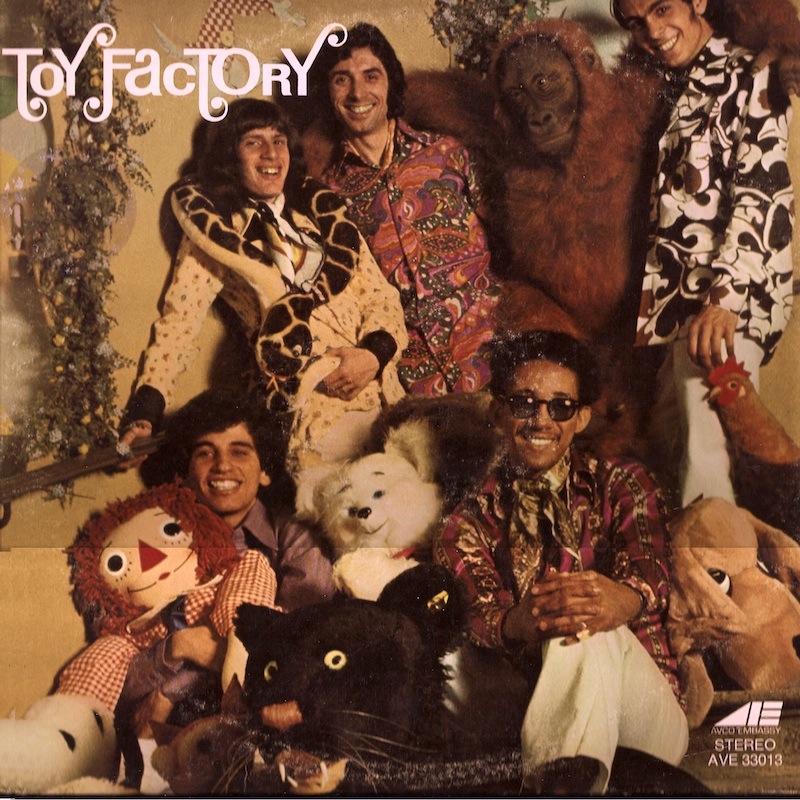
Though we haven’t been able to track down much bibliographical information on this late-60s bi-racial outfit, we think they were from Long Island, New York. From the liner notes on their LP we can also tell you Greg Weiss was the lead singer and was responsible for writing roughly half the material. The rest of the line up consisted of bassist Bill, guitarist Billy, drummer Joey and keyboard player Sal (great detail there).
Produced by Bernie Lawrence, the majority of 1970’s “Toy Factory” found the band trying to fight their way through rather faceless MOR pop. Lead singer Greg Weiss had a decent voice, but on tracks such as “What Is Youth”, “To Live or Die” and “Honey, Forever” he employed an irritating faux-English accent that recalled Davy Jones (he sounds like David Hemmings to me Bad Cat!!!). He also had an irritating habit of throwing mock sobs and groans into the mix (“When I’m with You” and “Honey Forever”).
Strike three were the occasional French lyrics (don’t pick on the French Bad Cat!!!) he tossed into the mix (“To Live or Die” and “Honey Forever”). Curiously, the band was at their best when they cut loose and go for a harder rock sound. In this case, the pseudo-psychedelic “No Rhyme To Orange” (sporting a nice fuzz guitar solo) and “Things” was a nifty slice of blue-eyed soul. “Summertime” also found the band turning in one of the weirdest George Gershwin covers we’ve ever heard (pretty decent guitar here too Bad Cat!!!). This one certainly won’t change your life, but it’s one of those period failures that’s worth checking out. (BAD CAT).
Track Listing
- What Is Youth
- To Live Or To Die
- Dear Girl
- Yesterday’s Love
- No Rhyme To Orange
- Summertime
- When I’m With You
- Things
- Honey Forever
- Little Girl
Disclaimer: The link below may point to content that is copyrighted. redtelephone66 only provides this link with the understanding that you are responsible for the content you download. redtelephone66 does not engage in music piracy, nor do we do host, fileshare, or otherwise trade in copyrighted works.
Tot Factory – Toy Factory (1970)
Title: Toy Factory
Year: 1970
Format: LP
Label: Avco Embassy
Though we haven’t been able to track down much bibliographical information on this late-60s bi-racial outfit, we think they were from Long Island, New York. From the liner notes on their LP we can also tell you Greg Weiss was the lead singer and was responsible for writing roughly half the material. The rest of the line up consisted of bassist Bill, guitarist Billy, drummer Joey and keyboard player Sal (great detail there).
Produced by Bernie Lawrence, the majority of 1970’s “Toy Factory” found the band trying to fight their way through rather faceless MOR pop. Lead singer Greg Weiss had a decent voice, but on tracks such as “What Is Youth”, “To Live or Die” and “Honey, Forever” he employed an irritating faux-English accent that recalled Davy Jones (he sounds like David Hemmings to me Bad Cat!!!). He also had an irritating habit of throwing mock sobs and groans into the mix (“When I’m with You” and “Honey Forever”).

Orpheus – Orpheus (1971)
Title: Orpheus
Year: 1971
Format: LP
Label: Bell
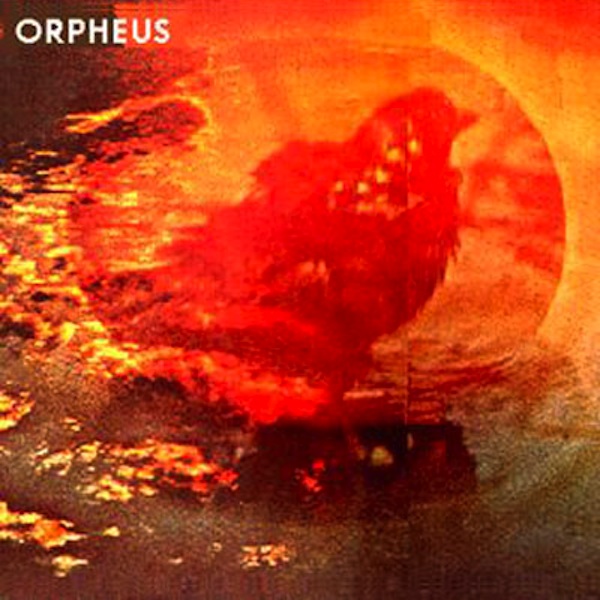
Sometime before the breakup of the original band, Orpheus guitarist Bruce Arnold started playing in a pickup band called Two Foot Lamb Door, which included Elliot Sherman and Steve Martin. Martin had contributed several songs to Orpheus’ debut, and “Just Got Back” to Ascending. Producer Alan Lorber gave Arnold the nod to carry on the band, and Two Foot Lamb Door became the new Orpheus.
Arnold and Martin formed the core of the band. Arnold had invited original bassist John Erik Gulliksen to join the new lineup, but he declined, having moved on to corporate success. Thus reconstituted, the group signed to Bell Records.
The album that resulted sounds very little like the Orpheus of old. It’s an unorchestrated rock band often employing darker themes. The change is due to the fact that Martin writes the majority of the material, and takes about half the lead vocals. Alan Lorber was back in the producer’s chair, but keeps an amazingly low profile.
The new Orpheus doesn’t shy away from a pretty ballad (the Arnold-sung “I Wanna Be Your Lover” sounds most like the original line-up), but isn’t afraid to venture into headier territory (“Sweet Life”, “It Gets Worse Every Time”, “Nunnery”). No one’s gonna mistake ‘em for Black Sabbath, but you can bet the original band would have never considered the schizophenia ode “Monkey Demon”, or the biblical imagery of “I’ll Be There”.
In fact, this may be the Orpheus album to start with for the uninitiated, even if it is the hardest of the four to find. It’s still understated, but it’s more likely than the others to appeal to mainstream classic rock fans. (ochsfan RYM)
Track Listing
- Big Green Pearl (Version One)
- Monkey Demon
- It Gets Worse Every Time
- I Wanna Be Your Lover
- Nunnery
- By The Way
- Sweet Life
- Lucianne
- Tomorrow Man
- Rainbow Peddler
- I’ll Be There
- Big Green Pearl (Version Two)
Disclaimer: The link below may point to content that is copyrighted. redtelephone66 only provides this link with the understanding that you are responsible for the content you download. redtelephone66 does not engage in music piracy, nor do we do host, fileshare, or otherwise trade in copyrighted works.
Mojo – Mojo Magic (1968)
Title: Mojo Magic
Year: 1968
Format: LP
Label: GRT
Quite a few references show The Mojo Men as being part of the San Francisco music scene. Technically that’s correct, but the original line up of singer/bassist Jim Alaimo, guitarist Paul Curcio, drummer Dennis DeCarr and keyboard player Don Metchick morphed out of the Coral Gables, Florida based The Valiants.
Frontman Alaimo was a cousin to Steve Alaimo and had recorded some material under the monikers ‘Jim Paris’ and ‘Jimmy Summers and the Slicks’. The Valiants had actually provided backing on some Steve Alaimo sides, but 1964 saw the quartet head for San Francisco where they changed their name to ‘The Mojo Men’ and briefly picked up Sly Stone as a member. While Stone quickly moved on to form Sly and the Family Stone, he was instrumental in getting the group signed to San Francisco DJ ‘Big Daddy’ Tom Donahue’s Autumn Records where they recorded three 45s during the 1965-66 period. Stewart also wrote some of their material, including the hit ‘She’s My Baby’ and produced most of their Autumn Records sides.
Prior to the release of their third single the band underwent a personnel change that saw original drummer DeCarr replaced by former Vejtables singer/ drummer Jan Errico. The personnel switch also marked a change in musical direction with the band dropping their earlier garage/R&B leanings (they’d opened for the Stones during their first San Francisco concert appearance at the Civic Auditorium) for a far more polished and produced pop-oriented sound.
With Autumn in financial collapse, the group switched over to the much large Reprise Records. Starting with a reissue of their last Autumn ‘A” side, Reprise released a string of seven 45s over the next three years:
1968 saw the group shorten their name to ‘The Mojo’ (Errico reportedly was tired of being referred to as a ‘mojo man’). Increasingly frustrated with Reprise Records unwillingness to release an album (even though they had completed recording a ton of material), they signed with the GRT Records which promised to finance an album. (London Records picked up European distribution rights.)
Co-produced by David Hassinger and Les Brown Jr., 1968’s “Mojo Magic” is an interesting time piece. While lots of reviews compare them to the Mamas and the Papas, or Spanky and Our Gang, those comparisons aren’t entirely accurate. Showcasing Alaimo and Errico as the band’s primary creative source (they penned nine of the ten album tracks), the band’s earlier R&B orientation is completely abandoned. In it’s place there’s a likable, but largely unoriginal mix of lite psych and sunshine pop.
Propelled by Errico’s crystal clear contralto voice, the group are at their most impressive on the most psych-oriented numbers, including the single ”Candle To Burn’, ‘Free Ride’ and the lone cover – a great take on Bonner and Gordon’s ‘Whatever Happened To Happy’. That said, even their more commercial leanings are interesting. Tracks like ‘Beside Me’ and ‘Evelyn Hope’ sport Mamas and Papas-styled harmonies, but incorporate fuzz guitars, Baroque-ish arrangements and other trappings the former would never touch.
Okay, okay I’ll admit that ‘Make You At Home’ and ‘New York City’ are shamelessly commercial. Still, there are enough winners here to warrant a couple of spins. GRT also tapped the album for a pair of instantly obscure singles (Bad Cat)
Track Listing
- Candle To Burn
- Make You At Home
- Free Ride
- Beside Me
- New York City
- I Can’t Let Go
- Flower Of Love
- Not Too Old To Start Crying
- Evelyn Hope
- What Ever Happened To Happy
Disclaimer: The link below may point to content that is copyrighted. redtelephone66 only provides this link with the understanding that you are responsible for the content you download. redtelephone66 does not engage in music piracy, nor do we do host, fileshare, or otherwise trade in copyrighted works.
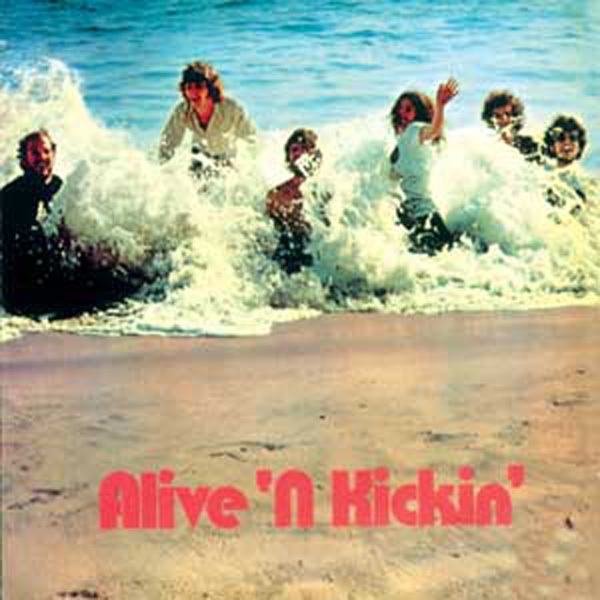
Alive ‘N Kickin’ – Alive ‘N Kickin’ (1970)
Title: Alive ‘N Kickin’
Year: 1970
Format: LP
Label: Roulette
Led by singer Pepe Cardona Alive ‘n Kickin’ was a New York City based sextet showcasing the talents of drummer Vito Albano, vocalist Sandy Todler, guitarist John Parisio, keyboardist Bruce Sudano and bassist Thomas Wilson. The group started their careers playing the city’s club circuit getting their initial break when they attracted the attention of Tommy James of Shondells fame. Impressed by the band he offered to help them record a song he’d recently written but had been unable to record due to a severe case of stage fright. Ironically, before the group could record ‘Crystal Blue Persuasion’ James withdrew the offer so that James and the Shondells could release it themselves. Redeeming himself, James offered the band a replacement track entitled ‘Tighter and Tighter’.
Feeling that the song was overly commercial, the band was initially reluctant to record the track. They ultimately relented recording the song as their debut for Roulette Records. Released as a single ‘Tighter and Tighter’ b/w ‘Sunday Morning’ (Roulette catalog number R-7078), the song eventually went top-10.
As was standard marketing, Roulette rushed the band into the studio to record a supporting album. Produced by James and Bob King, the cleverly-titled “Alive ‘n Kickin’” proved a minor surprise. Anyone hearing ‘Tighter and Tighter’ (let along looking at the fun-in-the-sun album cover), would have justifiably concluded these guys were little more than a faceless top-40 pop band. Wrong conclusion.
Powered by Todler’s tough voice (her bluesy delivery occasionally baring a startling resemblance to Janis Joplin – check out ‘Just Let It Come’ or ‘Kentucky Fire’), the set of largely original material rocked with a surprising amount of energy. While it may not have made for the year’s most original set, tracks such as ‘Junction Creek’ and ‘Mississippi Mud’ saw the group displaying a penchant for above average blues-rock. That wasn’t meant to imply these guys were going to knock Deep Purple off the hard rock throne. Largely penned by Sudano and Wilson, virtually everyone of these nine tracks retained a distinctive commercial sheen. (RDTEN1 RYM)
Track Listing
- Tighter, Tighter
- Junction Creek
- Jordan
- Kentucky Fire
- Sunday Morning
- Just Let It Come
- Mississippi Mud
- Hitter Man
- Mother Carey’s Chicken
- London Bridge
- You Gave Me Something
- Good Ole Lovin’ Back Home
Disclaimer: The link below may point to content that is copyrighted. redtelephone66 only provides this link with the understanding that you are responsible for the content you download. redtelephone66 does not engage in music piracy, nor do we do host, fileshare, or otherwise trade in copyrighted works.
Assembled Multitude – Assembled Multitude (1971)
Title: Assembled Multitude
Year: 1971
Format: LP
Label: Atlantic
Originally a staff writer working for John Madara’s production company, by the late 1960s Tom Sellers was a veteran of the Philadelphia-based band Gulliver (along with Daryl Hall of future Hall and Oates fame). Following the band’s collapse Sellers focused his attention on production work, forming The Assembled Multitude as a studio vehicle for his in-studio experiments.
Atlantic Records somehow decided to release Sellers’ MOR cover of The Who’s “Overture from Tommy (A Rock Opera)” b/w “” (Atlantic catalog number 45-2737) as a single. Even though it was easily one of the year’s lamest singles, it promptly became a top-20 hit, leading Atlantic to finance a supporting album. Produced by Sellers, 1970′s “The Assembled Multitude” did little to stray from Sellers’ MOR tendencies.
Featuring a collection of heavily orchestrated rock numbers with a couple of equally forgettable originals thrown in the mix, this was a rock LP for grannies. It’s so bad as to actually be kind of cool. It’s probably worth the entrance fee just to hear Sellers’ cover of Neil Young’s “Ohio”. (RDTEN1 RYM)
Track Listing
- Overture From “”Tommy”"
- Woodstock
- Where The Woodbine Twineth
- Ohio
- Singalong Junk
- MacArthur Park
- The Princess And The Soldier
- Twenty-Four Hours From Tulsa
- While My Guitar Gently Weeps
- Mr. Peppercorn
- I Want You (She’s So Heavy)
Disclaimer: The link below may point to content that is copyrighted. redtelephone66 only provides this link with the understanding that you are responsible for the content you download. redtelephone66 does not engage in music piracy, nor do we do host, fileshare, or otherwise trade in copyrighted works.
Cook E. Jarr – Pledging My Love (1969)
Title: Pledging My Love
Year: 1969
Format: LP
Label: RCA Victor
Before he became the number one lounge act in Vegas, Cook E. Jarr released this album
for RCA which Play It Again Max describes as “a pleasant and at times soulful slice of pop music with full orchestral arrangments and occasional choruses”. For more info on Mr. Jarr visit his website at http://www.cookejarr.com/ (Max Collodie)
Track Listing
- Pledging My Love
- Do You Believe In Magic
- If I Were A Carpenter
- Reason To Believe
- The Lady Came From Baltimore
- Knock On Wood
- Ask The Lonely
- I Can’t Turn You Loose
- Red Balloon
Disclaimer: The link below may point to content that is copyrighted. redtelephone66 only provides this link with the understanding that you are responsible for the content you download. redtelephone66 does not engage in music piracy, nor do we do host, fileshare, or otherwise trade in copyrighted works.