

Gordon Lowe – Follow The Sound (1970)
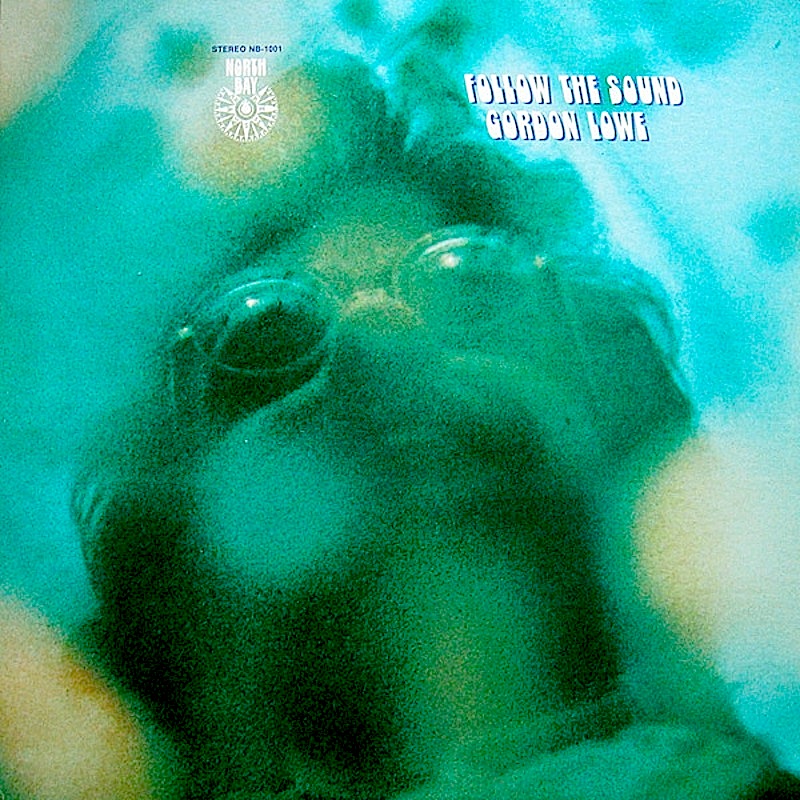
Artist: Gordon Lowe
Title: Follow The Sound
Year: 1970
Format: LP
Label: North Bay
Hi there… I did indeed record this in 1970 with Kenny Gamble as co-producer. We had Brian Buckley, guitar, Denny Jackson, guitar and mouth harp, John Erlendson,bass and Laurel Ward vocals. It was during that time in Phila. that I found myself as opening act for ‘The Doors’ in Boston…. cool! G.
Rare folk-psych/SSW album from Toronto-native Lowe, recorded in Philadelphia at Sigma Sound Studios and featuring Vincent Montana Jr. on percussion. (Howard Hales Broom)
Track Listing
- Follow The Sound
- Give Her My Love
- Dawn
- Jenny’s Gone
- Life Of A River
- Round And Round
- So Sorry
- Prisms
- Turnover Darlin’
- Coming Home
Alex Bevan – No Truth To Sell (1971)
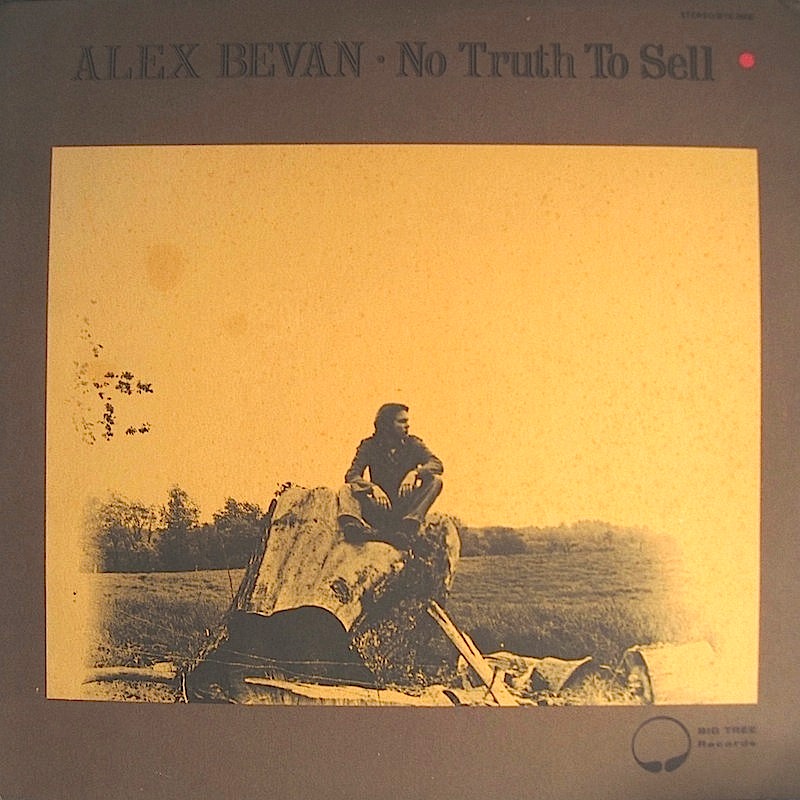
Artist: Alex Bevan
Title: No Truth To Sell
Year: 1971
Format: LP
Label: Big Tree
Bevan enters the heavily competitive track of new-style writer/singers of lyrical free verse and could come out a winner. The songs are rich in everyday imagery and personally interpreted; “Take Your Time”, “No Truth To Sell”, “Ease Your Load”, “Linda’s Song” and “Brady Street Hotel” stand out. (Billboard Magazine)
Track Listing
- Take Your Time
- Never Lock The Door
- Coventry Avenue
- Ring Of Silver
- No Truth To Sell
- Ease Your Load
- Brady Street Hotel (Empty Rooms)
- Two-Man Carnival Show
- Evening Prayer (Sometimes)
- Trains Gone By
- Linda’s Song
- Sunburn
- Every Song
Aliotta Haynes – Aliotta Haynes Music (1970)
Artist: Aliotta Haynes
Title: Aliotta Haynes Music
Year: 1970
Format: LP
Label: Ampex
Alliotta Haynes were a trio that formed in 1970 in West Allis, Wisconsin and consisted of Mitch Aliotta (bass-vocals), Ted Aliotta (drums-vocals) and Skip Haynes (guitar-vocals).
According to the liner notes, Mitch Aliotta learned to play trumpet at a very early age and then learned guitar. He played bass in various rock bands prior to joining the Rotary Connection. His brother Ted kicked around in different rock groups in Chicago and had the lead role in the musical “Hair” but lost the role after three weeks due to a motorcycle accident, while Skip Haynes came from a family of entertainers and once lived with Indians becoming an Indian dancer and later a commercial artist before spending time in Europe.
Their album is basically folk with a soft sound but hard lyric lines. Good vocal harmony prevails throughout as does good arranging and production. Alliotta Haynes shows insight on cuts such as “Rockefeller’s Blues” and “Running Song” while turning in a distinctive version of James Taylor’s “Fire And Rain”. The album generally follows folk revival lines with perceptive lyrics and music. (Bridget Bishop)
Track Listing
- Pitter Patter
- Rockefeller’s Blues
- Fire And Rain
- Dream Song
- Uppers And Downers
- Running Song
- My Song
- Brother Sparrow
- I Saw The Sun
Sid Selvidge – Portrait (1969)
Artist: Sid Selvidge
Title: Portrait
Year: 1969
Format: LP
Label: Enterprise
“Portrait, ” Sid Selvidge’s debut album, was released in 1969 on Enterprise, an offshoot of the legendary Memphis soul label Stax Records. Produced by Don Nix, it yielded a charted song, “The Ballad Of Otis B. Watson”, an anti-war tune that would profoundly color Selvidge’s relationship with commercial radio. Reacting to advertiser pressure, Selvidge recalls, stations were quick to take the popular song off of the air – an irony for a former deejay who had long enjoyed easy access to the airwaves. (Archer Records)
Track Listing
- The Ballad Of Otis B. Watson
- Look What The Years Have Done To You
- Going Through Another Change
- Portrait
- Cotton Eyed Joe
- Wreck On The Highway
- Children’s Suite
- Only The Children Know
- Hush-A-Bye
- Miss Eleana
- Tying Days Together
- Amelia Earhart
Rosebud – Rosebud (1971)
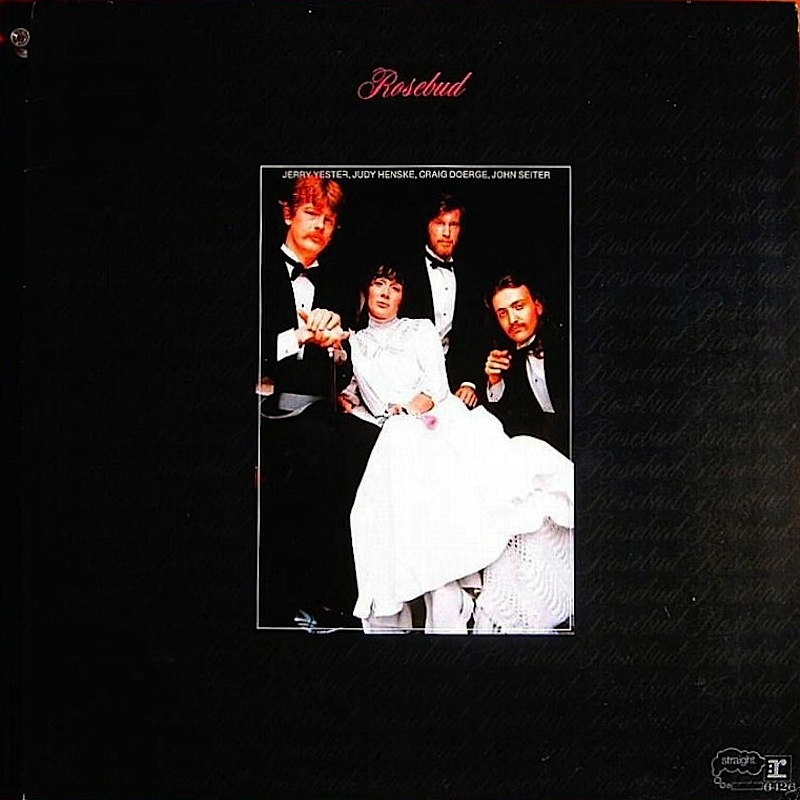
Artist: Rosebud
Title: Rosebud
Year: 1971
Format: LP
Label: Reprise/Straight
This was the band put together by Judy Henske and Jerry Yester after the classic Farewell Aldebaran. It also introduced Craig Doerge on keyboards – who became Judy’s husband.
Given the strained personal relationships that must have existed at the time it isn’t a bad record, but the Henske magic is sadly diluted across a pleasant range of airy mostly countryish songs typical of the era.
“Western Wisconsin” refers back to Judy’s homeland, and “Lorelei” could have fitted happily on Aldebaran. The band split up, Judy took a back seat as Craig took on LA session work, and that was the last we heard of her for almost 30 years. (ghmyrtle RYM)
Track Listing
- Panama
- Le Soleil
- Reno
- Western Wisconsin
- Lorelei
- Salvation
- Lullabye II (Summer Carol)
- The Yum Yum Man
- Roll Home Cheyenne
- Flying To Morning
Judy Henske & Jerry Yester – Farewell Aldebaran (1969)
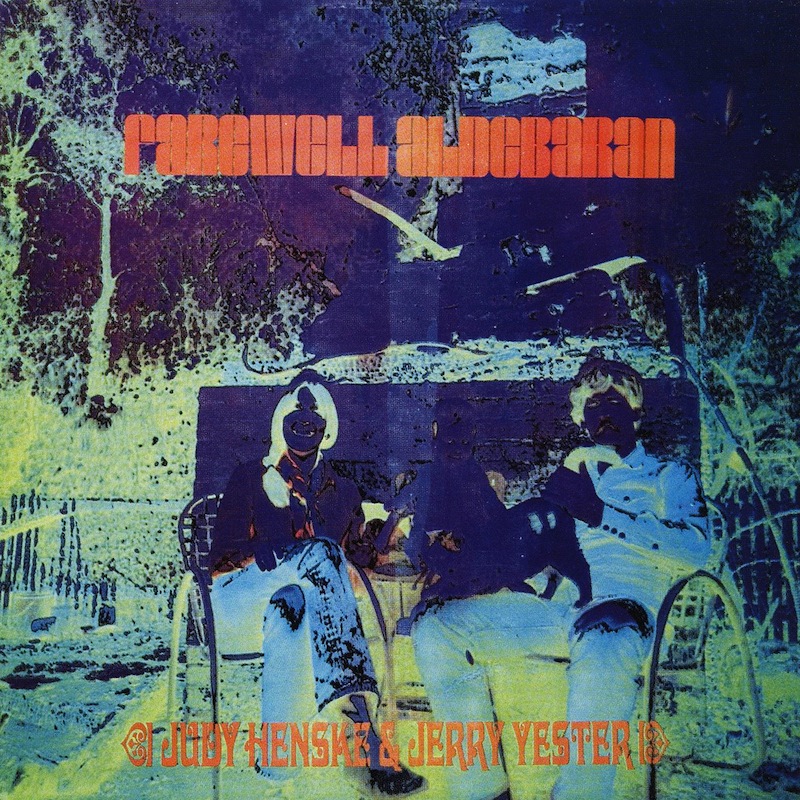
Artist: Judy Henske & Jerry Yester
Title: Farewell Aldebaran
Year: 1969
Format: LP
Label: Straight
By the mid-1960s Judy Henske had carved out a reputation as a well known and rather successful folk artist. She’d also married former Lovin’ Spoonful bassist Jerry Yester, with whom she soon had a baby girl. For his part, with the demise of the Spoonful, and a couple of solo singles, Yester originally turned his attention to production, working with the likes of The Association and The Turtles. He also began writing material with Henske.
Signed to Frank Zappa’s newly formed Straight Records (Henske’s manager Herb Cohen was also Zappa’s manager), the two brought in former Spoonful cohort Zal Yanowsky to co-produce 1969′s “Farewell Aldebaran” with Henske handling the lyrics and Yester furnishing the music, the resulting album was highly eclectic.
Showcasing Henske’s surprisingly versatile voice (anyone expecting fragile folk or top-40 pop was in for a major surprise), the LP found the duo effortlessly bouncing across musical genres. While folk (“Lullaby”) and pop (“Horses on a Stick”) weren’t entirely abandoned, the emphasis was on psych (check out the nifty country-cum-psych “Raider”) and hard rock (“Snowblind”) sounds.
Not everything worked; the couple occasionally sounding like they’re simply trying too hard, but roughly half of the selections were worth hearing a couple of times. In spite of strong reviews, the album sold few copies; a fact no doubt aided by Straight’s minimal promotional support. (Bad Cat)
Track Listing
- Snowblind
- Horses On A Stick
- Lullaby
- St. Nicholas Hall
- Three Ravens
- Raider
- One More Time
- Rapture
- Charity
- Farewell Aldebaran
Don Cooper – The Ballad Of C.P. Jones (1971)
Artist: Don Cooper
Title: The Ballad Of C. P. Jones
Year: 1971
Format: LP
Label: Roulette
Contributed by Eliot W.
Cooper rides the narrow furrow between folk, country and rock, uses his disaffected voice and guitar on some story themes and keeps the backup group (which has some strong jazz names) down. All in all it’s a good example of offbeat talent comin’ through. Good sample track is the opener, “The Ballad Of C.P. Jones.” (Billboard Magazine)
Track Listing
- The Ballad Of C. P. Jones
- Lonely Blue
- Rhinestone In The Rough
- Let Myself Go
- Fat Lovebirds
- A Better Way
- If It’s Gotta Happen
- Haven’t Much Time
- Howlin’ At The Moon
- Good Ol’ Gal
- Do Or Die
Bob Desper – New Sounds (1974)
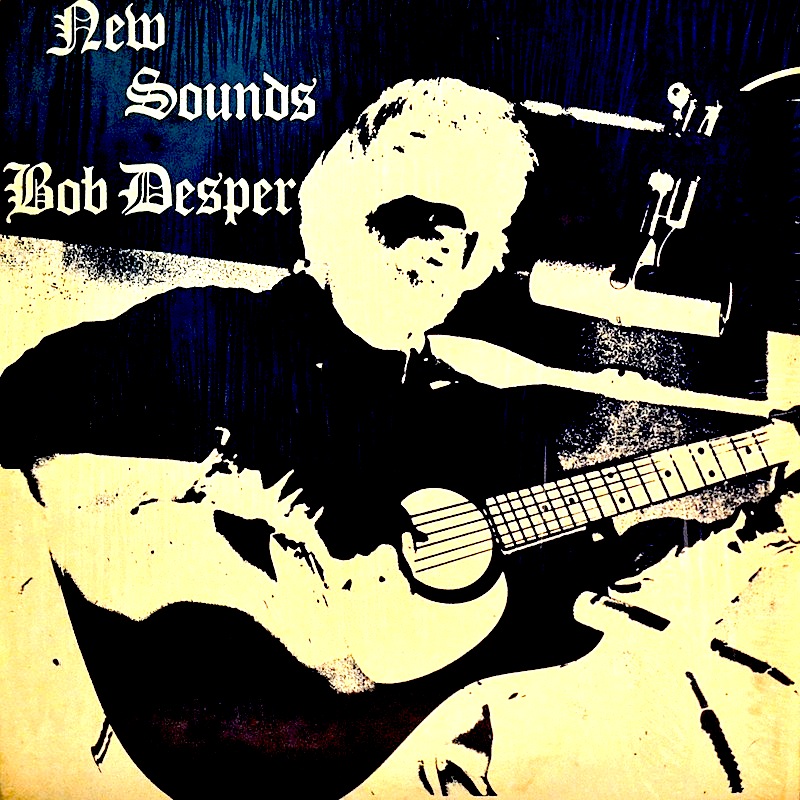
Artist: Bob Desper
Title: New Sounds
Year: 1974
Format: LP
Label: Rose City Sound
The Pacific Northwest is a dark, dankplace, with a suicide rate higher than Keith Richards on a four day binge. Eventheir most articulate native son, Kurt Cobain, drowned in the sea of despair and offed himself. And what’s the cause of this environmental depression??? It may be the constant grey skies and rain, it may be the extremely high runaway and homeless rate or it just may very well be the music of Bob Desper.
Bob recorded his New Sounds LP in one take at the local Rose City Sound studios. Just him, his acoustic guitar and an amazing insight to the dark side of the human psyche. So dark in fact, that only a blind man can see it. Bob is that man, and on this LP he taps into a place that very few people have visited. His voice is quiet with an edge sharper than a Ginzu knife
His lyrics reflect a lonely man who recognizes the shortcomings of human kind. This LP gives me goosebumps each and every time I play it. Side one starts off with “Darkness Is Like A Shadow”. A spooky, echoey tune w Bob introduces a topic that becomes a re-occurring theme throughout the entire LP, the fact that people with eyesight are blind to the things that are truly important in life.
“It’s Too Late” and “Lonely Man” follow and continue the introspective soul search, all accompanied by Bob’s extraordinary guitar playing. The fourth and last cut on side one is “To A Friend Of Mine”. This is w I usually start thinking about going into the bathroom and slitting my wrist with a razor blade just to prove to Bob that I could begin to understand what true suffering is.
This 15+ minute journey is, in my opinion, the most flawless chunk of downer/loner folk music ever recorded. Side two is good, but pales in comparison to it’s flip side. Songs are “Let It Shine For You”, “Don’t You Cry For Me”, “Liberty” and “Time Is Almost Over”. (Acid Archives)
Track Listing
- Darkness Is Like A Shadow
- It’s Too Late
- Lonely Man
- To A Friend Of Mine
- Let It Shine For You
- Don’t You Cry For Me
- Liberty
- Time Is Almost Over
Bob Martin – Midwest Farm Disaster (1972)
Artist: Bob Martin
Title: Midwest Farm Disaster
Year: 1972
Format: LP
Label: RCA Victor
Bob Martin is a highly talented singer songwriter from Lowell, Massachusetts who released Midwest Farm Disaster in 1972. Martin is still making records today but this one is generally acknowledged as his masterpiece and is perhaps one of the finest singer songwriter albums ever recorded.
Martin’s voice is gravelly and weathered but soulful. Think of a strange Kevin Coyne, Van Morrison, and Bob Lind blend and you’d be right on target. The lyrics are top shelf too, the equal or better of most major or critically acclaimed artists out there.
The album’s sound is very close to Gene Clark’s White Light or Bob Lind’s Since There Were Circles LP, a stark, beautiful blend of folk and country that reveals its depth with repeated listens. Each song has something new to offer, and Bob brings us into his working class world with great American stories about local drunks, small town farm life, hard times, prison convicts, and working on the mill.
“Blind Marie” is a moving singer songwriter track that sounds like a classic, it also happens to be the album’s most accessible song that should have gained Martin commercial notoriety. Tracks like the Woody Guthrie influenced “Third War Rag” and “Frog Dick, South Dakota” are coloured by a distinct sense of humor but are also packed with good, catchy melodies and wonderfully sarcastic lyrics.
Other songs like the intense “Mill Town” and the title track are dark tales that relate to Bob’s earlier life on the farm and are superb examples of real Americana. The album ends with “Deer Island Prison, ” which might be thought of as the album’s centerpiece.
Martin turns in a stunning vocal and lyrical performance that must surely rank as one of the great, unsung confessionals. This is an excellent and unforgettable LP full of rich drifter music and mandatory listening for those who are into deep, rustic singer songwriter albums. (Rising Storm)
Track Listing
- Captain Jesus
- Third War Rag
- Mill Town
- Changes In Me
- Old Rass
- Sister Rose And The First Salvation Band
- Midwest Farm Disaster
- Frog Dick, South Dakota
- Blind Marie
- Charlie Zink
- Deer Island Prison
Mark Spoelstra – State Of Mind (1966)
Artist: Mark Spoelstra
Title: State Of Mind
Year: 1966
Format: LP
Label: Elektra
Folksinger Mark Spoelstra was ahead of the curve in the opposition to the Vietnam War that grew up in the mid-’60s. Raised a Quaker, he had sought conscientious objector status when drafted in 1963 and spent two years performing alternative community service in a rural black community in central California, completing his commitment in the fall of 1965, by which time President Lyndon Johnson had vastly increased the number of American troops in Vietnam and protests against the war had become widespread.
Meanwhile, Spoelstra had established a modest career in music, following his two 1963 albums of folk-blues standards for Folkways Records with his 1965 Elektra Records debut, Five & Twenty Questions, in which he sang his own thoughtful songs of personal reflections and political commentary. State of Mind was the follow-up to that disc, and on it Spoelstra became more specific about his own life and about his views on the issues of the day.
“There are soldiers of all kinds,” he sang in “Sacred Life,” “and the battlefield type is not mine/There are soldiers that fight for the living and soldiers that live for the dying.” In such songs as this one, “Too Late,” and “Soulless Blues,” he castigated war and those who, unlike himself, were willing to fight it.
His experience with the disadvantaged also gave him a special, close-up perspective on the civil rights movement, one he expressed in “Guns of Our Cities,” which concerned the urban rioting of the mid-’60s, and “Farewell to North Avenue,” in which he looked back on his service and those with whom he worked.
The subject matter might have made the album somewhat relentless, but the tone was relieved by a number of children’s songs (“Bubble Gum Song,” “Gimme Gimme,” and “Play Run Run”) and by the music, which consisted largely of uptempo fingerpicked country blues that Spoelstra played on his acoustic guitar, the only musical accompaniment to his vocals.
The album’s simplicity probably doomed it commercially in 1966, when most folkies were heading into folk-rock behind Bob Dylan. Elektra was encouraging that movement, and the label was getting more interested in signing rock bands like Love, so when State of Mind didn’t sell as well as Five & Twenty Questions, Spoelstra was unceremoniously dropped, and it took him three years to find another label berth. (William Ruhlmann)
Track Listing
- Too Late
- State Of Mind
- Guns Of Our Cities
- Bubble Gum Song
- Dizzy Spell Blues
- This Man
- Gimme Gimme
- Soulless Blues
- Full Time Man
- Sacred Life
- Play Run Run
- Farewell To North Avenue